
filter_list Showing 8 results for "Box" close Clear
search
dashboard All 92 museum exhibitions 55article local 10rate_review review 8article culture 7person people 4trending_up market 4article news 3candle obituary 1
date_range Range Today This Week This Month All
Subscribe

Zineb Sedira review: A chic ode to revolutionary cinema, brainy boozers – and exceptional berets

Zineb Sedira's exhibition at Tate Britain presents a cinematic and sculptural homage to La Cinémathèque Algérienne, the Algerian film archive founded in 1965 that became a hub for leftist African filmmakers. The show recreates a 1970s Algerian cafe in Paris, complete with a jukebox, books on revolutionary cinema, and a model movie theater screening a documentary about the archive's director, Boudjemaâ Karèche. Sedira, born in Paris to Algerian parents and based in London, weaves personal and political narratives to explore identity, diaspora, and the role of art in social change.
Art, Death, Duchamp

Marcel Duchamp, known for his nonchalant attitude toward the material status of his artworks, paradoxically exerted meticulous control over their afterlife. The article examines his detailed instructions for the posthumous installation of his secret sculptural environment *Étant donnés* (1946–66) at the Philadelphia Museum of Art, including a four-ring binder of notes specifying everything from architectural dimensions to lightbulb wattage. It also highlights his earlier role as cofounder of the Société Anonyme, Inc., where he balanced artistic control with delegation, selecting artists like Louis Eilshemius for exhibitions despite their differing sensibilities.

The National Gallery of Art’s Dear America Needs a Postscript

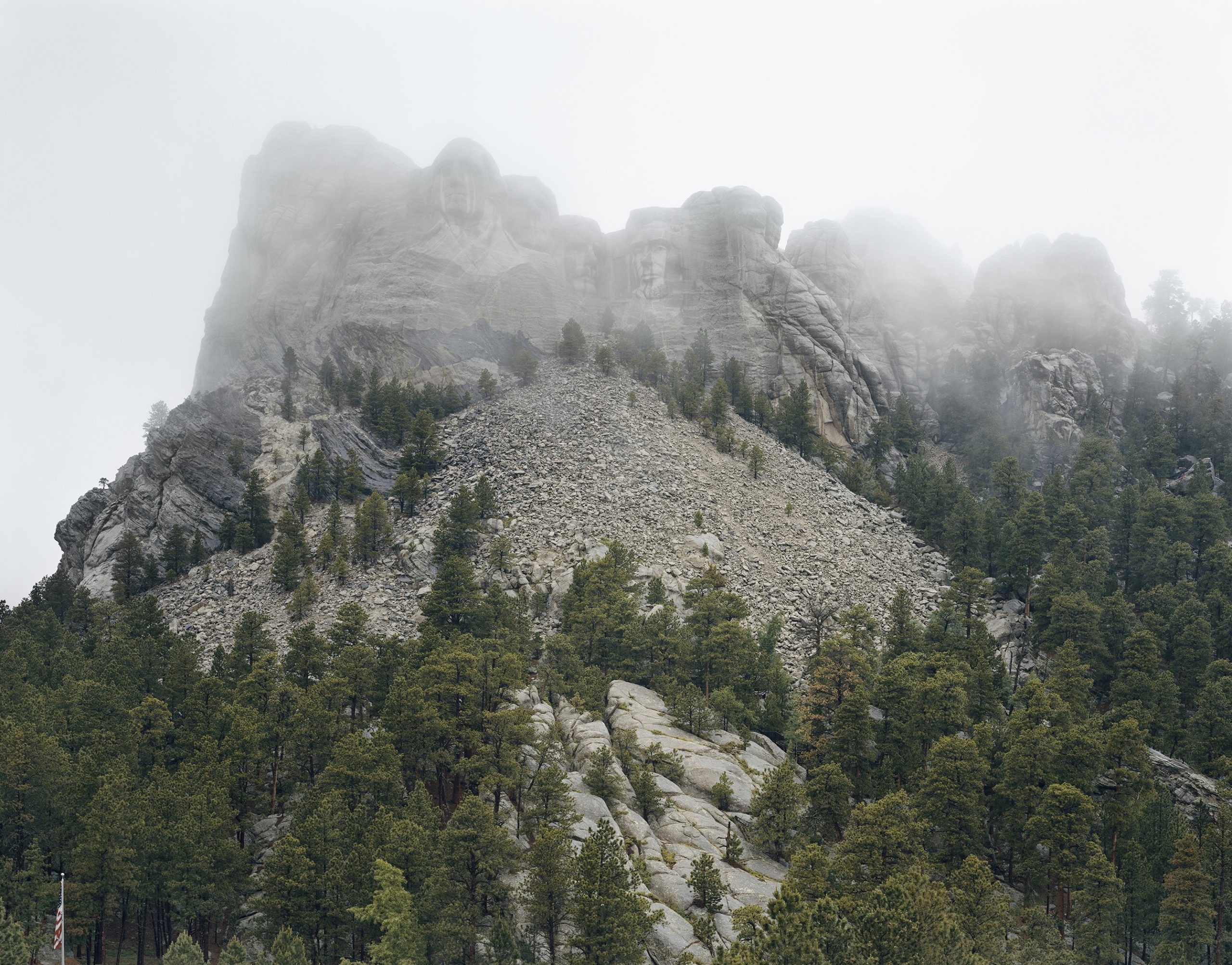
The National Gallery of Art in Washington, D.C. has opened "Dear America," an exhibition organized around the themes of "Land," "Community," and "Freedom" that attempts to survey the entire history of the United States through its collection. The show features works by artists including Mitch Epstein, Victoria Sambunaris, Sedrick E. Huckaby, and Nancy Andrews, with sections on the American landscape, industrialization, and diverse communities. However, the review notes that the exhibition feels overly literal, with American flags prominently featured and a sense of ticking off boxes rather than offering a challenging or intellectually rigorous presentation.

I’ve Got the Post-Duchamp Blues

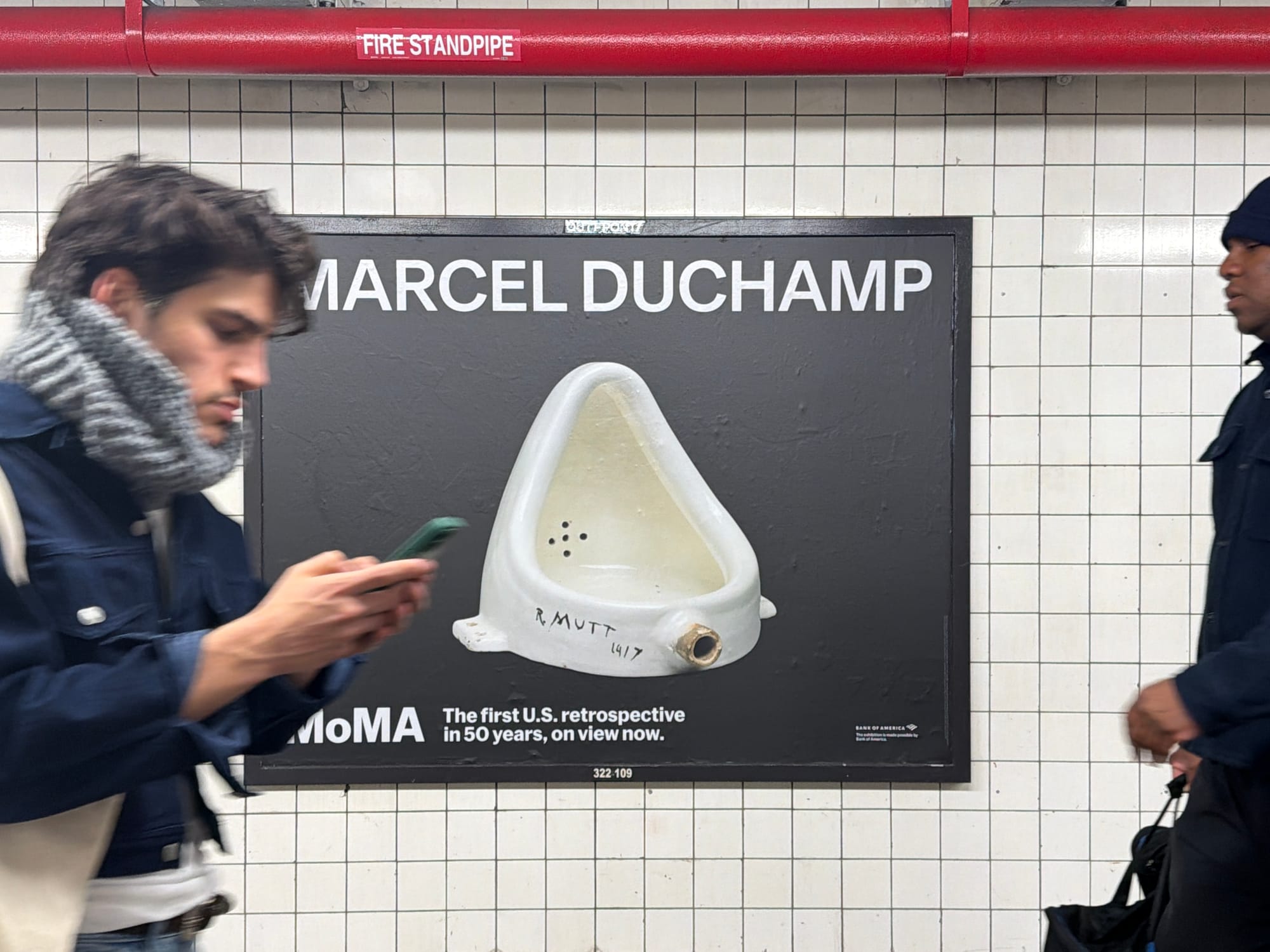
The article is a review of the Marcel Duchamp retrospective at the Museum of Modern Art (MoMA) in New York, the first such show since 1973. Featuring around 300 works from Duchamp's six-decade career, the exhibition includes his iconic readymades like "Fountain" (1917) and early paintings such as "Nude Descending a Staircase, No. 2" (1912). Co-curated by MoMA's Ann Temkin and Michelle Kuo along with Matthew Affron of the Philadelphia Museum of Art, the show runs through August 22, 2026, before traveling to Philadelphia.

What’s Left to Learn from Marcel Duchamp?

The article examines Marcel Duchamp's enduring influence on contemporary art, focusing on his readymades such as "Fountain" (1917) and "Bicycle Wheel" (1913/1951). It notes that a major survey co-organized by the Museum of Modern Art and the Philadelphia Museum of Art, 70 years after Duchamp predicted his true public would emerge in 50 to 100 years, reaffirms his status as the most influential artist of the past century. The piece discusses how Duchamp's practice of selecting and presenting ordinary objects as art—from a urinal to a snow shovel—once shocked the art world but now seems quaint compared to later works like Maurizio Cattelan's taped banana.

The tiniest event can tear a hole. Sara MacKillop by Margaret Kross

Sara MacKillop's exhibition "The Cutaway View" at Good Weather in Chicago presents sculptures made from humble analog materials like blank wall calendars, empty shopping bags, and gift wrapping. The London-based artist alters these objects with minimal interventions—such as surgically cut holes in shopping bags to accommodate vinyl records—drawing attention to the ephemera and texture of retail culture. Her series "Calendar Houses" (2021–ongoing) uses archive boxes and wall calendars to create miniature modernist dwellings that critique systems of order and self-optimization.

What Would Orwell Think of the Mormon ‘Animal Farm’?

A new 3D-animated adaptation of George Orwell's 'Animal Farm' has been released, directed by Andy Serkis and featuring a star-studded voice cast including Glenn Close, Woody Harrelson, Kathleen Turner, and Seth Rogen. The film is backed by Angel Studios, a Mormon-run company based in Provo, Utah, known for family-friendly content. The adaptation adds a modern father-son plot between a pig named Lucky and Napoleon, introduces an evil corporation CEO, and replaces Orwell's bleak ending with a happy one where the animals blow up a hydroelectric dam. ArtReview critic Travis Diehl describes the film as 'sheer propaganda' and 'horrifying,' noting its marketing campaign included a fictional glue product called Boxer's Glue.

Split decision: The Art Museum’s missed opportunity with its new ‘Rocky’ exhibition | Opinion

The Philadelphia Museum of Art's new exhibition, "Rising Up: Rocky and the Making of Monuments," celebrates the 50th anniversary of the film *Rocky* and highlights Philadelphia's boxing history, including figures like Joe Frazier and Bernard Hopkins. However, the author, a street reporter who wrote a book about people running the museum steps, argues the exhibit missed a key opportunity by focusing on the Rocky statue and monuments rather than centering on the film's transformative power and the iconic steps-running ritual that has drawn visitors for decades.