
filter_list Showing 3 results for "British" close Clear
search
dashboard All 60 museum exhibitions 35article news 6trending_up market 5article policy 4rate_review review 3article local 2article culture 2candle obituary 1person people 1article architecture 1
date_range Range Today This Week This Month All
Subscribe

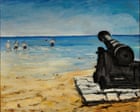
Winston Churchill: The Painter review – We will daub them on the beaches

The Guardian reviews "Winston Churchill: The Painter," an exhibition of nearly 60 paintings by the former British prime minister, curated by Xavier Bray and Lucy Davis. The show assembles works from across the UK and private collections, depicting scenes from Churchill's travels, stately homes, and leisure moments, painted as an amateur Sunday painter for stress relief rather than artistic acclaim. The review notes Churchill's use of techniques borrowed from Walter Sickert, including projectors and monochrome underlayers, and describes his style as charmingly amateurish with a vivacity in seascapes but weakness in figures and architectural luminosity.

Leonora in the Morning Light review – pioneering British artist who fled convention for the surrealists

A new biopic titled *Leonora in the Morning Light* chronicles the life of British surrealist painter Leonora Carrington, who fled her aristocratic upbringing in London to join the surrealist circle in Paris. The film, adapted from Elena Poniatowska's biographical novel, follows Carrington from her affair with the older Max Ernst through her mental health crisis in Spain and eventual settlement in Mexico, where she created art on her own terms. Olivia Vinall portrays Carrington with a fierce, uncompromising spirit, though the film is criticized for uneven storytelling and clunky dialogue.

Lionel Wendt: The Politics of the Male Nude

ArtReview publishes an essay by Qingyuan Deng analyzing the first US solo exhibition of Lionel Wendt's photographs at American Art Catalogues in Manhattan's West Village. The show presents Wendt's haunting gelatin silver prints of male nudes, still lifes, and solarized images, positioning him as a canonical figure of South Asian modernism. Deng argues that while the exhibition correctly identifies homoerotic desire in Wendt's work, it over-relies on queer theory's framework of opacity and fails to fully address the political radicality of Wendt's practice under British colonial rule in Ceylon, where homosexuality was criminalized under the 1883 Penal Code.