
filter_list Showing 4 results for "Riga" close Clear
search
dashboard All 268 trending_up market 100museum exhibitions 62article news 46article local 16article culture 15article policy 8person people 8gavel restitution 5rate_review review 4candle obituary 4
date_range Range Today This Week This Month All
Subscribe

ruth asawa retrospective sfmoma review

Ruth Asawa's first retrospective at the San Francisco Museum of Modern Art in 1973 featured a communal "dough-in" where children made art from baker's clay, a practice that drew skepticism from some onlookers. Now in 2025, SFMOMA presents a larger retrospective of Asawa's work, showcasing her wire sculptures, drawings, and playful, community-oriented art. The exhibition, organized by SFMOMA's Janet Bishop and MoMA's Cara Manes, will travel to the Museum of Modern Art in New York, the Guggenheim Bilbao, and the Fondation Beyeler.
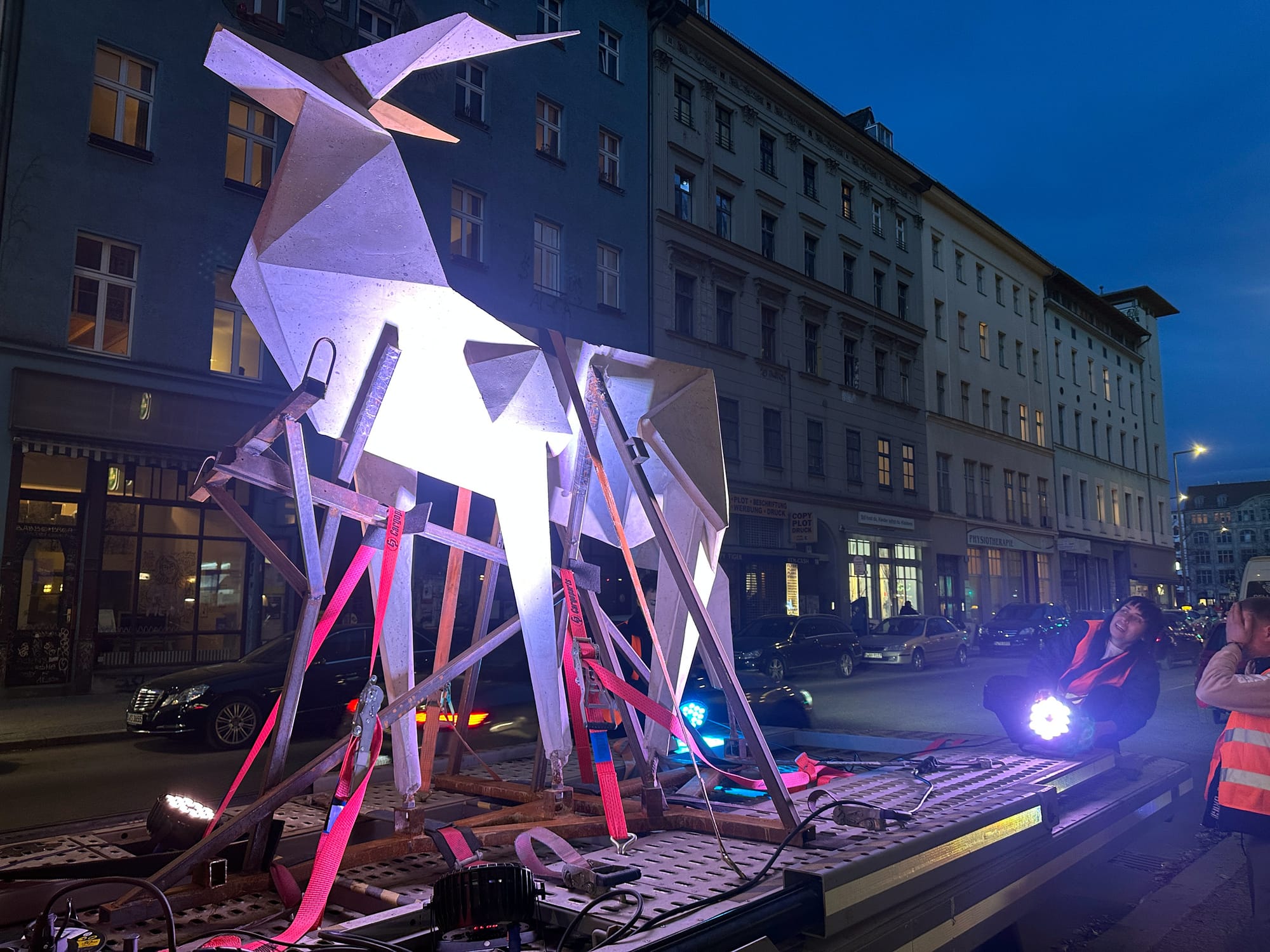
The Ukrainian Pavilion’s Deer Seen Around the World

Zhanna Kadyrova's concrete sculpture "The Origami Deer" (2019) is prominently displayed at the entrance to the Giardini during the 61st Venice Biennale, part of her project "Security Guarantees" in the Ukrainian Pavilion. Originally installed in Pokrovsk, eastern Ukraine, the work was removed in 2024 as Russian forces advanced, then traveled through Vienna, Warsaw, Prague, Berlin, and Paris before reaching Venice—a journey mirroring the displacement of millions of Ukrainians. The sculpture, shaped like a deer and evoking folded paper, references the 1994 Budapest Memorandum, in which Russia, the UK, and US guaranteed Ukraine's security in exchange for its nuclear disarmament—guarantees that proved worthless after Russia's invasions.

A Baroque Too Baroque: Reflections on the Colossal Exhibition in Forlì

Un Barocco troppo barocco. Riflessioni sulla colossale mostra di Forlì

A massive exhibition titled "Barocco: il gran teatro delle idee" (Baroque: The Grand Theater of Ideas) is on view at the Museo Civico San Domenico in Forlì, Italy. The show, curated by a committee of six, ambitiously attempts to define the Baroque across the 17th and 18th centuries, extending its scope to include France and Spain, and even suggesting its echoes in the 20th century. It features approximately 300 works, including paintings, sculptures, and decorative arts.

For Ceija Stojka, Memory Is Survival

The article reviews the exhibition "Ceija Stojka: Making Visible" at the Drawing Center in New York, showcasing over 50 paintings and drawings by the late Romani-Austrian artist. Stojka, a child survivor of the Holocaust, documented both the atrocities she endured and the tender, everyday beauty of Romani life, using acrylic, sand, and paper to convey memories of her family's traveling wagon and natural landscapes. The show highlights her self-taught practice and outsider perspective, featuring works from the 1990s alongside her memoirs, which were posthumously translated in 2022.