filter_list Showing 27 results for "SARA" close Clear
search
dashboard All 1460 museum exhibitions 679article local 200article news 180trending_up market 147article culture 119person people 44article policy 40rate_review review 27candle obituary 12gavel restitution 7article events 3article event 2
date_range Range Today This Week This Month All
Subscribe

the worst art we saw in 2025

Artnet News editors and writers compiled a list of the worst art of 2025, calling out works they found lazy, cynical, overhyped, or ethically dubious. Highlights include Flora Yukhnovich's site-specific painting installation at the Frick Collection, which critics deemed middling and out of place among the museum's historic masterpieces; Jeff Koons's eight-foot-tall Hulk (Tubas) sculpture, sold for $3 million at Frieze New York and described as an obnoxious trophy piece; and actor Adrien Brody's interactive gum wall installation, which invited visitors to stick chewed gum onto a canvas.

here are 6 of the worst art works we saw all year

Artnet News published a year-end roundup of the worst artworks of 2023, as selected by its writers and editors. The list includes Meta's AI-art chatbot experiments on Instagram, which cloned celebrity likenesses into cringe-worthy avatars like Snoop Dogg's 'The Dungeon Master' and Kendall Jenner's 'Billie,' alongside Refik Anadol's 'Unsupervised' at MoMA, criticized as shallow tech spectacle. Other entries include a poorly received Picasso-themed exhibition and additional works deemed ill-conceived or badly executed.

worst artworks we saw around the world in 2022

Artnet News editors compiled a list of the worst artworks they encountered in 2022, including a chaotic performance by Poncili Creación at NADA Miami, an overproduced Danish Pavilion installation by Uffe Isolotto at the Venice Biennale, and a Paul Cézanne painting at the Barnes Foundation that disappointed a critic. The article offers subjective, critical takes on these works, describing the NADA performance as bizarre and jolting, the Danish pavilion as graphic and lacking a powerful message, and the Cézanne as a disappointment within an otherwise memorable museum visit.

Desperate, Scared, But Social at UC Irvine Langson Orange County Museum of Art

The group exhibition "Desperate, Scared, But Social" at the UC Irvine Langson Orange County Museum of Art (Langson IMCA) explores the complexities of contemporary social dynamics and collective anxiety. The show brings together diverse artistic perspectives to examine how individuals navigate a landscape defined by political instability, environmental concerns, and the pervasive influence of digital connectivity.

Alex Heilbron at as-is

Artist Alex Heilbron presents a solo exhibition at the Los Angeles gallery as-is. The show is featured as a lead review in the February 2026 issue of Contemporary Art Review LA, highlighting Heilbron's continued exploration of painting and visual language within the Southern California art scene.

Devin Troy Strother at ArtCenter

The article is a table of contents for Issue 42 of Contemporary Art Review LA, which includes a review of an exhibition by artist Devin Troy Strother at ArtCenter. The review, written by Janelle Zara, is listed among other reviews, interviews, and features in the publication's November 2025 issue.

art best and worst art of 2025 list

Cultured's art critic reflects on the best and worst of 2025, highlighting standout moments including Salman Toor's 2007 portrait of Zohran Mamdani (now mayor-elect of New York), the posthumous Jack Whitten survey "The Messenger" at MoMA, and Anne Imhof's epic production "DOOM: House of Hope" at the Park Avenue Armory. The article also notes Mamdani's arts-friendly transition committee and the broader resilience of artists amid political turmoil.

2026 whitney biennial critics conversation

The 82nd edition of the Whitney Biennial has opened at the Whitney Museum of American Art, curated by Marcela Guerrero and Drew Sawyer. Featuring 56 artists from diverse global backgrounds, the exhibition explores themes of American empire, human-nonhuman relationships, and the impact of infrastructure. Early critical reactions highlight a pervasive sense of "horror" and bodily disturbance, with works utilizing AI, sculpture, and painting to address grief, war, and societal transformation.

whitney biennial 2026 review

The 2026 Whitney Biennial marks a shift in contemporary art from literal messaging toward atmospheric 'mood.' This edition is characterized by an immersive aural landscape of drones and whispers, moving away from the overt identity politics of previous years in favor of a 'sincerity first' credo. Key works include Emilie Louise Gosslaux’s emotional tribute to her guide dog, Mo Costello’s community-focused binders, and Nour Mobarak’s intimate recordings of internal bodily sounds.

hot girl feminism chloe wise ambera wellmann sasha gordon

A wave of paintings by women depicting women dominated New York galleries this fall, sparking a critical examination of contemporary feminist figuration. Artists like Emily Coan and Anna Weyant create images of idealized, often sexualized femininity, framing their work as a reclamation of beauty and personal expression.

art ai digital guide brian droitcour

Brian Droitcour curates a guide to navigating the current media landscape through the work of tech-savvy artists and writers, focusing on exhibitions in Brooklyn and Queens. The guide highlights Porpentine's show "Xrafstar World" at Haul Gallery in Gowanus, which features poster-prints of drawings depicting characters from their stories and games, made with different digital brushes. Droitcour contrasts this DIY, performance-driven work with major institutions' engagement with AI, such as Sasha Stiles' "A Living Poem" at MoMA, which he criticizes for echoing technology's promises of polish rather than probing its complications.

minnie evans legacy high museum whitney

The article reflects on the responsibility of critical art writing in the Southeast, sparked by the announcement that Art Papers, an international art magazine based in Atlanta, will sunset in 2026 after 50 years. The author recounts a debate among local art workers about reviewing the forthcoming Minnie Evans retrospective organized by the High Museum of Art and traveling to the Whitney Museum, which he initially declined due to a conflict of interest with curator Katherine Jentleson. He ultimately agrees to write, emphasizing the need for Black scholars to engage with self-taught Black artists. The piece examines how Evans's narrative has been mediated through the lens of white photographer and art historian Nina Howell Starr, questioning the power dynamics and what remains unknown about Evans's own agency.

Review: “50th Anniversary Exhibition Part I” at Moody Gallery, Houston

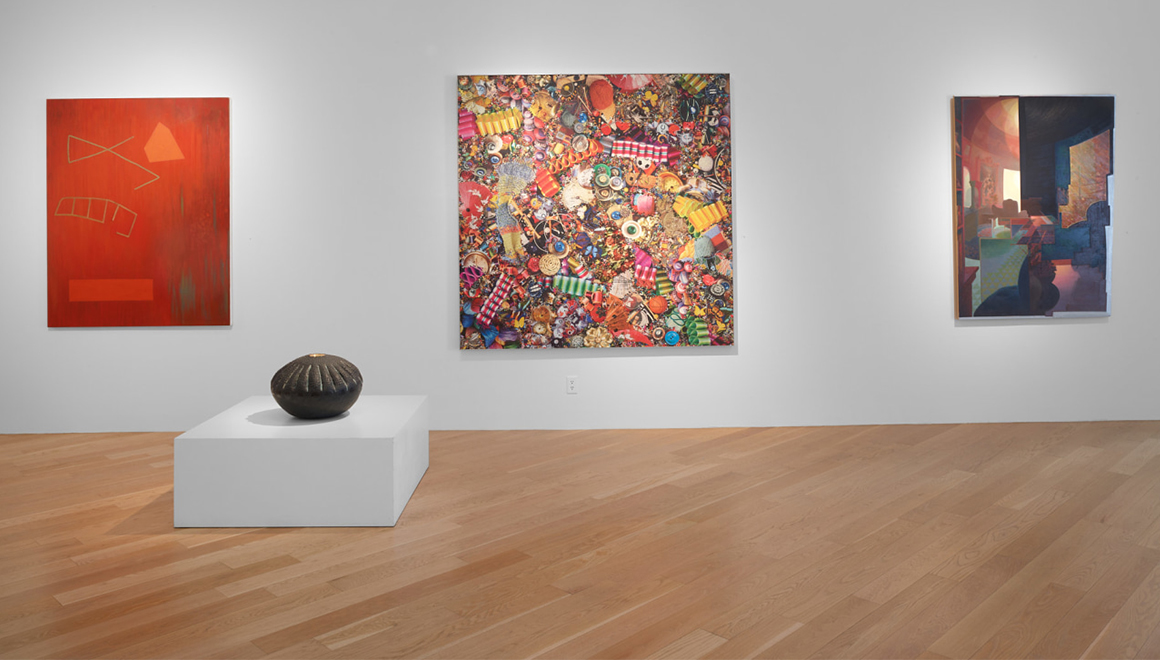
Moody Gallery in Houston opened “50th Anniversary Exhibition Part I” on September 13, showcasing 38 artworks by gallery-affiliated artists. The show is deliberately non-chronological and non-comprehensive, featuring works ranging from 2006 to 2025, including pieces by Melissa Miller, William “Bill” Steffy, Michael Kennaugh, Dan Sutherland, Pat Colville, Tracye Wear, Al Souza, and the collaborative MANUAL (Ed Hill & Suzanne Bloom). The exhibition spans three spaces and highlights the gallery’s eclectic, open-minded approach and its commitment to promoting Texas-based artists.

Art for Our Age of Chaos

The article reviews two major New York exhibitions opening in 2026: the Whitney Biennial at the Whitney Museum of American Art, featuring over fifty artists, and "New Humans: Memories of the Future" at the newly expanded New Museum, with over a hundred artists. Both shows are described as enormous and defiant, responding to a distracted public and financial pressures. The reviewer notes that both exhibitions juxtapose large-scale immersive works with tiny, intimate pieces, and finds the Whitney Biennial lacking urgency, while preferring the New Museum's historical narrative about technology and modernity.

What’s Left to Learn from Marcel Duchamp?

The article examines Marcel Duchamp's enduring influence on contemporary art, focusing on his readymades such as "Fountain" (1917) and "Bicycle Wheel" (1913/1951). It notes that a major survey co-organized by the Museum of Modern Art and the Philadelphia Museum of Art, 70 years after Duchamp predicted his true public would emerge in 50 to 100 years, reaffirms his status as the most influential artist of the past century. The piece discusses how Duchamp's practice of selecting and presenting ordinary objects as art—from a urinal to a snow shovel—once shocked the art world but now seems quaint compared to later works like Maurizio Cattelan's taped banana.

Chelsea Exhibition Reviews: Rosebud Contemporary, Paula Cooper, Fredericks & Freiser, Berry Campbell and more

This article reviews several Chelsea gallery exhibitions, focusing on Mary Ann Unger's monumental sculpture show 'Across the Bering Strait' at Berry Campbell, which features her hydrocal-over-steel works exploring themes of feminism, anthropology, and the natural world. It also covers 'En Route' at Rosebud Contemporary, a group exhibition of abstract painters Rifka Milder, Meg Hitchcock, and Ketta Ioannidou, each reflecting on artistic journeys through their work.

Colours of Time review – Monet meets Mamma Mia in charming French artist comedy

Director Cédric Klapisch’s new film, *Colours of Time* (originally *La Venue de L’Avenir*), is a sentimental French comedy that weaves a fictional romantic history around Impressionist master Claude Monet and pioneering photographer Félix Nadar. The plot follows a group of modern-day descendants who discover a trove of historical secrets in a derelict cottage, leading to a whimsical, time-bending exploration of their ancestors' lives in Belle Époque Paris.

The tiniest event can tear a hole. Sara MacKillop by Margaret Kross

Sara MacKillop's exhibition "The Cutaway View" at Good Weather in Chicago presents sculptures made from humble analog materials like blank wall calendars, empty shopping bags, and gift wrapping. The London-based artist alters these objects with minimal interventions—such as surgically cut holes in shopping bags to accommodate vinyl records—drawing attention to the ephemera and texture of retail culture. Her series "Calendar Houses" (2021–ongoing) uses archive boxes and wall calendars to create miniature modernist dwellings that critique systems of order and self-optimization.

Blank Spaces. Sung Tieu by Sarah Johanna Theurer

Sung Tieu's installations, characterized by austere, bureaucratic surfaces, explore the hidden architectures of power embedded in everyday systems. The article examines her series of works that deconstruct administrative forms used in asylum procedures, reducing them to blank spaces and quantified grids to expose how institutional power operates through seemingly neutral documents. Her exhibition "In Cold Print" at Nottingham Contemporary physically manifests these themes by using steel fences to control viewer movement, drawing direct parallels between minimalist sculpture and the dehumanizing design of border controls.

February Book Bag: from Tracey Emin’s conversations about painting to a catalogue of Lucian Freud’s drawings

The article presents a selection of recently published art books, highlighting new releases on artists Tracey Emin, Beatriz González, and Lucian Freud, as well as a second volume on Arab Modernist artists. It details the content of each book, including personal reflections, career overviews, and connections to upcoming exhibitions.

"She's Like the Wind"

The article reviews "She's Like the Wind," an annual all-female group exhibition at Deep Space gallery in Jersey City, featuring works by artists Delilah Ray Miske, Leigh Cunningham, and SarahGrace. Miske's painting "Lemon Lime Toe of God" shows only a woman's leg and foot, while Cunningham's oil paintings present figures as blurred forms seen through a translucent curtain, and SarahGrace's textile works depict headless female nudes with suggestive titles like "Provoke" and "Dominate." The show marks a departure from the gallery's typically family-friendly, sex-averse programming.

Black.2; Family Values; Studio Exhibition

Amelia Winata reviews three concurrent group exhibitions in Melbourne galleries: 'Black.2' at Void_Melbourne (15 Nov–20 Dec 2025), 'Family Values' at Futures (6 Dec–20 Dec 2025), and 'Studio Exhibition' at Haydens (6 Dec 2025). The article opens with a metaphor comparing the gallery-goer's experience to the rescue ship Carpathia navigating icebergs, reflecting the glut of end-of-year group shows in Melbourne's commercial spaces. Winata visits each space, describing the deco-chic building housing Void_, the formalist black-themed works by artists like Nick Devlin, Elvis Richardson, Sarah Goffman, and Suzie Idiens, and the broader context of Melbourne's gallery scene.

Review: “Boris Lurie: Nothing To Do But To Try” at the Holocaust Museum Houston

The Holocaust Museum Houston is currently hosting "Boris Lurie: Nothing To Do But To Try," an exhibition focusing on the early works of the Holocaust survivor and NO!art movement founder. Organized by the Museum of Jewish Heritage, the show highlights Lurie’s "War Series," featuring paintings, drawings, and never-before-seen ephemera created as a means of processing the trauma of his imprisonment in camps like Buchenwald. The works, ranging from the immediate post-war period to decades later, serve as a visceral record of memory and loss, including tributes to his family members murdered in the Rumbula Forest massacre.

The Sticky Politics of Wall Texts

A critic's visit to the 36th Bienal de São Paulo led to a pointed critique of the exhibition's didactic strategy. The show, curated by Bonaventure Soh Bejeng Ndikung, featured floor-mounted placards with QR codes, poorly placed basic labels, and extremely lengthy omnibus section texts, creating a frustrating experience that oscillated between providing too little and too much information.

Folkestone Triennial 2025 review: environmental catastrophe—but also hope, joy and a jolly salamander

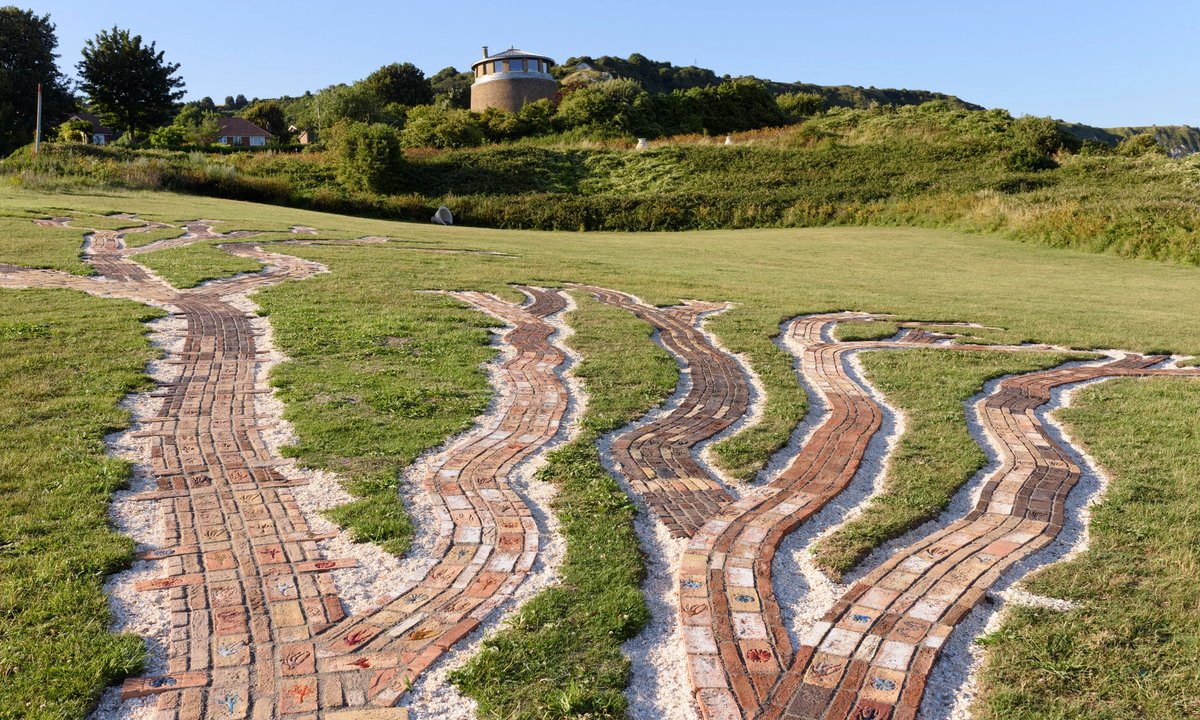
The Folkestone Triennial 2025, titled "The Lie of the Land," features 18 artists across the seaside town in southeast England. Works include Sara Trillo's chalk cob sculptures inspired by Iron Age urns, Emilija Skarnulyte's film on nuclear decommissioning at Lithuania's Ignalina plant, Katie Paterson's amulet installation made from planetary crisis materials, and Cooking Sections' activist project on UK sewerage pollution. The triennial runs through the ancient port's historic role as a site of arrival and departure.

A new ‘anti-biography’ rips apart the myth of Leonardo as a solitary genius

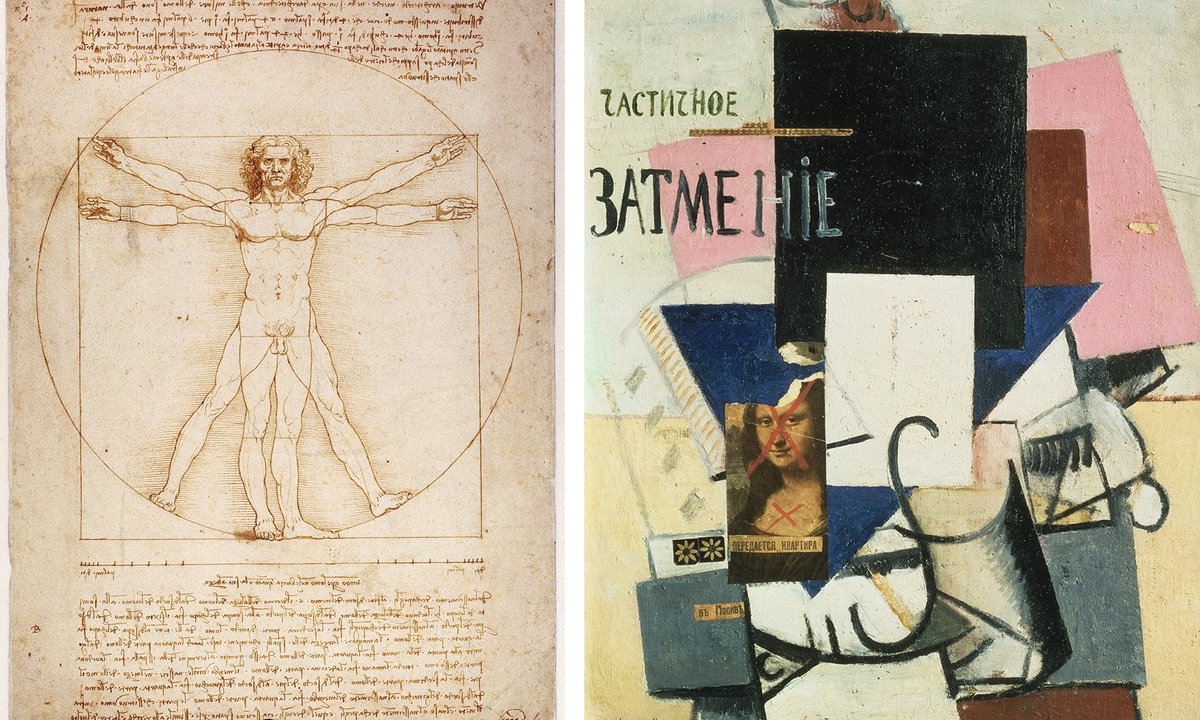
Stephen J. Campbell, a professor of art history at Johns Hopkins University, has published a new book titled *Leonardo da Vinci: An Untraceable Life*, which he frames as an "anti-biography." The book aims to dismantle the mythology surrounding Leonardo da Vinci, arguing that the fragmentary archival record has led to speculative and often outlandish theories that portray him as a solitary genius ahead of his time. Campbell repositions Leonardo within the artistic and intellectual context of late 15th- and early 16th-century Europe, critiquing how media, the art market, and popular culture have commercialized his legacy.

Before We Knew Better or We Should All Know Better

The article reviews "Before We Knew Better," a group exhibition at Elise Seigenthaler Gallery featuring artists Sarah Bedford, Day Brièrre, Josiah Ellner, and Léa LeFloc'h. The critic reflects on the show's thematic framing around narrative, folklore, and personal mythology, while expressing frustration with its open-endedness and lack of clear intent. Specific works are discussed, including Ellner's psychedelic unicorn paintings, LeFloc'h's enigmatic works on paper, Bedford's nocturnal flowers, and Brièrre's intricate ceramics, though the critic notes the installation does not always serve the pieces well.