filter_list Showing 54 results for "Invisible" close Clear
search
dashboard All 54 museum exhibitions 41article news 3article culture 3candle obituary 2person people 2article local 2rate_review review 1
date_range Range Today This Week This Month All
Subscribe

Venice Biennale 2026 Highlights: Arsenale & Giardini

ArtReview editors highlight the must-see national pavilions at the 61st Venice Biennale, running from 9 May to 22 November 2026. Notable presentations include Austria's Florentina Holzinger turning her pavilion into a toilet and sewage-treatment plant with naked performers, and Germany's pavilion featuring works by Sung Tieu and the late Henrike Naumann, who died in February 2026, exploring East German memory and conceptual minimalism.

Frieze New York Is an Assembly-Line Salad

At Frieze New York, curator Lucien Zayan searches for artworks exploring the relationship between food and art, finding a piece by Aki Goto at Europa gallery that reflects on sugar, colonization, and cavities. The fair features works like David Lamelas's "To Pour Milk into a Glass" (1972) from Dia Art Foundation and Mungo Thomson's "Snowman" (2023) at Karma, while a performance by Kite (Oglála Lakȟóta) at the Counterpublic triennial booth offers a reprieve from the monotonous fair experience.

Accumulations: A Conversation

On March 16, 2026, e-flux Screening Room presented “Viscosities,” a program of moving-image works by artist Lucy Beech, followed by a conversation between Beech, Lukas Brasiskis, and the audience. The discussion, edited for publication, explores Beech's concepts of accumulation and viscosity, drawing from Trisha Brown's 1971 performance *Accumulation* to describe how her work builds complex sequences through additive materials. Beech discusses her film *Flush*, which examines freemartin cows studied by eugenics-linked scientists, and its connection to endocrinology and IVF. She also addresses her reuse of materials, collaboration with James Richards on *A Map of the Pit*, and her film *Out of Body*, which uses imaging technologies to trace hidden industrial and biological flows, including urine-derived hormones from the Dutch program Moeders voor Moeders.

How an Artist and Museum Conspired to Give a Delivery Worker What the Apps Won’t: PTO

Artist Fields Harrington, after witnessing a delivery worker get hit by a car in Brooklyn, began photographing the customized bikes of New York City's delivery workers, capturing their gloves, reflective tape, and cultural markers. His series is now featured in MoMA PS1's "Greater New York" exhibition. In a direct act of reciprocity, Harrington convinced the museum to rent a delivery worker's bike and pay its owner, Gustavo Ajche, his usual wage of $21.44 per hour during museum hours. For one week each month, the bike is displayed, and every 21 minutes and 44 seconds, a notification ding sounds, referencing the wage Ajche and his group Los Deliveristas Unidos fought for.

Trevor Paglen’s New Book Says AI Is Rewriting What Images Do

Artist Trevor Paglen has published a new book, *How to See Like a Machine: Images After AI*, which argues that generative AI and computer vision are fundamentally changing how images function in culture. Drawing on his decade-long practice, Paglen contends that images are no longer merely representations for human interpretation but have become operational tools—'activations' that trigger automated responses and shape reality. He cites examples such as surveillance cameras at grocery stores, the Samsara navigation system in trucks, and the ImageNet database to illustrate how machine vision systems normalize surveillance in service of capital, a phenomenon he terms 'machine realism.'

Story of enslaved boy featured in 1748 Joshua Reynolds portrait emerges in new study

A research project by the National Trust, the National Gallery in London, and Royal Museums Greenwich has uncovered new details about the identity of an enslaved boy known only as “Jersey,” who appears in a 1748 portrait by Sir Joshua Reynolds. The painting, which hangs at Saltram in Devon, depicts Jersey with his enslaver, naval officer and MP Paul Henry Ourry. Through admiralty records, muster books, and baptismal certificates, researchers identified the boy as “Boston Jersey,” later baptised as George Walker, and found evidence of his naval service and possible path to freedom.

Concrete sun tunnels and shimmering pools of water: the monumental land art of Nancy Holt

Nancy Holt (1938-2014), a pioneering land artist known for her monumental work *Sun Tunnels* (1976) in the Utah desert, is the subject of a new exhibition at the Goodwood Art Foundation in Sussex. Titled *MOONSUNSTAR EARTHSKYWATER*, the show is the first UK retrospective to bring together Holt's photographic works, films, poetry, indoor installations, and outdoor pieces, including *Hydra's Head*, a constellation-inspired installation of six circular pools in a chalk quarry. The exhibition highlights Holt's recurring motifs of circles and systems, tracing them from her early concrete poem to her large-scale cosmological works.

Valie Export, Avant-Garde Icon and Feminist Trailblazer, Dies at 85

Valie Export, the Austrian avant-garde artist known for her radical feminist performances, films, and sculptures, has died at age 85. Her gallery, Thaddaeus Ropac, announced her death, noting her groundbreaking work in the 1960s and 1970s introduced a new form of embodied feminism to Europe. Export, born Waltraud Lehner in Linz, Austria, changed her name in 1967 and became known for provocative works such as "Aktionshose: Genitalpanik" (1969) and "Tap and Touch Cinema" (1968–1971), which challenged voyeurism and the sexualization of women's bodies. She also co-founded the Austrian Filmmakers Cooperative in 1968 and was commissioned by the Austrian Broadcast Corporation for her film "Facing the Family" (1971).

New York Galleries: Openings and Closings (04/27-05/03)

Mapping the Invisible: Saudi Arabia’s A Necessary Fiction Unfolds in Venice

A new exhibition titled "A Necessary Fiction: Maps, Art, and Models of Our World" has opened in Venice, presented by the Saudi Ministry of Culture in tandem with the 61st International Art Exhibition of La Biennale di Venezia. Held at the Abbazia di San Gregorio from 6 May to 22 November 2026, the show is curated by Sara Almutlaq and Aurora Fonda, with associate curators Zaira Carrer and Amina Diab. It features historical maps and contemporary artworks by artists including Wael Shawky, Nasser Al Salem, Matilde Sambo, Monira Al Qadiri, Shilpa Gupta, Reena Saini Kallat, Manal AlDowayan, Nolan Oswald Dennis, Ibrahim Mahama, Trevor Paglen, Eva & Franco Mattes, Giorgio Andreotta Calò, and Yoko Ono, exploring cartography as an imaginative and ideological act rather than a neutral science.

Exhibition | EILEEN AGAR, 'Leaves of the World' at Andrew Kreps Gallery, 22 Cortlandt Alley, New York, United States

Andrew Kreps Gallery in New York is presenting 'Leaves of the World,' an exhibition of works by Eileen Agar (1899–1991) spanning seven decades of her career, from 1927 to 1980. The show highlights Agar's enduring engagement with collage and her unique blend of surrealism, cubism, and abstraction, featuring pieces such as 'Leaves of the World' (c. 1940) and 'Personnage' (1949). A parallel exhibition of Agar's work will open at Alison Jacques in London this June.

Maia Chao Performs the Museum

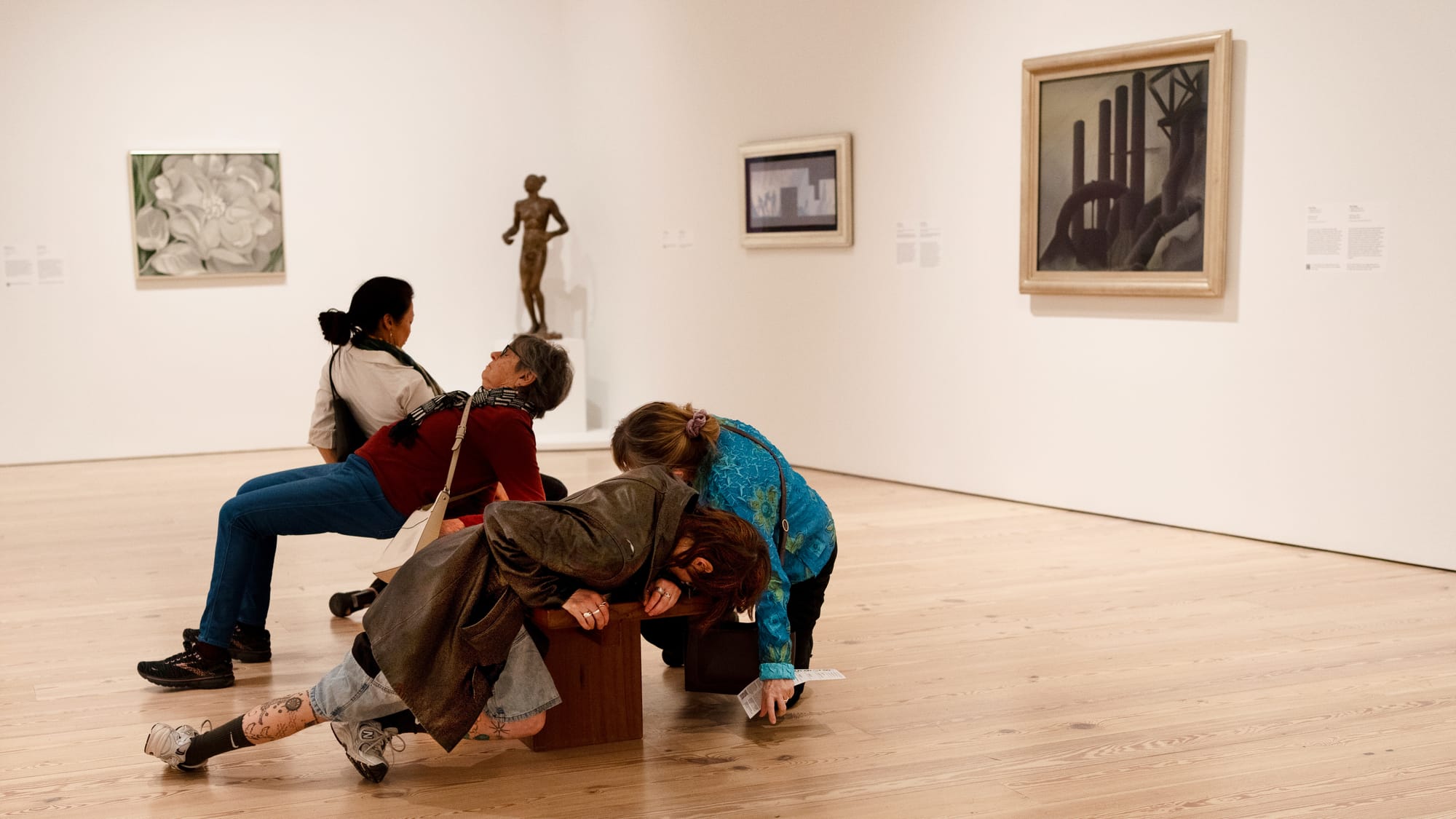
Artist Maia Chao will activate the seventh-floor galleries of the Whitney Museum of American Art with her performance "Being Moved" as part of the 2026 Whitney Biennial programming. The work explores the theatricality and choreography of a museum visit, examining the gap between the fantasy of profound encounter and the ambivalence of spectatorship. Chao, who studied cultural anthropology at Brown University and grew up with artist parents in Providence, Rhode Island, approaches the museum as a structure that quietly trains behavior and participation. Her earlier projects include "My Business (Cards)" (2017), which invokes Adrian Piper's work, and "Look at Art, Get Paid" (2015–20), which paid non-museum-goers to serve as guest critics.

Artists, Read the Fine Print

Artist Damien Davis writes a critical piece on how so-called 'standard' contracts in the art world systematically undermine artists' power, citing long consignment periods, moral rights waivers, and opaque terms that favor institutions. Separately, the Venice Biennale has scrapped its traditional Golden Lion awards after the awards jury resigned; instead, ticket holders will vote on 'Visitor Lions,' with results announced in November, and notably Israel and Russia remain eligible despite the jury's earlier ban. Other news includes damage to a 1,000-year-old Native American archaeological site by construction crews building President Trump's border wall.

The invisible worlds of Hilma af Klint, pioneer of abstraction, finally revealed at the Grand Palais

Les mondes invisibles d’Hilma af Klint, pionnière de l’abstraction, enfin révélés au Grand Palais

The article reveals the long-overlooked story of Hilma af Klint (1862–1944), the Swedish artist who created abstract paintings years before Kandinsky, Mondrian, and Malevich, yet kept her work secret until 20 years after her death. Her monumental output—1,600 abstract paintings and 124 notebooks—was first publicly shown in 1986 at the Los Angeles exhibition 'The Spiritual in Art, Abstract Painting, 1890–1985'. A 2019 retrospective at the Guggenheim Museum in New York drew 600,000 visitors, a museum record. Now, the Grand Palais in Paris presents the first-ever French exhibition of her work, focusing on her 'Paintings for the Temple' cycle (1906–1915), a series of 193 works that synthesize her spiritual quest.

Au boulot ! 10 œuvres qui célèbrent le travail

Beaux Arts Magazine presents a feature on ten artworks that celebrate labor, from ancient Egyptian frescoes to modern depictions of workers. The article highlights pieces such as Pieter Brueghel the Elder's "The Harvesters" (1565), Diego Velázquez's "The Spinners" (c. 1657), and Johannes Vermeer's "The Milkmaid" (c. 1660), examining how artists have elevated peasant, artisan, and domestic work from background detail to central subject. The feature coincides with the Musée d'Orsay's nationwide initiative "100 œuvres qui racontent le travail" (100 Works That Tell the Story of Work), which explores the history and representation of labor in art.

Artist Valie Export, Who Saw Right Through the Male Gaze, Dies at 85

Austrian artist Valie Export, a pioneering feminist performance and media artist, died on May 14, three days before her 86th birthday. Her death was confirmed by Thaddaeus Ropac Gallery. Export, born Waltraud Lehner in 1940, rejected traditional domestic roles and adopted her iconic all-uppercase name from a cigarette brand. She created guerrilla-style performances and films that directly confronted the male gaze and patriarchal society, often using her own body as a medium. Key works include “Genital Panic” (1968), in which she walked through a Munich cinema in crotchless pants, and “Tapp und Tastkino (Tap and Touch Cinema)” (1968), where she invited strangers to touch her bare breasts through a stage strapped to her chest.

Hito Steyerl “Mechanical Kurds” at Villa Arson, Nice

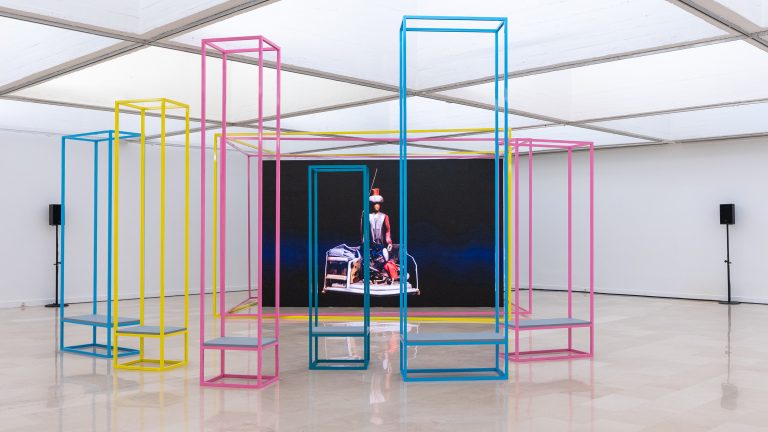
From February 20 to May 31, 2026, Villa Arson art center in Nice presents "Mechanical Kurds," a video installation by German artist Hito Steyerl. The work blends fiction, documentary, and critical speculation to examine invisible micro-labor chains, the geopolitics of images, and the delegation mechanisms behind so-called autonomous technologies.

Aileen Murphy Sleeps on the Ceiling

Aileen Murphy's third exhibition at Deborah Schamoni in Munich, titled "Sleeps on the Ceiling," presents five new paintings dominated by rosé and pink tones. The works revolve around a table-like motif, featuring animals, disembodied limbs, and surreal details such as a white cat with red eyes and a yellow snake. Murphy, who completed her studies in 2018, blends abstract gestures with detailed figuration, creating scenes that are both playful and uncanny. The exhibition's title is borrowed from Elizabeth Bishop's poem "Sleeping on the Ceiling" (1946), reflecting a dissolution of domestic interior, urban monument, and psychological landscape.

Fotografia Europea returns to Reggio Emilia. Program, appointments, hundreds of widespread exhibitions

A Reggio Emilia torna la grande rassegna Fotografia Europea. Programma, appuntamenti, centinaia di mostre diffuse

Fotografia Europea, the major photography festival in Reggio Emilia, returns for its 21st edition from April 30 to June 14, 2026, under the theme "Fantasmi del quotidiano" (Ghosts of the Everyday). The official circuit features twenty exhibitions across historic venues such as Chiostri di San Pietro, Palazzo da Mosto, and Palazzo dei Musei, as well as modern spaces like Spazio Gerra and Collezione Maramotti. Highlights include works by Felipe Romero Beltrán (winner of the KBr Photo Award 2025), Mohamed Hassan, Salvatore Vitale, Marine Lanier, Ola Rindal, Tania Franco Klein, Giulia Vanelli, Frédéric D. Oberland, and Simona Ghizzoni, with curatorial contributions from Tim Clark and Luce Lebart. Over three hundred off-circuit exhibitions will also be held throughout the city.

Paul Klee’s ‘Angelus Novus’ Joins Show at Jewish Museum in New York

Paul Klee's iconic watercolor 'Angelus Novus' (1920) has been added to the exhibition "Paul Klee: The Visible and the Invisible" at the Jewish Museum in New York, after being delayed due to wartime complications. The work, which was famously owned by philosopher Walter Benjamin and inspired his concept of the angel of history, joins over 70 other works in the survey of Klee's career.

Staying Curious: Isabelle de Caters on 20 Years of Gallery Isabelle

Gallery Isabelle, founded by Isabelle de Caters in Dubai's Al Quoz district, celebrated its 20th anniversary in April 2026 with a 20-day exhibition titled "Move, Pause, Return." The show unveiled one work per day before bringing all 20 artists together for a final gathering. De Caters, who opened her first space B21 Gallery in 2006 when contemporary art in the Gulf was seen as a passing fad, reflects on two decades of building a gallery through instinct, long-term artist relationships, and organic growth rather than commercial dictates.

Enter the unsettled space of Asian American abstraction

The Milton Resnick and Pat Passlof Foundation in New York is hosting the exhibition "How Asian Is It?", featuring 12 pioneering East Asian American abstractionists born between 1928 and 1955. Curated by Lilly Wei, the show includes works by Barbara Takenaga, Emily Cheng, Charles Yuen, and David Diao, among others. These artists navigated an art world where downplaying their Asian identities often felt necessary for survival, especially after the 1965 Immigration and Nationality Act reshaped US immigration policy. The exhibition explores how their abstraction—marked by attention to interval, pause, and what remains unsaid—reflects a disciplined negotiation with space rather than a shared style or manifesto.

Seen a ghost? The eeriest images from Fotografia Europea – in pictures

Fotografia Europea, the international photography festival in Reggio Emilia, Italy, has opened with 20 exhibitions and related events under the theme 'ghosts of the moment'. The festival features works by artists including Tania Franco Klein, Giulia Vanelli, Felipe Romero Beltrán, and Salvatore Vitale, exploring themes of memory, migration, identity, and the unseen forces shaping contemporary life. The festival runs until 14 June 2026.

Flesh and Bones: The Exhibition Turning the Art of Anatomy Into a Cultural Conversation

The exhibition "Flesh and Bones: The Art of Anatomy" at Singapore's ArtScience Museum explores the history of anatomical representation as a cultural construct rather than a universal scientific truth. It juxtaposes Western anatomical atlases from the Renaissance with Chinese meridian (jingluo) systems, featuring works by artist Chiharu Shiota and other historical pieces that reveal how different cultures have visualized the human body through both scientific and spiritual lenses.

Beyond the Eiffel Tower: Photo Exhibition Reveals Paris Unseen

The Sungkok Art Museum in Seoul is hosting a photography exhibition titled 'Paris Unseen' or 'Paris, Invisible Paris'. The show features works by 51 artists, including three Koreans, and was co-curated with Alain Sayag, former head of photography at the Centre Pompidou. It aims to move beyond the city's iconic tourist imagery to present lesser-known perspectives of Paris, coinciding with the 140th anniversary of Korea-France diplomatic relations.

Al Padiglione del Giappone della Biennale di Venezia vi affidano una bambola da accudire

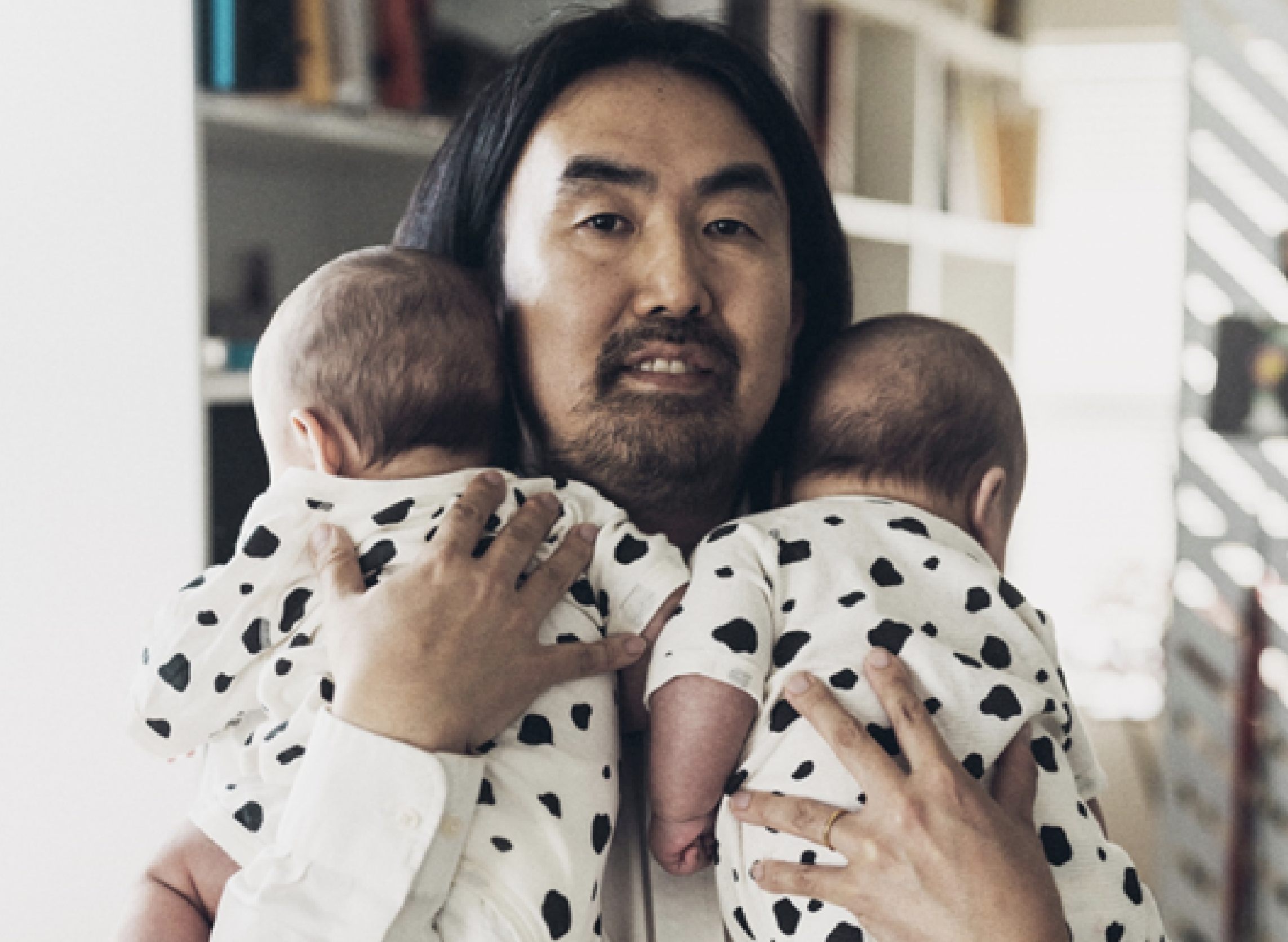
The Japan Pavilion at the Venice Art Biennale 2026 features an immersive, interactive exhibition titled "Grass Babies, Moon Babies" by Japanese-American artist Ei Arakawa-Nash. Visitors are invited to care for one of 200 dolls, each with a QR code that provides a "diaper poem" linked to the doll's symbolic birth date—reflecting the artist's personal experience of becoming a father in 2024 and broader social dynamics in Japan. The pavilion, curated by Lisa Horikawa and Mizuki Takahashi, evolves over the seven months of the Biennale as a platform for shared care and participation.

Between everyday and exceptional

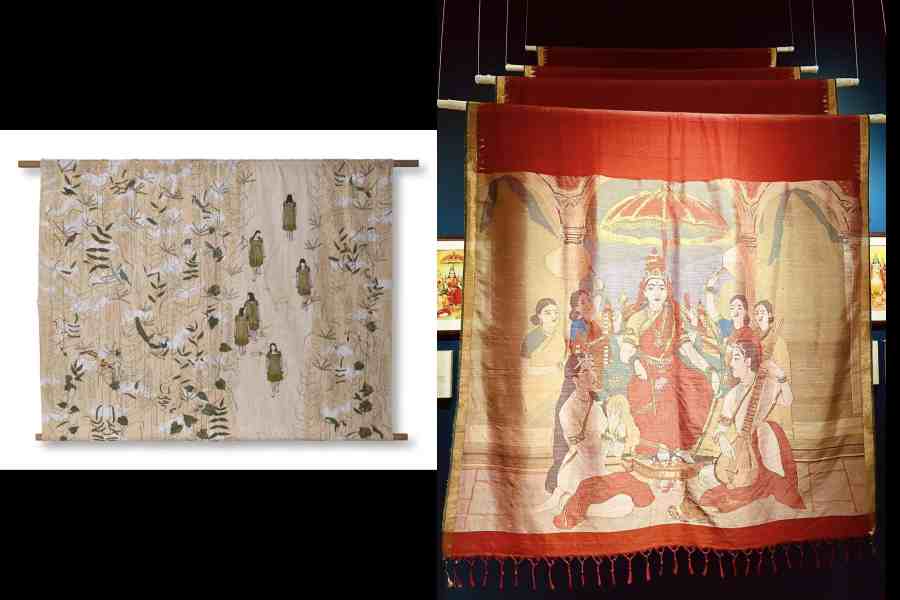
Emami Art in Kolkata presents "Nothing Twice," an exhibition featuring nine young women artists that explores the fragility of ordinary life through domestic, tactile, and overlooked subjects. Curated by Ushmita Sahu, the show includes works in painting, textiles, photography, ceramics, drawing, and video, with artists like Moumita Basak, Shilpi Sharma, and Riti Sengupta focusing on material memory and feminist art histories. Concurrently, "Khadi: A Canvas" at TRI Art & Culture showcases 19 khadi sarees woven in the jamdani technique by tribal women from Srikakulam, connecting Raja Ravi Varma's visual culture with Gandhi's politics of self-reliance, curated by Lavina Baldota with textile artist Gaurang Shah. Additionally, "Digital Atma (Spirits) X The Wandering Souls" at A.M (Art Multi-disciplines) examines digital life and technology's impact on identity and intimacy through poetry, sound, image, and performance.

Aux Catacombes, une visite réinventée

After five months of closure, the Catacombs of Paris have reopened with a major modernization project. The site now features a new immersive audio guide narrated by the voice of its historical founder, Louis Étienne Héricart de Thury, along with improved lighting that highlights previously invisible details and a revamped climate-control system to better preserve the bones. The €5.5 million renovation, led by Paris Musées and funded by the City of Paris, also included structural repairs to the bone stacks using dry-stone techniques instead of cement.

What We Throw Away Does Not Disappear

Was wir wegwerfen, verschwindet nicht

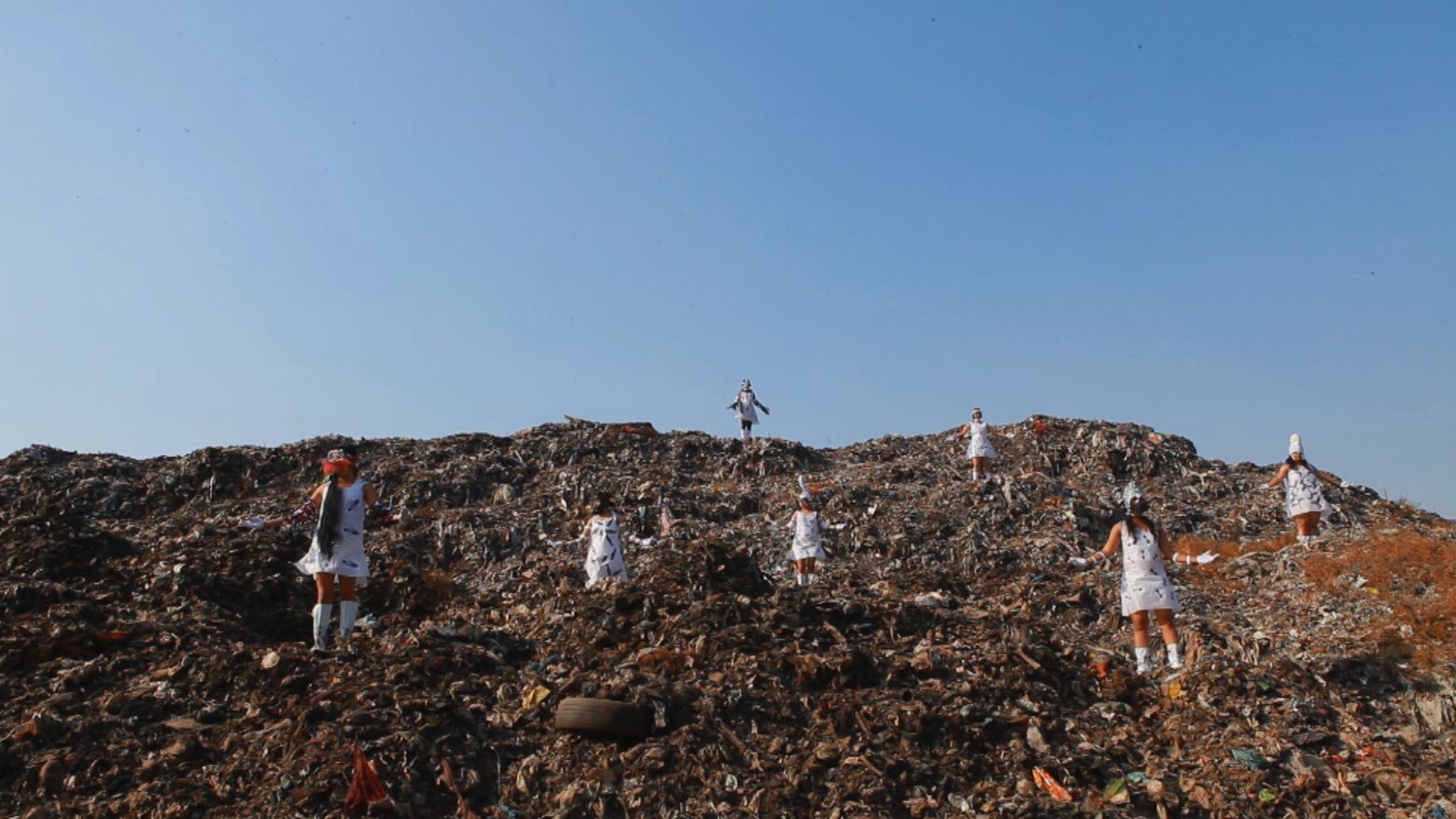
The Museum Ostwall at the Dortmunder U in Dortmund has opened a new exhibition titled "Müll – die globalen Wege des Abfalls" ("Waste – The Global Paths of Garbage"), curated by Christina Danick and Michael Griff. Featuring around 50 international artworks from the 20th and 21st centuries, including two newly commissioned pieces, the show uses art to explore waste as material, motif, and aesthetic strategy. Key works include Kader Attia's "Los de Arriba y Los de Abajo," which addresses power imbalances through the lens of garbage in Hebron, and historical pieces by César Baldaccini, Arman, and HA Schult. The exhibition also highlights contemporary issues such as e-waste, global waste trafficking, and the environmental impact of industrial nations on the Global South.

The Ukrainian Pavilion’s Deer Seen Around the World

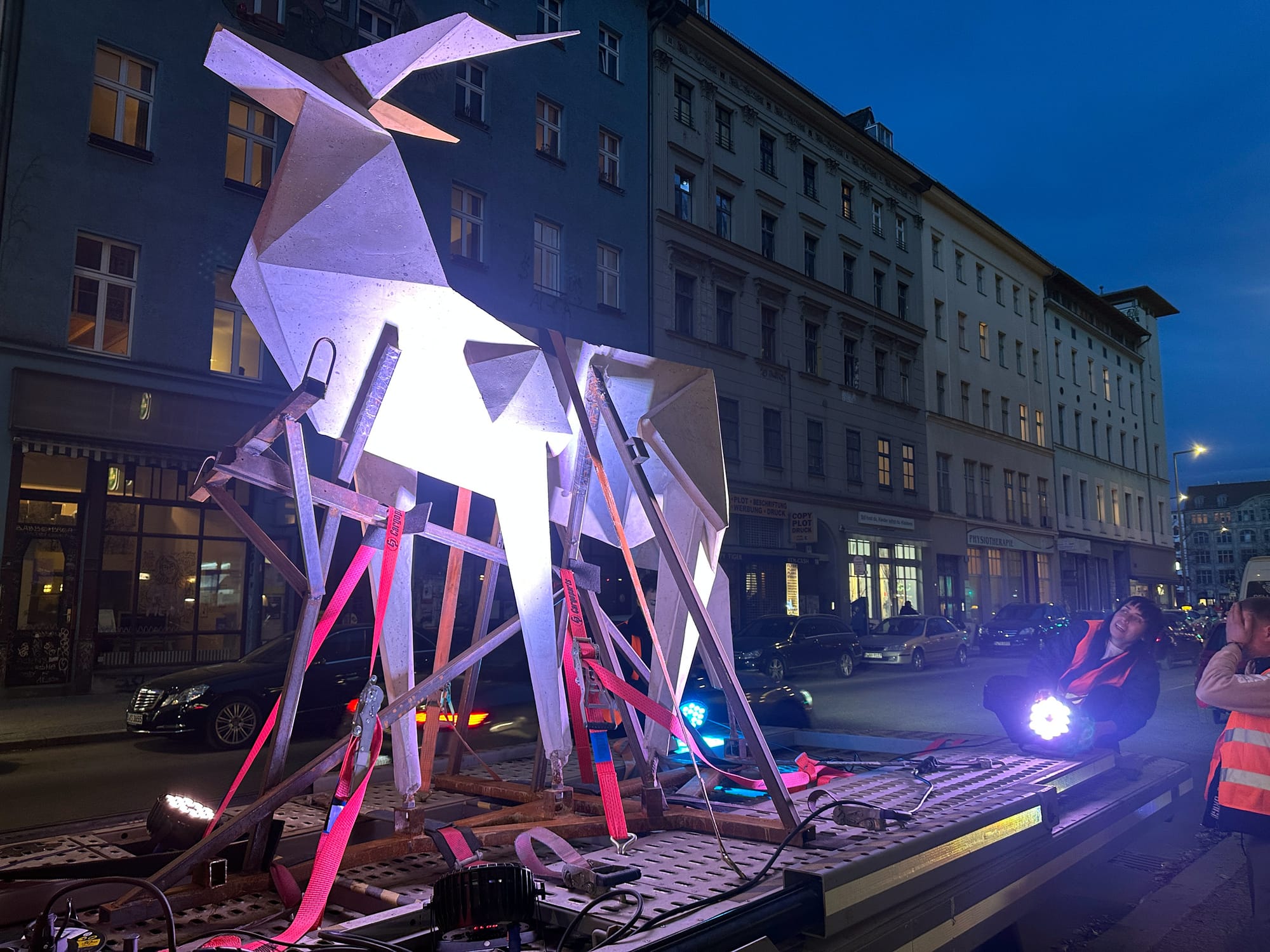
Zhanna Kadyrova's concrete sculpture "The Origami Deer" (2019) is prominently displayed at the entrance to the Giardini during the 61st Venice Biennale, part of her project "Security Guarantees" in the Ukrainian Pavilion. Originally installed in Pokrovsk, eastern Ukraine, the work was removed in 2024 as Russian forces advanced, then traveled through Vienna, Warsaw, Prague, Berlin, and Paris before reaching Venice—a journey mirroring the displacement of millions of Ukrainians. The sculpture, shaped like a deer and evoking folded paper, references the 1994 Budapest Memorandum, in which Russia, the UK, and US guaranteed Ukraine's security in exchange for its nuclear disarmament—guarantees that proved worthless after Russia's invasions.