filter_list Showing 98 results for "RIOT" close Clear
search
dashboard All 98 article news 46museum exhibitions 31article culture 7article local 5article policy 3candle obituary 2rate_review review 2trending_up market 1person people 1
date_range Range Today This Week This Month All
Subscribe

14 Must-See Museum Shows in New York This Spring

New York museums are launching a significant slate of spring exhibitions, featuring major retrospectives and thematic surveys. Highlights include "Noguchi's New York" at the Noguchi Museum, exploring the sculptor's unrealized urban projects; "Raphael: Sublime Poetry" at the Metropolitan Museum of Art, a comprehensive look at the Renaissance master; and "Gothic by Design: The Dawn of Architectural Draftsmanship," also at the Met, focusing on medieval architectural drawings.
Mom, I'm Gonna Be an Artist!

Hyperallergic's Saturday newsletter, edited by Valentina Di Liscia, rounds up a week of art-world activity marked by protests and resistance. Staff Writer Isa Farfan asked 15 artists to share advice from their mothers for Mother's Day, featuring responses from Pat Oleszko, whose work is in the Whitney Biennial. The newsletter also covers editor-in-chief Hakim Bishara's report on a historic strike for Palestine and workers' rights at the Venice Biennale, where dozens of national pavilions shut down, and Editor-at-Large Hrag Vartanian's review of the central exhibition "In Minor Keys." Additional stories include Damien Davis on artists and consignment agreements, Matt Stromberg on the LA Art Book Fair, a protest against Jeff Bezos at the Met Gala, MoMA PS1's upcoming Teresa Margolles survey, and a picket at the American Folk Art Museum.

The 2026 Venice Biennale Is Quintessential Biennial Art

The 61st Venice Biennale, titled "In Minor Keys" and curated by the late Swiss-Cameroonian curator Koyo Kouoh, opened in 2026. The main exhibition at the Arsenale and Giardini features works by artists such as Éric Baudelaire, Maria Magdalena Campos Pons, Mohammed Z. Rahman, Sohrab Hura, and Rose Salane, among others. The exhibition centers on themes of mourning, colonial history, slavery, and healing, with works like Baudelaire's video installation linking the flower trade to the transatlantic slave trade, and a tribute section honoring artists Beverly Buchanan and Issa Samb.

New York institutions offer nuanced and inclusive views of US’s 250th birthday

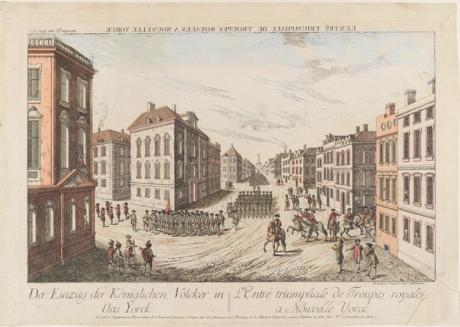
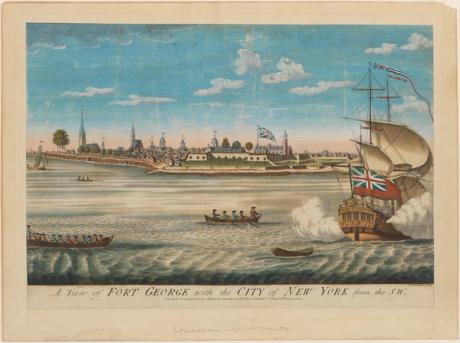
New York institutions are presenting nuanced exhibitions for the US's 250th birthday, offering both patriotic and critical perspectives on the American Revolution. The Grey Art Museum at NYU displays one of the 26 surviving Dunlap broadsides of the Declaration of Independence alongside over 100 contextual documents in "The Declaration of Independence: Long Trail to Liberty," while the Museum of the City of New York's "The Occupied City" immerses visitors in the British occupation of New York, featuring interactive elements like toppling a digital effigy of King George III.

Naked jetskiers, giant bells and a celebrity seagull! Venice Biennale’s wildest moments – in pictures

The Guardian presents a photo essay capturing the most eccentric and memorable moments from the 61st Venice Biennale, running until 22 November 2026. Photographer David Levene documents installations including a concrete 'Origami Deer' evacuated from war-torn Pokrovsk, Ukraine, by artist Zhanna Kadyrova; a seagull that became a minor celebrity after nesting outside the Polish pavilion; and the Holy See pavilion's immersive sound installation curated by Hans Ulrich Obrist and Ben Vickers. Other highlights include the Egyptian pavilion's touch-and-smell 'Silence Pavilion' and a Polish pavilion film featuring deaf and hearing singers.

‘Harlem has always been evolving’: inside the Studio Museum’s $160m new home

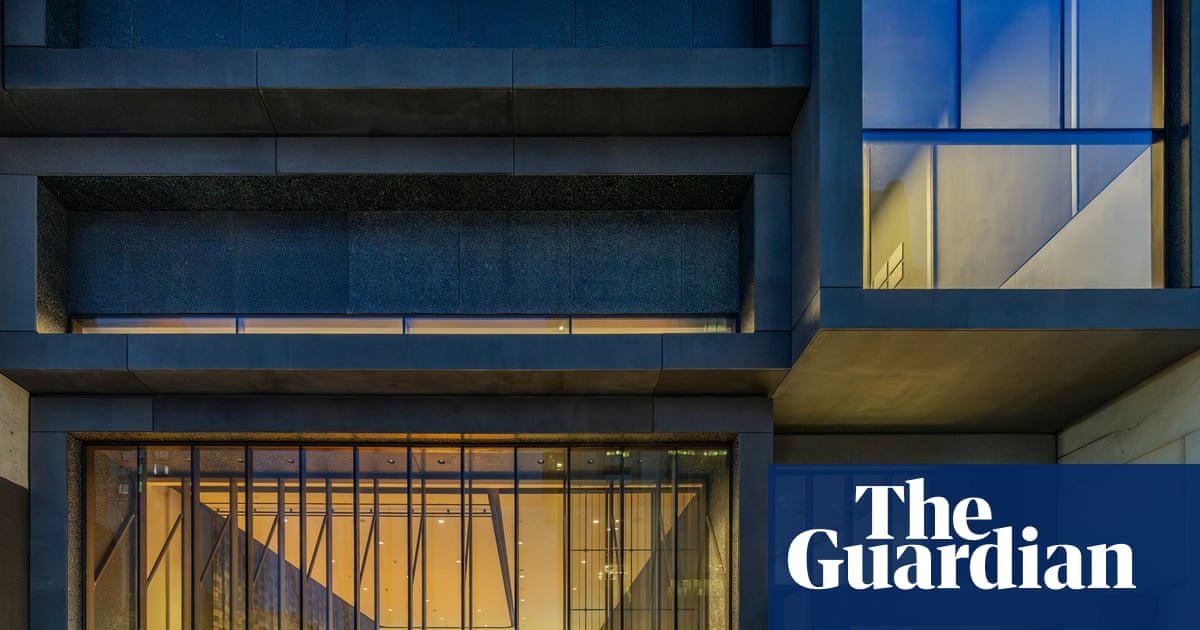
The Studio Museum in Harlem is set to inaugurate its new $160 million, purpose-built home on Manhattan’s 125th Street. Designed by Adjaye Associates in collaboration with Cooper Robertson, the 82,000-square-foot facility nearly doubles the museum's previous exhibition space and replaces a repurposed 1914 bank building that lacked essential infrastructure like loading docks and large elevators. This milestone marks the first time in the institution's history that it will operate out of a structure specifically designed to support its mission of championing artists of African descent.

A Venice Biennale in Protest

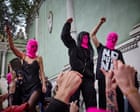
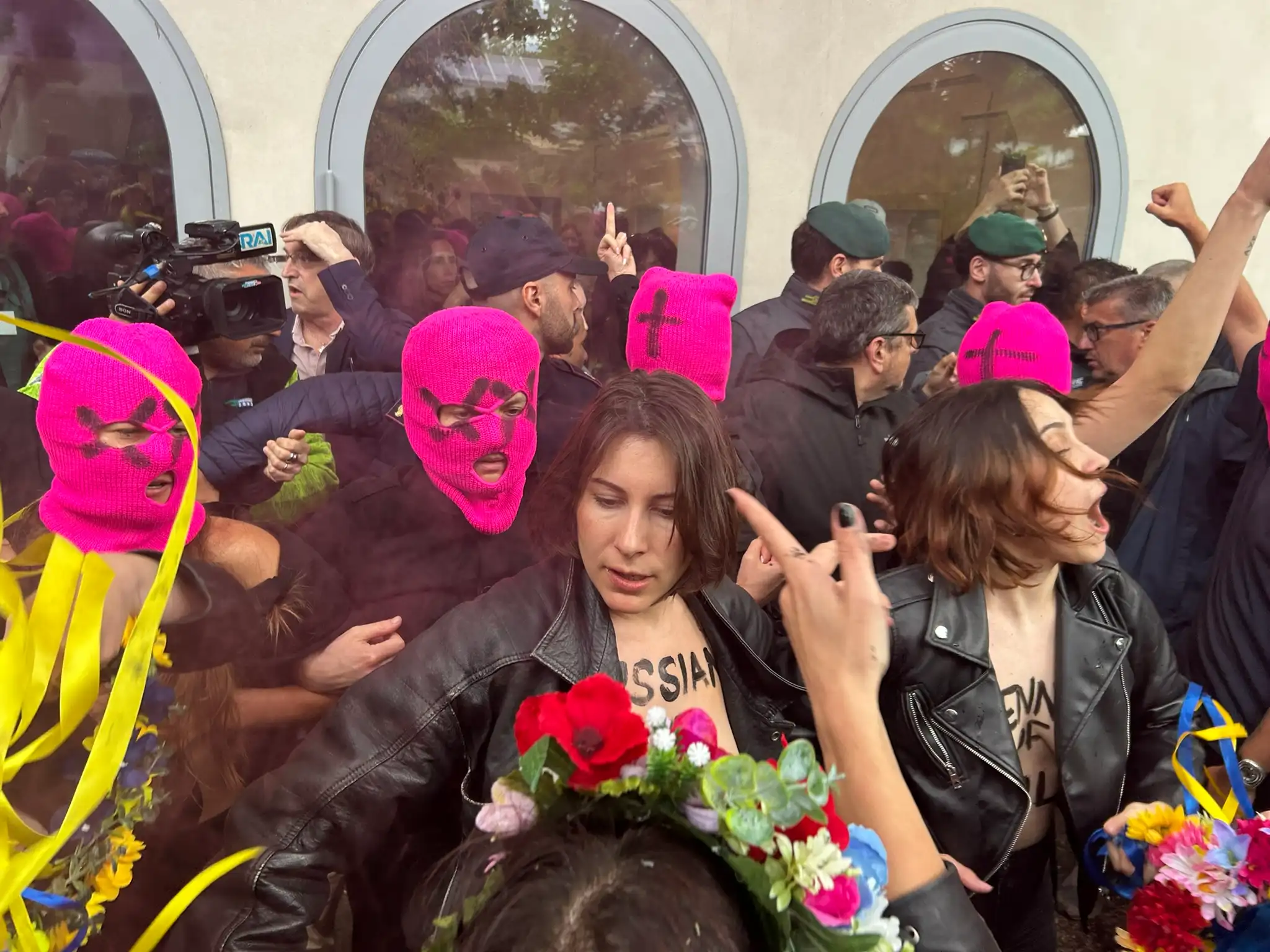
Hundreds of protesters, led by the Art Not Genocide Alliance, blocked the entrance to the Israeli pavilion at the Venice Biennale on May 6, waving Palestinian flags and accusing Israel of operating a "genocide pavilion." Activists from Pussy Riot and FEMEN also staged a pink smoke-filled protest against Russia's participation. Meanwhile, the Biennale jury suddenly resigned, and Israeli pavilion artist Belu-Simion Fainaru made legal threats against the Biennale alleging antisemitism and discrimination. The article also covers exhibitions in Upstate New York, a tribute to Beat Generation icon Jack Kerouac, and obituaries for performance art champion Steven Durland, artist Georg Baselitz, cartoonist Nicole Hollander, and arts patron Doris Fisher.

The week around the world in 20 pictures

This photo essay from The Guardian presents 20 images capturing global events from the past week, including a protest by Femen and Pussy Riot activists against Russia's participation at the Venice Biennale art show, Israeli strikes in Gaza, the hantavirus outbreak, and Emma Chamberlain at the Met Gala. Other images document the war in Ukraine, with scenes of Russian military rehearsals in Moscow, damaged monuments, and drone strike aftermath, as well as a political protest in Nashville where Democratic state representative Justin J Pearson was removed from the house gallery during a redistricting protest.

‘The content, material and form support each other’: Sandy Rodriguez on her Hispanic Society Museum show

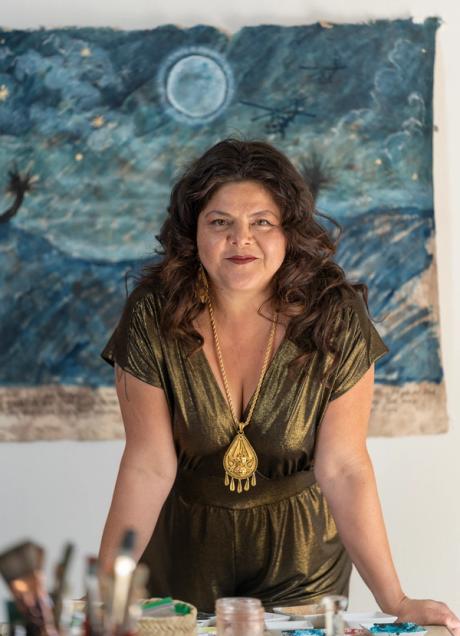
Sandy Rodriguez presents her new exhibition, *Tierra Insurgente*, at the Hispanic Society Museum and Library in Washington Heights, featuring her hand-painted maps on amate paper alongside historic codices and globes from the institution's collection. Her works blend Mesoamerican and colonial-era imagery with contemporary symbols of state violence and resistance, such as riot police, calavera-style surveillance helicopters, and references to the 2020 racial-justice protests in New Orleans. Rodriguez uses natural pigments like cochineal and hand-processed minerals on bark paper, a material once outlawed by Spanish colonizers, to create a dialogue between past and present.

Exhibitions marking 250th anniversary of the US open in New York

Several New York museums have opened exhibitions marking the 250th anniversary of the United States, which falls on 4 July 2026. The New-York Historical Society presents "Old Masters, New Amsterdam," drawn from the Leiden Collection, focusing on the lives of Dutch colonists. The Hispanic Society Museum & Library offers "Goya and the Age of Revolution," linking the American Revolution to European upheavals and Goya's depictions of war. The Metropolitan Museum of Art has installed "Revolution!" in its American Wing, reexamining the nation's founding through art. A rare copy of the Declaration of Independence handwritten by Thomas Jefferson will also be on view at the New York Public Library.

More than 70 Venice Biennale artists withdraw from awards

More than 70 artists participating in the 2025 Venice Biennale have withdrawn from consideration for the Golden Lion awards, which this year will be decided by public vote. The artists, including Walid Raad, Laurie Anderson, and Yto Barrada, signed a statement published on e-flux on May 9, withdrawing in solidarity with the entire prize jury that resigned last month over a dispute regarding the participation of Israel and Russia. The Biennale management replaced the traditional jury-selected awards with a new "Visitor Lion" system where ticket holders can vote, but the Biennale has acknowledged that if any of the withdrawing artists win, they will not collect the award.

Ary Scheffer en 2 minutes

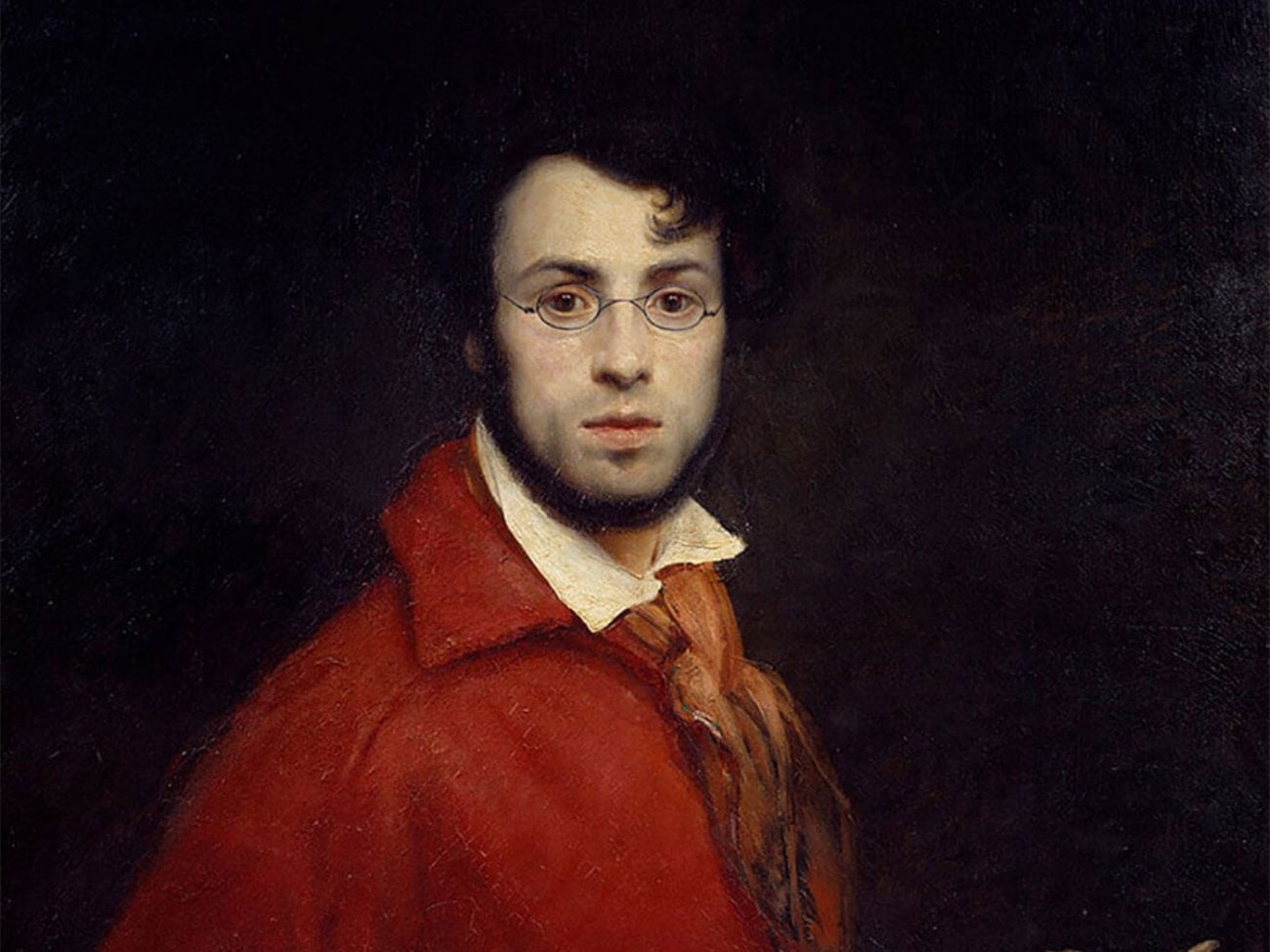
Ary Scheffer (1795–1858) was a Dutch-born Romantic painter who became a central figure in Parisian artistic and cultural life during the July Monarchy. He was the official portraitist of the Orléans family and created deeply melancholic, spiritual works inspired by Dante, Goethe, and the Gospels. His studio at 16 rue Chaptal, in the Nouvelle Athènes district, hosted legendary Friday gatherings attended by Chopin, Liszt, George Sand, and Dickens, and now houses the Musée de la Vie romantique. Key works include *Le Dévouement patriotique des six Bourgeois de Calais* (1819) and *Les Femmes souliotes* (1827), both acquired by the French state.

Delegitimation, Denunciation and Insecurity

"Delegitimation, Denunziation und Verunsicherung"

German cultural critic Georg Seeßlen warns in his taz column of a right-wing 'war of conquest' targeting liberal cultural institutions through systematic delegitimation, denunciation, and intimidation. Meanwhile, a new Berlin artist study reveals that the average annual income from artistic work is just €6,000, highlighting a structural dysfunction in the art system. Additionally, Jonathan Meese's play 'Alaska Kid' has been canceled at the Volksbühne Berlin following the death of his mother Brigitte Meese, who was his organizer, muse, and confidante.

Female nudity and art that stinks: key takeaways from Venice Biennale 2026

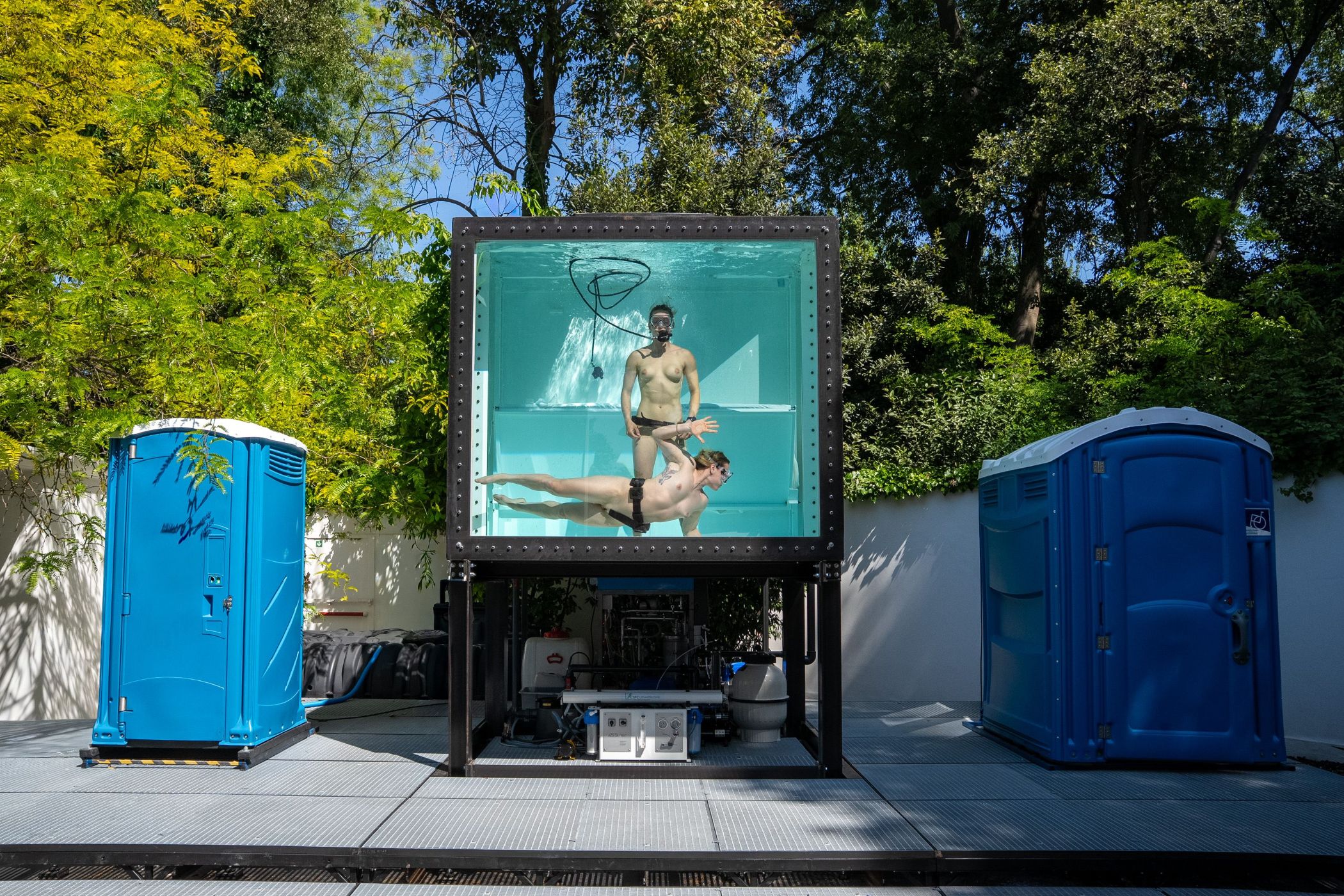
The 2026 Venice Biennale opened with 99 participating countries, including first-timers Somalia and Qatar, under the shadow of curator Koyo Kouoh's death. Her planned theme of "enhancement" and the main show "In Minor Keys" were disrupted by political protests: Pussy Riot objected to Russia's inclusion, and a strike against Israel's participation forced several national pavilions (UK, Austria, France) to close. Key takeaways include pervasive female nudity across pavilions, debates over Russia's presence, criticism of the US pavilion's lackluster art, maritime themes dominating several shows, and the rise of olfactory art.

A Time of Transition

During the preview week of the 61st Venice Biennale, escalating protests targeted the national pavilions of Israel and Russia, with demonstrations by Pussy Riot, ANGA (Art Not Genocide Alliance), and Baltic pavilions. A major protest on May 8 drew over 3,000 people in solidarity with Palestine, and 27 national pavilions—including Austria, the Netherlands, France, and Japan—staged a strike, the first at the Biennale since 1968. The Golden Lion jury resigned after declaring they would not consider countries under ICC investigation (Israel and Russia), and the Biennale administration replaced the prize with a visitors' award, from which half the artists in the main exhibition have withdrawn.

We visited the 2026 Venice Art Biennale: the exhibitions and pavilions you shouldn’t miss

The 2026 Venice Art Biennale has opened across the Giardini, Arsenale, and venues throughout the city, with geopolitics, climate collapse, and national identities dominating the exhibitions. Notable pavilions include Austria's "Seaworld Venice" by Florentina Holzinger, the Czech and Slovak Pavilion's "Il Silenzio della Talpa" by Jakub Jansa and Selmeci Kocka Jusko, India's "Geographies of Distance: remembering home" featuring multiple artists, and the Taiwan Pavilion's "Screen Melancholy" by Li Yi-Fan. The Russian Pavilion has become a focal point of controversy, with guards and empty beer bottles outside, and the Pussy Riot collective staging a protest nearby.

25th Biennale of Sydney – Rememory

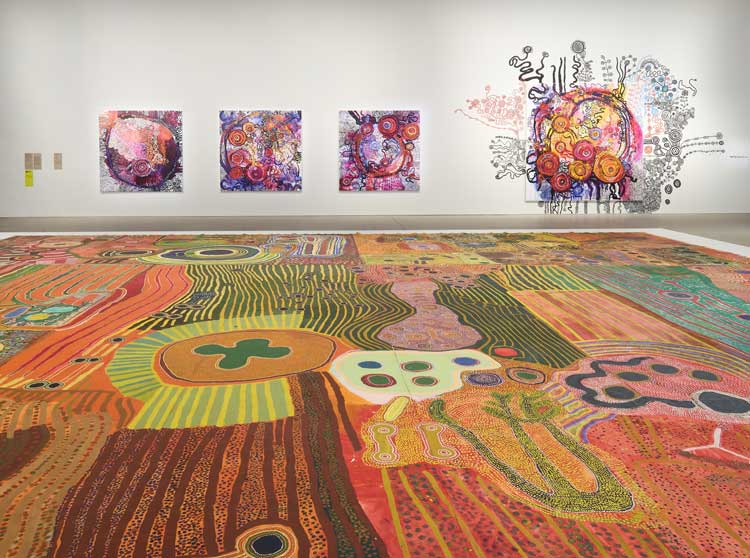
The 25th Biennale of Sydney, titled 'Rememory,' opened on March 14, 2026, across multiple venues including the Art Gallery of New South Wales, White Bay Power Station, and the Sydney Opera House. Artistic director Hoor Al Qasimi curated the event around the concept of 'rememory,' inspired by Toni Morrison's novel *Beloved*, featuring over 143 works by 83 artists and collectives from 37 countries. The biennale centers First Nations voices and diasporic communities, with standout pieces like the Ngurrara Artists' *Ngurrara Canvas II* (1997) and works by Yaritji Young. However, the event has faced controversy due to Al Qasimi's opposition to the war in Gaza, leading to criticism from donors and board members, as well as logistical disruptions from the Iran war affecting the curator and artists.

Pussy Riot Storms Russia Pavilion at Venice Biennale

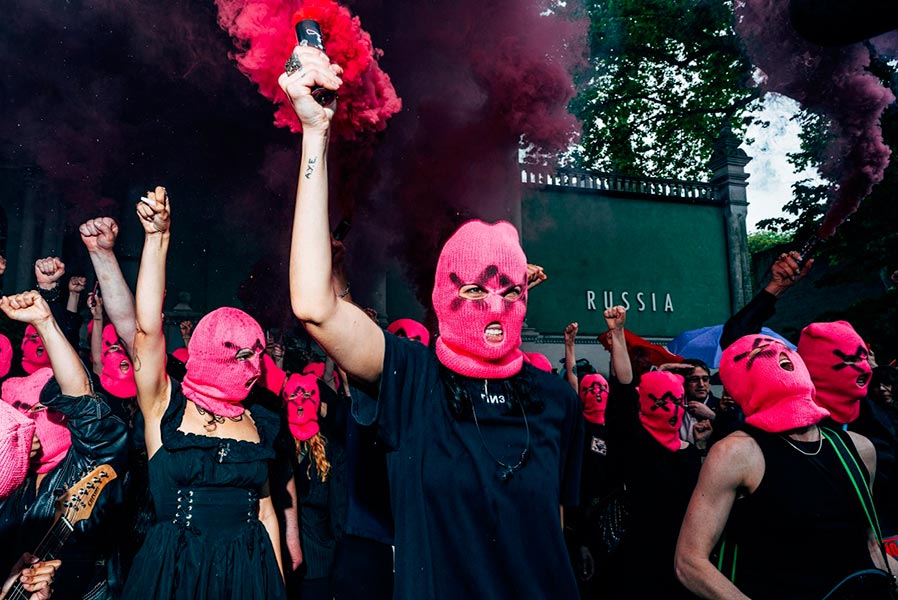
Pussy Riot staged a dramatic protest at the Russia Pavilion during the Venice Biennale, releasing pink smoke and waving Ukrainian flags while chanting slogans like 'Blood is Russia’s art.' Around 50 protesters, including members of Femen, occupied the area. Pussy Riot founder Nadya Tolokonnikova called for the pavilion to be closed and given to oppressed peoples, challenging Biennale president Pietrangelo Buttafuoco to meet her. The protest lasted about 20 minutes, with performers climbing the pavilion and exposing political slogans on their chests.

Pussy Riot and FEMEN Join Forces in Punk Protest in Venice: ‘Russia Kills! Biennale Exhibits!’

On Wednesday morning, Pussy Riot and FEMEN led a protest outside the Russian Pavilion at the 2026 Venice Biennale, chanting slogans like “Russia kills! Biennale exhibits!” and “Blood is Russia’s art!” Dozens of protesters, some in pink balaclavas and others bare-chested with floral crowns, gathered in the Giardini under light rain, carrying guitars and blasting punk rock and hip-hop. The action was organized by Nadya Tolokonnikova and other Pussy Riot members alongside FEMEN, a Ukrainian-founded women’s movement. They released pink, yellow, and blue smoke, and Tolokonnikova criticized the Biennale for allowing Russian participation while artists who oppose the war in Ukraine are imprisoned. She proposed an alternative exhibition, “Resistance Imprisoned,” currently on view in Strasbourg, featuring incarcerated artists.

"Du bist nun in die ewigen Jagdgründe der Kunst entschwunden"

This week's art news roundup covers several stories: Jonathan Meese publishes an obituary for his mother Brigitte Meese in Der Spiegel, describing her as a central figure in his life and work. Pussy Riot seeks to take over the Russian Pavilion at the Venice Biennale. The European Media Art Festival (EMAF) in Osnabrück faces controversy over antisemitism allegations linked to Palestinian-American filmmaker Basma al-Sharif, leading the city and state government to distance themselves from the festival. In the NZZ, Christian Wildhagen reports on conflicts over official political portraits, citing examples like Swiss councilor Martin Neukom rejecting paintings and Donald Trump criticizing his portrait. Art historian Horst Bredekamp pays tribute to Italian philosopher Federico Vercellone (1955–2026) in the FAZ, highlighting his theory of the 'self-activity of form.'

La Biennale de Venise s’ouvre dans un climat houleux

The 61st Venice Biennale opened amid intense controversy after its president, Pietrangelo Buttafuoco, announced the return of the Russian pavilion, which had been absent since the start of the Ukraine war. The European Commission suspended its €2 million subsidy for the 2028 edition, and the entire Biennale jury resigned on April 30. Buttafuoco later declared the Russian pavilion would remain closed, but protests erupted during the pre-opening days (May 6–8), drawing 28,000 professionals. Pussy Riot members, Femen activists, and the Free Nations League staged demonstrations, while the Israeli pavilion remained open despite a letter signed by nearly 200 artists calling for its exclusion.

Michelangelo and Rodin as an 'Artistic Couple'

Michel-Ange et Rodin en « couple artistique »

The Louvre Museum in Paris presents a major exhibition pairing Michelangelo and Auguste Rodin as an "artistic couple," curated by Chloé Ariot of the Musée Rodin and Marc Bormand of the Louvre. The show features over 200 works, including three marble sculptures by Michelangelo—the Slaves and a Christ on the Cross—alongside drawings, plaster casts, and works by Rodin such as the monumental Balzac. It also includes pieces by contemporaries and later artists like Joseph Beuys, Jana Sterbak, Giuseppe Penone, and Bruce Nauman to trace the sculptors' shared legacy.

A new director for the Smithsonian American Art Museum

Une nouvelle directrice pour le Smithsonian American Art Museum

Lynda Roscoe Hartigan, 75, has been appointed director of the Smithsonian American Art Museum (SAAM), succeeding Stephanie Stebich after a vacancy of nearly 17 months. Hartigan, who began her career at SAAM in the 1970s and rose to chief curator before leaving in 2003, most recently served as executive director of the Peabody Essex Museum, becoming its first woman to lead the institution. She will assume her new role on September 8.

An Art Historian’s Riotous Novel Melds Medieval Art with Monica Lewinsky

Julia Langbein's new novel *Dear Monica Lewinsky*, published by Doubleday, follows translator Jean Dornan as she revisits a traumatic relationship with a professor from her youth, set against the backdrop of the 1998 Monica Lewinsky scandal. The story interweaves medieval art, particularly the 13th-century *Golden Legend*, with Lewinsky's public shaming, as Jean prays to Lewinsky for guidance and is visited by a haloed version of her. Langbein, an art historian with a PhD from the University of Chicago, draws on her expertise to explore themes of humiliation, self-estrangement, and collective experience.

Artist Valie Export, Who Saw Right Through the Male Gaze, Dies at 85

Austrian artist Valie Export, a pioneering feminist performance and media artist, died on May 14, three days before her 86th birthday. Her death was confirmed by Thaddaeus Ropac Gallery. Export, born Waltraud Lehner in 1940, rejected traditional domestic roles and adopted her iconic all-uppercase name from a cigarette brand. She created guerrilla-style performances and films that directly confronted the male gaze and patriarchal society, often using her own body as a medium. Key works include “Genital Panic” (1968), in which she walked through a Munich cinema in crotchless pants, and “Tapp und Tastkino (Tap and Touch Cinema)” (1968), where she invited strangers to touch her bare breasts through a stage strapped to her chest.

At the Venice Biennale I saw anger at Russia and Israel – and its leadership pretending everything was fine | Charlotte Higgins

At the 2024 Venice Biennale, the Russian pavilion returned with festive performances and prosecco deliveries, drawing sharp criticism from observers who saw it as a propaganda effort to distract from Russia's war in Ukraine. Meanwhile, Ukraine's Kramatorsk was bombed, and protests erupted, including a Pussy Riot intervention. Biennale president Pietrangelo Buttafuoco defended Russia's and Israel's participation, rejecting preemptive bans despite open letters and appeals. European Commission investigated potential sanctions breaches, and culture ministers from Ukraine, Poland, Estonia, and Baltic states boycotted or condemned the biennale's stance, accusing it of yielding to the aggressor.

Welcome to Venice: the shows you won’t want to miss at the 61st Biennale

The 61st Venice Biennale, titled "In Minor Keys," opens with a keynote exhibition conceived by the late Koyo Kouoh and realized by her team after her sudden death in May 2025. The show spans the Central Pavilion in the Giardini and the Arsenale, featuring 110 artists and collectives. Highlights include Bracha L. Ettinger's installation at the Hotel Metropole, where she transforms a room where Sigmund Freud wrote part of *The Interpretation of Dreams* into a feminist 'borderspace,' and works by artists such as Arthur Jafa, Richard Prince, Issa Samb, Beverly Buchanan, and Daniel Lind-Ramos. The exhibition explores themes of history, colonialism, war, and environmental destruction, aiming for a 'sotto voce' tone that nonetheless delivers powerful, liberating statements.

Russian art today is blood. A tough interview with Pussy Riot

“L’arte russa oggi è il sangue”. Una dura intervista alle Pussy Riot

During the preview of the 2026 Venice Biennale, the Russian Pavilion became the site of a protest by Pussy Riot and FEMEN, who staged an action called "STORM OF VENICE." Wearing pink balaclavas and carrying radical slogans, they denounced Russia's presence at the Biennale, accusing the Kremlin and the European cultural system of complicity. The protest centered on the phrase "Blood is Russia's art." In an interview, Pussy Riot member Nadya Tolokonnikova argues that artists who represent the official Russian Pavilion become instruments of the aggressive imperial state, and that the Biennale confuses cultural dialogue with political normalization.

È morto Paolo Masi. La lunga ricerca dell’artista fiorentino sulla trasformazione dei materiali poveri

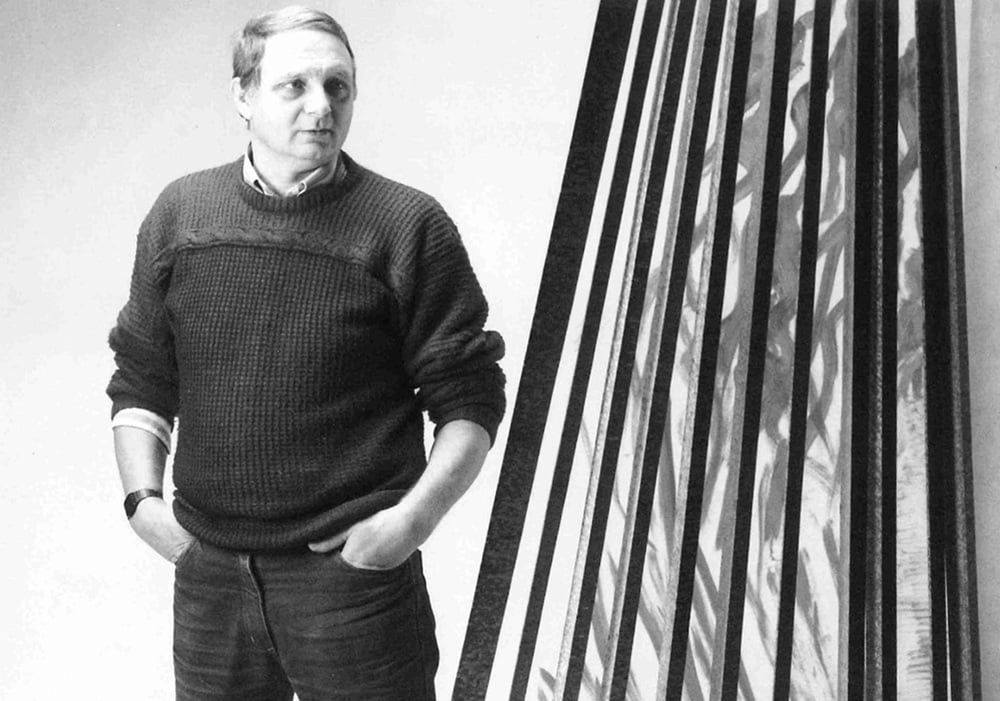
Paolo Masi, the Florentine artist known for his lifelong exploration of poor materials and their transformation, died in Florence on Wednesday, May 6, just days before his 93rd birthday. His career spanned from informal experiments in the 1950s through a rigorous investigation of materials in the 1960s, including his first solo show at the Strozzina in 1960. He joined the aesthetic research group Centro F/Uno alongside Baldi, Lecci, and Nannucci, and later co-founded the collective spaces Zona (1974) and Base (1998) with Mario Mariotti and Maurizio Nannucci. Masi participated in the Venice Biennale (1978) and the Rome Quadriennale (1986), and his works are held by major museums and foundations internationally. His later years saw significant retrospectives at the Museo MAGA in Gallarate (2018) and at Le Murate in Florence (2018), as well as a 2023 solo show at Florence's Galleria Frittelli, which remembered him as an extraordinary artist and dear friend.

Pussy Riot Shows Art by Russia’s Prisoners in New Protest Exhibition

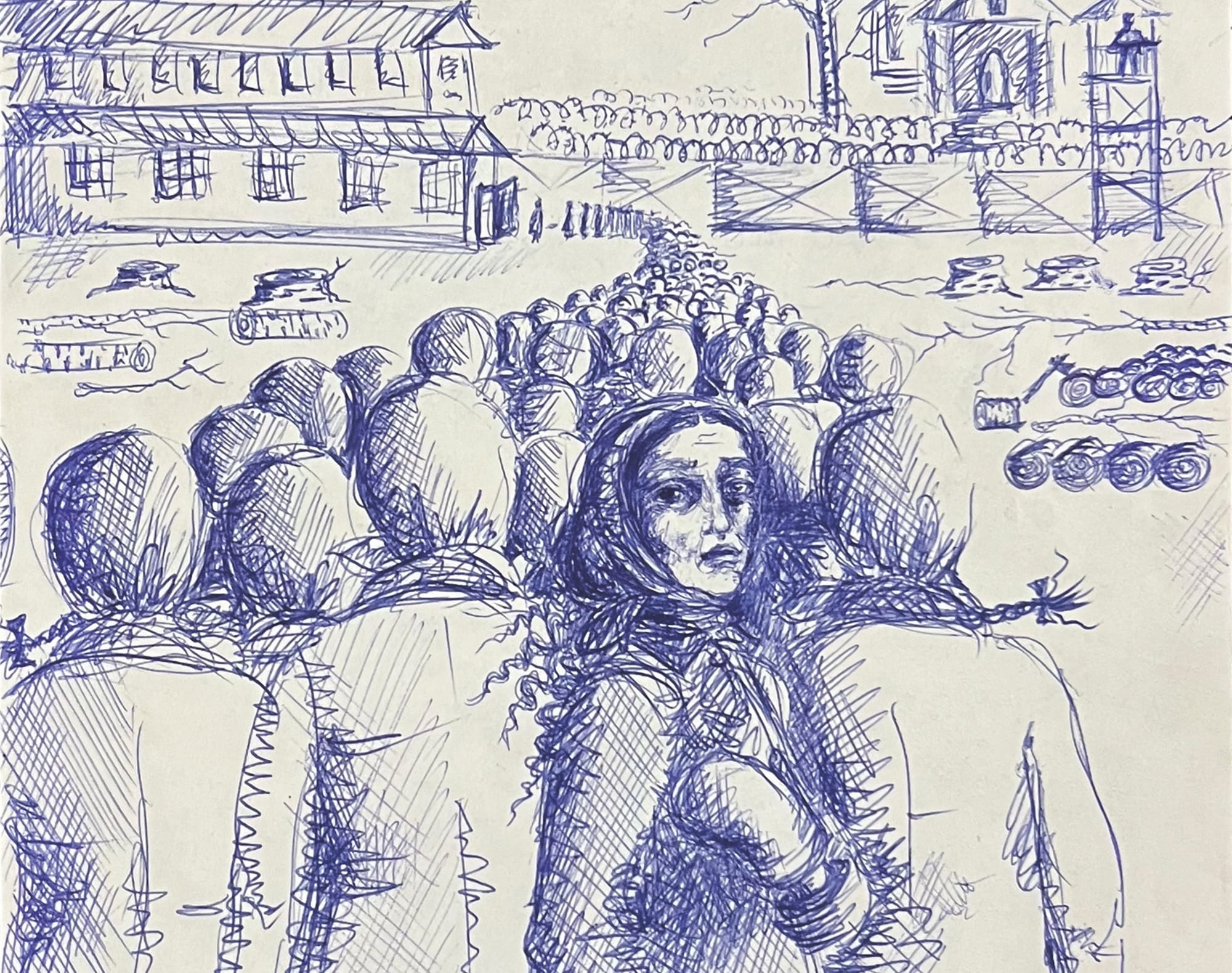
Pussy Riot founder Nadya Tolokonnikova co-curated "Resistance Imprisoned," a protest exhibition at Ritsch-Fisch Galerie in Strasbourg, France, featuring artwork created by people currently or formerly imprisoned in Russia, including Ukrainian civilians. The show opened April 19 and runs through May 31, timed to coincide with the first month of the Venice Biennale, which opens May 9. Works include a pen sketch by Lyudmila Razumova, a photojournalist arrested for anti-war graffiti in 2022 and serving a seven-year sentence, alongside pieces by other political prisoners and Ukrainian POWs. The exhibition aims to highlight the human cost of Russia's war and its participation in international cultural events.