filter_list Showing 500 results for "Roman" close Clear
search
dashboard All 500 museum exhibitions 214article news 105trending_up market 43article culture 41article local 27rate_review review 21gavel restitution 21article policy 12person people 11candle obituary 5
date_range Range Today This Week This Month All
Subscribe

Lebanon appeals to Unesco to intervene amid fears protected citadel has been destroyed

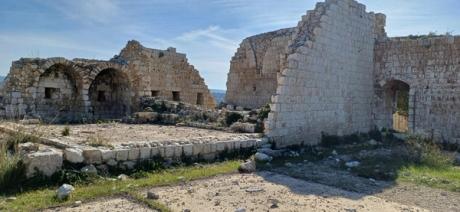
Lebanon’s Ministry of Culture has filed an urgent complaint with Unesco following reports that Israeli military forces destroyed the 12th-century Chama’ Citadel in southern Lebanon. The site, a Crusader-era fortress, had recently been granted "enhanced protection" status under the 1954 Hague Convention, a designation intended to shield it from military targeting. Lebanese authorities are currently unable to access the site due to ongoing military occupation and have requested that Unesco utilize satellite imagery to verify the extent of the demolition.
Barcelona museum refuses to return Sijena murals to monastery

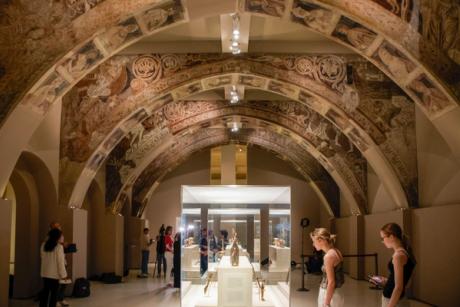
The Museu Nacional d’Art de Catalunya (MNAC) in Barcelona is refusing to comply with a Spanish Supreme Court order to return the 12th-century Sijena murals to their original monastery in Aragón. Tensions escalated after the museum hosted a listening party for pop star Rosalía in the same hall where the Romanesque masterpieces are housed, leading to accusations from the municipality of Villanueva de Sijena that the museum is endangering the fragile works. MNAC director Pepe Serra has dismissed these concerns as scientifically unfounded, sparking threats of a defamation lawsuit from local officials.

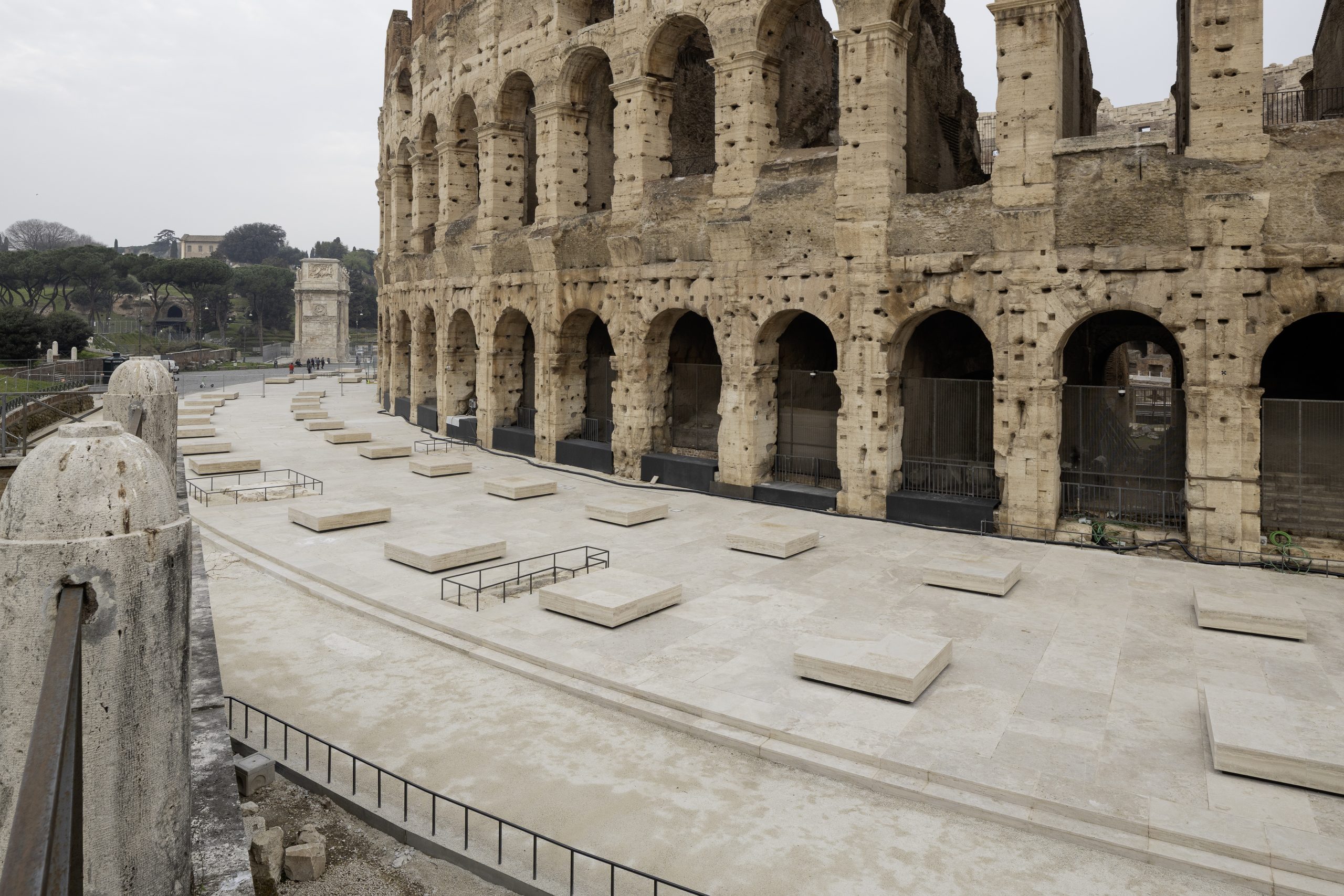
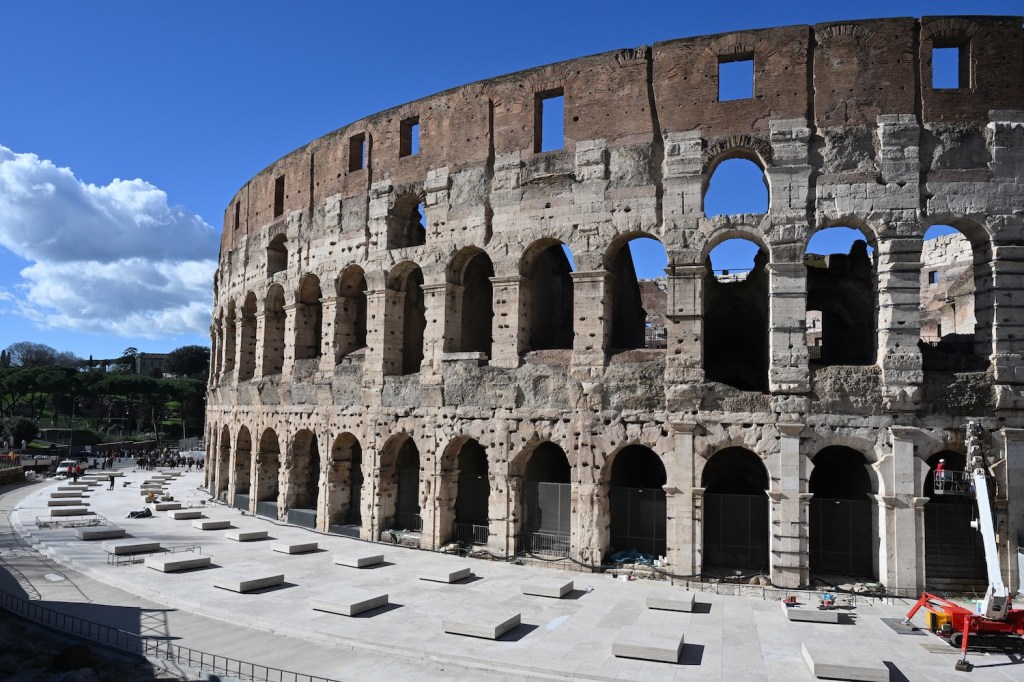
Rome’s Colosseum Gets a New Pedestrian Plaza

Rome has unveiled a newly restored pedestrian plaza at the southern façade of the Colosseum following a four-year construction project. Led by Stefano Boeri Interiors, the renovation features a travertine-paved square that recreates the original floor level and footprint of the ancient amphitheater. The design uses stone plinths to mark the locations of long-lost columns, allowing visitors to visualize the massive scale of the structure as it appeared nearly 2,000 years ago.

Colosseum Facelift Restores Ancient Southern Entrance to Its Former Glory

Rome’s Colosseum has unveiled a major four-year restoration of its southern entrance, a project led by Stefano Boeri Interiors in collaboration with the Colosseum Archaeological Park. The renovation lowered the surrounding piazza to its original Roman-era height, reintroduced travertine flooring sourced from ancient quarries, and installed seating blocks that mark the locations of long-lost marble columns. During the excavation process, archaeologists recovered a wealth of historical artifacts, including ancient coins, statues, and gold jewelry, while leaving a specific section untouched to showcase the arena's complex hydraulic foundations.

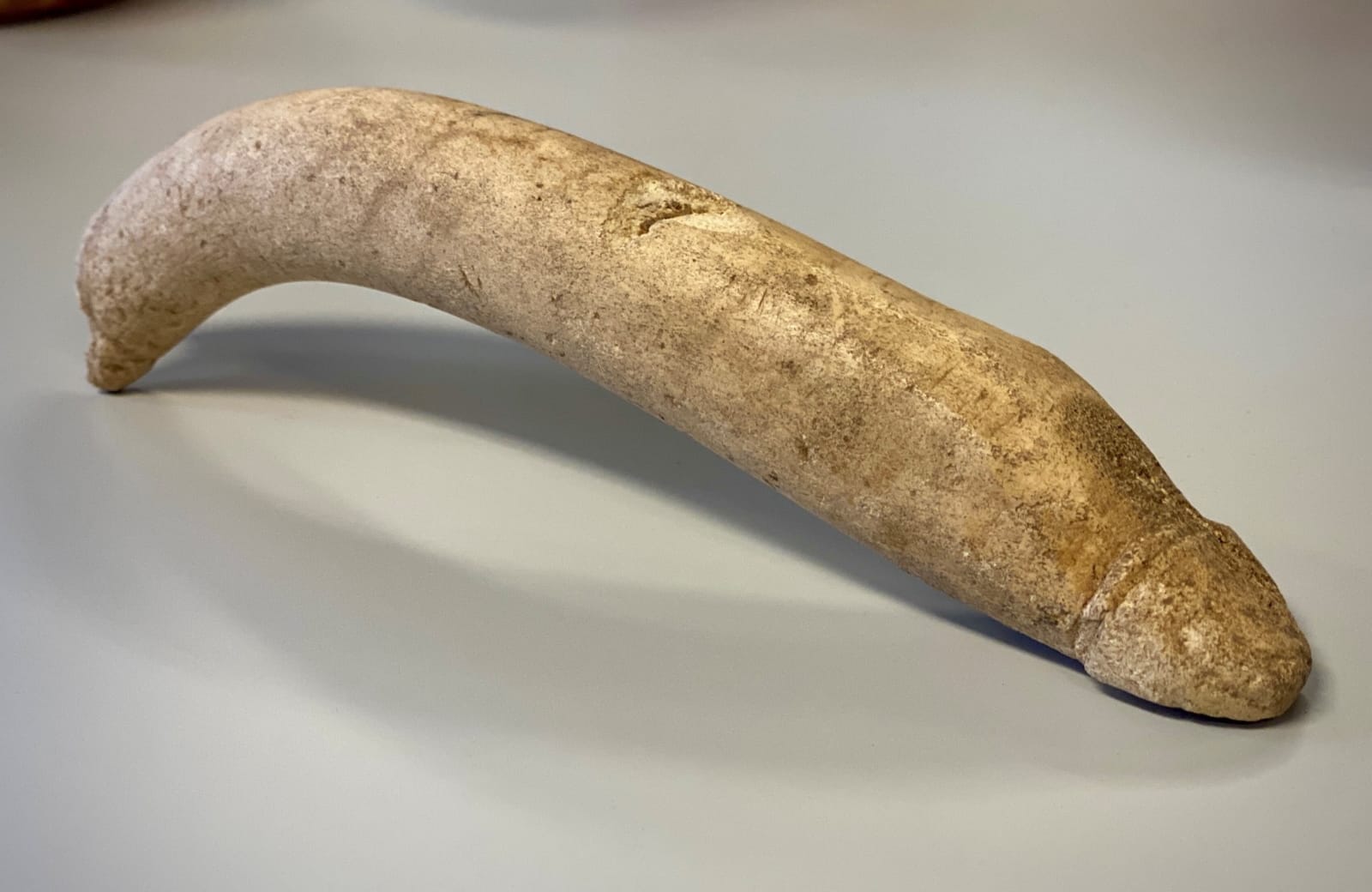
Dutch Museum Discovers 8-Inch Ancient Roman Phallus

Archaeologists at the Valkhof Museum in Nijmegen discovered a rare, eight-inch Ancient Roman phallus carved from bone while cataloging a massive backlog of 16,000 archaeological boxes. The artifact was found alongside high-quality Roman tableware during an €8 million government-funded inventory project aimed at processing collections from defunct storage depots in the province of Gelderland.

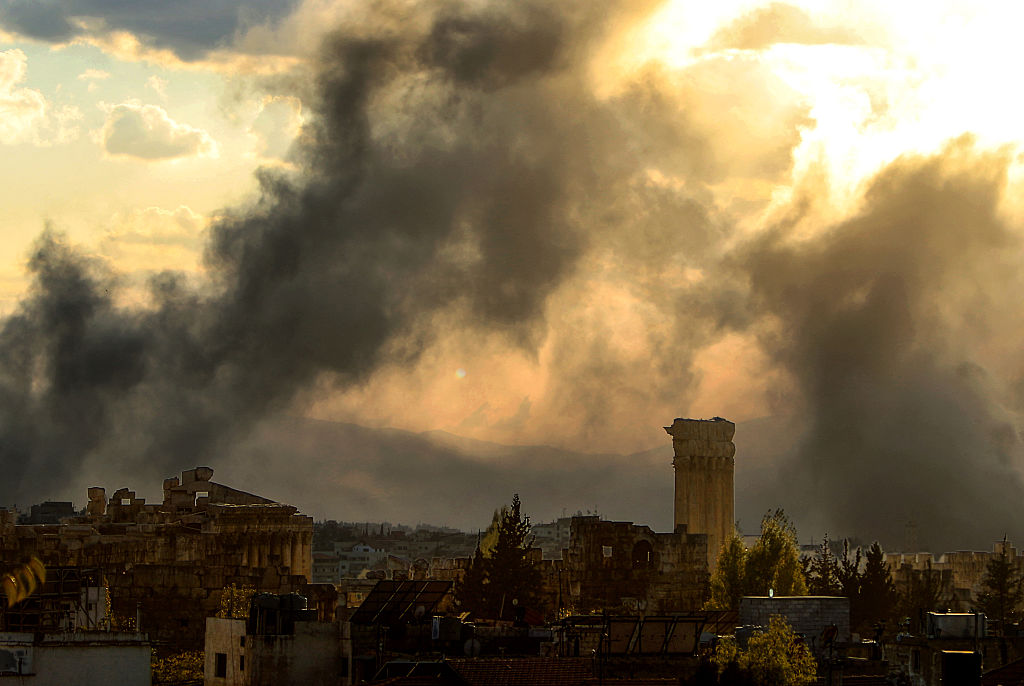
lebanese ministry of culture urges unesco to grant enhanced protections to cultural property

Lebanon’s Ministry of Culture has formally petitioned UNESCO to secure enhanced protections for the nation’s cultural heritage sites as regional conflict intensifies. Culture Minister Ghassan Salamé urged the UN agency to intervene with belligerent parties to ensure the safety of irreplaceable landmarks, including the National Museum of Beirut and the Roman ruins of Baalbek. UNESCO confirmed it has shared the coordinates of these World Heritage sites with all involved parties to prevent accidental or intentional targeting during military operations.

italian prime ministers face erased from rome fresco after complaints from the vatican

The face of an angel in a fresco at Rome's Basilica of St. Lawrence in Lucina, which bore a resemblance to Italian Prime Minister Giorgia Meloni, has been erased. Artist Bruno Valentinetti, who restored his own 2000 fresco, removed the image last week following an inquiry by Italy's culture ministry and the diocese of Rome, stating he acted at the Vatican's request.

house of griffins ancient rome restoration

The House of Griffins, an ancient Roman residence on Rome's Palatine Hill dating back to the 2nd and 1st centuries B.C.E., is opening to the public on March 3 after a major restoration. Discovered by archaeologist Giacomo Boni in the 19th century, the domus features vivid frescoes, mosaic floors, and a stucco lunette with griffins. The Colosseum Archaeological Park led the restoration in 2024, reinforcing structural integrity and conserving wall paintings. Visitors cannot access the underground chambers directly; instead, they will experience a real-time, remote tour via a livestream narrated by a guide with a video camera.

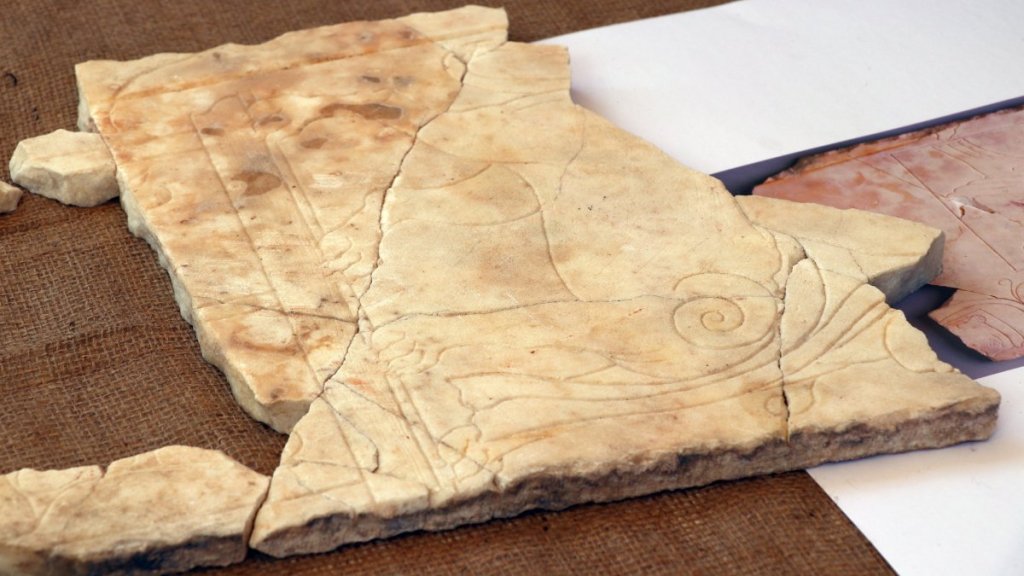
unusual medusa carving discovered archaeological site turkey

Archaeologists excavating a Roman forum near the ancient city of Amastris (modern-day Amasra) in Turkey have uncovered a marble Medusa carving with an unusual smiling expression. The relief was found atop decorative columns that once formed a covered walkway (stoa) in the forum. Excavations began three years ago after historical remains were discovered during school construction in 2017. The project, overseen by Bartin University’s Archaeology Application and Research Center and supported by the Turkish Ministry of Culture’s “Heritage of the Future” initiative, has so far reconstructed three columns across the 30,000-square-foot site.

rome charges fee for trevi fountain

Rome has introduced a €2.35 entry fee for the Trevi Fountain, one of the world's most famous monuments, effective February 1 during daylight hours (9am to 9pm). The measure, announced by Mayor Roberto Gualtieri, aims to curb overtourism by limiting viewership to 400 people at a time. The fountain currently welcomes up to 70,000 visitors per day, and the fee could raise an estimated $7.6 million annually for maintenance. Similar fees will apply to four other city sites, while Roman citizens retain free access.

rome new metro stations mini museums

Rome has opened two new subway stations on Line C—Colosseo/Fori Imperiali and Porta Metronia—that double as mini museums, showcasing over 500,000 artifacts unearthed during two decades of excavation. The stations, located 100 feet underground, feature displays of ancient ceramics, frescoes, mosaic floors, and the remains of a Roman military compound and thermal baths, curated by the Colosseum Archaeological Park and Sapienza University. Commuters can view the artifacts without a ticket in the station atriums, and future stations on the line will incorporate additional archaeological finds.

career coach survey artists careers paddy johnson

New York artist mentor Paddy Johnson released the inaugural New Visions Report on Wednesday, surveying 1,000 mid-career artists to assess their careers with the same data-driven approach used for other businesses. The report, produced with arts journalist Julia Halperin and Gray Market columnist Tim Schneider, reveals that 75 percent of surveyed artists earn $15,000 or less from their practice, 45 percent earned less in 2025 than in 2024, and 56 percent say debt influences their decisions. Despite these struggles, 73 percent remain optimistic about their careers. The report also found that even the most successful artists—those with gallery representation and museum shows—face debt and lack basic systems like estate plans, while 82 percent want more gallery and museum opportunities but are unsure how to achieve them.

libya national museum red castle reopens after 14 years

Libya’s National Museum, also known as the Red Castle Museum (As-Saraya Al-Hamra), has reopened in Tripoli for the first time since the 2011 revolution that ended Muammar el-Qaddafi’s rule. The museum, the largest in North Africa, closed at the onset of Libya’s military instability during the Arab Spring. Its 10,000-square-meter gallery houses artifacts spanning prehistory through Greek, Roman, and Islamic periods, including millennia-old mummies. Renovations began in 2023, with a full public reopening scheduled for early 2026; currently admission is limited to students.

ancient egyptian pleasure boat portus magnus

Underwater archaeologist Franck Goddio and his Institut Européen d’Archéologie Sous-Marine (IEASM) team have discovered the remains of a 35-meter-long ancient Egyptian pleasure boat, known as a thalamagos, in the submerged Portus Magnus off Alexandria’s harbor. The 28-meter preserved timbers, found seven meters underwater and buried under sediment, represent the first physical evidence of such vessels, previously known only from ancient texts like Strabo's Geography and the Nile mosaic at Palestrina. The ship, built in Alexandria and propelled by oars, features a central pavilion and Greek graffiti from the 1st century C.E., and may have sunk around 50 C.E. during the destruction of the temple of Isis on Antirhodos Island.

roman medusa cameo hallstatt

A rare ancient Roman cameo relief depicting the gorgon Medusa was discovered by construction workers during excavation work for a new funicular railway in Hallstatt, Austria. The 1.5-cm banded agate piece, dated to the 2nd century C.E., was likely crafted in a northern Adriatic workshop and worn as a necklace by an elite Roman woman. It will become part of the permanent collection at Austria's Linz Castle Museum.

faberge winter egg christies auction

A rare Fabergé Imperial egg, the Winter Egg, sold for £22.8 million ($30.2 million) at Christie’s London on December 2, 2025, setting a new world auction record for any Fabergé work. The egg was a 1913 Easter gift from Tsar Nicholas II to his mother, Maria Feodorovna, and was designed by Alma Pihl, one of the few women working in Fabergé’s St. Petersburg workshops. It had previously sold at Christie’s in 1994 and 2002, each time setting records.

thirty five arrested in bulgaria criminal art trafficking network

Bulgarian authorities, with support from Europol, arrested 35 individuals and conducted 131 searches across Bulgaria, seizing over 3,000 cultural artifacts valued at more than €100 million. The operation targeted a criminal network trafficking artifacts from Thracian and Greco-Roman civilizations across Europe, with connections to illegal excavations in Bulgaria and the Balkans. The investigation, which began after a 2020 house raid that uncovered 7,000 artifacts, involved law enforcement from Albania, France, Germany, Greece, Italy, and the UK, and was coordinated from Sofia and Eurojust in The Hague.

egyptian ceramic vessel ancient pompeii canteen

A nearly 2,000-year-old Egyptian ceramic vessel, a bucket-shaped situla, was discovered during conservation work at the Thermopolium of Regio V in Pompeii. The faience pot, decorated with Egyptian-style hunting reliefs, was found in the kitchen of a well-preserved fast-food restaurant that served the working- and middle-class residents of the Roman city before its destruction by Mount Vesuvius in 79 CE. The discovery was published by the Pompeii Archaeological Park’s online journal.

hard truths curator invisibility

The article, presented as an advice column by consultants Chen & Lampert in ARTnews, addresses two anonymous letters from art-world professionals. The first letter is from a curator at a major museum who feels underpaid, invisible, and constrained by an ethics policy that prevents freelance work, while colleagues at smaller institutions enjoy more freedom. The second letter is from a veteran graphic designer and illustrator, active since the 1960s, who laments losing commercial clients to younger, cheaper talent using AI and smartphones. The consultants respond with sharp, critical advice: they tell the curator to consider collective action with colleagues to push for institutional reform, and advise the designer to leverage their legacy and experience rather than accept obsolescence.

ancient egyptian iconography roman bathhouse sagalassos turkey

Archaeologists have identified ancient Egyptian iconography on a marble lintel in a Roman-era bathhouse at Sagalassos, Turkey. The carving depicts the sphinx god Tutu, flanked by two human figures wearing the crowns of Upper and Lower Egypt, along with deities Horus and Sobek. Dating to the reign of Emperor Augustus (27 BCE–14 CE), the panel was found in the frigidarium and was sourced from marble quarried over 124 miles away in the Afyonkarahisar region.

ancient rome new orleans tombstone

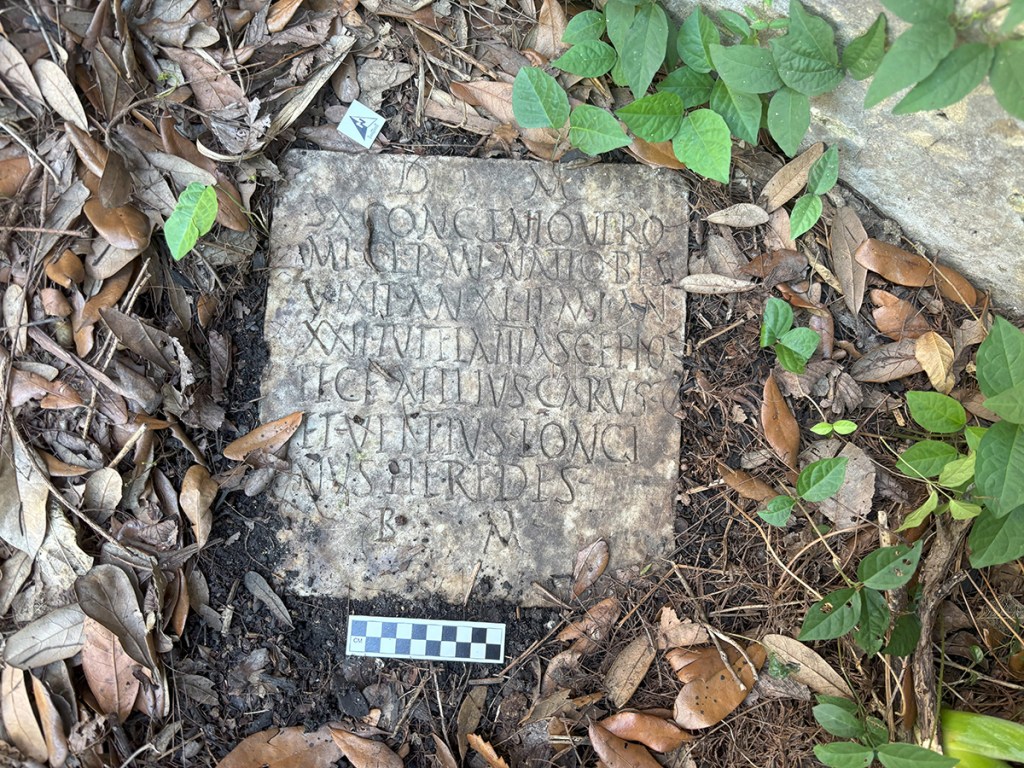
A 2nd-century Roman gravestone inscribed for a sailor named Sextus Congenius Verus was discovered in March 2025 by Daniella Santoro and Aaron Lorenz while doing yard work at their New Orleans home. University of New Orleans archaeologist D. Ryan Gray, working with colleagues at the University of Innsbruck and Tulane University, traced the stone to a missing object from a museum in Civitavecchia, Italy. Researchers believe it was brought to the U.S. as a souvenir by a member of the 34th division of the Fifth Army after the liberation of Rome in 1944. The FBI’s Art Crime Team is now involved in repatriating the headstone to Italy.

egyptian antiquities trafficker jfk airport prison sentence

Egyptian doctor Ashraf Omar Eldarir has been sentenced to six months in prison by U.S. District Judge Rachel P. Kovner for smuggling hundreds of ancient Egyptian artifacts into the United States. Eldarir was arrested in 2019 after importing over 600 artifacts without declaring them on customs forms, including a polychrome relief, Roman limestone pieces, gold amulets, and wooden tomb model figures dating to 1900 BCE. The largest seizure of smuggled antiquities at JFK Airport occurred in January 2020, when customs officers found 590 artifacts wrapped in bubble wrap and foam, with loose sand and dirt indicating recent excavation. Eldarir pleaded guilty to four counts of smuggling and used fake provenances—including forged documents and photoshopped photographs—to sell artifacts at U.S. auction houses.

senator john fetterman proposes bill to apply anti money laundering protections to us art market

On July 23, U.S. Senator John Fetterman introduced the Art Market Integrity Act, a bill that would apply anti-money laundering (AML) and counter-terrorism financing regulations to art dealers, auction houses, galleries, advisers, consultants, custodians, museums, collectors, and other intermediaries in the art market. The legislation amends the Bank Secrecy Act, requiring these entities to conduct client due diligence, maintain records, and report suspicious transactions. It exempts artists selling their own work, nonprofits, and businesses with under $50,000 in annual art transactions. The bill is co-sponsored by Senators Chuck Grassley, Sheldon Whitehouse, Bill Cassidy, Andy Kim, and David McCormick.

remnants enaissance equestrian statue french dig

Archaeologists from INRAP (the National Institute of Preventive Archaeological Research) have unearthed a Renaissance-era limestone equestrian statue in Toul, northeastern France. The statue, broken into 27 pieces, was found buried under a roadway among the remains of a medieval gate demolished around 1700. The largest fragment measures about three-and-a-half feet, and the intact work would have stood over five feet high. The horse's trunk and head are preserved, along with the rider's hips and upper thighs, but the rider's head and limbs are missing, making identification uncertain. INRAP suggests the rider may have been Henry II, King of France, or more likely John III of Lorraine, Cardinal of Lorraine and Bishop of Toul, and that Italian artists may have been involved in its creation.

pompeii garden of hercules restoration

The Pompeii Archaeological Park has unveiled the restored Garden of Hercules, replanted with 1,200 violets, 1,000 ruscus plants, 800 antique roses, vines, and fruit trees to mirror its appearance 2,000 years ago. The restoration is based on botanical research from the 1950s by Wilhelmina Jashemski, who identified pollen, spores, and plant fossils at the site. The garden, located on Regio VIII, Insula 2, also features a recreated ancient irrigation system and a terracotta statue of Hercules, and was once used for commercial perfume production.

vast roman villa under excavation in france

Archaeologists from the French National Institute for Preventive Archaeological Research (Inrap) have uncovered a massive 43,000-square-foot Roman villa at Sainte-Nitasse in Auxerre, France, during excavations ahead of a road construction project. The villa, dating from the 1st to 3rd centuries C.E., features a central garden with a basin and fountain, thermal baths with an underfloor heating system, and rooms including a reception room, kitchen, and working area. Previously known from 19th-century records and a 1960s dig that revealed a smaller 7,500-square-foot building, the new findings reveal what Inrap calls “one of the great villas of Roman Gaul,” with thick walls, marble, mosaics, and frescoes indicating aristocratic owners.

women ancient pompeii

A new exhibition at the Pompeii Archaeological Park, titled “Being a Woman in Ancient Pompeii,” aims to correct centuries of historical neglect by highlighting the lives of real women from the ancient city. Through frescoes, artifacts, inscriptions, and an interactive app, the show presents the stories of entrepreneurs, priestesses, innkeepers, artisans, sex workers, and slaves—including Clodia Nigella, a public pig-keeper; Faustilla, a pawnbroker; Asellina, a tavern owner who employed bar workers and sex workers; Julia Felix, an independent property owner who rented out her bathhouse; and Eumachia, a businesswoman. Co-curated by archaeologist Francesca Ghedini, the exhibition uses archaeological evidence to reconstruct the personalities and daily activities of these women, whose roles have long been obscured by male-dominated historical narratives.

giulia cretulescu fiber art sexy

Giulia Crețulescu creates fiber art from synthetic fabric sourced from a Ford automotive factory near her hometown of Craiova, Romania. Her work features geometric, torso-sized wall-mounted shapes with bondage-like straps and repurposed industrial seatbelts, blending found and handmade elements. After completing a PhD in graphic arts in Bucharest, she turned to sewing to resist the speed of digital design, producing non-functional, armor-like abstractions. Her recent exhibition at Fragment Gallery in New York showcased her unique approach, which also incorporates inspiration from motorcycle gear and medieval armor.

winged goddess carving hadrians wall

A couple of volunteer archaeologists, Dilys and Jim Quinlan, discovered a Roman stone relief carving of the winged goddess Victory while excavating at the Vindolanda fort near Hadrian's Wall in Northumberland, England. The 18.5-inch carving was found in the infantry barracks and is believed to have been part of a larger ornamental arch and gate, dating to around 213 CE after the Severan wars. The discovery was identified by Newcastle University professor Rob Collins and announced by the Vindolanda Charitable Trust.

president zelenskyy gives pope leo ukrainian icon

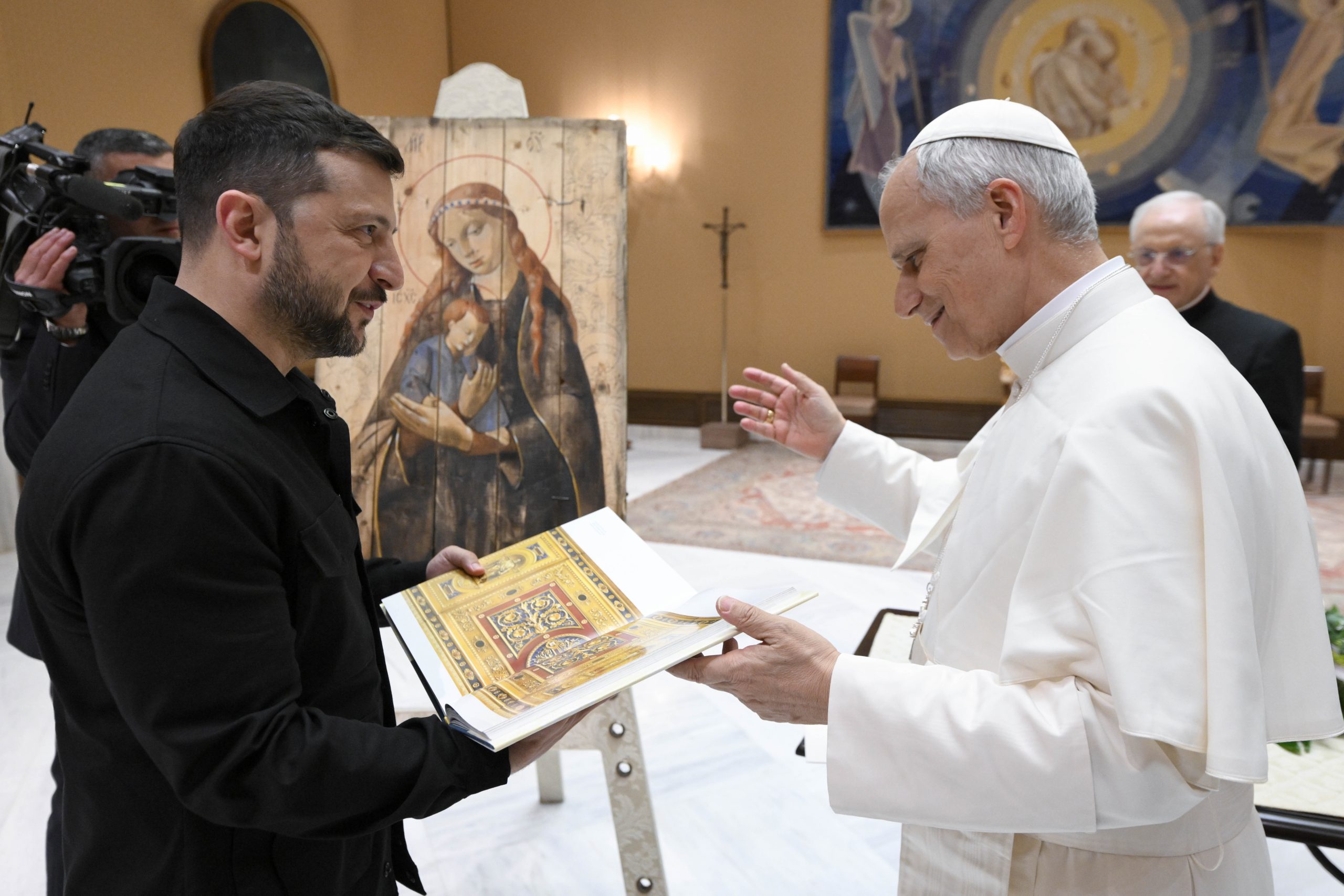
Ukrainian President Volodymyr Zelenskyy presented Pope Leo XIV with a Ukrainian religious icon painted on a fragment of an artillery crate from the front lines in the Kharkiv region, following the Pope's inaugural Mass on May 18, 2025. Zelenskyy described the icon, depicting the Virgin Mary and child, as a symbol of life that must be protected, referencing children affected by Russia's invasion. The meeting in Vatican City also included discussions about peace talks, with the Pope offering to host negotiations between Ukraine and Russia.