filter_list Showing 586 results for "critic" close Clear
search
dashboard All 586 museum exhibitions 274article news 88article culture 65rate_review review 48article local 34article policy 26trending_up market 21person people 17candle obituary 9gavel restitution 4
date_range Range Today This Week This Month All
Subscribe

Between Ritual and Institution: Andrea Canepa's Interventions in Spain

ENTRE EL RITO Y LA INSTITUCIÓN: LAS INTERVENCIONES DE ANDREA CANEPA EN ESPAÑA

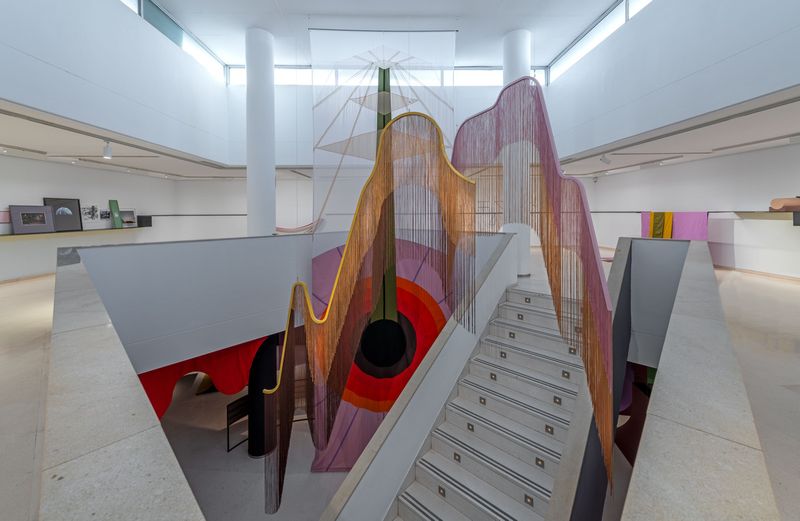
Andrea Canepa, a Peruvian artist born in 1980, has installed "Fardo" at the Palacio de Cristal in Madrid's Parque del Retiro, running from January 13, 2026 to January 1, 2027. The work wraps the building's perimeter in a printed fabric bearing patterns from Paracas funerary textiles, a pre-Columbian culture from southern Peru. Created during the palace's ongoing restoration (which began in 2023), the installation challenges the building's colonial history—it was built for the 1887 Exhibition of the Philippine Islands—by introducing indigenous visual and ritual references. Canepa also presented "Entre lo profundo y lo distante" at the IVAM in Valencia until April 12, 2026, which uses Andean huacas (sacred spaces) to propose a non-linear relationship between time, body, and space. Both works transform passive contemplation into active, bodily participation, using ritual as a means to reorganize the exhibition experience.
Notre-Dame: The Lie About Respecting Viollet-le-Duc's Light

Notre-Dame : le mensonge sur le respect de la lumière de Viollet-le-Duc

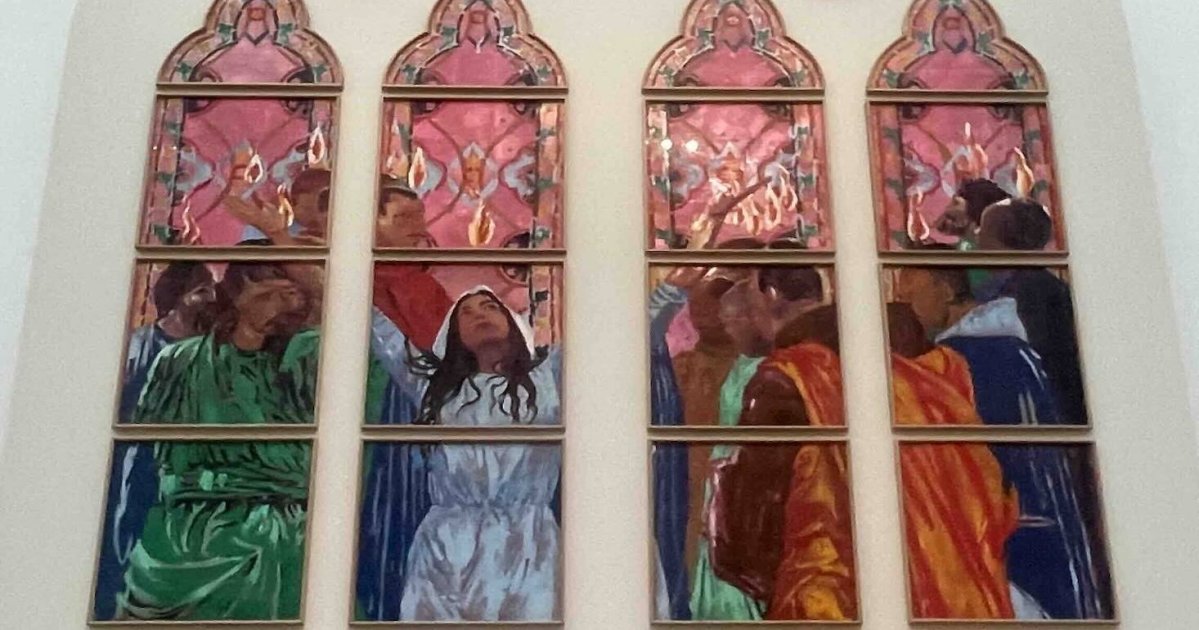
The article criticizes the planned replacement of the stained-glass windows in Notre-Dame Cathedral, designed by Claire Tabouret, arguing that the public establishment behind the project has made false claims about respecting the original light and colors of Eugène Viollet-le-Duc's 19th-century windows. The author compares the existing and proposed windows baie by baie, asserting that the new designs do not match the chromatic balance or light quality, and calls the official justification a lie. It also highlights two additional alleged falsehoods: that the law for Notre-Dame's restoration deliberately omitted the Venice Charter (when the culture minister said it was unnecessary because the charter was already binding), and that the National Commission for Heritage and Architecture had approved the window replacement (which the author claims is contradicted by the commission's own minutes and multiple members).

Venice Biennale Opens Amid Strikes, Protests and Institutional Rupture.

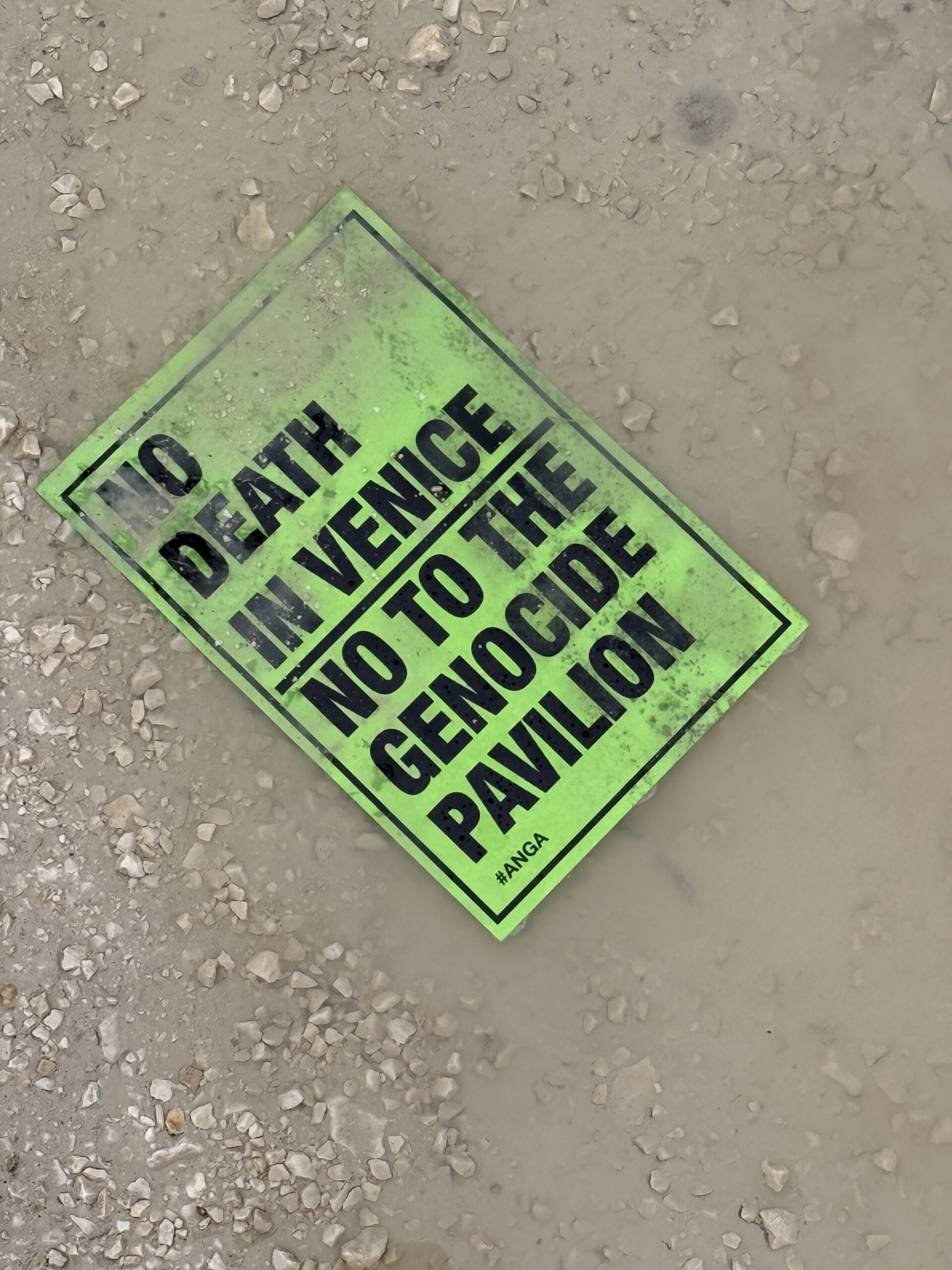
The 61st Venice Biennale opened in May 2026 amid strikes, protests, and political unrest, rather than celebration. Coordinated by Italian labor groups and transnational coalitions, demonstrators targeted the Biennale's decision to allow participation by Israel and Russia during the ongoing wars in Gaza and Ukraine. The Art Not Genocide Alliance (ANGA) led protests against Israel's participation, while Pussy Riot and FEMEN activists staged a protest outside the Russian pavilion. The Israeli pavilion's relocation from the Giardini to the Arsenale added symbolic weight, with critics viewing it as institutional endorsement. The late curator Koyo Kouoh's vision for the exhibition, titled "In Minor Keys," emphasized tenderness and complexity, contrasting with the volatile atmosphere.

Yves Klein Research Grant 2026: A Funded Residency for Emerging Scholars

The Yves Klein Foundation has launched its first Research Grant for 2026, offering a CHF 6,000 stipend and a one-week funded residency in Paris to emerging scholars under 35 who hold a PhD or postdoctoral degree. The program invites original research projects that deepen understanding of Yves Klein’s work, ideas, and legacy, with access to archives and scholarly guidance provided. Applications are due by 15 June 2026, with selection based on originality, scientific quality, and feasibility.

A trip to the future: the best of Belfast photo festival – in pictures

The Belfast Photo Festival returns for 2026 as the largest annual photography festival in the UK and Ireland, running from 4–30 June at venues across the city. This year's theme, 'Horizons: Visions of Futures Unknown,' challenges photographers and audiences to explore technological, environmental, geopolitical, and AI-driven boundaries in the medium. Featured works include Laura Pannack's 'The Journey Home,' Florence Goupil's documentation of a Peruvian protection agent, Toby Smith's participatory installation confronting the collapse of mechanical photography, and Lean Lui's allegorical 'The White Barracks' examining power and patriarchy.

Giant glacier painting disappears from Argentina’s presidential palace after new law passes loosening protections for these icy regions

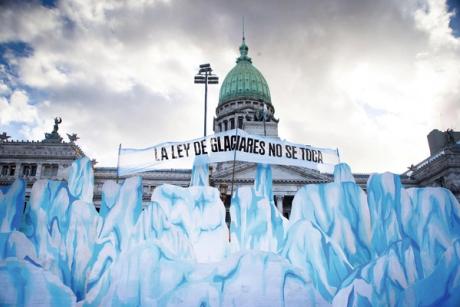
Days before Argentina’s Congress approved an amendment to the glacier law that weakens protections for glacial regions to facilitate mining, President Javier Milei’s government removed a monumental painting of the Perito Moreno Glacier from the Casa Rosada presidential palace. The work, Helmut Ditsch’s photorealist *The Triumph of Nature* (2006), had been on loan and on display since 2012. The government cited “maintenance reasons” and “structural damage,” but the artist says he was not notified and has contacted lawyers. A portrait of Juan Domingo and Evita Perón was also removed the same day, with the same vague explanation.

19th-century European weapons found in cenote in Mexico

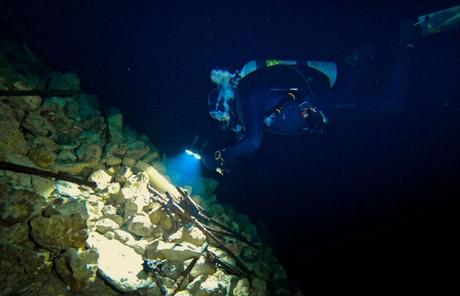
Archaeologists from Mexico's National Institute of Anthropology and History (INAH) have discovered 153 Spanish and British muskets and rifles, along with an iron cannon, in the Síis Já cenote beneath the 16th-century former convent San Bernardino de Siena in Valladolid, Mexico. The weapons were likely discarded by the Yucatecan government during the early years of the Caste War of Yucatán (1847-1901) to prevent them from falling into Maya rebels' hands. The site also yielded Maya ceramic pieces and 18th-century Chinese porcelain, and INAH reported debris and pollution affecting the cenote.

Manhattan D.A.’s Office Returns More Than 650 Looted Artifacts to India

On April 28, Manhattan District Attorney Alvin L. Bragg, Jr., announced the return of 657 trafficked antiquities valued at nearly $14 million to India. The items were recovered by the D.A.'s Antiquities Trafficking Unit and Homeland Security Investigations, and formally returned at a ceremony in New York. Among the repatriated pieces are a bronze figure of Avalokiteshvara (valued at $2 million), stolen from the Mahant Ghasidas Memorial Museum in Raipur in 1982; a red sandstone Buddha statue (valued at $7.5 million) smuggled by convicted dealer Subhash Kapoor; and a sandstone Ganesha sculpture looted by trafficker Vaman Ghiya and sold through Christie's by Nancy Wiener, who was later convicted of antiquities trafficking.

Russia's Venice Pavilion to Close to the Public in Compliance With Sanctions

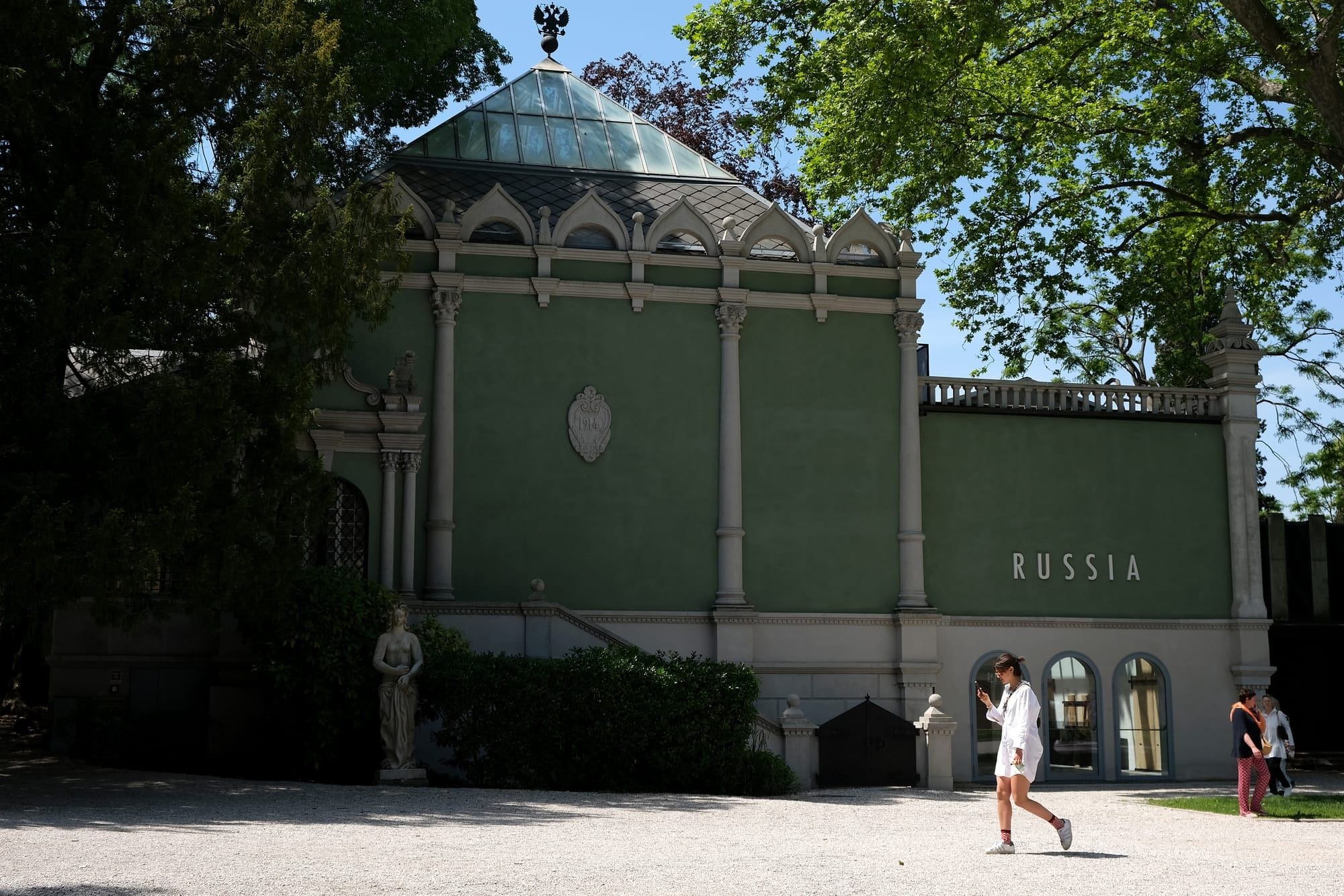
Russia will return to the 61st Venice Biennale with its national pavilion, but the exhibition will only be physically open to the press and select guests during the vernissage dates of May 5–8. From May 9 onward, the pavilion will remain closed to the public, with multimedia documentation of performances displayed on screens at the windows. The arrangement follows leaked emails among Biennale Foundation President Pietrangelo Buttafuoco, General Director Andrea Del Mercato, and Russian Pavilion Commissioner Anastasia Karneeva, revealing efforts to comply with EU sanctions while still allowing Russia's participation after two consecutive absences since its invasion of Ukraine.

Monopol verlost 5 × 2 Tickets für "Tirailleurs"-Ausstellung im HKW

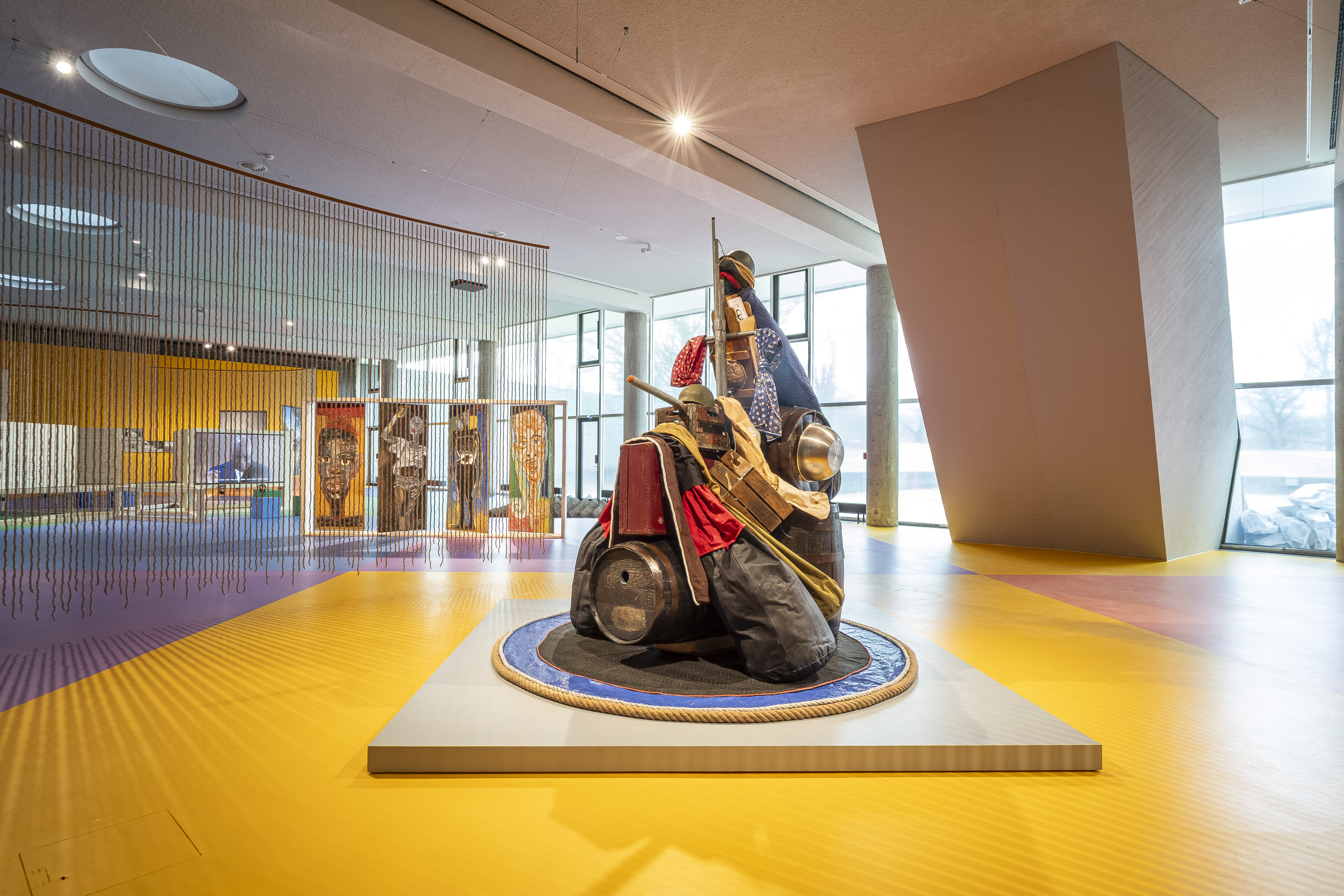
Monopol magazine is giving away 5 × 2 tickets for the exhibition "Tirailleurs" at the Haus der Kulturen der Welt (HKW) in Berlin. The show, which runs under the full title "Tirailleurs: Von Kanonenfutter zu Avantgarde – Die vergessenen Soldat*innen, die Europa befreit haben," highlights the largely forgotten history of African soldiers (tirailleurs) who fought for France in both World Wars, many forcibly recruited and deployed on the front lines. Featuring over 30 international artists with new commissions, the exhibition includes installations, films, photographs, and archival materials addressing colonial violence, memory politics, and the enduring impact of imperial power structures. Artists such as Dior Thiam, Daniel Lind-Ramos, Nadia Kaabi-Linke, and Mario Pfeifer contribute works that recover names, reframe historical images, and connect past colonial dynamics to present-day conflicts like the war in Ukraine.

This is fucking Disneyland

"Das ist fucking Disneyland"

The article surveys recent German cultural commentary, highlighting three main stories: art historian Bénédicte Savoy's warning in the FAZ about the physical decay of German universities, particularly the Technical University of Berlin, as a threat to democratic culture; Berlin artist Charlie Stein's essay on anxiety as a pervasive contemporary condition and art's role in making it visible; and critic Rachel Wetzler's harsh review of the Venice Biennale in Artforum, calling it an overwhelming 'theme park' version of the art world. Additionally, Nikolaus Bernau defends expert juries in the Tagesspiegel, using the Biennale's jury crisis as a case study.

Nicht mal Engel sind frei von der Gewalt

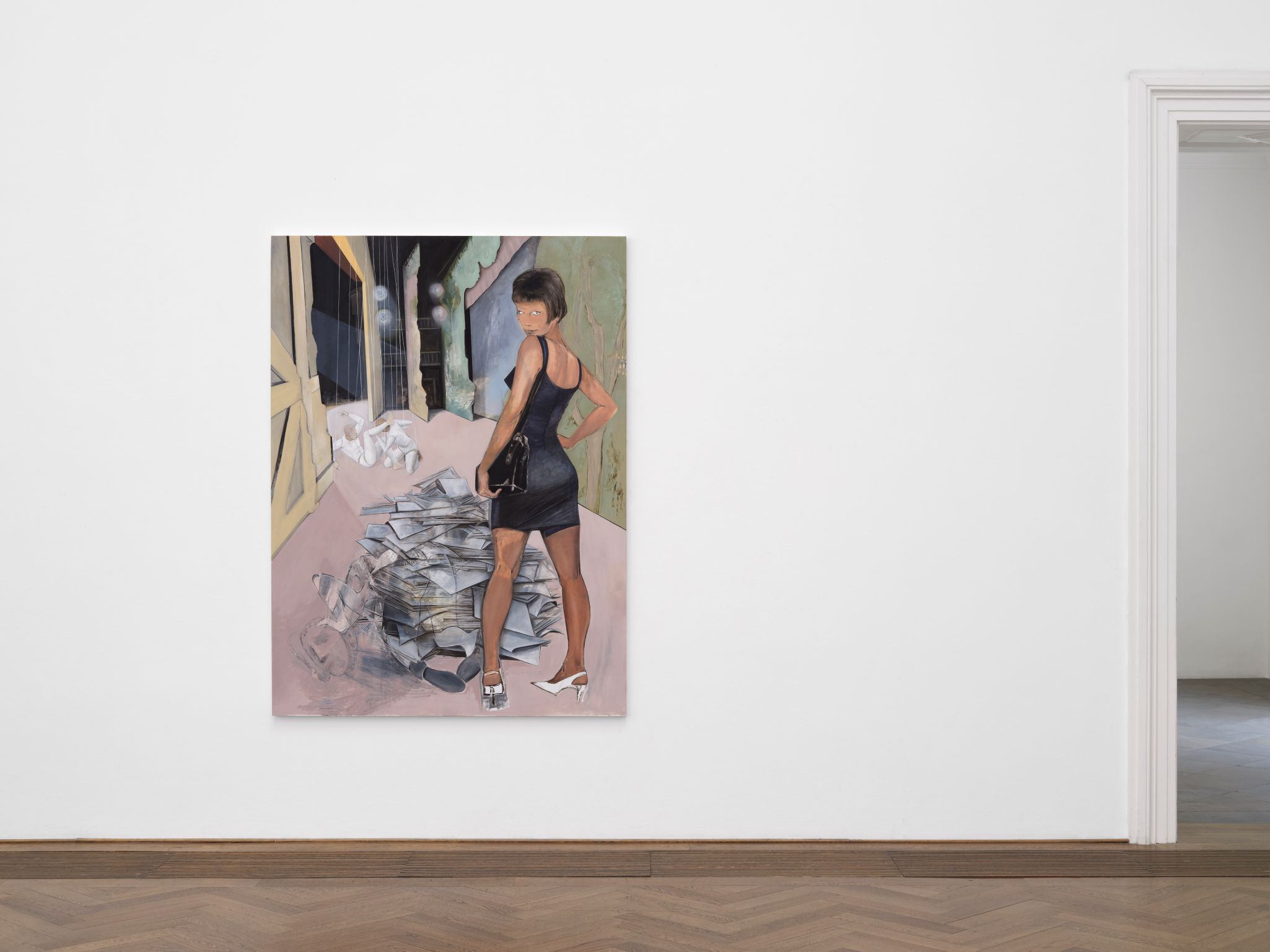
Janiva Ellis presents a multifaceted exhibition at Kunsthalle Basel, exploring the history of violence in modernity through paintings that blend history painting, cartoon, and abstraction. Her works, including "Glint" and "Une nuit agitée," feature angels, hybrid creatures, and dystopian landscapes, questioning the origins and functions of violence in art history and society.

Monuments in Motion

Denkmäler in Bewegung

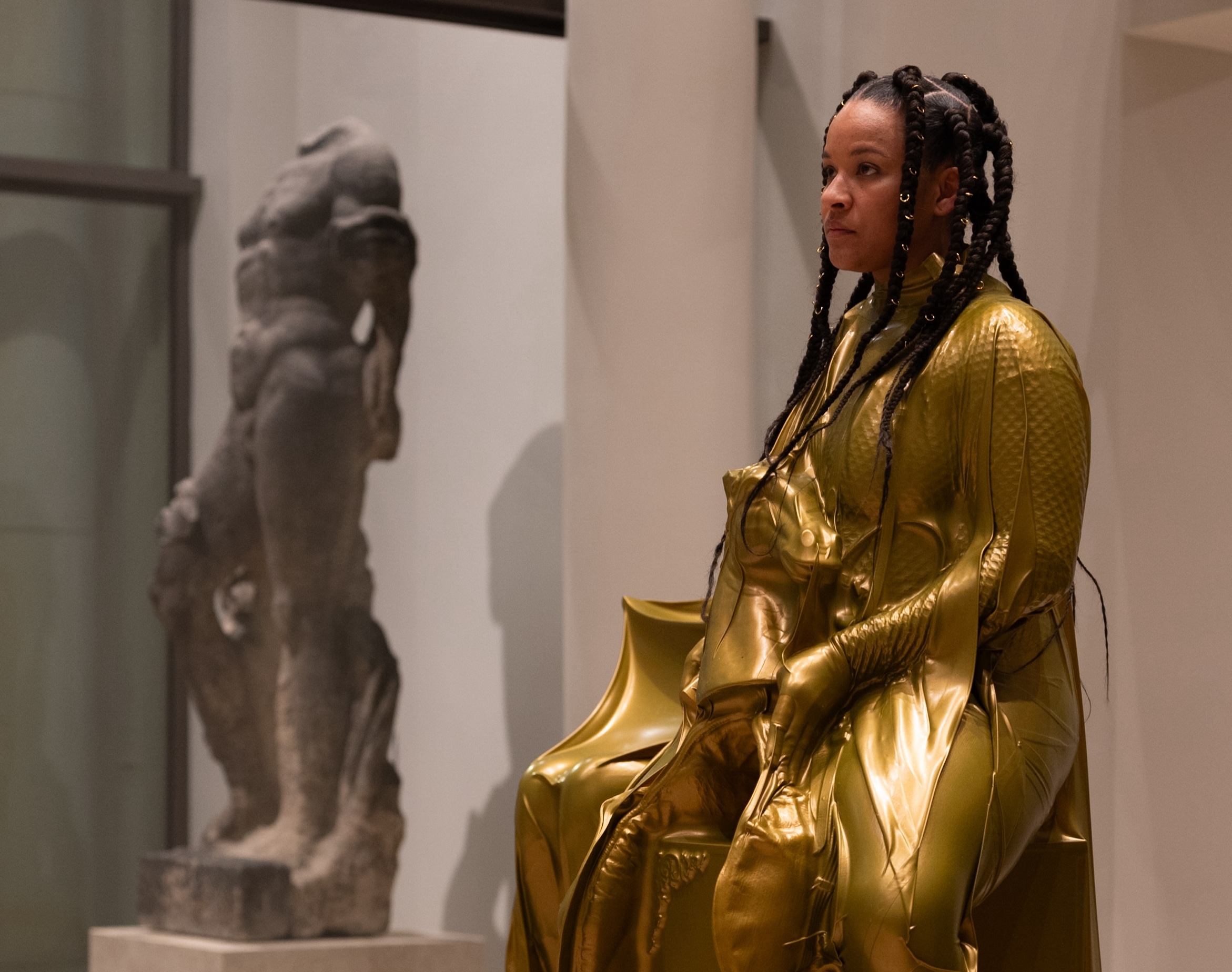
Berlin-based artist Sarah Ama Duah, who transitioned from fashion to sculpture, creates works that explore Afro-German memory culture. Her practice includes beeswax portraits, found objects like Delft porcelain and baroque vases, and performances at venues such as the Humboldt Forum. In 2025, she received the Wolfram Beck Prize for Sculpture. Duah's early fashion work, including silicone garments shown at the Fashionclash Festival in Maastricht, evolved into sculptural investigations of clothing, body, and space, leading her to study performance and sculpture at the Berlin University of the Arts under Jimmy Robert.

The Backlash Is Here

"Der Backlash ist da"

Kathleen Reinhardt, the curator of the German Pavilion at the Venice Biennale, has announced her concept featuring artists Sung Tieu and Henrike Naumann under the title "Ruin." The exhibition will use East Germany as a prism to explore themes of power, history, and the present. Reinhardt was invited to submit a concrete concept and specific artists for this edition of the pavilion.

It's a Rollercoaster of Emotions

"Es ist ein Wechselbad der Gefühle"

Sung Tieu has been selected to represent Germany at the Venice Biennale with a solo exhibition in the German Pavilion. In an interview with Monopol, she discusses how her personal biography—as a Vietnamese-German artist—informs her practice, which examines Vietnamese migration to East Germany, the rise of right-wing extremism, and the cold, bureaucratic language of state power. The exhibition will bring these themes to an international audience in Venice.

Henrike Naumanns langer Weg in den deutschen Pavillon

Henrike Naumann, a German artist who recently passed away, is being honored with a posthumous exhibition at the German Pavilion during the Venice Biennale. Her work, which explores recent German history, state art, and the absence of East German art in the pavilion, finds its ultimate context in this historically charged Nazi-era building.

A Struggle Between Artist and Machine

Ein Ringen zwischen Künstler und Maschine

Mario Klingemann, a pioneer of AI art, presents "Conflict of Interest," a pop-up exhibition at Sleek Art Space in Berlin during Gallery Weekend. Curated by Anika Meier and produced in collaboration with Art on Tezos, the show features works that challenge the flood of AI-generated imagery. Klingemann displays mundane landscape photographs from private slides, a series called "Weapons of Mass Distraction" where he disrupts an AI algorithm's image generation, and a haunting 2020 video in which AI-generated faces morph to music. The exhibition makes visible the struggle between human control and machine logic.

In Venice, the Passion of Life and the Ghost of Art

The 2026 Venice Biennale, the world’s oldest art exhibition, has opened with a theme centered on vitality and the celebration of life. The edition is described as both a passionate embrace of energy and a reminder of art’s lingering ghosts, offering a mixed but compelling experience for visitors.

Huet Lost in the Clouds

Huet perdu dans les nuages

The Musée de la vie romantique in Paris has reopened after a major renovation, but its inaugural exhibition, focused on the 19th-century painter Paul Huet (1803-1869), has been met with harsh criticism. The show examines Huet's depictions of skies and compares his work to contemporaries, yet the reviewer finds it neither a proper retrospective nor a coherent thematic exhibition. The cramped galleries, uneven selection of works, cluttered hanging, and garish scenography are all faulted, with many comparative pieces outshining Huet's own paintings.

Changes at Manifesta as Hedwig Fijen steps down

Hedwig Fijen, founding director of Manifesta, the European Nomadic Biennial, will step down on October 5. Emilia van Lynden and Catherine Nichols will succeed her as general director and artistic director respectively, as announced by the supervisory board of the International Foundation Manifesta. Fijen, who was commissioned by the Netherlands Office for Fine Arts in 1991 to develop a pan-European platform, has led Manifesta through editions in Palermo, Pristina, Barcelona, and the upcoming 2026 edition in the Ruhr region. Van Lynden has served as deputy director since 2019, while Nichols, a Berlin-based curator, contributed as creative mediator for the 2022 edition and artistic board member for 2026. The new leadership will begin with Manifesta 17 in Coimbra, Portugal, in 2028.

The appalling mediocrity of the chosen project for the 'Grande Colonnade' of the Louvre

L'effarante médiocrité du projet retenu pour la « Grande Colonnade » du Louvre

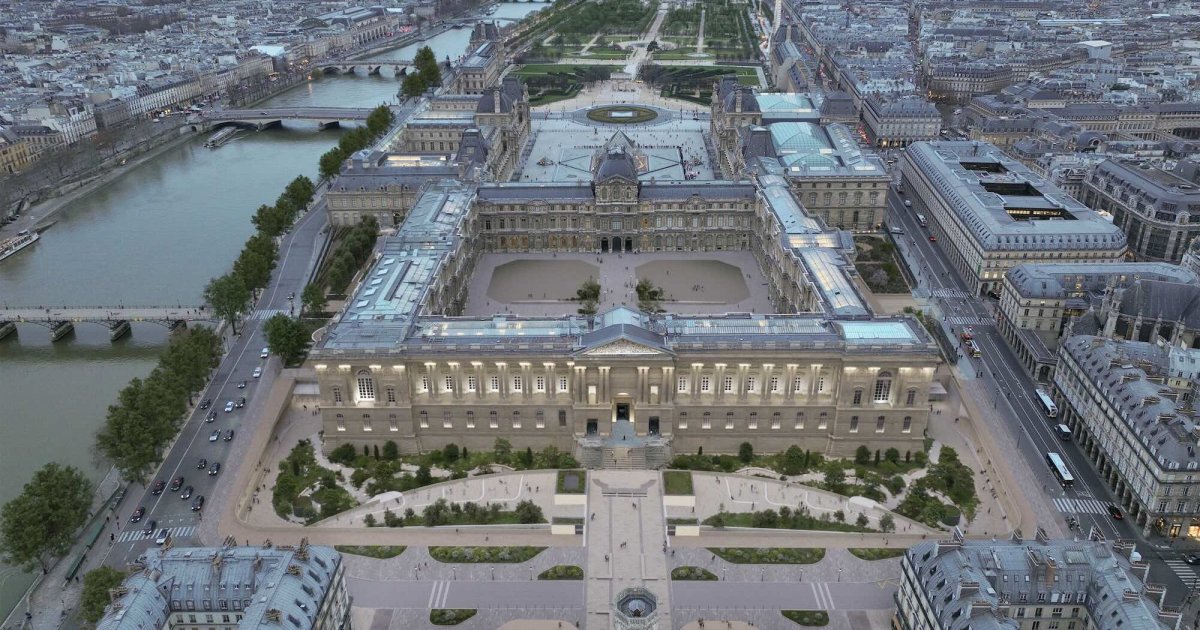
The French Ministry of Culture has announced the winning team for the 'Grande Colonnade' project at the Louvre, selecting STUDIOS Architecture Paris and Selldorf Architects. The ministry's press release, described as self-congratulatory and written in trendy bureaucratic language, celebrates the choice as a major advancement. However, the article criticizes the lack of transparency, noting that only three exterior visuals have been released, and argues that the project is unfunded and threatens necessary renovations at the museum, as previously highlighted by the Cour des Comptes and parliamentary representatives.

Zheng Zhilin at Linseed Projects

Zheng Zhilin presents a solo exhibition at Linseed Projects, featuring a series of new works that explore themes of memory, materiality, and spatial perception. The show includes paintings and mixed-media installations that engage with the physical and emotional textures of everyday environments, drawing on the artist's personal experiences and cultural references from contemporary Chinese life.

Romane de Watteville “I’ll miss you when I scroll away” at Istituto Svizzero, Milan

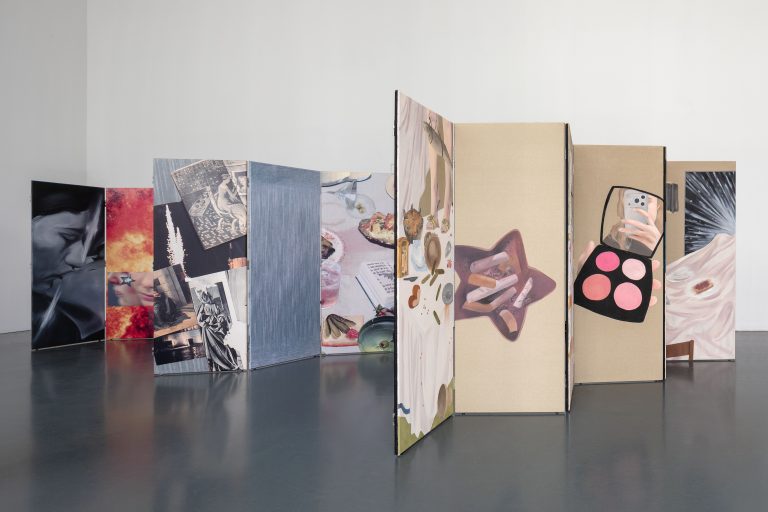
Romane de Watteville's exhibition "I'll miss you when I scroll away" opens at Istituto Svizzero in Milan, featuring an environmental installation designed specifically for the venue. Her figurative paintings explore the tension between aesthetic saturation and the disorienting experience of digital consumption, drawing from online imagery and personal archives.

Edgar Calel at Kunsthalle Bern

Edgar Calel, a Guatemalan artist born in 1987, is the subject of an exhibition at Kunsthalle Bern. His work draws on the rituals and traditions of his native Guatemala, focusing on the working conditions and environmental impact of export-oriented agricultural industries, particularly palm oil and coffee plantations that dominate the country's economy.

Marko Tadić “Funga Robo” at Trotoar, Zagreb

Marko Tadić presents his solo exhibition "Funga Robo" at Trotoar in Zagreb, showcasing recent works that explore speculative futures of cities through the lens of artistic ecologies. The exhibition title merges references to fungal mycelia and robotics, establishing a dialogue between biological systems and technological development.

Creative Thought Is Essential: A Letter from Our Editor

Jackie Andres, online editor of Colossal, writes an open letter to readers reflecting on Virginia Woolf's assertion that "thinking is my fighting." Andres connects this to contemporary concerns about declining literacy rates, the rise of AI tools like ChatGPT, doomscrolling, and "brain rot" that undermine critical thinking. She positions Colossal as a free, accessible resource for art education, noting that the publication has remained entirely free for 15 years, and highlights how educators and students use the site for lesson plans and learning.

In ‘Reverence,’ Three Decades of Paul Nicklen’s Remarkable Photographs Exalt Nature

Paul Nicklen, a renowned wildlife photographer and co-founder of the conservation organization SeaLegacy, is releasing a comprehensive book titled *Reverence* through publisher Hemeria. The volume collects 160 photographs spanning his three-decade career, including iconic images and previously unpublished works that capture the beauty and fragility of ecosystems from the Colorado River delta to the Arctic Bay.

L’artista multidisciplinare Francesco Impellizeri protagonista di un nuovo appuntamento de I Martedì Critici. Il video

Francesco Impellizeri, a multidisciplinary artist born in Trapani in 1958, is the subject of the third seasonal appointment of "I Martedì Critici," a series of meetings curated by Alberto Dambruoso and Loredana Rea. The article explores Impellizeri's career, which began in the mid-1980s and blends painting, music, photography, and performance into a distinctive, eccentric language. His work often uses paradox and sarcasm to critique contemporary stereotypes, as seen in performances like "Desfilè: mannequin per nient" and his series of "Pensierini"—childlike notebook pages that address political and social themes. His exhibitions span from the Fondazione Bevilacqua La Masa in Venice to the Museo Reina Sofía in Madrid and the Museo del Barrio in New York.

At the 2026 Met Gala, 'Fashion is Art.' Here's what to expect

The 2026 Met Gala will take place on the first Monday in May at New York's Metropolitan Museum of Art, supporting the Costume Institute. The spring exhibition is titled "Costume Art" and will be the first to occupy the new Condé M. Nast Galleries. The dress code is "Fashion is Art," inviting guests to explore fashion as an embodied art form. Co-chairs include Beyoncé, Nicole Kidman, Venus Williams, and Anna Wintour, with Jeff Bezos and Lauren Sánchez Bezos as honorary chairs. The event will be livestreamed by Vogue, hosted by Ashley Graham, La La Anthony, Cara Delevingne, and Emma Chamberlain.

Artists invited to submit work for Moraine Valley’s annual community show

Moraine Valley Community College in Palos Hills, Illinois, is inviting artists aged 18 and older living within 50 miles to submit up to two pieces for its 23rd annual community art show. Submissions are accepted May 19-21, with notifications on May 26. The exhibition runs May 29 to July 30, opening with a reception and awards ceremony on May 30. This year’s juror is Lisa DeLuca, a photographer and teaching artist with experience as a recruiter for art schools and a docent at the Museum of Contemporary Art, Chicago. She has previously juried the college’s high school exhibition and other regional shows.