filter_list Showing 2465 results for "DIS" close Clear
search
dashboard All 2465 museum exhibitions 1355article local 357article news 233article culture 178trending_up market 93rate_review review 67person people 67article policy 42candle obituary 37gavel restitution 34article gallery 1article event 1
date_range Range Today This Week This Month All
Subscribe

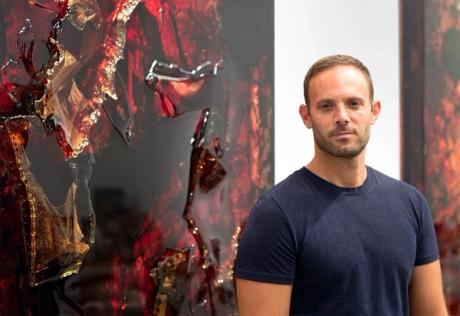
‘Blood can either be a connective tissue or something used for division’: Jordan Eagles on his show a Pioneer Works

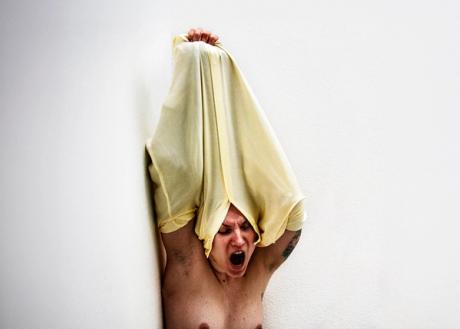
Jordan Eagles presents "Bases Loaded," a solo exhibition at Brooklyn's Pioneer Works that explores his lifelong fandom of the New York Mets through works made with donated blood and medical waste. The show features three bodies of work: large-scale reproductions of New York Post covers about the team, cast-resin sculptures of home plate filled with blood and family artifacts, and T-shirts given to blood donors at the Mets ballpark that Eagles cropped and splashed with blood from HIV-positive gay men, arranged by color into orange and grey factions.

‘We can all coexist’: artist Es Devlin uses selfies to unite UK in portrait of a nation

Artist Es Devlin has created a new installation at the National Portrait Gallery in London titled 'A National Portrait for the National Portrait Gallery,' made in collaboration with Google Arts & Culture Lab. The work invites people across the UK to upload selfies, which are transformed into charcoal-and-chalk-style portraits using an AI model trained on Devlin's own hand-drawn works. These portraits then appear on a constantly evolving projected carousel, blending and dissolving into one another. Devlin, known for designing visual worlds for Beyoncé, Adele, and the London Olympics closing ceremony, describes the piece as a non-verbal space for coexistence amid national division.

Most famous image of JMW Turner not a self-portrait, says expert

Dr James Hamilton, a leading Turner expert, has claimed that the most famous portrait of JMW Turner—long believed to be a self-portrait and featured on the UK £20 banknote—is actually by the painter John Opie. Hamilton argues that the work, dated around 1799, was mistakenly included in the Turner Bequest after the artist's death in 1851, when his studio was in disarray and the attribution was never properly verified. He points to stylistic evidence, including Opie's characteristic use of dramatic light and shadow, and calls on Tate Britain to reattribute the painting.

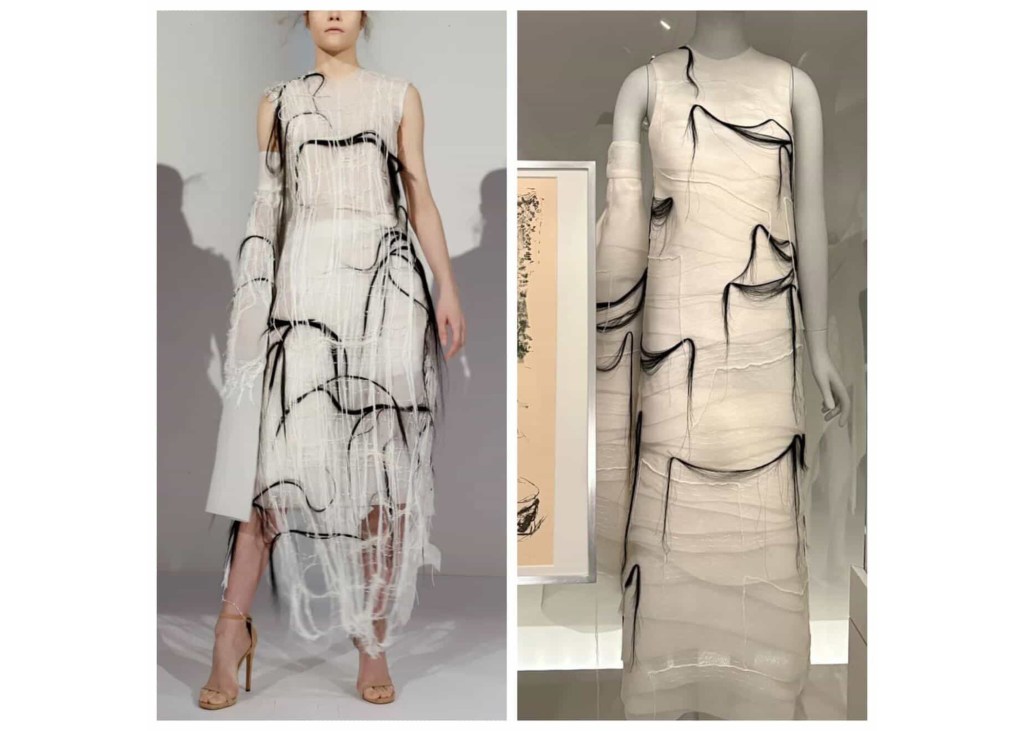
Artist Alleges Hair Dress in the Met’s ‘Costume Art’ Show Copies Her Design

London-based artist Anouska Samms has accused the Metropolitan Museum of Art's Costume Institute and curator Andrew Bolton of displaying a garment in the spring 2026 exhibition "Costume Art" that she claims is a counterfeit of her collaborative work. Samms says the piece, titled Corpus Nervina 0.0, was inspired by a 2023 hair dress she co-created with fashion designer Yoav Hadari for his label Psycheangelic. Despite a contract giving Samms sole ownership of the hair-based textile's intellectual property, the museum's wall label credits only Hadari and states Samms's textile was not used. Samms's lawyer, Jon Sharples, says the museum initially expressed interest in acquiring the original dress but later shifted to a remake after Hadari reported water damage, then stalled entirely before the exhibition opened.

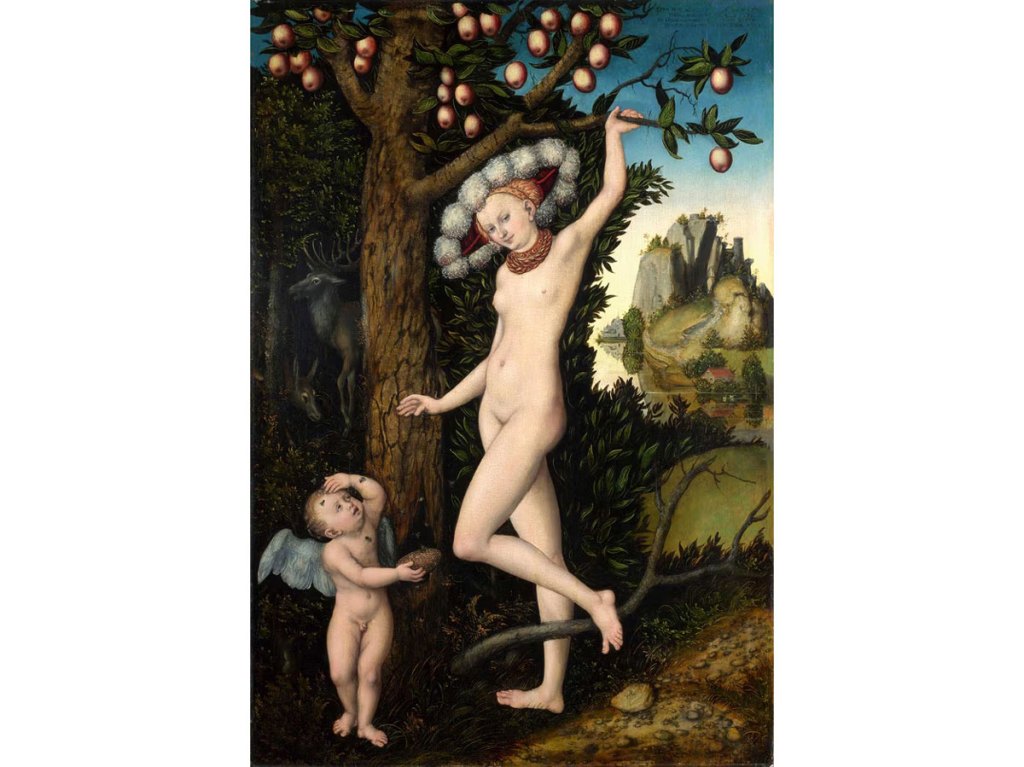
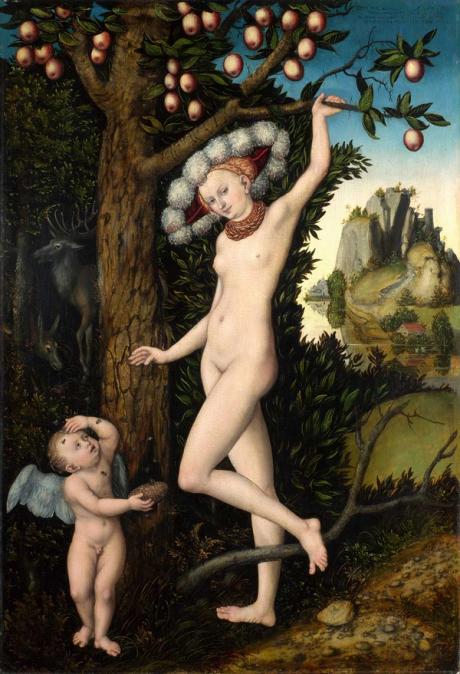
A Lucas Cranach the Elder Masterpiece Once Hung in Hitler’s Munich Apartment

A Lucas Cranach the Elder painting, *Cupid complaining to Venus* (1526–27), once hung in Adolf Hitler's Munich apartment, according to a report by the Art Newspaper. The work was identified in a 1940s photograph published in a 1978 furniture catalog and later in a 2023 article by art historian Birgit Schwarz, who confirmed Hitler's ownership via a 2006 discovery of an album at the Library of Congress. After World War II, American journalist Patricia Lochridge took the painting from a warehouse in Berchtesgaden and smuggled it to the US. The National Gallery in London acquired it in 1963 from A. Silberman Galleries, which falsely claimed it came from the 1909 auction buyer's heir; it had actually been purchased from Lochridge.

Famous Cranach painting spotted in rare photograph of Hitler’s apartment

A rare photograph from the early 1940s reveals that Lucas Cranach the Elder's painting *Cupid complaining to Venus* (1526-27), now a masterpiece in the National Gallery, London, once hung in Adolf Hitler's private Munich apartment. The image, previously published in Germany by provenance expert Birgit Schwarz, appears for the first time in an English-language publication. The painting was acquired by the National Gallery in 1963 from E. and A. Silberman Galleries in New York, which provided a false provenance. It had been taken from a warehouse of recovered art in 1945 by American journalist Patricia Lochridge, who smuggled it into the United States.

Portrait looted by Nazis found in home of Dutch SS leader’s family

An artwork looted by the Nazis from the renowned Goudstikker collection has resurfaced in the home of descendants of Hendrik Seyffardt, a notorious Dutch SS collaborator. The painting, *Portrait of a Young Girl* by Toon Kelder, was discovered by art detective Arthur Brand after a family member contacted him, revealing that the piece had hung for decades in the home of Seyffardt’s granddaughter. Brand traced the painting to a 1940 auction where part of the looted Goudstikker collection was sold, and lawyers for the Goudstikker heirs have confirmed the work was stolen and called for its return.

Archibald prize 2026: Richard Lewer’s portrait of artist Iluwanti Ken wins $100,000

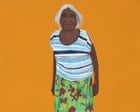
Richard Lewer has won the 2026 Archibald Prize, Australia's most prestigious portraiture award, for his portrait of Pitjantjatjara elder, traditional healer, and senior artist Iluwanti Ken. The $100,000 prize was announced at the Art Gallery of New South Wales, with the judging panel selecting the work unanimously from 59 finalists. Lewer, a six-time Archibald finalist, painted Ken life-size against a yellow ochre background, capturing her quiet authority and role as a working artist. The Wynne Prize for landscape painting was also awarded to Gaypalani Waṉambi for *The Waṉambi tree*.

Rio’s Museum of Image and Sound finally opens after 16 years in development

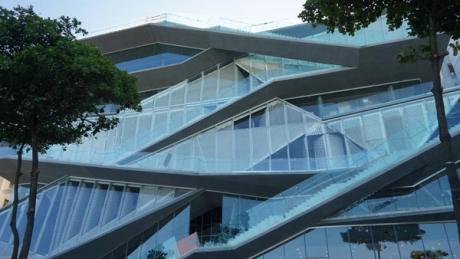
The Museum of Image and Sound (MIS-RJ) on Rio de Janeiro's waterfront opens to the public on May 8 after 16 years of development. The 10,000-sq.-m building, designed by Diller Scofidio + Renfro, features eight floors with panoramic views of Copacabana Beach and a façade honoring Roberto Burle Marx. The project faced multiple delays, funding suspensions, and controversy over urban redevelopment, including backlash when a nightclub on the site was demolished in 2010. Work resumed in 2021, and the $62.5 million museum was completed with public and private funds from donors like Itaú, Vale, and Rede Globo.

Polish pavilion at Venice Biennale explores fluidity of language with film recorded underwater

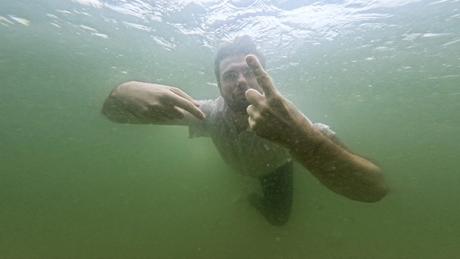
Poland's entry for the 2024 Venice Biennale, titled *Liquid Tongues*, is an audio-video installation by artists Bogna Burska and Daniel Kotowski. The work centers on a performance by the Chór w Ruchu (Choir in Motion), which includes both hearing and deaf performers, with much of the content filmed underwater in a Warsaw swimming pool. Presented across two screens in the Polish pavilion, the installation draws inspiration from whale song to explore alternative modes of communication, using spoken English and International Sign. The project builds on a previous performance at Warsaw's Zachęta National Gallery of Art and was developed in close collaboration with curators Ewa Chomicka and Jolanta Woszczenko.

Beware the technology rat trap: Cooper Jacoby’s standout contribution to New York’s Whitney Biennial

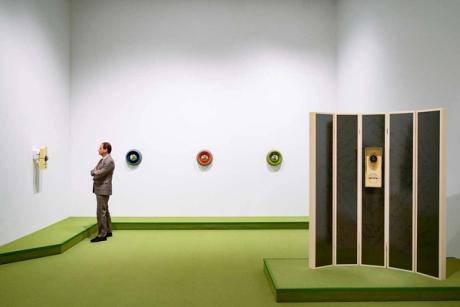
Cooper Jacoby's sculptures at the Whitney Biennial explore how AI corporations and other companies turn personal data into financial assets. His five works, displayed in a green-carpeted space he describes as "almost like a rat trap," include the 2026 piece *Estate (July 10, 2022)*—a folding screen with an intercom that uses AI trained on social media posts from deceased creatives to generate vocal outputs. Another series, *Mutual Life*, features eye-like sculptures with clock hands that spin based on the biological age of anonymous individuals in the artist's network. Jacoby's work highlights the lack of regulation around digital life and death, and the opaque nature of AI systems.

'I wanted to catch the desperation': Dries Verhoeven on turning the Dutch pavilion into a bunker for the Venice Biennale

Artist Dries Verhoeven has transformed the Dutch pavilion at the Venice Biennale into a bunker-like space by covering its iconic glass-and-steel structure with metal shutters. Inside, visitors experience a gradually darkening environment and a raw vocal performance by 13 rotating performers, intended to evoke desperation and confusion about contemporary global crises. The work critiques the modernist ideals of openness and optimism embodied by the pavilion, designed by Gerrit Rietveld in 1953.

Muscle memory: Natasha Tontey’s wild Venice installation explodes perceptions of Indonesian history

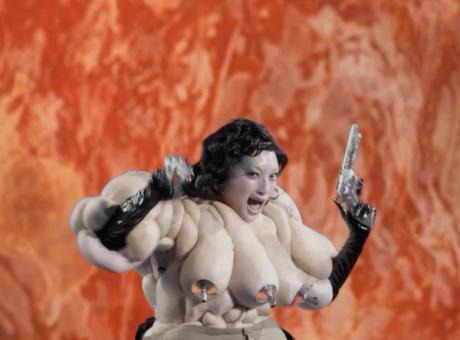
Natasha Tontey's new installation "The Phantom Combatants" at the Ateneo Veneto in Venice reimagines the story of Len Karamoy, a woman who was part of the CIA-funded Permesta resistance movement in North Sulawesi, Indonesia (1957-1961). The 22-minute film, commissioned by the LAS foundation and Amos Rex, features absurdly muscular mutant warriors and draws on Indigenous belief systems, video games, Indonesian soap operas, and B-movie aesthetics to explore themes of autonomy, resistance, and historical perspective.

Pedro Reyes’s new Lacma commission sparks criticism in Mexico

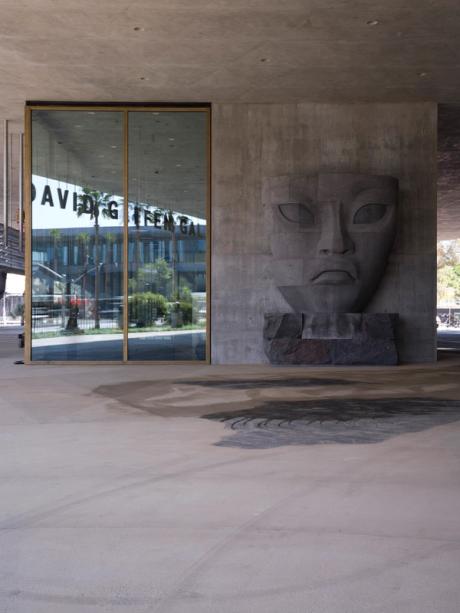
Pedro Reyes's new sculpture 'Tlali' (2026), a four-meter-tall Olmec-inspired volcanic-stone female face installed at the Los Angeles County Museum of Art (Lacma), has sparked criticism in Mexico. An open letter signed by nearly 80 cultural figures, published on the art criticism site Cubo Blanco, alleges the work is a new version of a 2021 project that was canceled after backlash. That earlier project, 'Tlalli', was meant to replace a Christopher Columbus statue on Mexico City's Paseo de la Reforma but faced opposition from over 300 cultural figures who argued a male, non-Indigenous artist should not represent Indigenous women. The site later became the 'Glorieta de las Mujeres que Luchan', an anti-monument against gender violence.

A.I. Identifies Holbein Drawing as Possible Portrait of Anne Boleyn

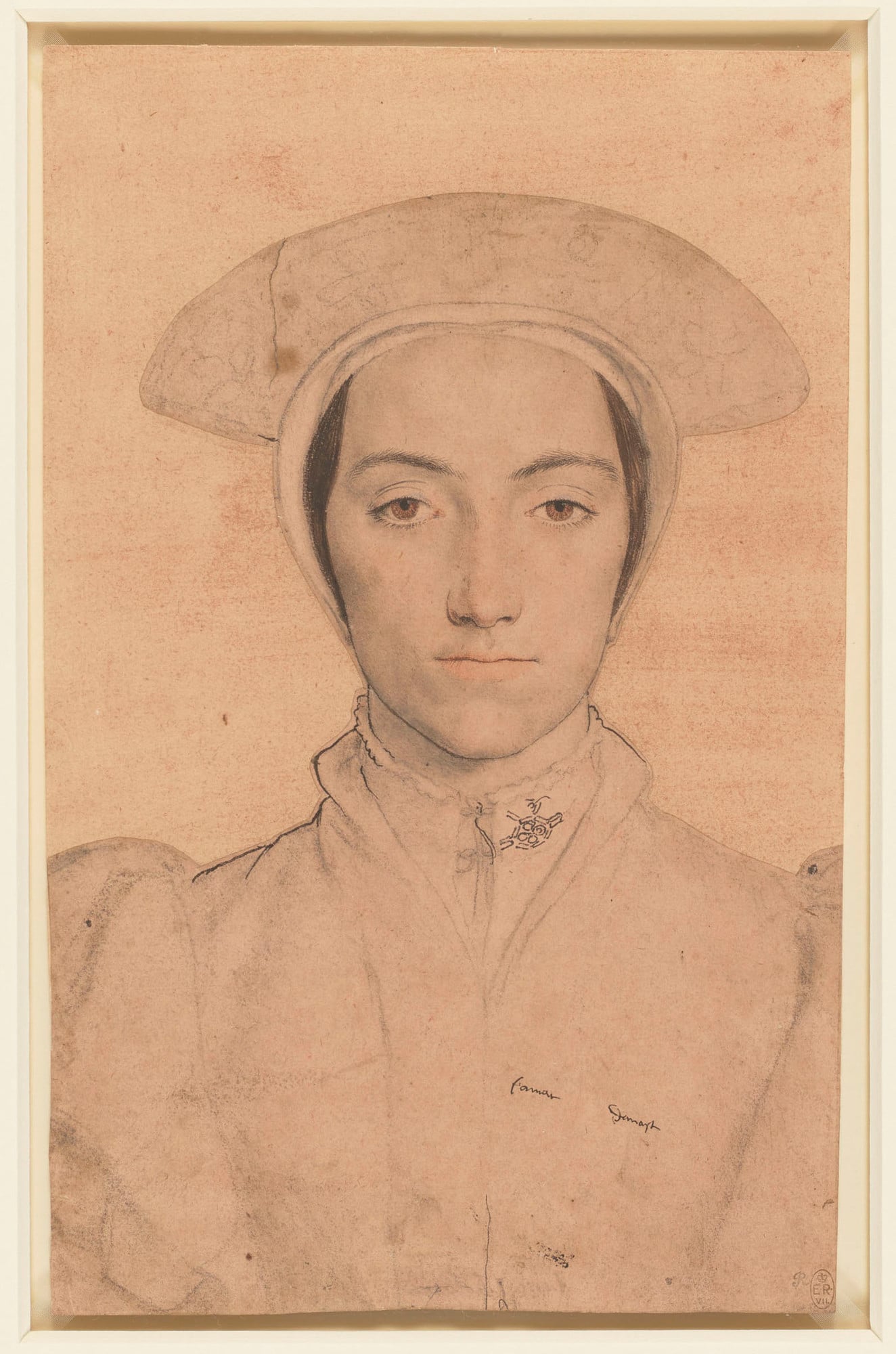
Researchers at the University of Bradford have used artificial intelligence to analyze preparatory drawings by Hans Holbein the Younger in the Royal Collection at Windsor Castle. The AI model, which previously identified a forgotten Raphael painting, suggests that a drawing long believed to depict Anne Boleyn actually shows her mother, Elizabeth Howard, while another drawing labeled "Unidentified Woman" likely portrays Anne Boleyn herself. The findings, published in Heritage Science, are based on biometric analysis of facial features, bone architecture, and proportional relationships, offering quantifiable evidence to resolve long-standing scholarly uncertainty about the sitters' identities.

Mystery sitter in Holbein portrait could be Anne Boleyn, AI analysis finds

Researchers using AI have analyzed two Renaissance sketches by Hans Holbein from the Royal Collection, known as the Windsor sketch and the Unidentified Woman. The AI model, developed by Professor Hassan Ugail at the University of Bradford, compared the entire Holbein corpus and found that the Unidentified Woman may actually be Anne Boleyn, while the Windsor sketch—long thought to depict Boleyn—may instead show her mother, Elizabeth Howard. The study suggests the works were incorrectly inscribed in the 1700s, leading to centuries of misidentification.

The Devil Wears Prada 2 to Lenny Henry: your complete entertainment guide to the week ahead

The Guardian's weekly entertainment guide highlights two major art exhibitions opening in May 2025: 'Aleksandra Kasuba' at Tate St Ives (2 May to 4 October) and 'Zurbarán' at the National Gallery, London (2 May to 23 August). The Kasuba show is the first UK presentation of the Lithuanian American artist's proto-immersive 'spatial environments,' featuring early paintings, mosaics, and installations focused on utopian social harmony. The Zurbarán exhibition presents a blockbuster survey of the 17th-century Spanish Baroque master, known for his intense religious subjects and dramatic chiaroscuro.

In Venice to Install Work for the Biennale, Artist Guadalupe Maravilla Alleges Racial Profiling by Police

New York–based artist Guadalupe Maravilla, in Venice to install his work for the 2026 Venice Biennale, alleges he was racially profiled by police after leaving the Arsenale venue. Two officers demanded his documents, called backup, and attempted to handcuff him before he de-escalated the situation and left. Maravilla, known for his 'Disease Thrower' sculptures that address migration and healing, shared the incident on Instagram and provided a statement to ARTnews.

The art of politics: how global conflicts are playing out in this year's Venice Biennale

Israel is making a controversial return to the 2025 Venice Art Biennale after its pavilion was locked in 2024 with a note demanding a ceasefire in Gaza. The artist representing Israel, Belu-Simion Fainaru, will present his project "Rose of Nothingness" in the Arsenale, while Russia also returns to the Biennale after its Giardini pavilion was reassigned to Bolivia in 2024. The Art Not Genocide Alliance (ANGA) has renewed calls for a boycott and is organizing strike action to disrupt the event, accusing Israel of genocide.

Simply divine: the extraordinary supernatural visions of Francisco de Zurbarán

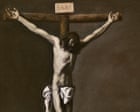
Francisco de Zurbarán, one of the three great Spanish 17th-century painters alongside Velázquez and Murillo, is finally receiving his first solo exhibition in the UK at the National Gallery in London. The show highlights his distinctive style of religious painting, characterized by stark chiaroscuro, sculptural realism, and a meditative stillness that makes the immaterial seem tangible. Works such as his crucified Christ and The Apparition of Saint Peter to Saint Peter Nolasco exemplify his ability to depict visions and inner spirituality, often commissioned by powerful religious foundations in Seville during the Counter-Reformation.

Natasha Tontey to Unveil Major New Immersive Installation Exploring Indigenous Resistance During Venice Biennale

Artist Natasha Tontey will unveil a major immersive installation titled "The Phantom Combatants and the Metabolism of Disobedient Organs" during the Venice Biennale at the Ateneo Veneto di Scienze, Lettere ed Arti. Jointly commissioned by Berlin’s LAS Art Foundation and Helsinki’s Amos Rex, the work combines video, sound, light, and sculpture to reimagine the story of Len Karamoy, a combatant in the CIA-supported Permesta movement that fought the Indonesian government from 1957 to 1961 in North Sulawesi. Tontey, a Minahasan Indigenous artist, uses LiDAR, quantum ghost imaging, and other technologies to explore Indigenous identity, ecology, and the blurring of history and myth.

Judge Orders Prado to Hold Disputed Velázquez Painting in Divorce Case

A Spanish judge has ordered the Museo del Prado in Madrid to take custody of a painting attributed to Diego Velázquez, which is at the center of a divorce dispute between steel magnate José María Aristrain and his ex-wife Gema Navarro. The work, a portrait of Philip IV linked to Velázquez’s early years in Madrid, was removed from Aristrain’s residence on March 17 and transferred to the Prado’s storage after Navarro filed a complaint alleging it had been wrongly withheld from her. The Ministry of Culture, acting with court and prosecutorial support, designated the museum as custodian until ownership is resolved. The painting had previously surfaced at auction, failing to sell in 2007 amid attribution doubts, before being acquired by Navarro in 2015 for €878,000.

Barbados's slavery museum and memorial faces major delays

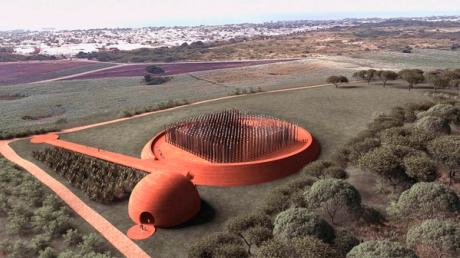
Barbados's Heritage District at the Newton Enslaved Burial Ground, a major project including a memorial, national museum, archives, and cultural complex, is facing significant construction delays more than four years after its 2021 announcement. The site, one of the largest known burial grounds of enslaved Africans in the Western Hemisphere, is being developed under the Road (Reclaiming Our Atlantic Destiny) Programme led by Prime Minister Mia Amor Mottley. While a temporary pavilion for the National Performing Arts Centre opened in August 2025, the overall completion—initially slated for 2024—has been pushed back due to expanded archival digitization, supply-chain disruptions, and a fire at the Barbados Archives Department in June 2024. The memorial, designed by Adjaye Associates, is conceived as a landscape intervention using teak sourced from Ghana.

An Art Historian’s Riotous Novel Melds Medieval Art with Monica Lewinsky

Julia Langbein's new novel *Dear Monica Lewinsky*, published by Doubleday, follows translator Jean Dornan as she revisits a traumatic relationship with a professor from her youth, set against the backdrop of the 1998 Monica Lewinsky scandal. The story interweaves medieval art, particularly the 13th-century *Golden Legend*, with Lewinsky's public shaming, as Jean prays to Lewinsky for guidance and is visited by a haloed version of her. Langbein, an art historian with a PhD from the University of Chicago, draws on her expertise to explore themes of humiliation, self-estrangement, and collective experience.

‘It’s not much but, at the same time, it’s very much’: the enduring impact of Sade’s style

The article discusses the enduring style of Sade Adu, frontwoman of the British group Sade, following the band's announcement of their induction into the 2026 Rock and Roll Hall of Fame. It highlights how Adu's signature look—scraped-back hair, red lipstick, hoop earrings, and simple black dresses or denim—has become iconic and influential, with her outfits featured in exhibitions like V&A East's 'The Music is Black' and referenced by celebrities such as Drake. The piece traces the origins of her style to her fashion design studies at Saint Martin's School of Art and her early work with designer Fiona Dealey.

Barber and Osgerby: The Best of London Design Arrives in Exhibition in Milan

Barber e Osgerby: il meglio del design londinese arriva in mostra a Milano

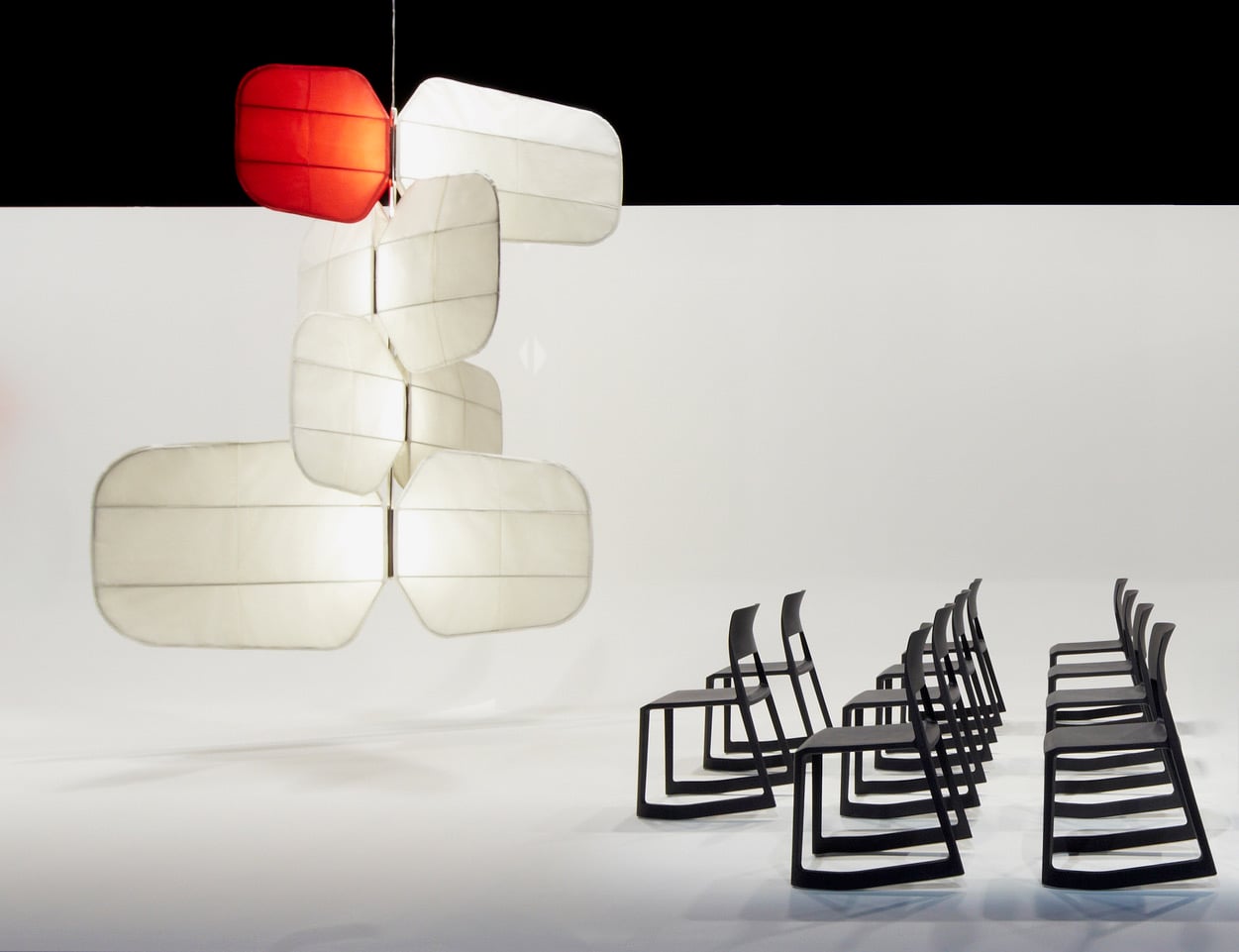
Designers Edward Barber and Jay Osgerby have opened a major exhibition, 'Edward Barber | Jay Osgerby. Alphabet,' at the Triennale di Milano. The show presents a chronological survey of their work from the mid-1990s to 2022, featuring furniture, objects, and prototypes displayed on large plinths, alongside an archival section revealing their creative process.

Hito Steyerl “The Island” Osservatorio Fondazione Prada / Milan by Piermario De Angelis

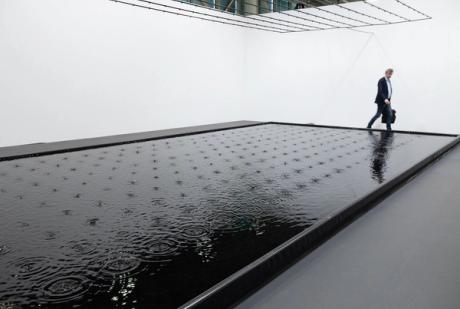
Hito Steyerl's solo exhibition "The Island" at Osservatorio Fondazione Prada in Milan explores the concept of submersion as both a geological condition and a media regime. The show takes its title from a Neolithic artificial island discovered off the coast of Korčula, Croatia, which remained submerged for approximately seven thousand years. Through video interviews, installations, and critical assemblages, Steyerl connects this submerged structure to contemporary issues of digital image circulation, algorithmic power, and the dispossession of agency, drawing on science fiction, quantum physics, biochemistry, and deep time.

Inside LACMA’s Eye-Popping New Home, How Do You Find the Art?

The Los Angeles County Museum of Art (LACMA) has opened its new David Geffen Galleries building, a major architectural project designed to be a glamorous cultural beacon. The building itself is a striking landmark, but the exhibition spaces within present significant challenges for the display of art, creating a complex, maze-like environment for visitors.

Amanda Heng Walks the Walk

Singaporean artist Amanda Heng, now 74, is representing Singapore at this year's Venice Biennale with her exhibition titled *A Pause*, featuring a site-specific installation and durational performance. Known for her decades-long performance *Let's Chat* (1996–), in which she cleans mung bean sprouts with participants to foster casual conversation, Heng transforms everyday domestic gestures into feminist acts. Her work reclaims the body, labor, and relationships as sites of personal autonomy. She was part of the pioneering, male-dominated generation of Singaporean contemporary artists in The Artists Village, but left due to its hierarchical structure to pursue collaborations with women artists and further studies.

Sue Webster: Fandoms and Icons

Sue Webster's solo exhibition 'Birth of an Icon' at Firstsite in Colchester traces her lifelong obsession with pop culture, from teenage fandom of Siouxsie Sioux to her evolution as an artist. The show features a sprawling installation 'The Crime Scene' (2017–) that maps her personal history through albums, newspaper clippings, and objects, alongside painted jackets and self-portraits. It marks a departure from her earlier work as half of the duo Tim Noble and Sue Webster, embracing a more personal, amateurish style that reflects her journey through adolescence, marriage dissolution, and motherhood.