filter_list Showing 1177 results for "Lore" close Clear
search
dashboard All 1177 museum exhibitions 850article culture 97article local 81article news 45rate_review review 32trending_up market 27person people 24candle obituary 9article policy 8gavel restitution 2article event 2
date_range Range Today This Week This Month All
Subscribe

"Hier darf laut gelacht werden"

During the opening week of the Venice Biennale, multiple reports detail controversies surrounding the Israeli and Russian pavilions. According to Hyperallergic, artist Belu-Simion Fainaru of the Israeli pavilion threatened legal action against the Biennale after the jury sought to exclude Israel and Russia from prizes over alleged human rights violations, citing antisemitism and nationality-based discrimination. This may have prompted the jury's sudden resignation. Meanwhile, taz reports that Russia's pavilion is a macabre 'dance of death' blending techno and political denial, while Israel's pavilion faces a 'silent boycott' and social ostracism. Zeit describes protests by Pussy Riot and Femen outside the Russian pavilion as a defining image, with activists chanting 'blood sticks to the art of this country.'
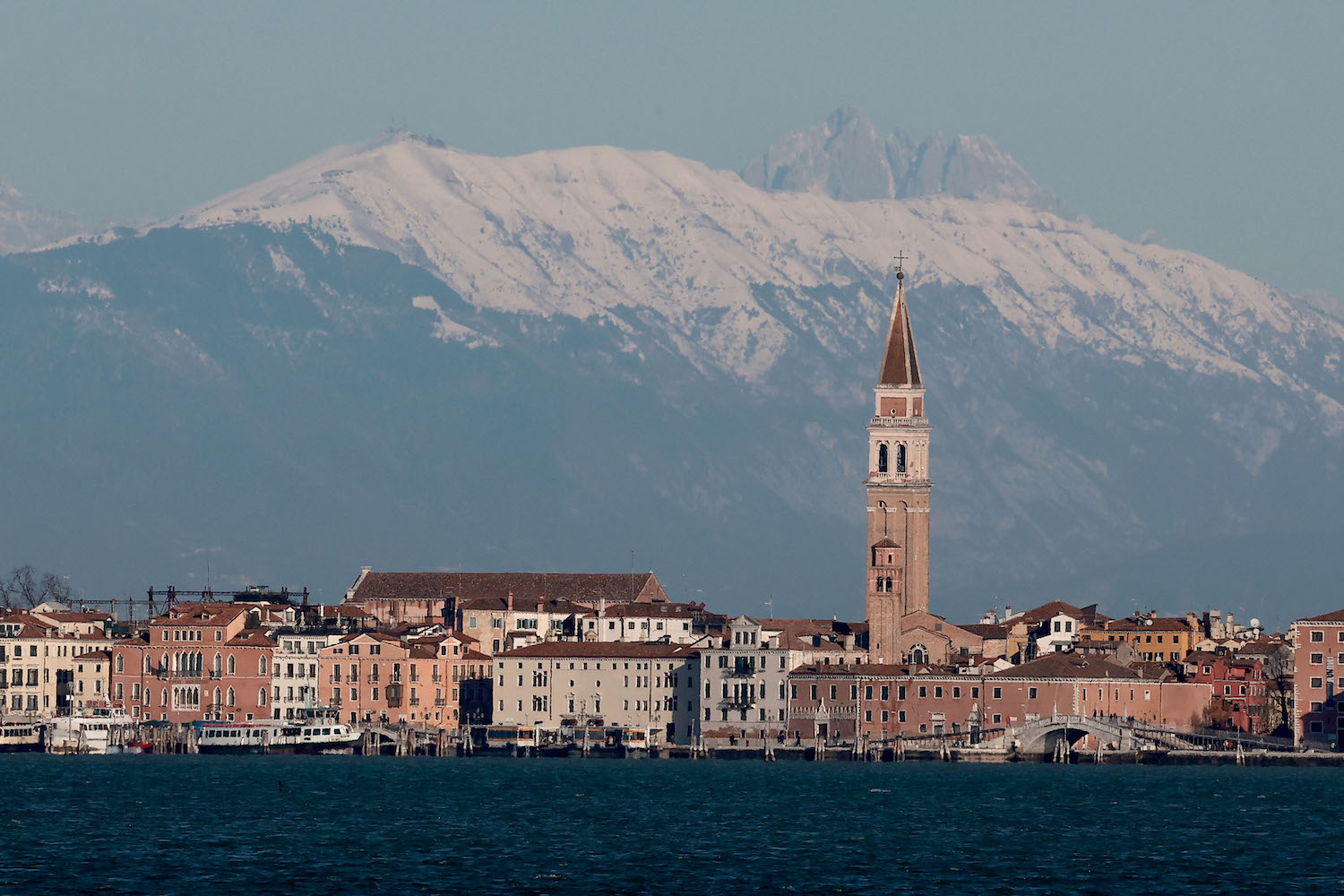
Wer vertritt wen in Venedig?

What We Throw Away Does Not Disappear

Was wir wegwerfen, verschwindet nicht

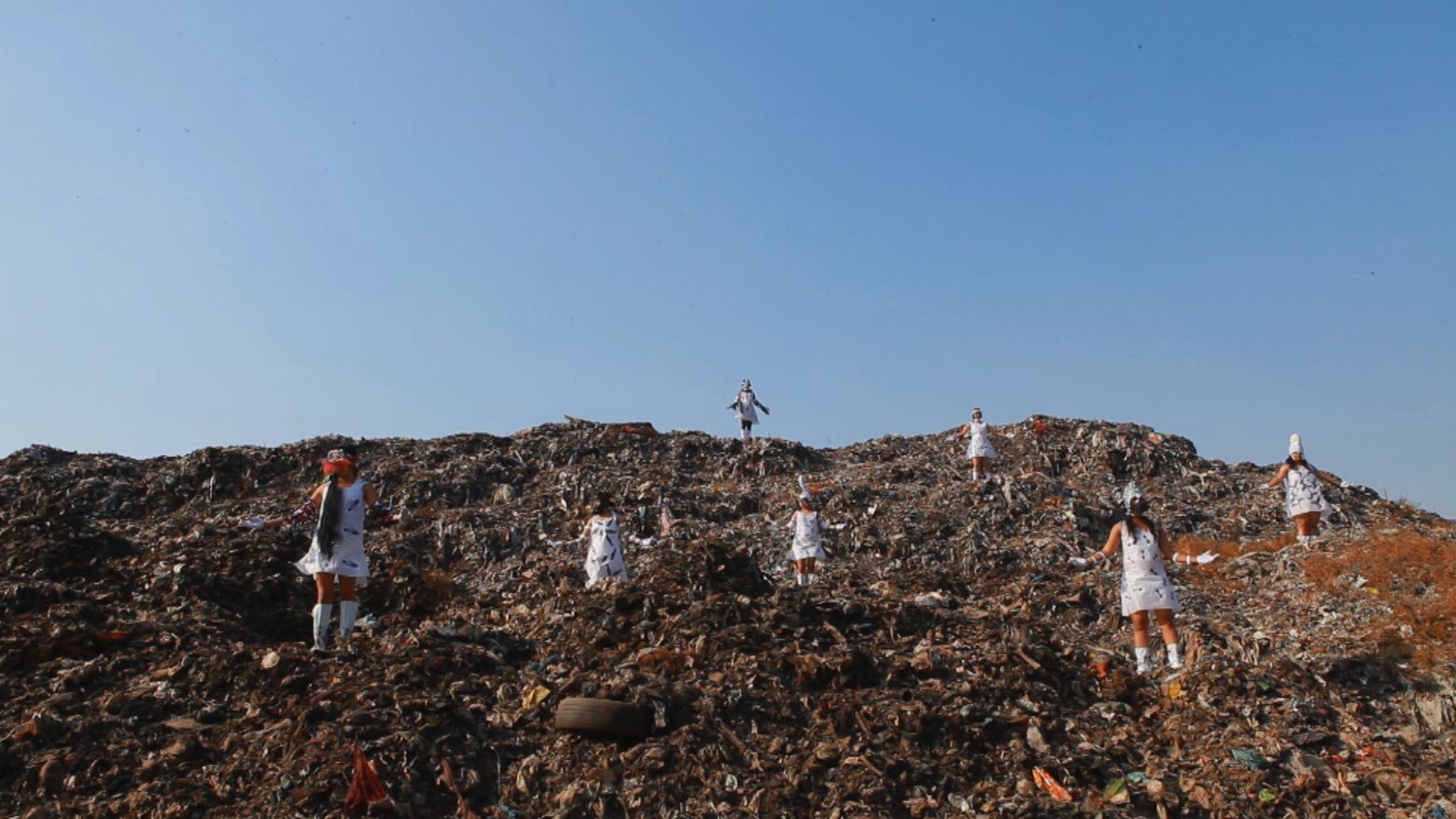
The Museum Ostwall at the Dortmunder U in Dortmund has opened a new exhibition titled "Müll – die globalen Wege des Abfalls" ("Waste – The Global Paths of Garbage"), curated by Christina Danick and Michael Griff. Featuring around 50 international artworks from the 20th and 21st centuries, including two newly commissioned pieces, the show uses art to explore waste as material, motif, and aesthetic strategy. Key works include Kader Attia's "Los de Arriba y Los de Abajo," which addresses power imbalances through the lens of garbage in Hebron, and historical pieces by César Baldaccini, Arman, and HA Schult. The exhibition also highlights contemporary issues such as e-waste, global waste trafficking, and the environmental impact of industrial nations on the Global South.

Ballets of Repetition

Ballette der Wiederholung

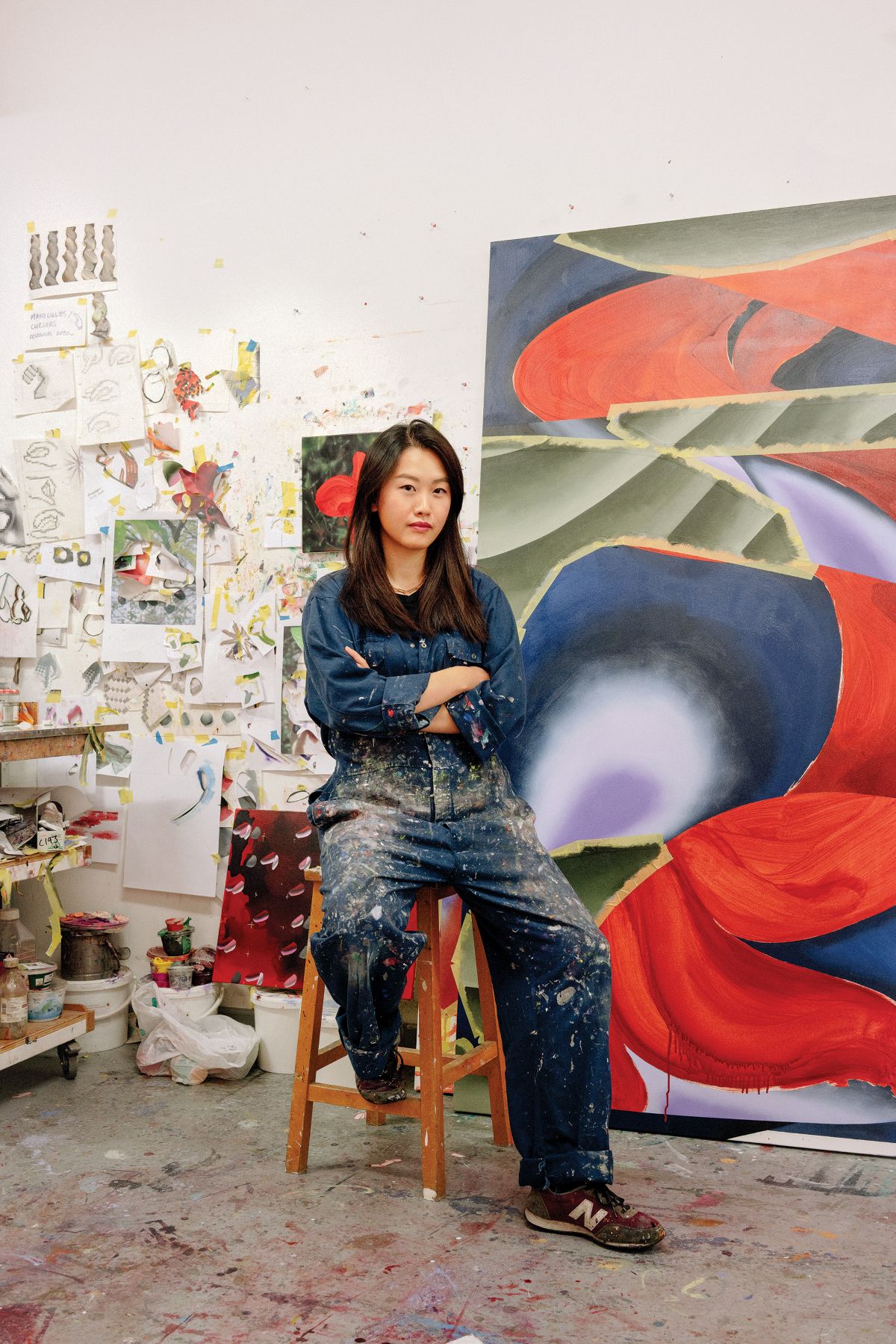
Vivien Zhang, a painter whose work blends botany, mathematics, and migration, is now exhibiting in Berlin. Her paintings feature tongue-like petals, crystalline butterflies, dewdrops, seed capsules, chromosomes, and frozen brushstrokes, all arranged in grid-like patterns that create a ballet of repetition. The forms are technoid-organic and three-dimensional, presenting enigmatic visual puzzles that explore how shapes, identities, and systems emerge anew.

Einatmen – Ausatmen

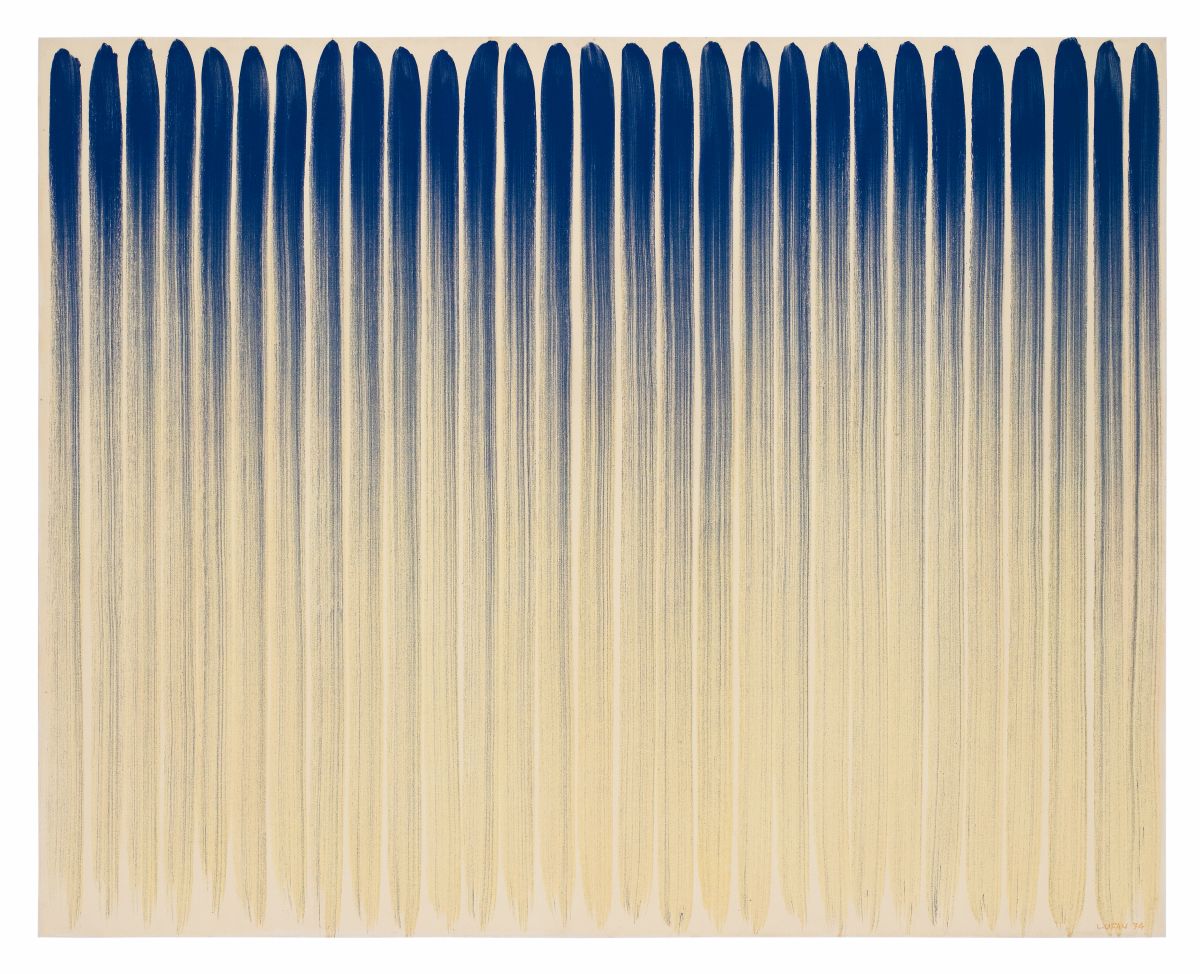
Lee Ufan, the renowned Korean artist known for his meditative single brushstroke paintings, is the subject of a feature article in Monopol. The piece visits his home in Kamakura, Japan, where he lives and works in a simple wooden cube house, reflecting the minimalist philosophy that defines his art. The article explores how Lee finds the entire universe in a single brushstroke, and how the art world is increasingly captivated by his serene, contemplative works.

Special Interest: Marble

Spezialinteresse: Marmor

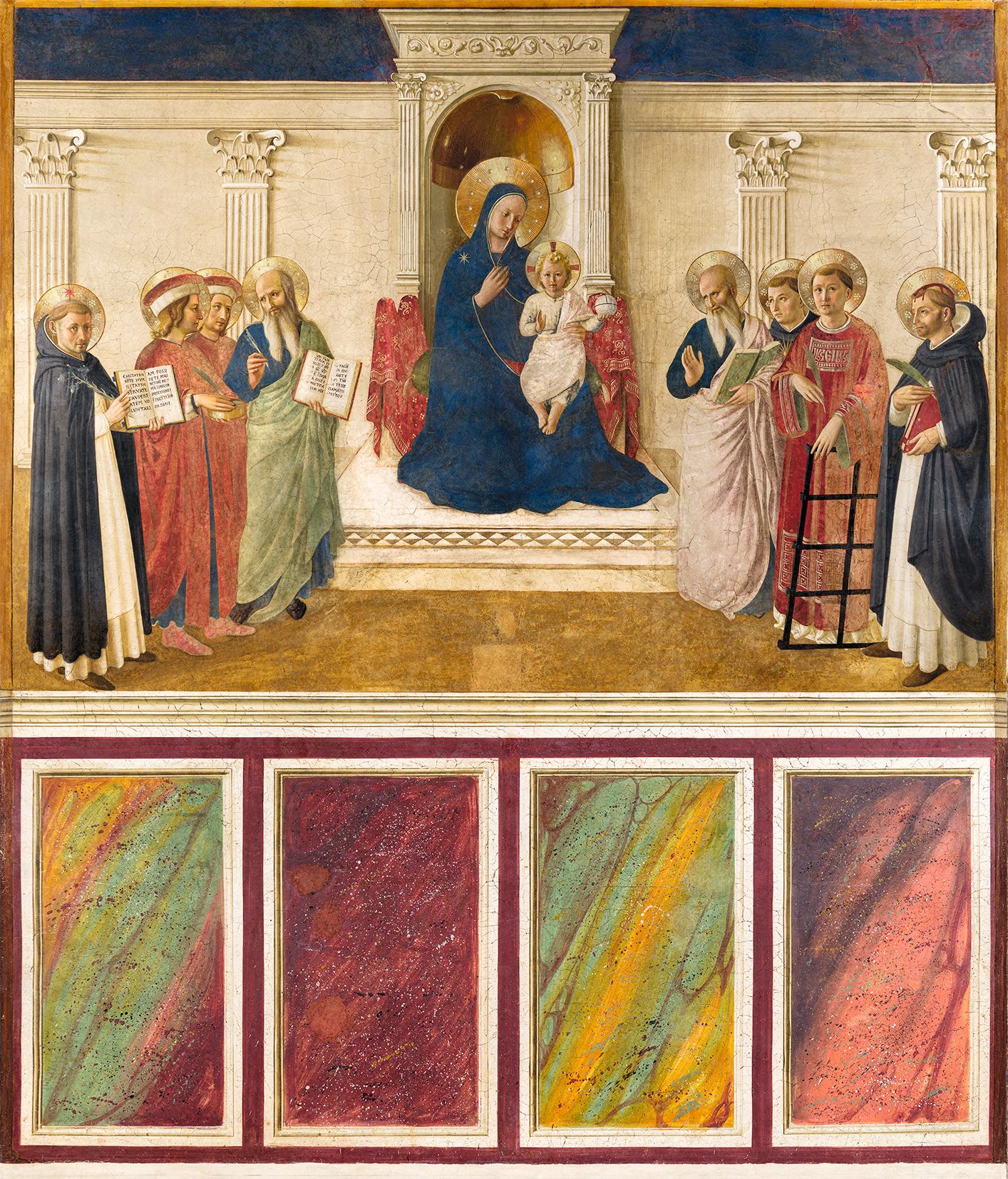
Karl Kolbitz has published a new book focusing on the depiction of marble in Early Renaissance paintings. He explores how artists used the fictional representation of marble to visualize the divine, drawing inspiration from art historian Georges Didi-Huberman and employing modern imaging techniques to reveal previously hidden details.

Quelques œuvres choisies au gré des 6 salles d’exposition

The article presents a thematic tour through six exhibition rooms dedicated to still life painting, focusing on works by Giorgio Morandi and Pablo Picasso. Each room explores a different conceptual angle: the grammar of objects in Morandi's metaphysical still lifes, the poetic dimension of Picasso's cubist compositions, contemporary vanitas motifs, the anti-Albertian nature of the genre, the interplay of presence and erasure, and the dislocation of form in Morandi's etchings. The exhibition draws on art historical references from Norman Bryson and Cesare Brandi to frame the evolution of still life from tradition to radical abstraction.

Dans les ateliers de la Maison du vitrail, où création et restauration conjuguent au présent cet art du verre et de la couleur

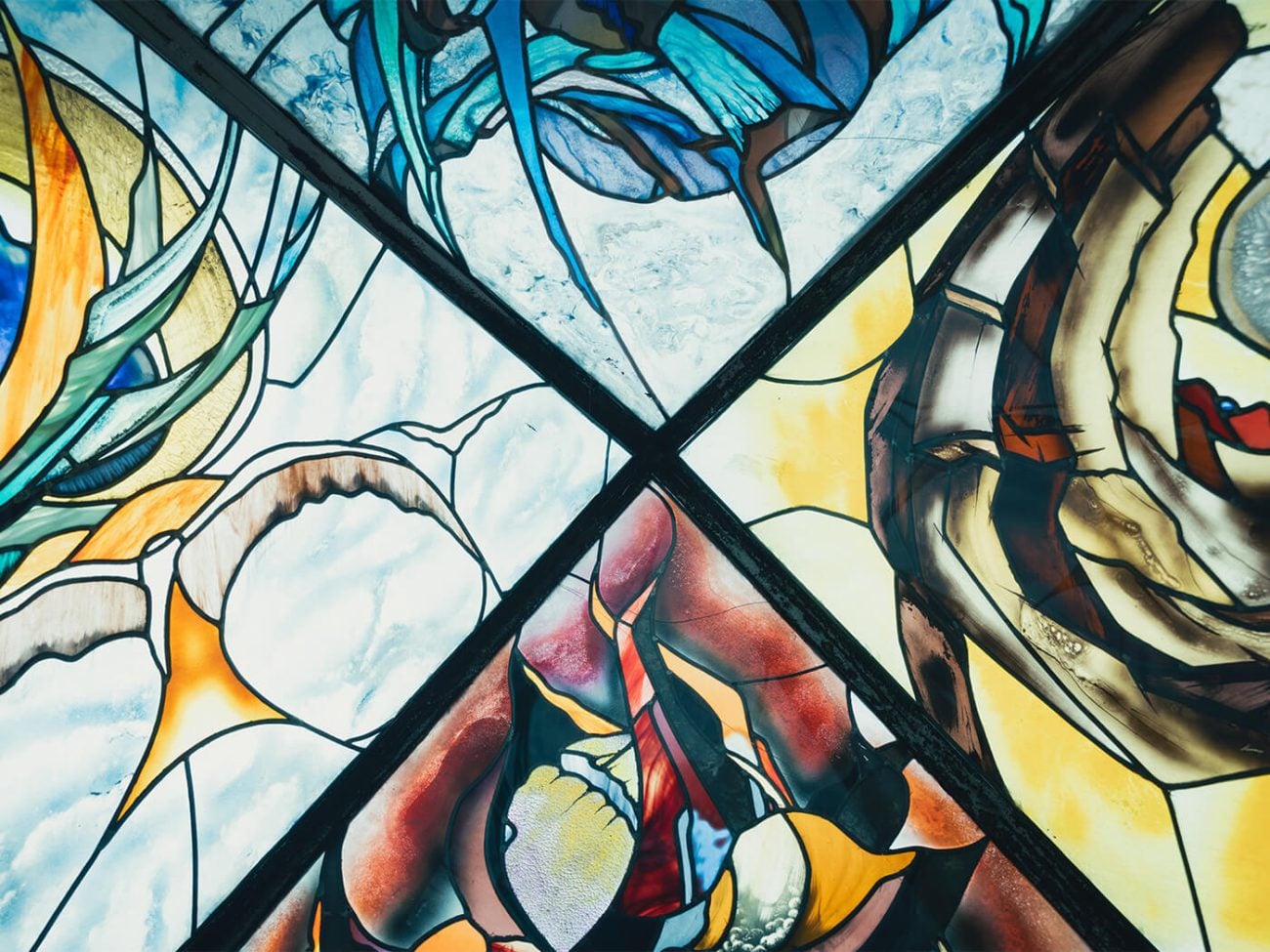
The article visits the Maison du vitrail, a French stained-glass workshop founded in 1973 by Christiane and Philippe Andrieux and now run by their daughter Emmanuelle. Located in a historic courtyard, the studio employs fourteen artisans who cut, paint, and assemble colored glass for both restoration and original creations. The workshop has evolved from a small space in Châtillon to a thriving enterprise that handles everything from church windows and Parisian staircases to trophies, jewelry, and commercial projects for clients like Truffaut and the Casino de Paris.

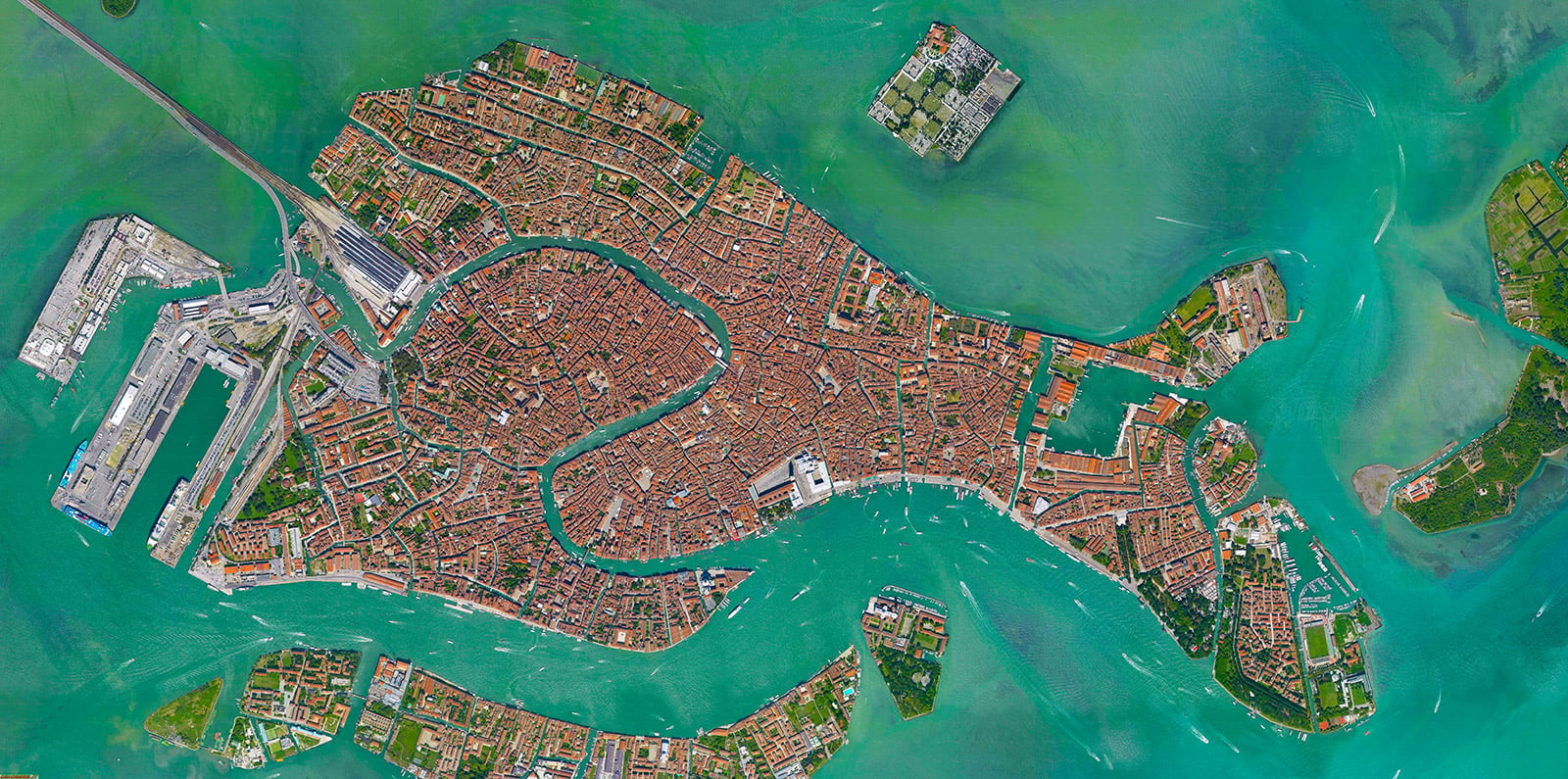
Venice Biennale 2026: The Pavilions Not to Be Missed

Biennale de Venise 2026 : les pavillons à ne surtout pas manquer

The 61st Venice Biennale, curated by Koyo Kouoh as an invitation to slow down and reconnect with emotions, features a constellation of contemplative and powerful proposals across the city. Notable national pavilions include the Holy See transforming a monastic garden into an immersive sound experience by Soundwalk Collective, Canada exploring colonial heritage through giant water lilies by Abbas Akhavan, and Austria electrifying the Giardini with radical performances by Florentina Holzinger. Other highlights include Spain dissecting collective memory through postcards, Poland imagining new forms of language between human and underwater worlds, and India's pavilion exploring notions of home.

Biennale de Venise 2026 : les saturnales éblouissantes d’Yto Barrada pour le pavillon français

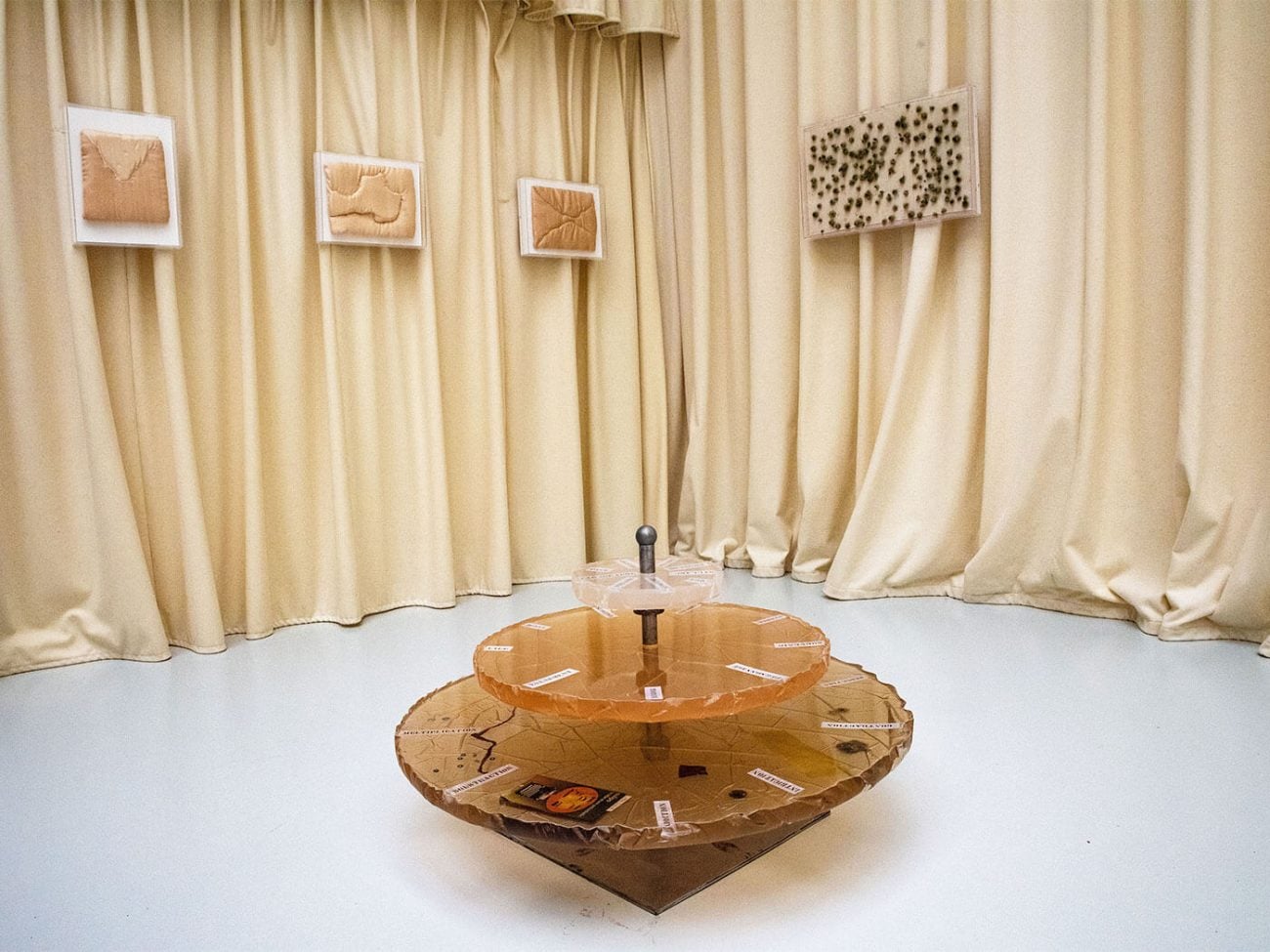
Yto Barrada has been selected to represent France at the 61st Venice Biennale in 2026 with her exhibition "Comme Saturne" (Like Saturn) in the French Pavilion. The installation features rebellious stage curtains hiding wasp nests and a copper daguerreotype plate of a planet, a large rock, a Wheel of Fortune, and a nostalgic vanitas arrangement around a missing mirror frame. Curated by Myriam Ben Salah, the show explores textile and natural dyeing, with three cabinets addressing the transmission of know-how, migration of plants and people, postcolonial history, and Enlightenment imperialism. A central room displays 70 pieces forming a symmetrical frieze of red natural dyes, while a black monochrome patchwork highlights the difficulty of achieving black in dyeing. Barrada is the fifth woman to represent France at the Biennale.

For the 61st Venice Biennale, a quest for beauty despite a troubled world

Pour la 61e Biennale de Venise, une quête de beauté malgré un monde troublé

Koyo Kouoh, the Swiss-Cameroonian curator who was set to become the first African woman to direct the Venice Biennale, died suddenly on May 10, 2025, at age 57, just weeks before the opening of the 61st edition she had conceived. Titled "In Minor Keys," the exhibition at the Giardini and Arsenale will proceed posthumously based on her detailed directives, featuring 111 artists including Laurie Anderson, Wangechi Mutu, and Kader Attia, with a focus on beauty, resilience, and radical emotional connection amid global turmoil.

L’œuvre « indocile » du photographe Guido Guidi exposée au BAL

The article announces the exhibition of photographer Guido Guidi's work at Le BAL in Paris, curated by Simona Antonacci, Pippo Ciorra, and Antonello Frongia, with scenography by Cyril Delhomme. The show, titled "Col tempo, 1956-2024," runs from February 20 to May 24, 2026, and was previously presented in a larger version at the MAXXI museum in Rome. Guidi, now 85, is described as the last of a generation of Italian photographers—alongside Luigi Ghirri and Ugo Mulas—who radically redefined photographic language through patient, obstinate reflection on the act of seeing.

« Le monde entier semble s’être mis en mouvement, animé par une soif d’expériences culturelles »

The article explores the transformation of cultural travel for artists and art lovers, contrasting the arduous, unknown journeys of historical figures like Eugène Delacroix, Paul Gauguin, and Ella Maillart with today's accessible, curated experiences. It describes how contemporary artists such as Ólafur Elíasson, JR, and Marina Abramović now use travel itself as a medium, creating works that engage with climate change, social issues, and presence. Destinations like the Venice Biennale, AlUla in Saudi Arabia, Naoshima in Japan, and Le Voyage à Nantes are highlighted as hubs where art and travel merge into immersive, sensory experiences.

‘What Color is Your Sky Today?’: The Becoming of the Image

Armineh Negahdari, a Bordeaux-based artist, presents her first institutional solo exhibition in France at the Fondation Louis Vuitton's Open Space series. Titled 'What Color is Your Sky Today?': The Becoming of the Image, the show features a new body of drawings that use charcoal, pastel, and oil paint to explore unstable morphologies between human, vegetal, and animal forms. The works resist narrative closure, emphasizing drawing as an event rather than representation, with lines that accumulate, falter, and begin again. The exhibition is on view at Gallery 8 until 30 August 2026.

Banksy statue appears in Central London.

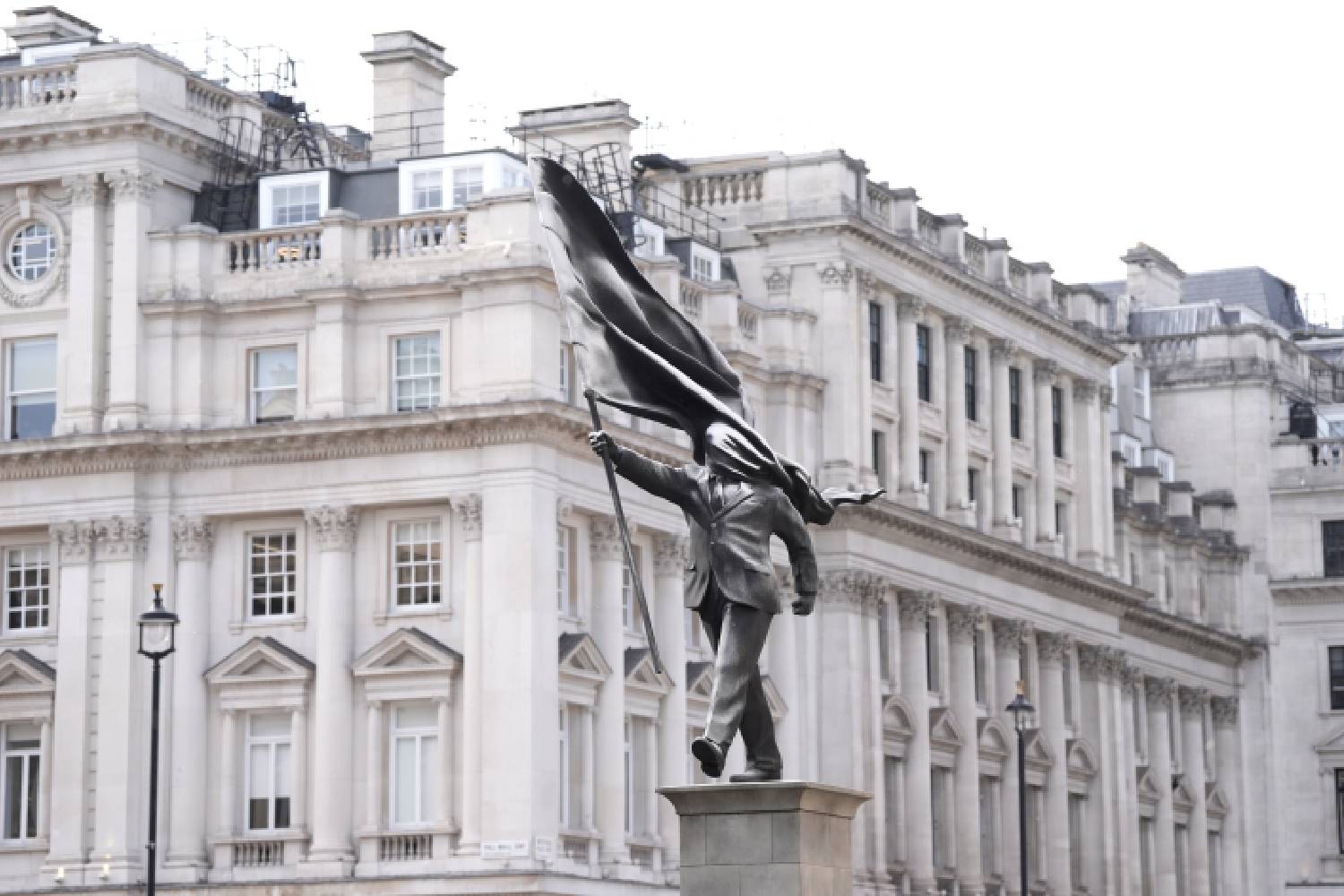
A large statue mysteriously appeared in central London earlier this week and has been confirmed as the work of the street artist Banksy. The piece, bearing the artist's signature, depicts a suited man carrying a flag that obscures his face as he walks off a plinth. It was installed in Banksy's signature guerrilla style at Waterloo Place in St. James's, near statues of Edward VII and Florence Nightingale.

Prelude for a Press at palace enterprise

An exhibition titled 'Prelude for a Press' is on view at palace enterprise in Copenhagen from March 19 to April 25, 2026, organized by Jesper List Thomsen. It features works by Marie Angeletti, Gerry Bibby, Ezio Gribaudo, Asger Jorn, Marion Milner, Anastasia Pavlou, Georgia Sagri, Jesper List Thomsen, and Jackie Wang.

Meet the Former Monk Taking Over Venice During This Year’s Biennale

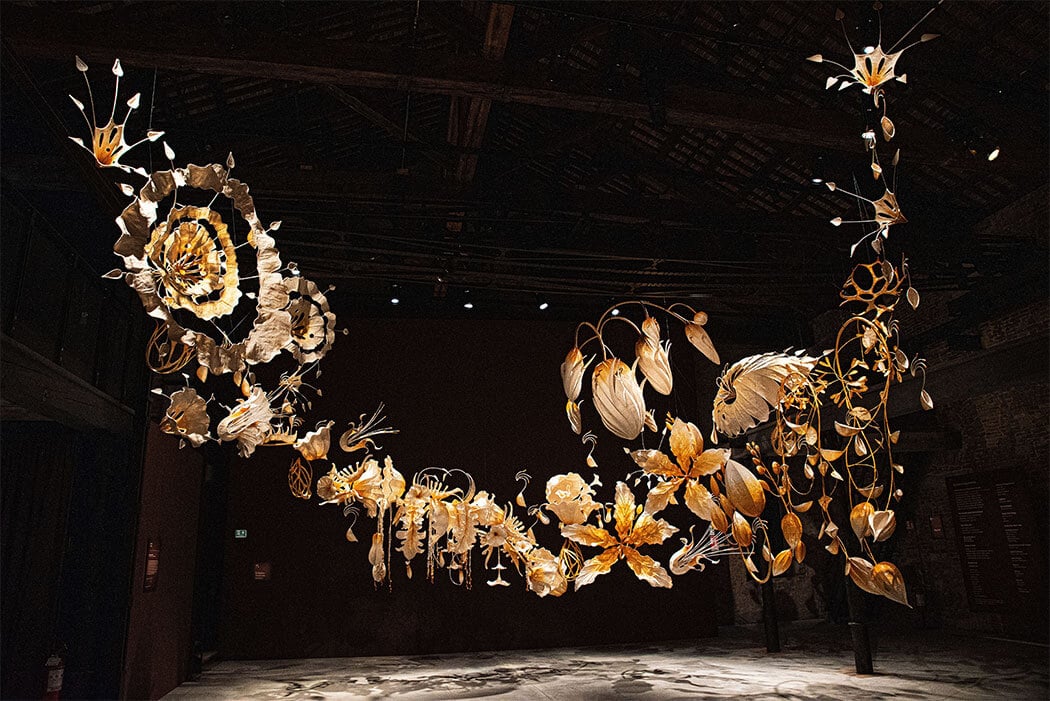
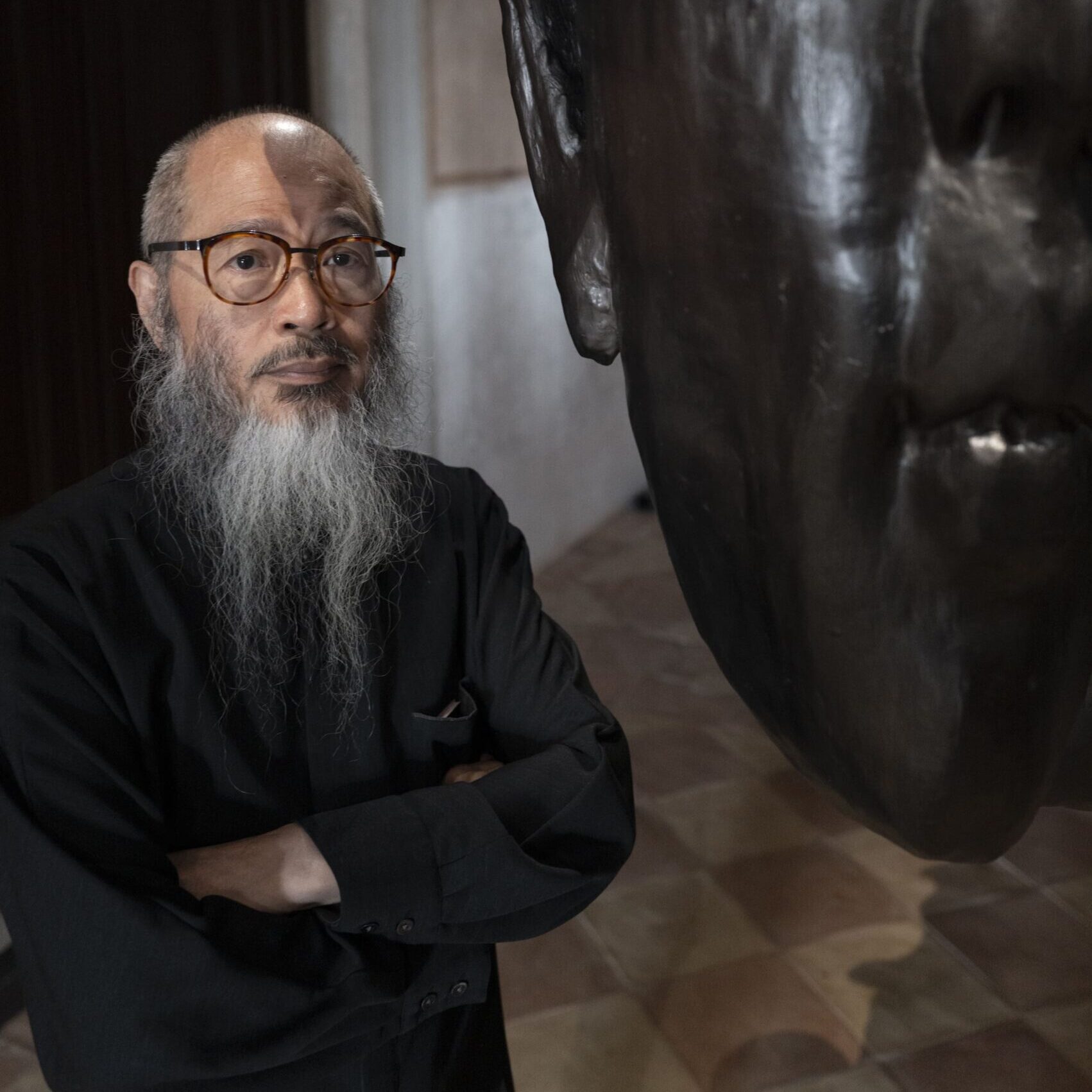
Wallace Chan, a Hong Kong-born sculptor and jeweler who once lived as a Buddhist monk, is presenting his latest exhibition “Vessels of Other Worlds” at the Chapel of Santa Maria della Pietà in Venice on May 8, coinciding with his 70th birthday and the Venice Biennale, followed by a show at Shanghai’s Long Museum on July 18. The exhibition features three monumental titanium sculptures standing seven, eight, and 10 meters tall, evoking religious oil vessels, and explores themes of birth, growth, and rebirth through the demanding medium of titanium, which Chan describes as the material closest to eternity.

CUANDO LOS OBJETOS HABLAN. MUSEO HECHIZO, DE JUAN JOSÉ SANTOS

Juan José Santos's book "Museo hechizo" (Metales Pesados, 2025) challenges the perceived neutrality of the Western museum, presenting it as an institution shaped by colonial logics of classification, extraction, and representation. The essay centers on the concept of "lo hechizo"—understood as both artisanal precariousness and disruptive enchantment—and explores small, community-based Latin American museum experiences that operate from precarity, reciprocity, and care. Santos argues that the museum is a space of conflict where voices, narratives, and ways of constructing history are contested, and he proposes thinking of the museum through its minor, situated, and alternative forms in Latin America.

7 Artists Discuss the Power and Urgency of Textiles

Louisiana Channel has released a new film titled "7 Artists on Soft Sculptures," featuring artists Sheila Hicks, Nick Cave, Shoplifter, and Kaarina Kaikkonen, among others. The film explores the tactile and emotional power of textiles in contemporary art, with each artist discussing their unique approach—from Hicks's call for softness in a hard world to Cave's use of found objects in identity-masking suits, Shoplifter's vibrant synthetic hair installations, and Kaikkonen's deeply personal incorporation of her late father's clothing.

Contrast Reigns in Austn Fischer’s Conspicuous Black-and-White Photos

Austn Fischer, a Wisconsin-born, London-based photographer, creates black-and-white images that explore fashion as performance and identity. His work features striking contrasts, such as lace ruffs paired with athletic wear, and he has collaborated with clients like The New Statesman and Crack Magazine, photographing subjects including Ai Weiwei and David Byrne. Fischer describes his process as working backwards, arranging scenes intuitively and later reflecting on their personal significance, especially regarding his sexuality and masculinity.

Nolan Lucidi “Bildersaal” at Kunsthaus Glarus

Kunsthaus Glarus presents "Bildersaal," the first institutional solo exhibition by Swiss artist Nolan Lucidi (b. 2000, based in Basel). The installation combines videos and objects to explore male homosexual desire drawn from literature, art history, and personal experience, while also interrogating formal language and claims to authority.

“Cartographies of Growth” at MARTa Herford

From February 7 to June 7, 2026, MARTa Herford presents a dual exhibition dedicated to Lois Weinberger (1947–2020) and Katinka Bock (born 1976). The show explores poetic phenomena beyond human control, where materials react, spaces shift, and natural forces leave their traces both inside the museum and beyond.

Reba Maybury “I Come in Peace” at Secession, Vienna

Reba Maybury presents her exhibition "I Come in Peace" at Secession in Vienna, an installation that spans four sites within the building—including the façade, foyer, and upstairs spaces. Maybury, an artist, writer, and political dominatrix, uses her multidisciplinary practice to explore themes of feminism, sexuality, labor, and power, directly engaging with the institution's history by questioning how to dominate the legacy of Gustav Klimt.

Venice Biennale’s Visitor Lions Face Artist Boycott

‘How can nudity be so provocative?’ Florentina Holzinger on rocking Venice with naked jetskiers, human bells and urine divers

Florentina Holzinger, an Austrian dancer and choreographer known for provocative, physically extreme performances, is representing Austria at the Venice Biennale with a new work titled *Seaworld Venice*. The piece features naked performers on a barge in the lagoon, including a woman suspended upside down inside a cast-iron bell hoisted by a crane, a guitarist rocking at a vertiginous height, and a vocalist screaming like Yoko Ono. Holzinger’s previous opera *Sancta* included a climbing wall, nuns on roller skates, and a pregnant pope on a robot arm, and has toured European opera houses for two years.

‘It takes an entire museum to do it justice’: the Smithsonian celebrates America in 250 objects

The Smithsonian National Museum of American History in Washington DC is marking the 250th anniversary of US independence with a major exhibition titled "In Pursuit of Life, Liberty & Happiness," opening on 14 May. The show displays 250 objects spanning all three floors of the museum, ranging from a Revolutionary War-era gunboat (the Philadelphia) to a Donald Trump "Make America great again" hat. Seventy-six rarely seen objects are concentrated in entry hall cases, while the rest are embedded throughout existing galleries, connected by a "ribbon" design. Director Anthea Hartig frames the exhibition as a commemoration of moments where individuals and communities fought for recognition and identity, pairing each object with an action verb to emphasize democracy as participatory.

The Most Provocative Performance in Venice

Florentina Holzinger, a performance artist known for extreme feminist works involving nudity, bodily fluids, and physical endurance, is representing Austria at the 2026 Venice Biennale with a pavilion titled “Seaworld Venice.” Opening May 9, the installation transforms the Austrian Pavilion in the Giardini into an underwater theme park and a functioning sewage treatment plant, where audience urine collected from portable toilets is cleaned and recycled into the tanks. The work explores themes of the human body, ecology, and Venice’s own struggles with sinking infrastructure and mass tourism.

Not Just the Biennale: What to See in Venice in Spring 2026 Among Galleries, Independent Spaces, and Special Projects

Non solo Biennale: cosa vedere a Venezia nella primavera 2026 tra gallerie, spazi indipendenti e progetti speciali

The article highlights a curated selection of exhibitions to see in Venice during spring 2026, beyond the main shows of the 61st Venice Biennale. It features projects in galleries, independent spaces, and historic venues, including a group show titled "Waves" at Casa Sanlorenzo with works by Alexander Calder and Lucio Fontana, a video installation by Ieva Lygnugarytė at Oratorio dei Crociferi, a Judy Chicago survey at Galleria Alberta Pane, a solo show by Hanna Rochereau at Mare Karina, and a Barry X Ball retrospective at the Abbey of San Giorgio Maggiore.

Dirty carpets to Palestinian skateboarders: a decade of Peckham 24 – in pictures

Peckham 24, a photography festival in south London, celebrates its 10th anniversary with a special edition titled "The Eras Edition," running from 15-17 May at Copeland Park and the Bussey Building. Founded a decade ago by artist-curator duo Jo Dennis and Vivienne Gamble as a fringe event of Photo London, the festival began as a 24-hour pop-up showcasing emerging talent. This year's edition explores the theme of time through works by artists including Kristina Yenza (documenting youth in wartime Ukraine), Vinca Petersen (rural community life on the Isle of Skye), Max Ferguson (the London College of Communication tower block), Julie F Hill (space telescope data visualizations), Mark Duffy (carpet detritus in the Houses of Parliament), and Maen Hammad (Palestinian skateboarders).

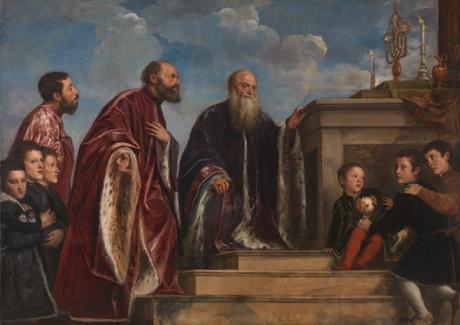
How the adoption of canvas in Venice changed the way artists painted

Art historian Cleo Nisse has published a new book, *Venetian Canvas and the Transformation of Painting*, examining how 16th-century Venetian painters such as Titian, Veronese, and Tintoretto pioneered the use of canvas as a painting support. Nisse reveals that canvas was not a uniform material—artists experimented with different weaves, including tabby and herringbone patterns, and even repurposed sailcloth and tablecloth-quality fabrics to achieve specific visual effects. The book argues that canvas was already familiar in the late Middle Ages for banners and alternatives to tapestry, and that Vittore Carpaccio was the first master of the medium, varying canvas types for expressive purposes in his *Legend of St Ursula* series.