filter_list Showing 138 results for "golden lion" close Clear
search
dashboard All 138 article news 72museum exhibitions 52person people 7article culture 2article policy 2article event 1rate_review review 1article local 1
date_range Range Today This Week This Month All
Subscribe

« Les artistes sont des fous, des enfants » : rencontre avec Annette Messager au cœur du bric-à-brac poétique de son atelier

French artist Annette Messager, 82, welcomes Beaux Arts Magazine into her Malakoff studio and home ahead of her exhibition at the Musée de la Chasse et de la Nature in Paris. The studio is a chaotic, poetic bric-à-brac filled with hybrid creatures, stuffed toys, anatomical objects, and textile works, including her iconic piece "Les Piques" (1992–1993). Messager, who won the Golden Lion at the Venice Biennale in 2005, discusses her playful yet serious approach to art, describing artists as "mad, like children" who play constantly, sometimes very seriously. Her upcoming shows include presentations at Centre Pompidou Málaga, Galería Albarrán Bourdais in Madrid, the National Taiwan Museum of Fine Arts, and the Kunsthalle Prague.
khaled sabsabi reinstatement

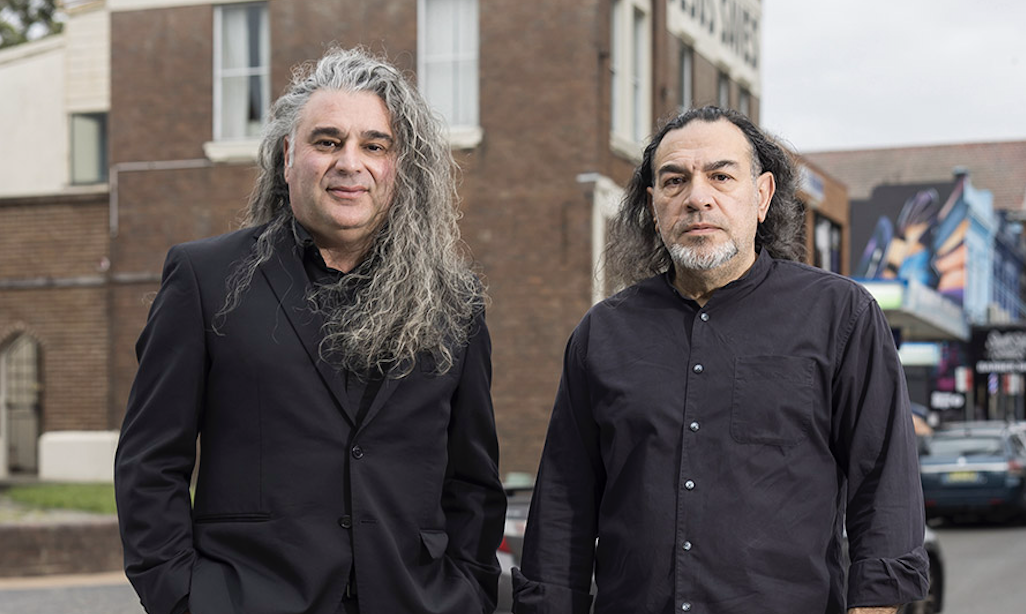
Artist Khaled Sabsabi and curator Michael Dagostino have been reinstated to lead Australia’s pavilion at the 61st Venice Biennale, following an independent review of Creative Australia’s decision to drop them in February 2025. The initial removal came after right-wing politicians raised allegations of antisemitism against Sabsabi, whose work often addresses Islamophobia and Arab identity, particularly his 2007 video "You" featuring Hezbollah leader Hassan Nasrallah. The reversal follows resignations, boycotts, and widespread protests from the Australian arts community.

diller scofidio and renfro venice canal water coffee wins golden lion

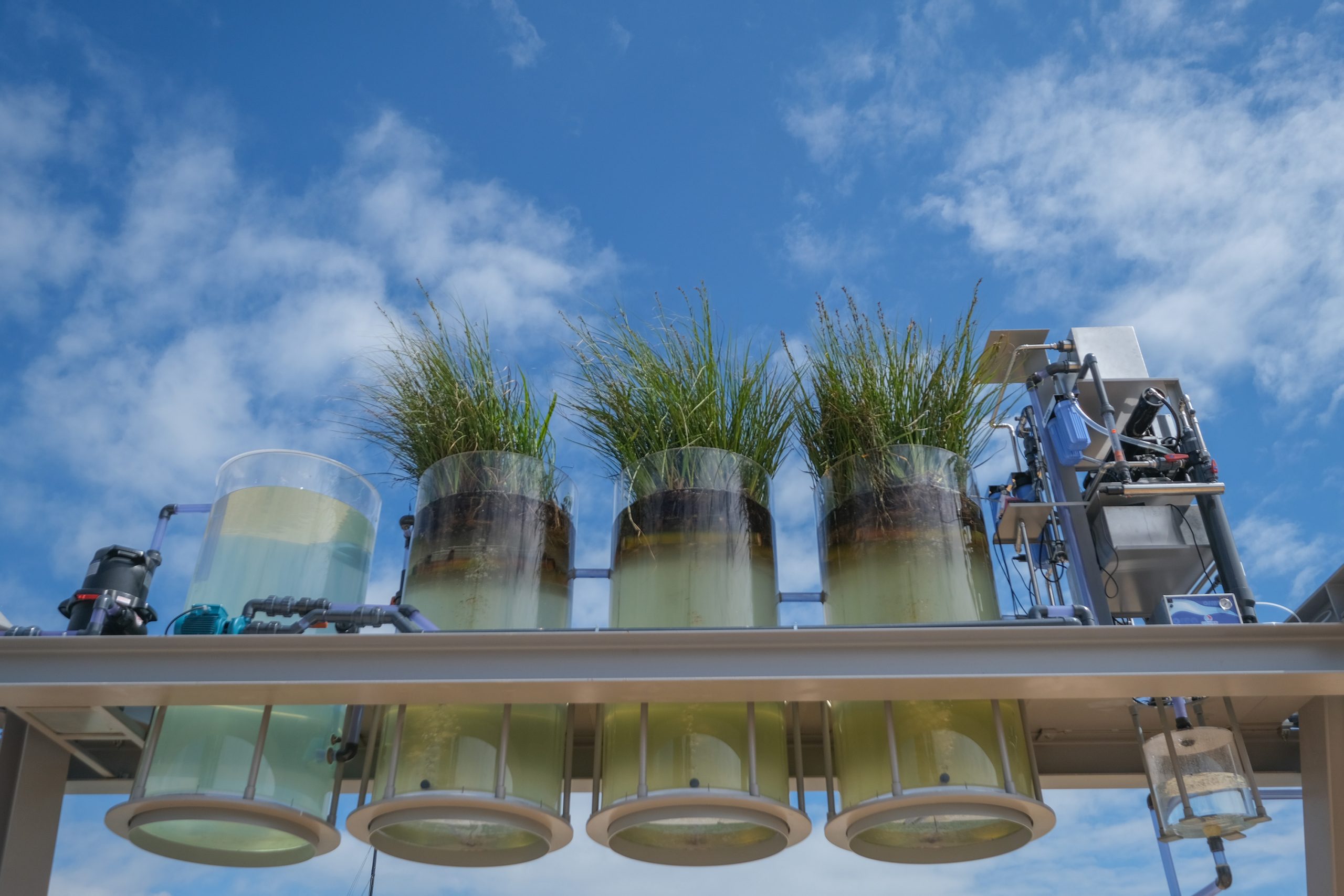
Diller Scofidio and Renfro (DS+R) has won a Golden Lion at the 2025 Venice Architecture Biennale for "Canal Café," a project that brews espresso using water filtered from the Venetian lagoon. The installation, part of the biennale's exhibition "Intelligens. Natural. Artificial. Collective," uses a combination of biological filtration by salt-tolerant halophytes and artificial methods like reverse osmosis to purify the polluted canal water. Michelin-starred chef Davide Oldani selected the coffee blend, and the espresso is sold for €1.20. Originally conceived for the 2008 biennale but delayed due to permit issues, the project was realized with improved filtration technology and support from engineering firms Natural Systems Utilities and SODAI, as well as Webuild.

Venice Golden Lion jury won’t consider Russian and Israeli pavilions

The jury for the Golden and Silver Lion awards at the 61st Venice Biennale has announced it will not consider the national pavilions of any country whose leaders are currently charged with crimes against humanity by the International Criminal Court. This decision specifically excludes Russia, whose president Vladimir Putin is charged with unlawful deportation of Ukrainian children, and Israel, whose prime minister Benjamin Netanyahu is charged with targeting Palestinian civilians and using starvation as a weapon. The jury, presided over by Solange Oliveira Farkas and including Zoe Butt, Elvira Dyangani Ose, Marta Kuzma, and Giovanna Zapperi, issued a full statement explaining their commitment to human rights and alignment with the curatorial vision of the late Koyo Kouoh.

The 2026 Venice Biennale, Explained

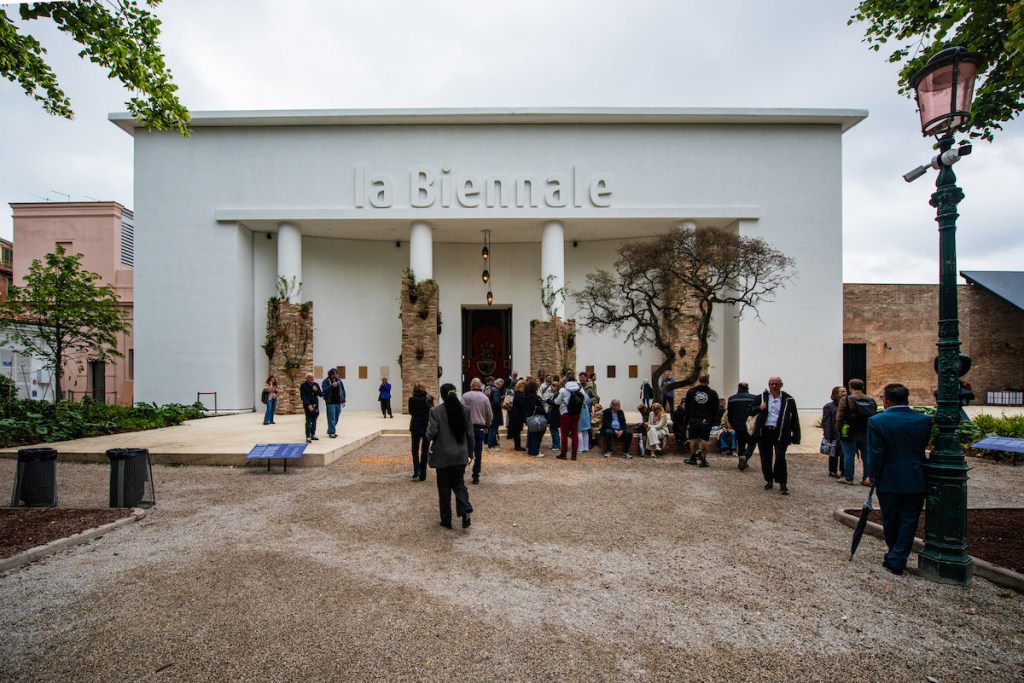
The 2026 Venice Biennale, the 61st edition of the world's oldest and most prestigious contemporary art biennial, will run from May 9th to November 22nd, with previews from May 6th to 8th. Its central curated exhibition is titled "In Minor Keys," and it will be accompanied by a series of national pavilions.

Performa Is Bringing a Star-Studded Variety Show to Broadway

Performa, New York's biennial for performance art, is staging a one-night variety show on Broadway at Manhattan's Town Hall on June 10. The inaugural Performa All-Star Variety Show will feature artists including Barbara Kruger, Julio Torres, Marcel Dzama, Laurie Simmons, and Anne Imhoff, hosted by comedian Casey Jost. The 90-minute, 12-act event draws inspiration from 19th-century vaudeville and Futurist cabarets, offering a public spectacle outside the biennial's usual three-week format.

galerie eva presenhuber franz west

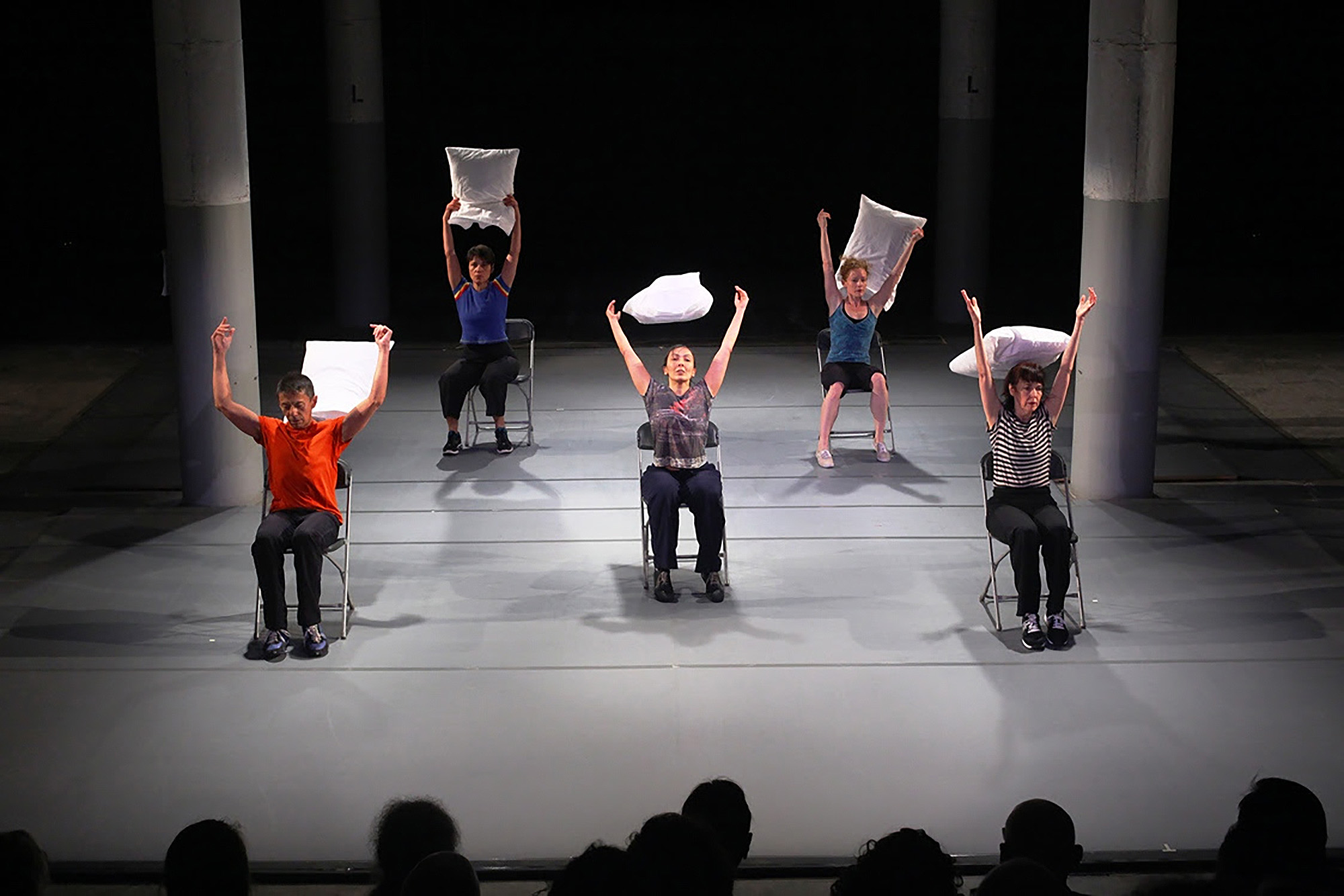
Galerie Eva Presenhuber in Zurich has opened "Franz West, Die Frühen Werke / Early Works," the gallery's twelfth exhibition dedicated to the late Austrian artist Franz West (1947–2012). The show surveys West's output from 1975 to 1990, highlighting his early sculptures, drawings, collages, and his signature interactive "Passstücke" (Adaptives)—pieces designed to be moved, worn, or played with by viewers. The exhibition runs through October 3, 2025.

Marina Abramović and Peter Doig win £77,000 Praemium Imperiale prizes

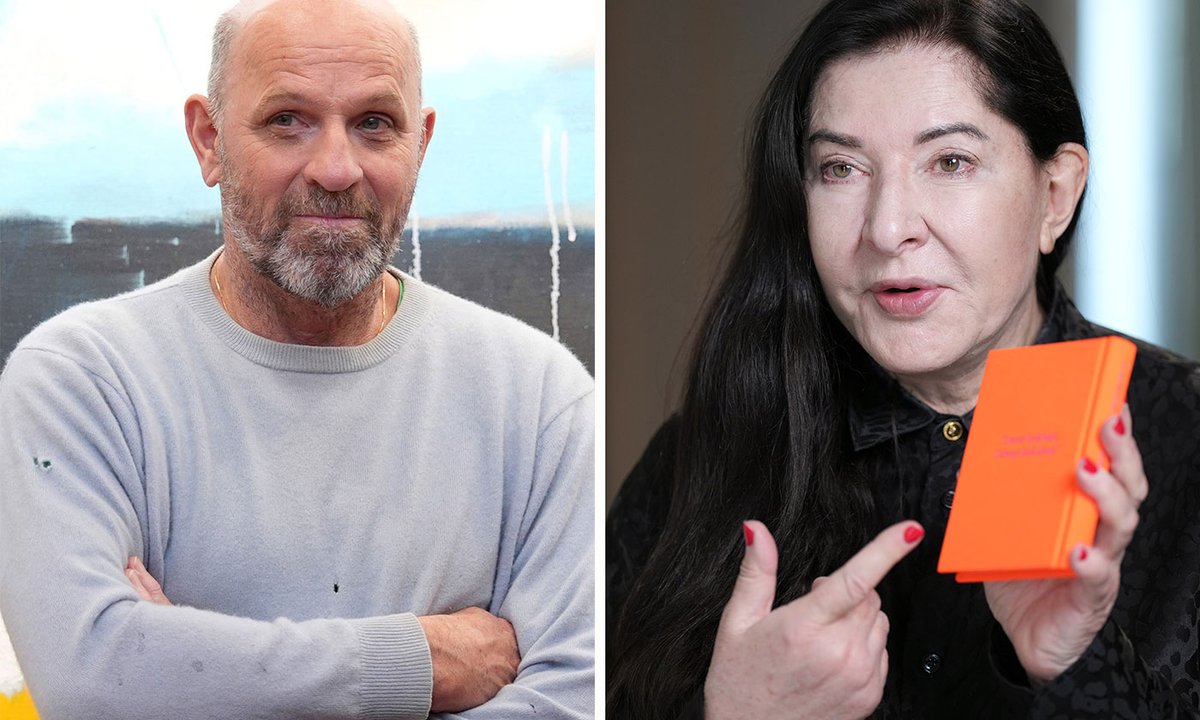
Marina Abramović and Peter Doig have been awarded the 2025 Praemium Imperiale prizes for sculpture and painting, respectively, each receiving a 15 million yen (£77,000) honorarium. The awards, presented by the Japan Art Association under honorary patron Prince Hitachi, also recognized Belgian filmmaker Anne Teresa De Keersmaeker (theatre/film), Hungarian pianist András Schiff (music), and Portuguese architect Eduardo Souto De Moura (architecture). The National Youth Theatre received the 2025 Grant for Young Artists.

The best and worst we saw at the Venice Art Biennale 2026. Artribune's hits and flops

Il meglio e il peggio che abbiamo visto alla Biennale d’Arte di Venezia 2026. Top e flop di Artribune

The 61st Venice Biennale, titled "In Minor Keys" and directed by Koyo Kouoh, opened amid significant turmoil: the death of a newly appointed curator, diplomatic tensions over the presence of Russia and Israel, political protests, and the unprecedented collective resignation of the jury, which led to the Golden Lions being awarded by public vote for the first time. Despite this chaotic backdrop, the exhibition—featuring a record 100 national pavilions—has been widely praised for avoiding moralistic pedagogy and instead embracing visual seduction, formal quality, and sensory joy while addressing themes of identity, memory, colonialism, ecological crisis, and violence. The article highlights top and flop moments from the opening week, including strong showings by Biennale president Pietrangelo Buttafuoco and a standout exhibition at Fondazione Prada.

According to Brian Eno, everything is political. And in Parma, his first exhibition in Italy opens, also speaking about Palestine

Secondo Brian Eno tutto è politica. E a Parma apre la sua prima mostra in Italia che parla anche della Palestina

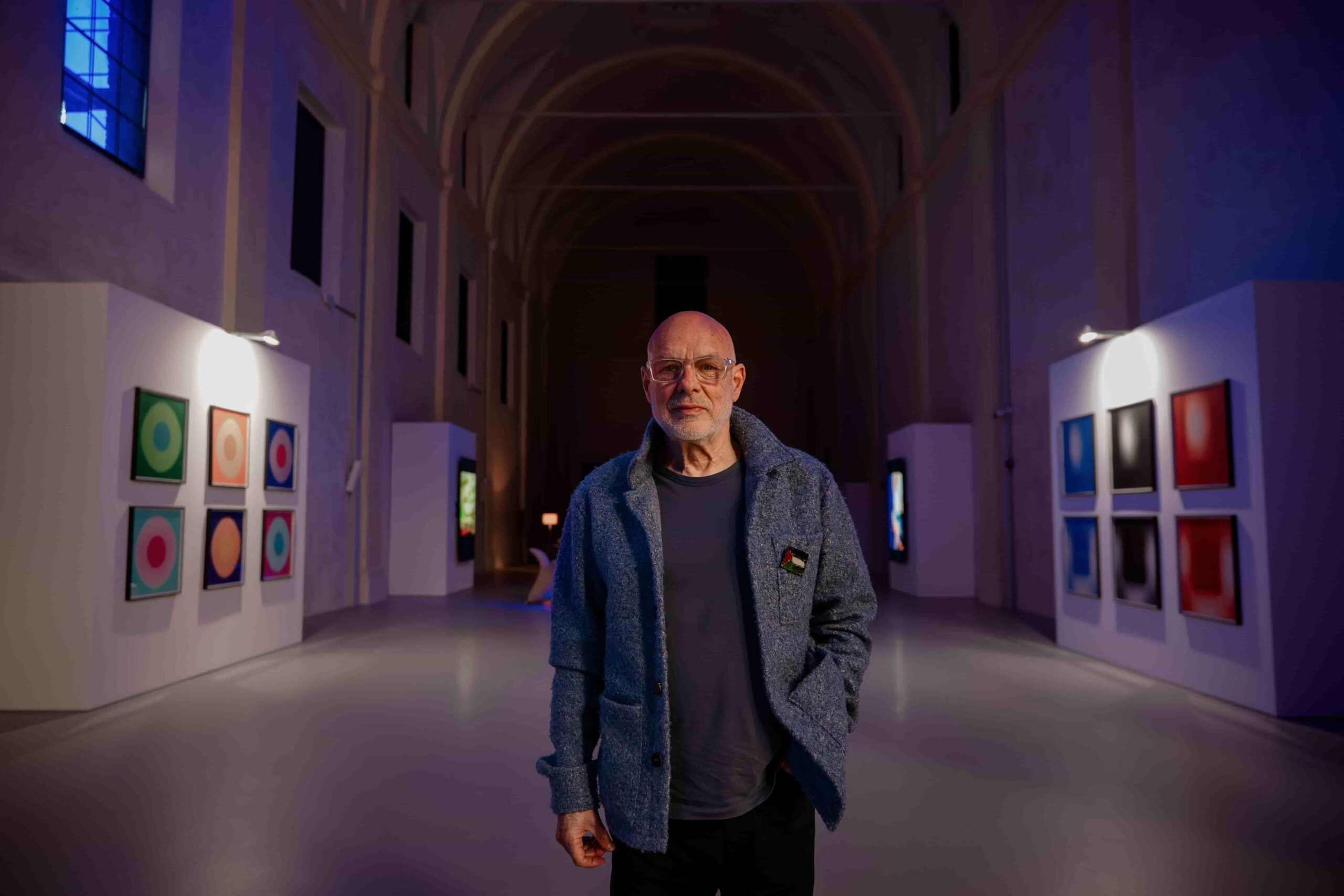
Brian Eno, the internationally renowned British artist and musician, opens his first retrospective exhibition in Italy at the Complesso Monumentale di San Paolo in Parma, running from May 1 to August 2, 2026. The show features two complementary projects: SEED, a site-specific sound installation created with Turkish writer Ece Temelkuran in the garden, and My Light Years, a light-based work in the newly restored Ospedale Vecchio. Curated by Alessandro Albertini, the exhibition marks Eno's return to Italy after his Golden Lion for lifetime achievement at the 2023 Venice Biennale, and follows earlier interventions at Castello del Buonconsiglio, Palazzo Te, and Ara Pacis.

Art and politics clash at Venice Biennale, as world conflicts upstage exhibition's opening

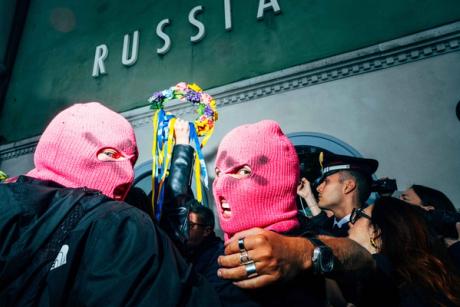
The 61st Venice Biennale, the world's most prestigious art exhibition, opens under unprecedented turmoil. For the first time, its vision was shaped by the late Cameroonian curator Koyo Kouoh, who centered artists from Africa and its diaspora. However, political conflicts over Russia and Israel have overshadowed the art. All five jurors resigned after the Italian culture minister investigated their decision to withhold prizes from Russia and Israel over alleged crimes against humanity. Protests erupted at the Russian pavilion, with Pussy Riot activists denouncing Russia's participation, while the Israeli pavilion artist threatened legal action over the jury's snub. The Biennale will proceed without a jury, with visitors voting for two awards, and the fate of the Golden Lion remains uncertain.

Derrick Adams to Install Monumental Portrait of Koyo Kouoh in Venice During the Biennale

Artist Derrick Adams will install a monumental banner version of his collage "Heavy is the head that wears the crown" (2026) on the facade of the Palazzetto dello sport Giobatta Gianquinto in Venice, near the Arsenale, during the Venice Biennale. The work features a portrait of the late curator Koyo Kouoh, artistic director of the 2026 Venice Biennale, with the word "JOY" radiating golden rays above her head. The tribute was conceived by curator Francesco Bonami, who had invited Kouoh to serve on the Golden Lion jury for his 2003 Biennale, and developed after a studio visit with Adams.

Venice Biennale Jury Resigns in the Wake of Controversial Prize Ban

The jury for the 2026 Venice Biennale has resigned just days before the public opening on May 9, after announcing on April 22 that it would not consider artists from countries accused of crimes against humanity for the Golden and Silver Lion prizes. The jury, consisting of Solange Oliveira Farks (president), Zoe Butt, Elvira Dyangani Ose, Marta Kuzma, and Giovanna Zapperi, cited its earlier statement of intention in its resignation, which directly impacted the participation of Russia and Israel—both subject to International Criminal Court warrants. In response, the Biennale postponed the awards ceremony from May 9 to November 22 and replaced the traditional jury with a public vote for best participant and best national participation, framing the move as upholding openness and rejecting censorship.

Venice Biennale Jury Resigns En Masse, Organizers to Award “Visitors’ Lions” in November

The jury for the 2026 Venice Biennale has resigned en masse, announcing the decision via e-flux's Instagram account on April 30 without providing a reason. The five-member jury, including president Solange Oliveira Farks, Zoe Butt, Elvira Dyangani Ose, Marta Kuzma, and Giovanna Zapperi, had previously stated they would not consider national pavilions from countries charged with crimes against humanity by the International Criminal Court, directly affecting Israel and Russia. In response, the Biennale postponed the awards ceremony from May to November 22 and replaced the Golden Lions with two "Visitors' Lions" voted on by the public.

Israel’s foreign ministry accuses Venice Biennale's jury of ‘politicising’ exhibition

Israel’s foreign ministry has accused the Venice Biennale's jury of politicizing the exhibition after jurors announced they would not consider for prizes countries whose leaders face International Criminal Court charges for crimes against humanity. The jury’s statement, which did not name specific nations, is broadly understood to apply to Israel and Russia, both returning to the Biennale for the first time since the Gaza war and the Ukraine invasion, respectively. The Israeli ministry posted on X that the jury had decided to 'boycott' Israeli sculptor Belu-Simion Fainaru, calling it 'a contamination of the art world.' The Biennale distanced itself from the jury’s announcement, stating the jury acts autonomously, while the Russian pavilion is reportedly set to open only for a limited pre-opening period due to budget constraints amid sanctions.

lithuanian pavilion

Lithuania's pavilion at the 2019 Venice Biennale presents "Sun & Sea (Marina)," an opera about a day at the beach that serves as a subtle, chilling commentary on climate change. Viewers observe performers lounging on a sandy tableau from a balcony, as they sing about mundane inconveniences and environmental apathy. The work, created by theater director Rugilė Barzdžiukaitė, playwright Vaiva Grainytė, and composer Lina Lapelytė, was adapted into English for the biennale and organized by Lucia Pietroiusti of London's Serpentine Galleries.

Venice in Crisis Mode

Venedig im Krisenmodus

The 61st Venice Biennale has opened under extraordinary circumstances, marked by political protests, a jury resignation, and canceled awards. The Biennale's jury resigned en masse after announcing they would exclude Israeli and Russian contributions from their decisions, leading to the cancellation of the Golden Lion awards and a crisis over the international competition's legitimacy. A newly introduced audience prize also faced boycotts from artists in solidarity. Protests, closed pavilions, and pro-Palestinian actions dominated the preview days, with artists pasting protest posters directly onto their works, reflecting heightened tensions.

Deutscher Pavillon wird zum Plattenbau

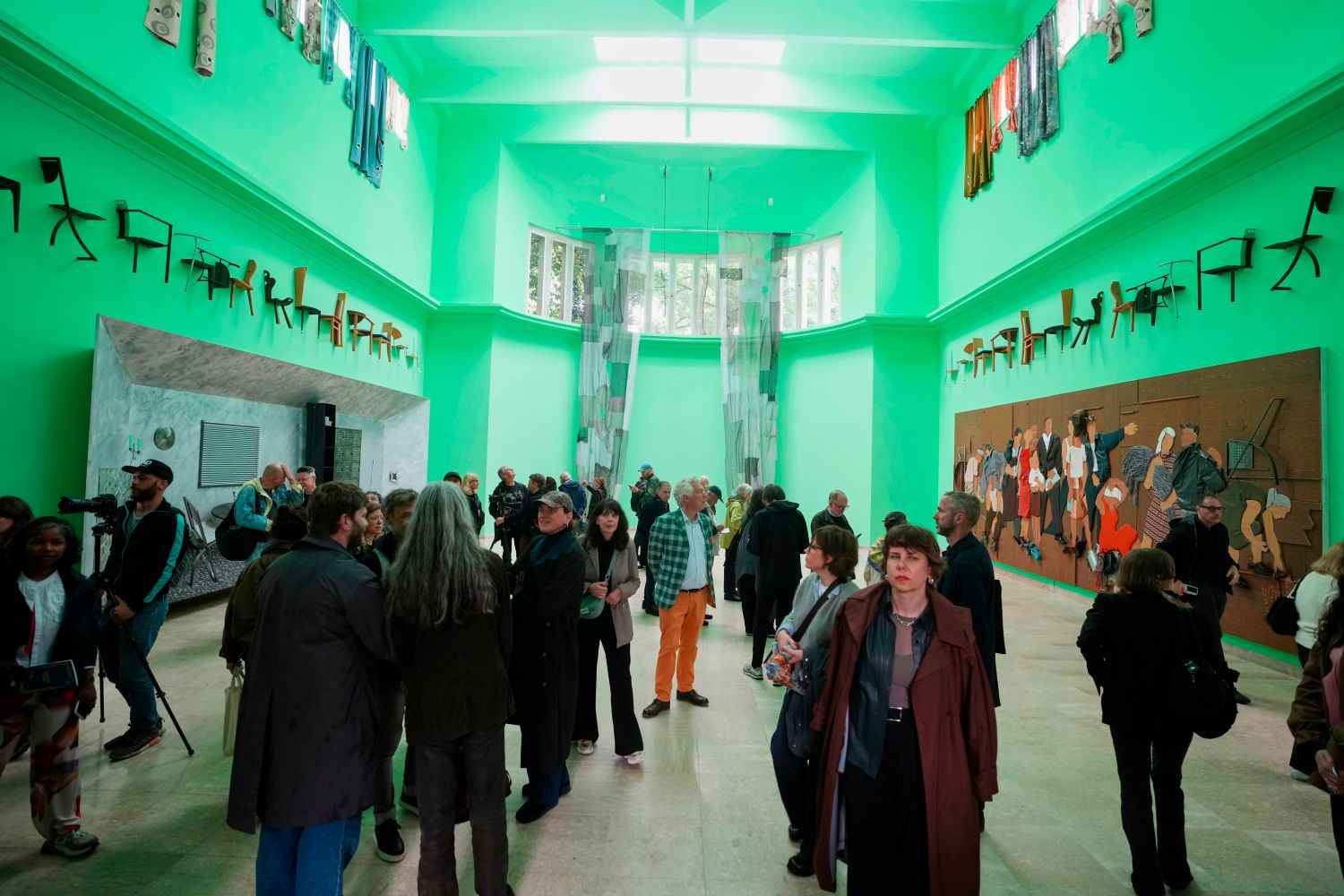
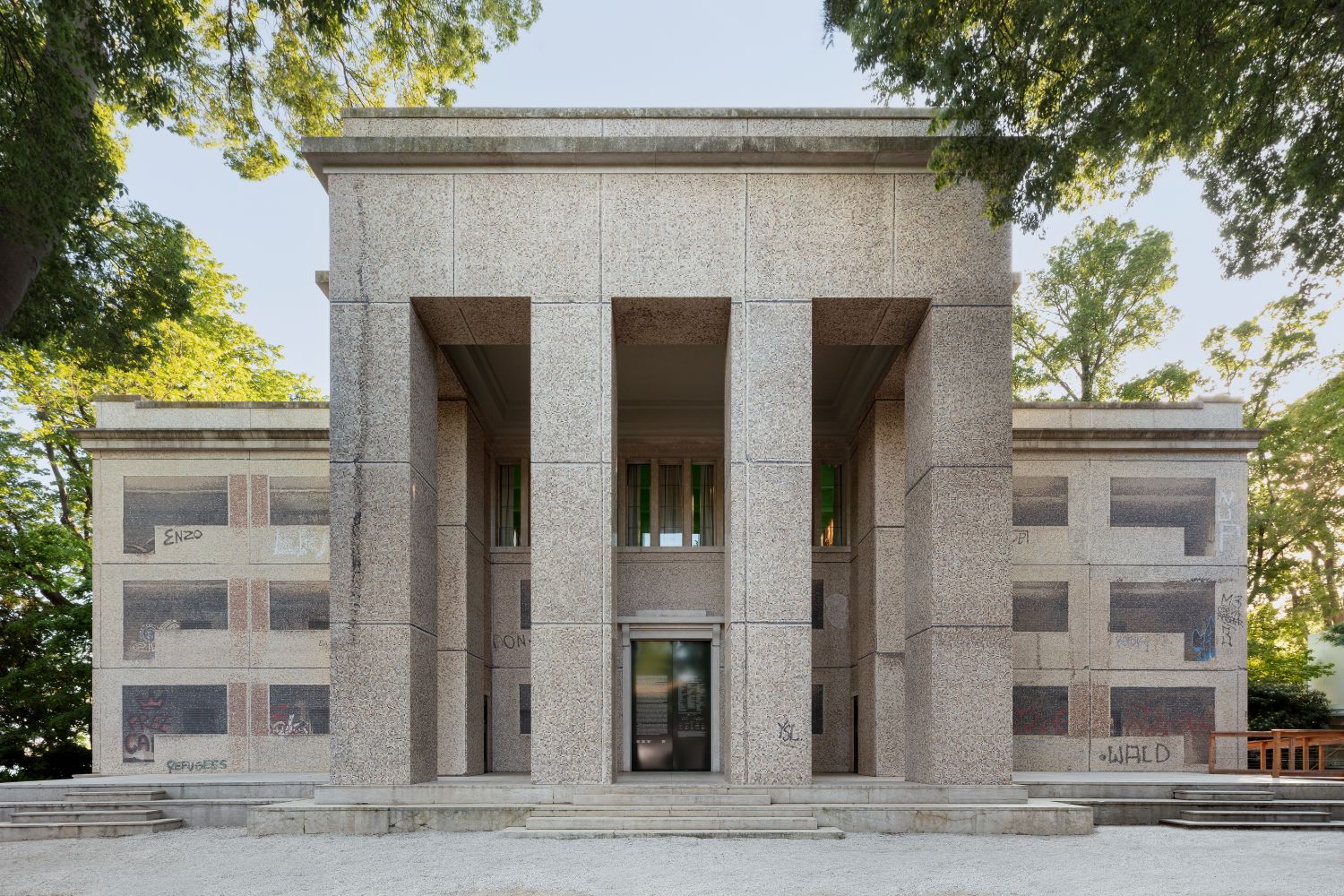
The German Pavilion at the Venice Art Biennale has been transformed into a prefabricated concrete slab building (Plattenbau) for this year's edition, designed by artists Sung Tieu and the late Henrike Naumann, who died suddenly in February at age 41 from cancer. Curator Kathleen Reinhardt described the pavilion as part of a highly political Biennale, with Tieu covering the 1938 fascist-era building with a mosaic of over three million tiles depicting a Berlin apartment block that once housed Vietnamese contract workers. Naumann's interior installation features mint-green references to Soviet barracks in East Germany, a cartography of war, and works including a relief of chairs, a curtain of chainmail, and the performance "Trümmerfrau."

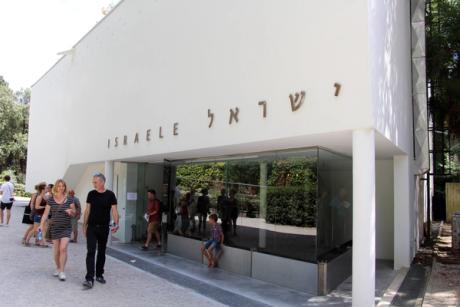
Israeli Pavilion artist issued legal warnings before Biennale jury resignation

Belu-Simion Fainaru, the artist representing Israel at the 2026 Venice Biennale, issued legal warnings to the Biennale, the Italian Ministry of Culture, and the Italian Prime Minister’s office after the Golden Lion jury announced it would not consider pavilions from countries whose leaders are charged with crimes against humanity by the International Criminal Court, including Israel and Russia. Fainaru’s legal threats cited alleged antisemitism and nationality-based discrimination. Shortly after, the Biennale jury resigned, prompting organizers to postpone the awards ceremony to the closing day and replace the Golden and Silver Lions with two 'Visitors’ Lions' voted on by attendees, with all national participations eligible.

Putin ‘Won’ the Venice Biennale, Quips Italian Culture Minister

Italian Culture Minister Alessandro Giuli stated that Russian President Vladimir Putin "won" the 2024 Venice Biennale, criticizing Russia's controversial return to the event. Giuli, who repeatedly denounced Russia's presence, told Corriere della Sera that Russian artists in the pavilion cannot express dissent against their regime. The Biennale faced widespread calls to remove Russia, with the EU threatening to withhold a €2 million grant, but organizers argued they lacked legal authority to exclude the country. Protests by Pussy Riot and FEMEN marked the pavilion's opening, while the Biennale's jury resigned en masse after announcing that nations charged with crimes against humanity would be ineligible for Golden Lions.

Venice Biennale Artists Decline Consideration for Golden Lions Chosen by Public Vote

Nearly half of the artists in the main exhibition of the Venice Biennale have signed a statement declining consideration for the Golden Lion awards, in solidarity with the jury that resigned last month. The statement, published by e-flux, includes prominent names such as Alfredo Jaar, Tuan Andrew Nguyen, Otobong Nkanga, and Walid Raad, as well as national pavilion representatives from France, Lithuania, and the Netherlands. The Biennale had planned to replace the jury-selected Golden Lions with "Visitor Lions" decided by public vote, but the artists' refusal marks an unprecedented protest within the exhibition.

Several Venice Biennale pavilions shut in protest over inclusion of Israel

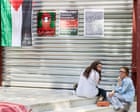
Several national pavilions at the 2026 Venice Biennale shut down during the final preview day in a strike organized by the Art Not Genocide Alliance (Anga) protesting Israel's inclusion due to its war in Gaza. Pavilions from Belgium, the Netherlands, Austria, Japan, Macedonia, and Korea closed entirely, while others like Britain, Spain, France, Egypt, Finland, and Luxembourg partially closed or reopened later. Artists in the main exhibition added Palestinian flags and posters reading "Palestine is the future of the world." The Israeli pavilion was closed for a private event, and earlier in the week Pussy Riot staged a protest at the Russian pavilion.

Khaled Sabsabi is finally at the Venice Biennale: ‘Being here is already a win’

Khaled Sabsabi has opened his exhibition 'conference of one’s self' at the Australian Pavilion of the 61st Venice Biennale, alongside a second installation 'Khalil' in the Arsenale. This follows a tumultuous period in which Creative Australia rescinded his appointment as Australia’s representative in February 2025, sparking widespread backlash from the art community. After being reappointed in July 2025, Sabsabi presents two monumental multimedia works inspired by Sufi practice, created in Bangkok and described as 'one body with two limbs'.

An Unprecedented 24-Hour Strike Could Upend the Venice Biennale

An unprecedented 24-hour strike is set to interrupt the Venice Biennale's opening week on Friday, May 8, in protest of Israel's participation in the global art event. The action, organized by the activist group Art Not Genocide Alliance (ANGA), follows a letter signed by over 230 Biennale participants demanding Israel's exclusion. The strike has exposed divisions among participants, with some artists and pavilion teams weighing solidarity against the rare opportunity to platform their own political messages. The Slovenian pavilion, represented by Nika Grabar of the Nonument Group, has committed to the strike, while others like Ecuador's Tawna Collective remain undecided, balancing protest with their mission to highlight ecological crises in the Amazon.

Pussy Riot protest at Venice Biennale forces Russian pavilion to briefly close

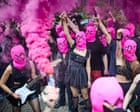
On the second day of the Venice Biennale preview, the activist group Pussy Riot staged a chaotic protest at the Russian pavilion, forcing it to temporarily close. Wearing pink balaclavas and carrying flares, about 40 activists—including members of Femen—gathered outside the pavilion, shouting slogans like "Blood is Russia's Art" and attempting to enter before being pushed back by police. Founding member Nadya Tolokonnikova led the protest, condemning Europe for allowing Russian participation despite the war in Ukraine. Separately, the Art Not Genocide Alliance (Anga) demonstrated outside the Israeli pavilion, which was locked from inside, over Israel's war in Gaza.

Major protests take place at Venice Biennale previews

Major protests erupted during the preview days of the Venice Biennale, with multiple demonstrations targeting the Israeli and Russian pavilions. On Wednesday, the Art Not Genocide Alliance (ANGA) held a large protest outside the temporary Israeli pavilion in the Arsenale, attended by over 200 people calling for its closure. Separately, the Solidarity Drone Chorus performed a sound composition by Gazan artist Ahmed Muin, with 60 artists wearing T-shirts bearing names of artists from Gaza. Meanwhile, Pussy Riot and FEMEN protested Russian participation, forcing the Russian pavilion to shut its doors. These actions follow the resignation of the entire Golden Lion jury days before the opening, after they stated they would not consider pavilions from countries whose leaders are charged with crimes against humanity by the ICC—widely seen as a reference to Russia and Israel.

Dark clouds, protests and resignations dampen start of 61st Venice Biennale

The 61st Venice Biennale opened under grey skies and rain, with political tensions overshadowing the art world's premier event. The Russian pavilion, absent for two editions due to the Ukraine war, reappeared with a party atmosphere, though the Italian ministry of culture confirmed it would not be open to the public. The Ukrainian culture minister called Russia's symbolic presence powerful. The Iranian pavilion withdrew without explanation, and a protest by 60 artists from the In Minor Keys show marched through the Giardini humming in solidarity against Israel's participation. Over 200 artists, including Lubaina Himid and Alfredo Jaar, signed an open letter demanding the Israeli pavilion's cancellation. The event also proceeded without its curator, Koyo Kouoh, who died in May 2025; her curatorial team delivered the exhibition following her plans.

Venice Diary Day 1: At the Giardini, Artists Refuse to Make Fascism Cozy

Henrike Naumann's posthumous installation at the German Pavilion, which retains its 1938 Nazi-era fascist architecture, refuses to make the space 'cozy' by adorning windows with violently ripped domestic fabrics. The 2026 Venice Biennale is the first under president Pietrangelo Buttafuoco, associated with neo-fascist politics, and is overshadowed by controversy over his 'neutrality' policy allowing all countries to participate despite human rights concerns. The exhibition jury initially announced it would not consider pavilions from countries whose leaders are charged with crimes against humanity, then abruptly quit, leaving the situation unresolved. The US Pavilion features unimpressive blobs by Alma Allen, while the Russian Pavilion offers cut flowers and free vodka, and Andreas Angelidakis responds to fascist aesthetics at the Greek Pavilion.

Venice Biennale’s Prize Ban on Israel and Russia Falls Short for Critics

The jury of the 2026 Venice Biennale has ruled that Israel and Russia will be ineligible for the Golden and Silver Lion prizes, citing International Criminal Court charges of crimes against humanity against their leaders. The decision follows years of activism and political pressure, with the European Union withdrawing €2 million in funding from the event in protest of Russia's participation. While groups like Art Not Genocide Alliance praised the move as an unprecedented step, critics argue it falls short of a full ban on participation. Israel's artist representative, Belu-Simion Fainaru, condemned the policy as discriminatory, and an open letter signed by 70 artists and curators called for excluding all regimes committing war crimes, including the United States.

What You Need to Know About the Venice Biennale’s Russian Pavilion Controversy

The Russian pavilion is set to return to the Venice Biennale for the first time since the 2022 invasion of Ukraine, presenting an exhibition titled 'The tree is rooted in the sky.' This has sparked significant controversy, with artists, curators, and politicians from Ukraine and several European nations calling for the pavilion's exclusion, citing the ongoing war and sanctions. The Biennale organizers have refused to remove Russia, stating they lack the authority to exclude a state recognized by Italy and emphasizing the event's role as a neutral space for cultural dialogue.