filter_list Showing 981 results for "Discover" close Clear
search
dashboard All 981 museum exhibitions 365article news 246trending_up market 149article local 71article culture 65gavel restitution 31person people 24rate_review review 10article policy 9candle obituary 7article event 3article museum 1
date_range Range Today This Week This Month All
Subscribe

worlds oldest known rock art in indonesia 67800 years old

Researchers have discovered a hand stencil in a cave on the Indonesian island of Sulawesi that dates to 67,800 years ago, making it the oldest known rock art in the world. The faded 14 × 10 cm patch of pigment, found on the southeastern peninsula of Sulawesi, was dated using Uranium-series analysis of mineral crusts that formed on top of the painting. The discovery was made by a team from Griffith University in Australia, Indonesian archaeological organizations, and the National Research and Innovation Agency, who have been documenting cave art sites in the region since 2019.

3d tech reveals new gladiator graffiti in pompeii

Researchers using Reflectance Transformation Imaging (RTI) and 3D photogrammetry have uncovered 79 previously invisible graffiti fragments on a 90-foot walled corridor in Pompeii's theater district. Among the discoveries are a dynamic sketch of two gladiators in combat and a love declaration beginning "Erato amat…" (Erato loves…). The work, detailed in Pompeii's e-journal, was conducted by teams from Sorbonne University and the University of Québec at Montréal, who developed a custom 3D-image platform to visualize and digitally annotate the ancient carvings.

archeologists uncover frescoes villa di poppea

Archeologists have uncovered frescoes in the Hall of the Mask and the Peacock at the Villa di Poppaea in Oplontis, near Naples, as part of an ongoing excavation and renovation project led by the Archaeological Park of Pompeii. The newly revealed Second Style frescoes feature vibrant peacocks and masks, including a complete peahen and a stage mask from Atellan Comedy, and have clarified the hall's true dimensions and decorative richness. The team also identified the locations of garden trees using a casting technique and discovered four new rooms, bringing the villa's total to 103 rooms.

pompeii hercules fresco location

Archaeologists have identified the original location of a looted fresco fragment from Pompeii that was repatriated from the U.S. to Italy in 2023. The fragment, depicting baby Hercules wrestling a snake, was found to have once decorated the upper lunette of a private chapel (sacellum) at the ancient villa of Civita Giuliana. The discovery was made during excavations in 2023 and 2024, and the fragment will be exhibited at the Antiquarium of Boscoreale from mid-January.

roman mosaic trojan war alternate scene

In the summer of 2020, a British family discovered a Roman mosaic on their farmland in Rutland, England, depicting scenes from the Trojan War. Archaeologists from the University of Leicester later uncovered three panels showing the battle between Achilles and Hector, dating to the 4th century C.E. The mosaic, named the Ketton Mosaic, is the first known depiction of the Trojan War in a British mosaic and was originally part of a Roman villa's dining room floor.

nazi bullet holes marseille madonna

A restoration of the Madonna and Child statue atop Notre-Dame de la Garde in Marseille has revealed seven bullet holes from Nazi gunfire during World War II. The 37-foot-tall copper and iron statue, known as the Bonne Mère, was shot after the city's liberation in 1944, when German artillery units fired on the church, piercing the bell tower, breaking stained-glass windows, and destroying the ceiling mosaic. The bullet holes were discovered near the end of a five-year restoration that included re-gilding and the installation of a new crown via helicopter.

superman comic auction record heritage

A first-edition copy of "Superman No. 1" from 1939 sold for $9.12 million at Heritage Auctions on November 20, setting a new record for the most expensive comic book ever sold. The comic was discovered in a cardboard box in the attic of a Northern California home by three brothers after their mother's death, preserved in near-mint condition (graded 9 out of 10 by CGC). Alongside it, they found other valuable early comics, including a 1939 Action Comics featuring Zatara ($204,000) and a Superman-focused issue ($264,000).

phillips juvenile triceratops fossil auction

Phillips auction house sold a juvenile Triceratops skeleton named Cera for $5.4 million at its Modern and contemporary evening sale in New York, marking the company's first foray into dinosaur fossils. The specimen, discovered in South Dakota's Hell Creek Formation, is the first juvenile Triceratops ever uncovered and features two-thirds of its original skeleton. The sale exceeded its low estimate of $2.5 million, and other natural history lots, including a preserved marine crocodile, were also offered.

ancient limestone face carving discovered controversial maya train project excavation

Archaeologists working on the controversial Maya Train project in Mexico's Yucatán Peninsula have discovered a 2,000-year-old limestone face carving. The 18-inch-tall sculpture, featuring deep-set eye sockets, a flat nose, and a cleft lip, was found in Sierra Papacal near Mérida during construction of the Mérida-Progreso Railway Bypass. The carving was attached to the foundation of an ovoid building with a west-facing entrance, suggesting it served as a ceremonial marker. Mexico's National Institute of Anthropology and History (INAH) is overseeing the excavation of 15 other nearby structures, and the artifact will be transported to a laboratory for conservation.

after museum heist syrian cultural authorities face scrutiny over lack of transparency

Syria's Ministry of Culture briefly published details of artifacts stolen from the Damascus National Museum, including six Roman-era marble statues of Venus and gold ingots, only to delete the post hours later. The theft occurred on Sunday night and was discovered Monday morning when a broken door was found. International media reported the theft citing anonymous sources, and the Directorate General of Antiquities and Museums (DGAM) confirmed an investigation but provided no further details. The museum, which houses thousands of antiquities, had reopened in January after closing during the civil war and the fall of the Assad regime.

the oldest blue pigment found in europe identified

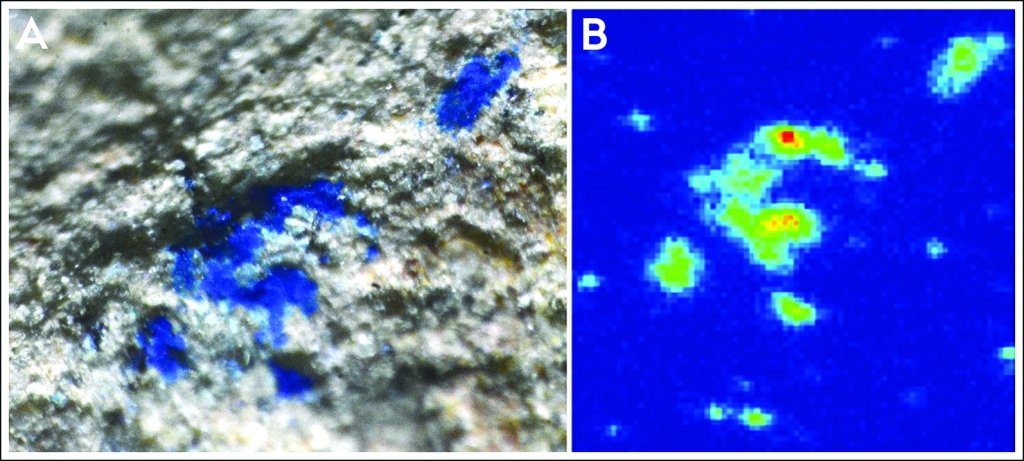
Researchers analyzing a stone from the Paleolithic site Mühlheim-Dietesheim in Germany have identified the earliest known use of blue mineral pigment in Europe. The study, published in the journal Antiquity, found traces of azurite on a roughly 13,000-year-old stone artifact, which is thought to have served as a palette for mixing pigments. This discovery challenges the long-held belief that Paleolithic art relied primarily on red and black pigments, as blue minerals like azurite had not been detected in Europe’s Paleolithic art until now.

rope atlanta black history apex museum

The APEX Museum in Atlanta, a Black history institution founded in 1978, reported discovering a "noose-like rope" in a tree on its premises. The museum's president and CEO, Dan Moore Jr., shared the news in an Instagram post, noting that Homeland Security determined the object was not a noose but that it was removed for evidence. Atlanta police are investigating the incident, which occurred on Wednesday.

egypt alexandria artifacts lifted sea

Egypt's Ministry of Tourism and Antiquities recovered underwater ruins from a sunken city off the coast of Alexandria on August 21. Divers and cranes retrieved ancient statues, including royal figures and sphinxes from the pre-Roman era, such as a partially preserved sphinx with the cartouche of Ramses II. The site in Abu Qir bay also revealed limestone buildings, residential and commercial structures, a 125-meter dock over 2,000 years old, a merchant ship, stone anchors, and a harbor crane from the Ptolemaic and Roman eras. Tourism and Antiquities Minister Sherif Fathy noted that only specific material meeting strict criteria is brought up, with the rest remaining underwater heritage.

sicily roman villa flip flop mosaic

Archaeologists at the Villa Romana del Casale in Sicily have uncovered a mosaic in the frigidarium (cold bath) of the southern baths featuring a pair of flip-flops and the inscription "Treptona bibas," likely referencing a woman involved in managing the complex. The discovery was made during the University of Bologna's Summer School ArchLABS program, which trains students from 11 countries in modern excavation techniques. The flip-flop motif, known from other Late Roman bath decorations across Spain, Cyprus, Jordan, and Asia Minor, signals the aristocratic and cosmopolitan character of the baths.

three men convicted celtic gold coins theft germany

Three men were convicted for stealing 483 ancient Celtic gold coins from the Kelten Römer Museum in Manching, Germany, in November 2022. The coins, dating to the 3rd century BCE and valued at several million euros, were discovered in 1999 near Manching. The thieves cut off telephone and internet service to the entire town to prevent the museum from contacting authorities. A court in Ingolstadt sentenced the men to prison terms ranging from four years and nine months to 11 years for gang robbery; a fourth defendant was acquitted of the museum heist but convicted for other thefts. DNA evidence linked the group to a string of robberies across Germany and Austria since 2014, and some coins were melted down, with 70 lost.

22 stone blocks alexandria ancient lighthouse seafloor

A team from the French National Center for Scientific Research has lifted 22 massive stone blocks from the Lighthouse of Alexandria from the seafloor, 30 years after the remains were first discovered in Egypt. The blocks include monumental door lintels, jambs weighing 70 to 80 tons, a threshold, large base slabs, and parts of a previously unknown pylon with an Egyptian-style door from the Hellenistic period. Each block will be scanned and studied to add to a digital collection of over 100 blocks already digitized, aiming to construct a virtual model of the lighthouse. The excavation was supervised by archaeologist Isabelle Hairy and conducted under the Egyptian Ministry of Tourism and Antiquities, with support from La Fondation Dassault Systèmes and French documentary company GEDEON Programmes, which filmed the work for a 90-minute documentary.

cerne abbas giant genitalia almost covered by trees 1930s

Historian Karen Heaney discovered that in 1932, the UK Home Office considered covering the Cerne Abbas Giant's erect penis with trees after a complaint from Dorset resident Walter Long, who called the 180-foot chalk figure an "obscene" offense to Christian values. Home Office official Cecil Yates proposed the tree-planting to the National Trust, but the Chief Constable of Dorset Police consulted the Home Office, which ultimately denied the request to avoid distorting the national monument.

polish venus of kolobrzeg

Experts from the Polish Conservator of Monuments have authenticated a Neolithic Venus carving discovered by a Polish farmer in 2022. The Venus of Kołobrzeg, a 6,000-year-old limestone sculpture, is one of the oldest artifacts from an agricultural community in this part of Europe. The figurine, now owned by the Polish Arms Museum in Kołobrzeg, was unveiled after extensive analysis including microscopic residue analysis that found traces of mussel and snail shells. Unlike other prehistoric Venus figures, it lacks distinct facial features but shares the characteristic pronounced breasts and voluptuous hips.

france deepest shipwreck camarat 4

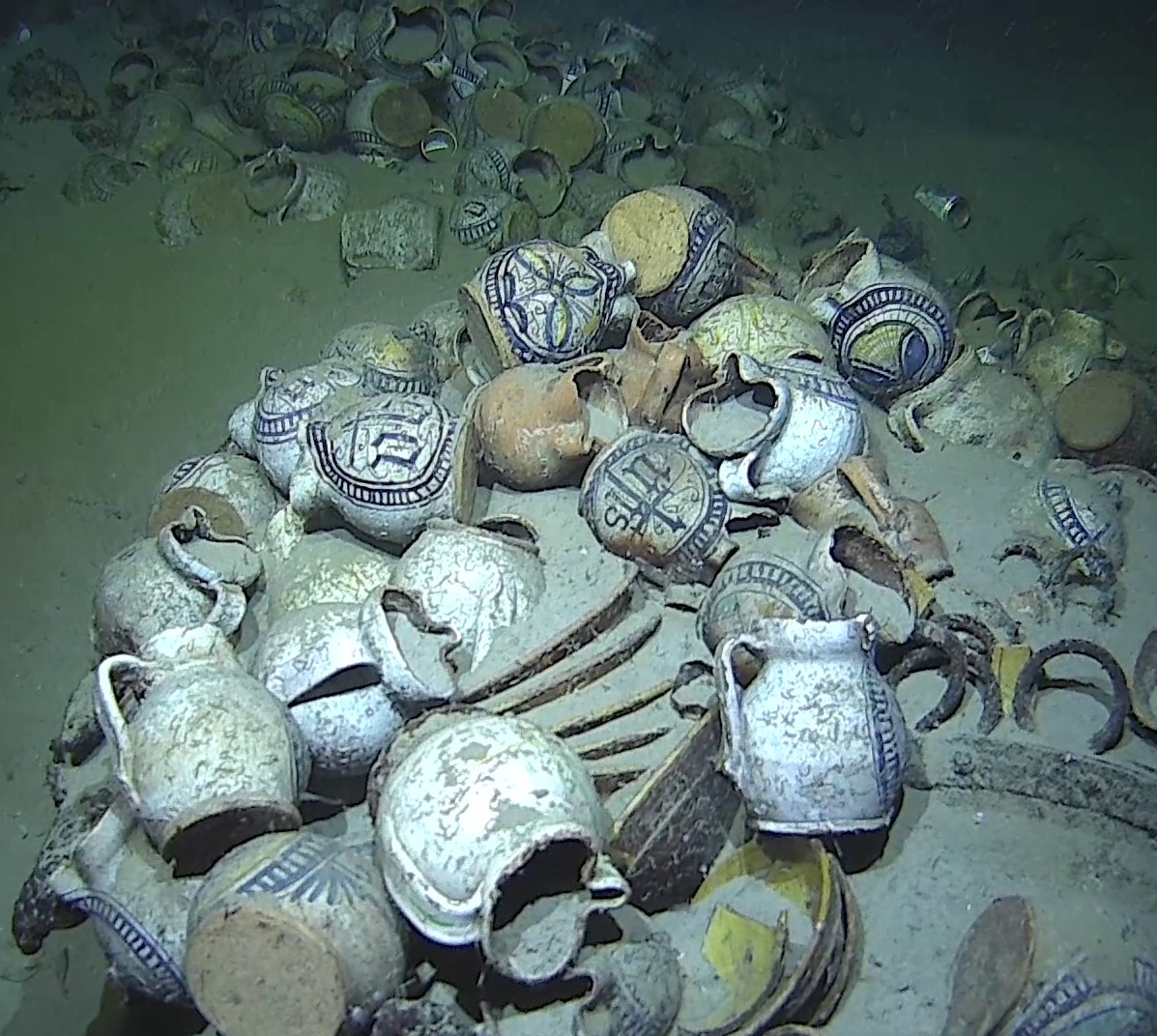
French archaeologists have discovered the wreck of a 16th-century merchant vessel, named Camarat 4, 1.6 miles below the Mediterranean Sea—the deepest shipwreck ever found in French waters. The French Navy first detected the site via sonar during a routine mission off the coast near Saint Tropez, then deployed an underwater drone that captured images of hundreds of ceramic pots. The Department of Underwater and Submarine Archaeological Research (DRASSM) confirmed the 98-foot-long ship sank nearly 500 years ago, carrying cargo including polychrome earthenware pitchers and plates traced to Liguria, Italy, along with cannons and iron bars.

san jose wreck found coins

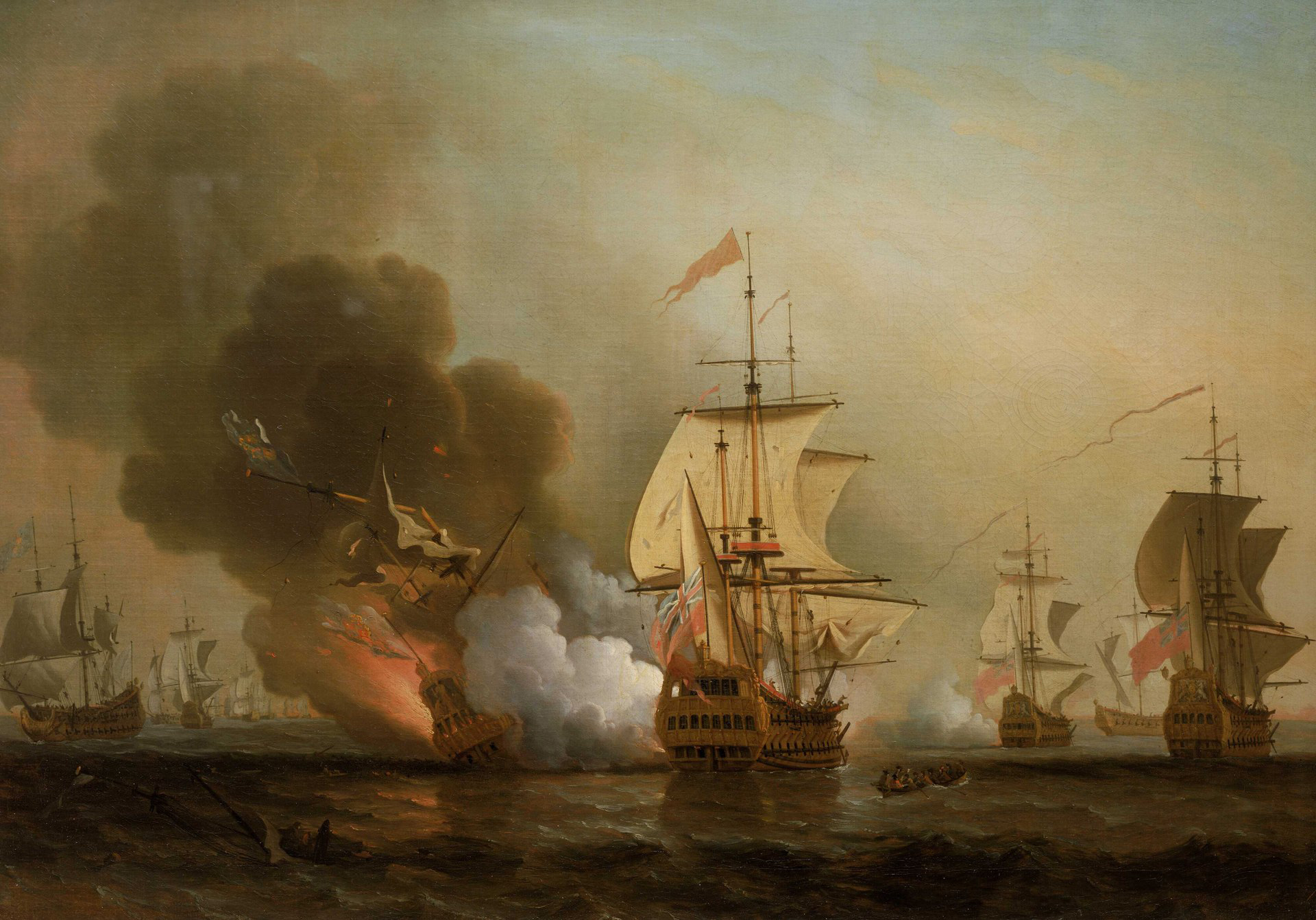
Researchers have confirmed the identity of the Spanish galleon San José, which sank off the coast of Colombia in 1708 carrying billions of dollars in gold, silver, and gems. Using high-resolution photographs and digital models from remotely operated vehicle surveys, they identified hand-struck coins (cobs) minted in Lima in 1707, along with Chinese porcelain and cannon inscriptions, as key evidence. The findings were published in the journal Antiquity on June 10.

viking gold metal detectorist declared treasure

Ronald Clucas, a metal detectorist with 50 years of experience on the Isle of Man, discovered an intricately plaited gold fragment identified as a Viking arm-ring from roughly 1,000 years ago. The artifact, found folded and measuring 1.5 inches, was declared treasure by the Isle of Man Deputy Coroner of Inquests on May 29 and is now displayed at the Manx Museum's Viking gallery. Archaeologist Allison Fox noted cut points indicating the arm-ring was portioned for use as currency, reflecting the Viking dual economy of coins and bullion.

egyptian blue pigment recreated

A team led by Washington State University has successfully recreated Egyptian Blue, the oldest manufactured pigment in history, which was first synthesized in ancient Egypt and used in funerary rituals and Roman art. The production process was lost during the Renaissance. Working with the Smithsonian’s Museum Conservation Institute and the Carnegie Museum of Natural History, the researchers developed 12 recipes using silicon dioxide, copper, calcium, and sodium carbonate, heating them at around 1,000 degrees Celsius for up to 11 hours to mimic ancient methods. They discovered that only half the expected amount of blue-producing compounds was needed to achieve the exact chemical match.

1600 year old beer shema mosaic publicly accessible israel

A 1,600-year-old mosaic known as the Be'er Shema Mosaic has been opened to the public for the first time at the Merhavim Regional Council complex in northwestern Negev, Israel. Originally unearthed in 1990 near Kibbutz Urim, the mosaic features 55 medallions depicting hunting scenes, exotic animals, mythological figures, fruit, and daily life, and was created by a master craftsman using small stones, varied colors, glass, and pottery. It was rediscovered, conserved, and relocated from its original site to the council compound as part of the "Antiquities Near Home" project co-organized by the Ministry of Heritage and the Israel Antiquities Authority.

neanderthals made art too startling new research suggests

Archaeologists at Complutense University in Madrid have published research suggesting that Neanderthals created art, challenging the long-held belief that only Homo sapiens were capable of symbolic expression. At the San Lázaro rock shelter in central Spain, a site occupied by Neanderthals over 40,000 years ago, researchers discovered a large granite pebble with a red ocher dot applied by a fingertip, along with carved cupules that form a face-like arrangement. Analysis by the Spanish National Police confirmed the dot was intentionally made, and the pebble was transported from three miles away, indicating deliberate selection and symbolic thought.

ancient greek marble workshop discovery paros

Archaeologists on the Greek island of Paros have uncovered a Hellenistic marble workshop at the site of Floga in Parikia. The dig, overseen by the Cyclades Archaeological Society and directed by Sofia Detoratou, revealed a large number of unfinished marble statues—mainly of Aphrodite—along with clay heads, molds, seals, and a thick layer of marble dust, indicating organized sculpture production. The site shows evidence of settlement from the late 5th century B.C.E., with the workshop emerging around the end of the 3rd century B.C.E.

ancient buddhist artifacts found in thailand

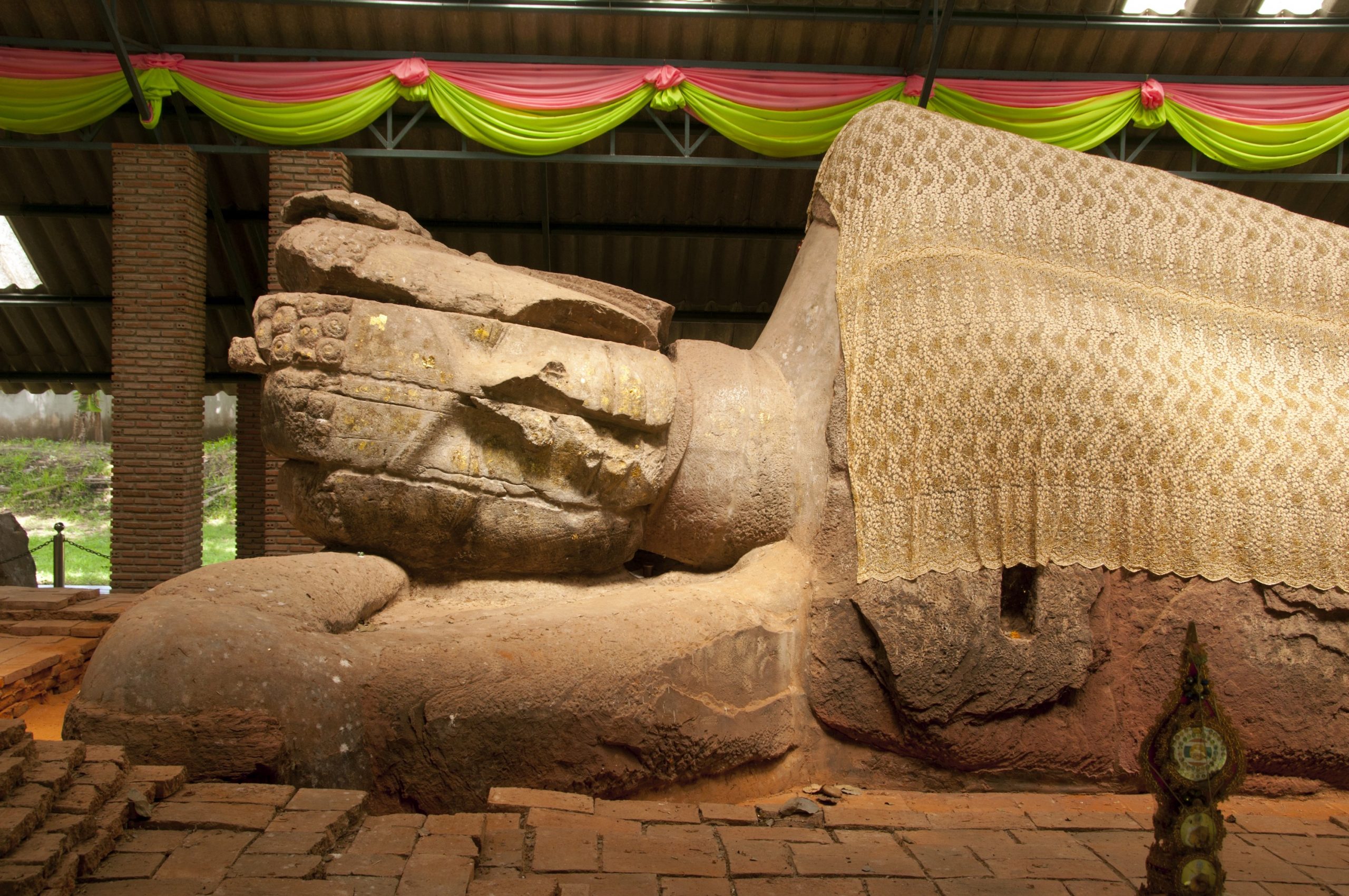
Workers installing a drainage system beneath Wat Dhammachak Semaram, a Buddhist temple in northeastern Thailand, discovered a cache of ancient relics buried just over a meter deep. The find includes 33 bronze, silver, and gold items such as rings, earrings, and two repoussé plaques—one gold depicting a seated Buddha in the teaching gesture, and one tin showing a standing Buddha with attendants. Archaeologists from Thailand’s fine arts department conducted a second phase of excavation, uncovering the plaques and a soil deposit embedded with metal sheets behind the temple’s famous 40-foot reclining Buddha.

house of helle and phrixus pompeii family death

A new study published in the Pompeii Excavations online journal reveals the final moments of a family during the 79 CE eruption of Mount Vesuvius. At the House of Helle and Phrixus in Pompeii, archaeologists found that the family attempted to barricade a bedroom door with a bed to survive the eruption, but perished. The remains of at least four individuals, including a child, were identified, along with a bronze amulet worn by the child and bronze kitchenware in the pantry.

hidden messages paris luxor obelisk

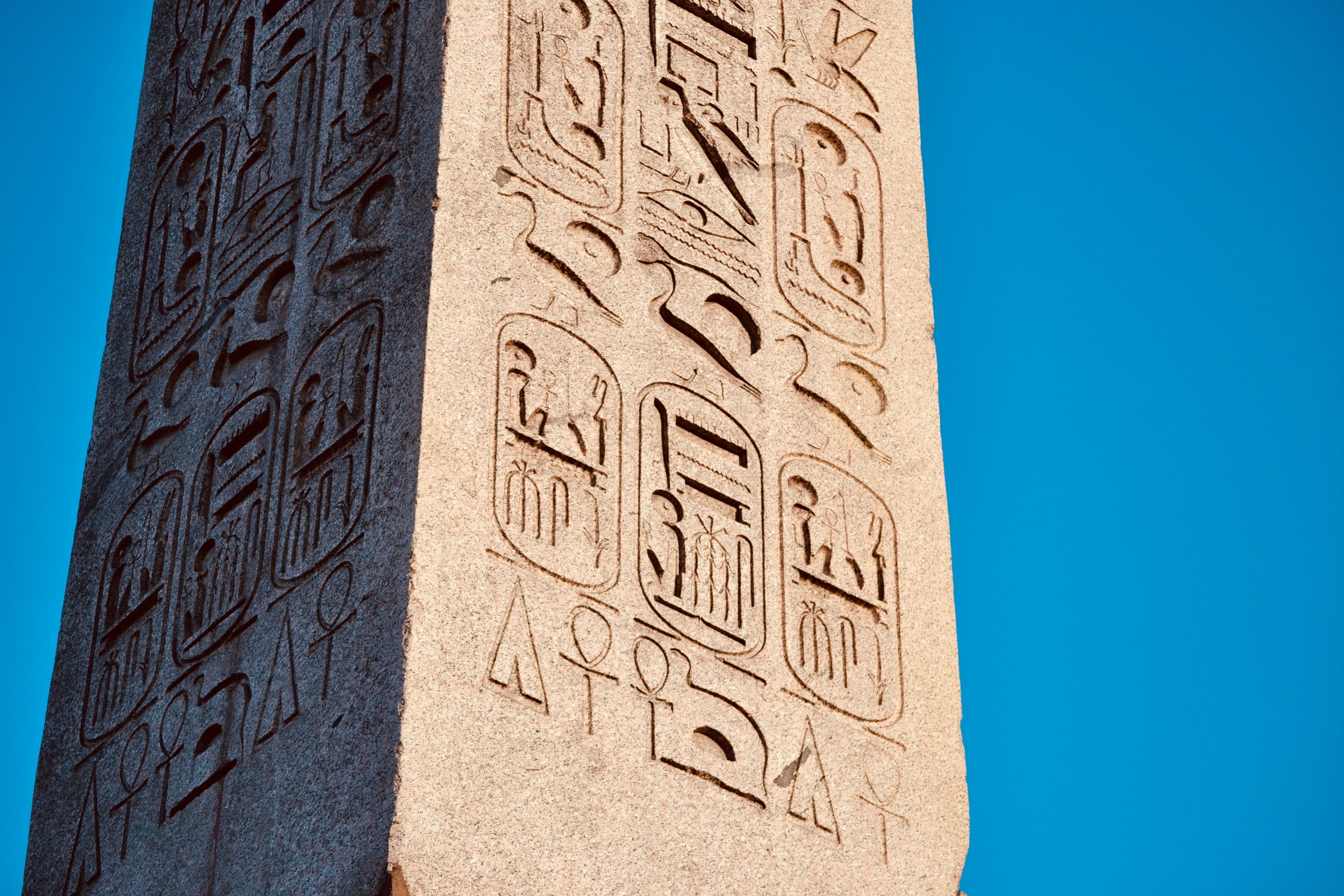
Egyptologist Jean-Guillaume Olette-Pelletier, a lecturer at Sorbonne University, discovered hidden cryptographic messages on the Luxor Obelisk in Paris's Place de la Concorde. During the pandemic, he noticed unusual hieroglyphs while walking past the 3,000-year-old monument. After scaffolding was erected for renovations ahead of the 2024 Olympics, he obtained permission to study the obelisk up close, becoming the first person in over a century to climb it. He identified seven crypto-hieroglyphs—encoded messages using puzzles and wordplay—that only a few experts can read. These inscriptions, set to be published in the journal ENiM, reveal that Pharaoh Ramses II used the obelisk as a propaganda tool to assert his divine right to rule, targeting the intellectual elite who approached the Luxor Temple by boat.

Szentendre’s Old Artists’ Colony Marks 100 Years with Major Exhibition

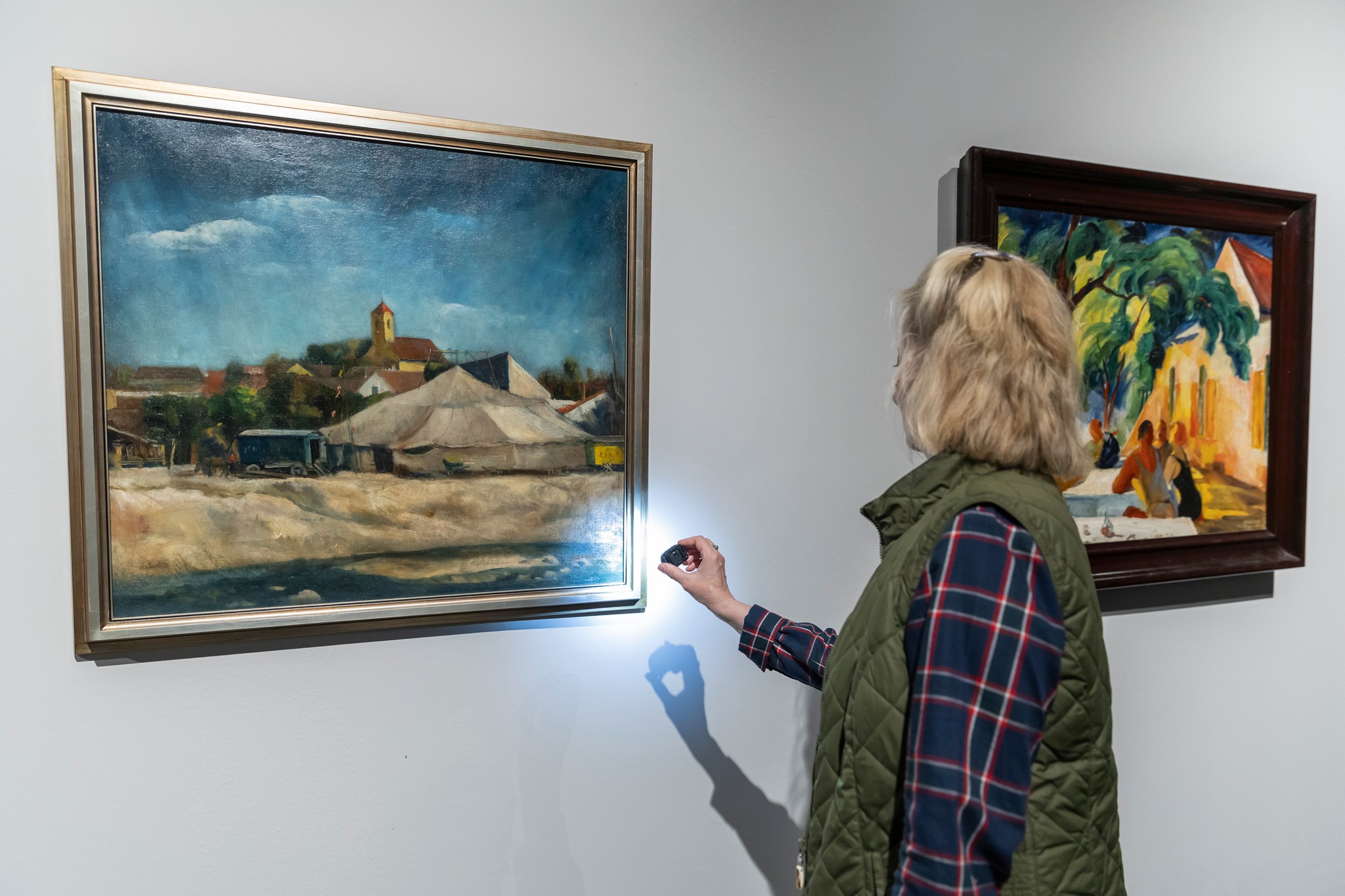
A major exhibition titled "Artists’ Colony 100" has opened at MűvészetMalom in Szentendre, Hungary, to mark the centenary of the Old Artists’ Colony founded in 1926. The show features hundreds of works by nearly a hundred artists, from founding members such as József Bánáti Sverák, Miklós Bánovszky, and Béla Onódi to contemporary figures including József Baksai and Imre Szakács. It includes iconic pieces, rare works, and recent discoveries, organized thematically with a focus on the garden motif that has long inspired colony artists.

Discover contemporary works across styles and generations by 23 artists at this exhibition in New Delhi

An exhibition titled "The Contemporary Lore: Sojourn of Styles and Generations Unfurled" has opened in New Delhi, featuring works by 23 artists across different career stages and artistic styles. Curated by Kiran K. Mohan with a critical essay by art historian Johny ML, the show includes paintings, sculptures, and mixed media by artists such as Anil Gaekwad, Ashok Bhowmick, Harshwardhan Devtale, and others. The display is deliberately non-chronological, aiming to foster dialogue between seasoned practitioners and emerging voices.