filter_list Showing 264 results for "In minor keys" close Clear
search
dashboard All 264 museum exhibitions 167article news 69rate_review review 8person people 6article policy 6article culture 5trending_up market 2article event 1
date_range Range Today This Week This Month All
Subscribe

Venice Biennale Jury Resigns En Masse, Organizers to Award “Visitors’ Lions” in November

The jury for the 2026 Venice Biennale has resigned en masse, announcing the decision via e-flux's Instagram account on April 30 without providing a reason. The five-member jury, including president Solange Oliveira Farks, Zoe Butt, Elvira Dyangani Ose, Marta Kuzma, and Giovanna Zapperi, had previously stated they would not consider national pavilions from countries charged with crimes against humanity by the International Criminal Court, directly affecting Israel and Russia. In response, the Biennale postponed the awards ceremony from May to November 22 and replaced the Golden Lions with two "Visitors' Lions" voted on by the public.
An Abandoned Shipyard in Venice Is Getting a New Life Thanks to This Congolese Choreographer

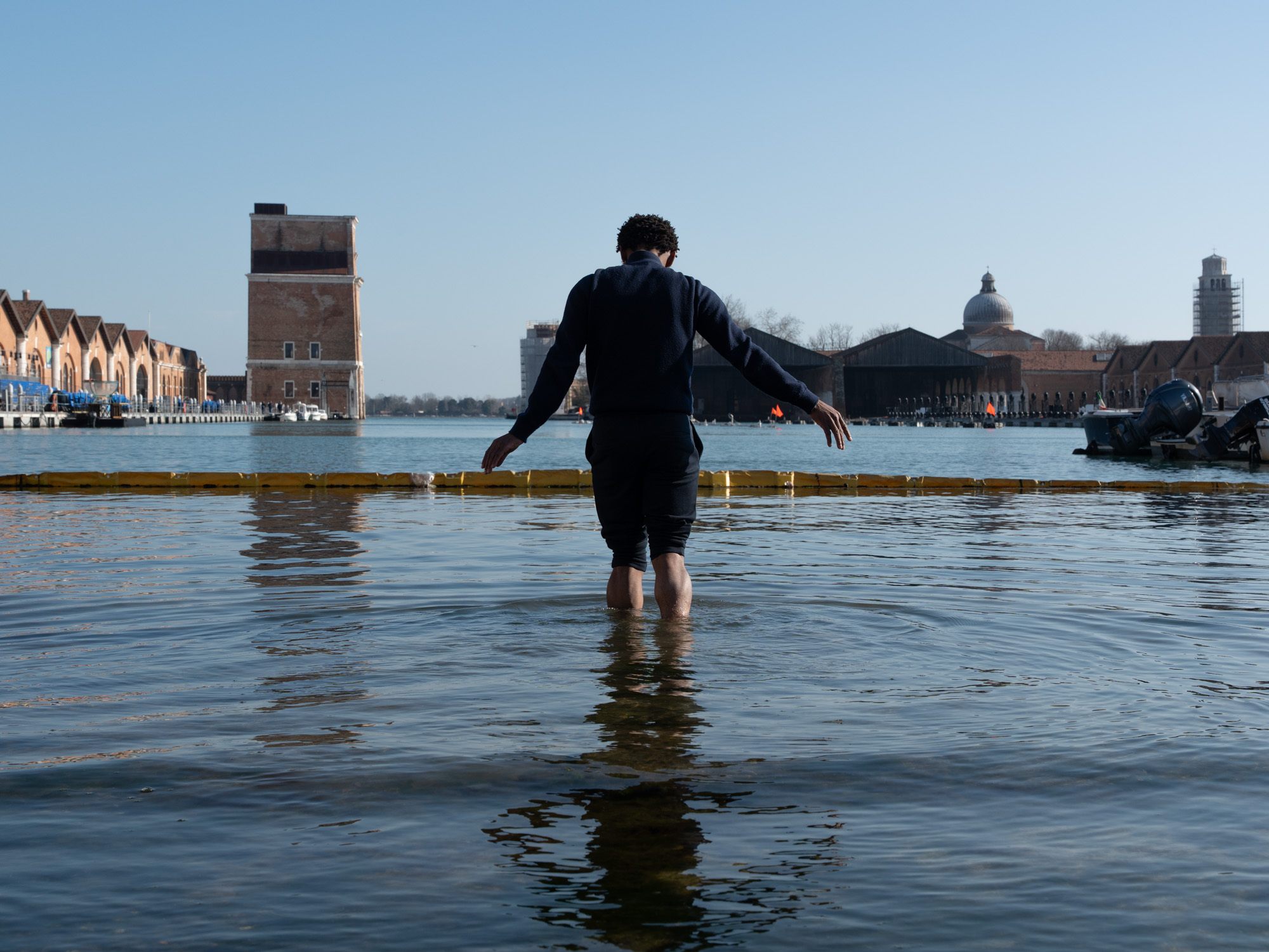
Congolese choreographer Faustin Linyekula is staging "The Galeazze Project," a performance in a 16th-century shipyard complex in Venice that has been inaccessible since World War II and never open to the public. Commissioned by the nonprofit Scuola Piccola Zattere, the work will bring up to 500 people into the 32,291-square-foot open-air ruin for two nights during the 2026 Venice Biennale preview week. The rental fee from the performance will help stabilize and restore the floors of the historic Galeazze site.

LATIN AMERICA AT THE VENICE BIENNALE: A VISUAL TOUR OF THE CENTRAL EXHIBITION

LATINOAMÉRICA EN LA BIENAL DE VENECIA: UN RECORRIDO VISUAL POR LA MUESTRA CENTRAL

The 61st Venice Biennale, titled "In Minor Keys," opened its preview days on May 8, 2025, curated by the late Koyo Kouoh (1967–2025). The central exhibition, realized by a team she selected before her death, features 110 participants from around the world, with a strong Latin American presence of 15 artists, collectives, and organizations. The show explores themes of colonial history, plantation economies, geological memory, and environmental crisis through works that emphasize shared materials, politics, and poetics across geographies from Dakar to San Juan.

Bogna Burska and Daniel Kotowski on Representing Poland at the 61st Venice Biennale

Bogna Burska and Daniel Kotowski, representing Poland at the 61st Venice Biennale, plan to exhibit a project inspired by the Choir in Motion (a phonic/sign-language ensemble of hearing and Deaf people), underwater role reversals, and whale communication. Their work explores alternate forms of communication, Deaf Gain, and the retrieval of voices—both human and non-human—aligning with the Biennale's theme "In Minor Keys." The Polish pavilion is located in the Giardini.

First Indigenous Representative of Peru at the Venice Biennale, Sara Flores Opens the Doors of Her Studio in the Heart of the Amazon

Première représentante autochtone du Pérou à la Biennale de Venise, Sara Flores ouvre les portes de son atelier au cœur de l’Amazonie

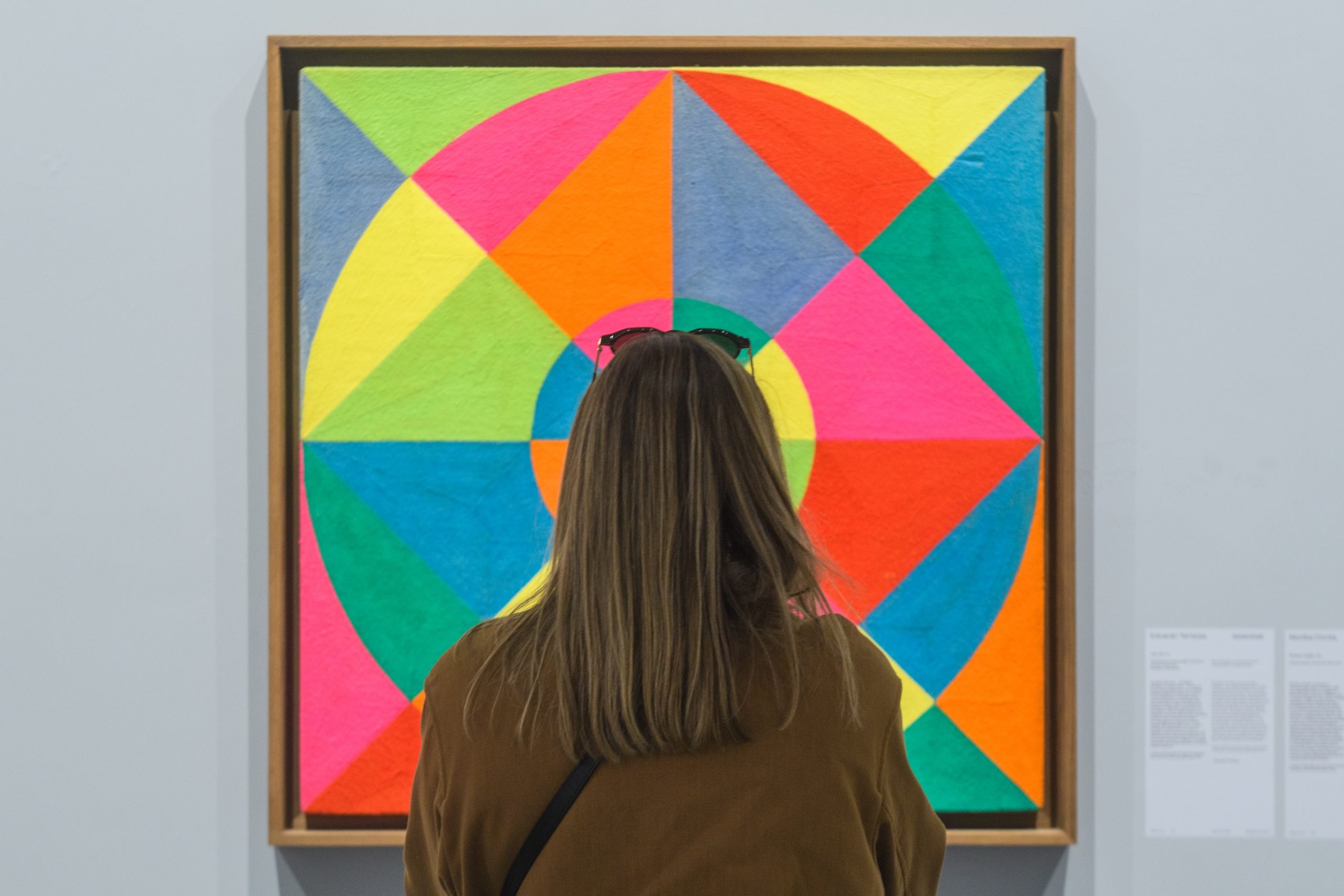
Sara Flores, a 76-year-old artist from the Shipibo-Konibo Indigenous community in the Peruvian Amazon, has been selected as the first Indigenous artist to represent Peru at the Venice Biennale. In her open-air studio deep in the rainforest, she creates large-scale geometric compositions in the kené ("true drawing") tradition, using natural dyes from local plants. She is also co-founder of the Bakish Mai Multiversity, an educational institution dedicated to Indigenous knowledge and artist residencies, alongside Matteo Norzi, one of the two curators of the Peruvian pavilion. The article offers an intimate portrait of her life, her matriarchal family, and her creative process.

Boats and trains, not planes: reflections on a greener—but sometimes greenwashed—Venice Biennale

The article recounts the author's train journey from London to Venice for the 61st Venice Biennale, highlighting the environmental benefits and pleasant experience of traveling by rail versus flying, despite higher costs and longer duration. It then focuses on the Biennale's central exhibition "In Minor Keys" curated by the late Koyo Kouoh, which foregrounds environmental themes through works that engage with earth, nature, and ecological stakes, featuring artists like Otobong Nkanga, Célia Vasquez Yui, Theo Eshetu, Linda Goode Bryant, and Annalee Davis.

Political Fallout Rocks Venice Biennale Prize System

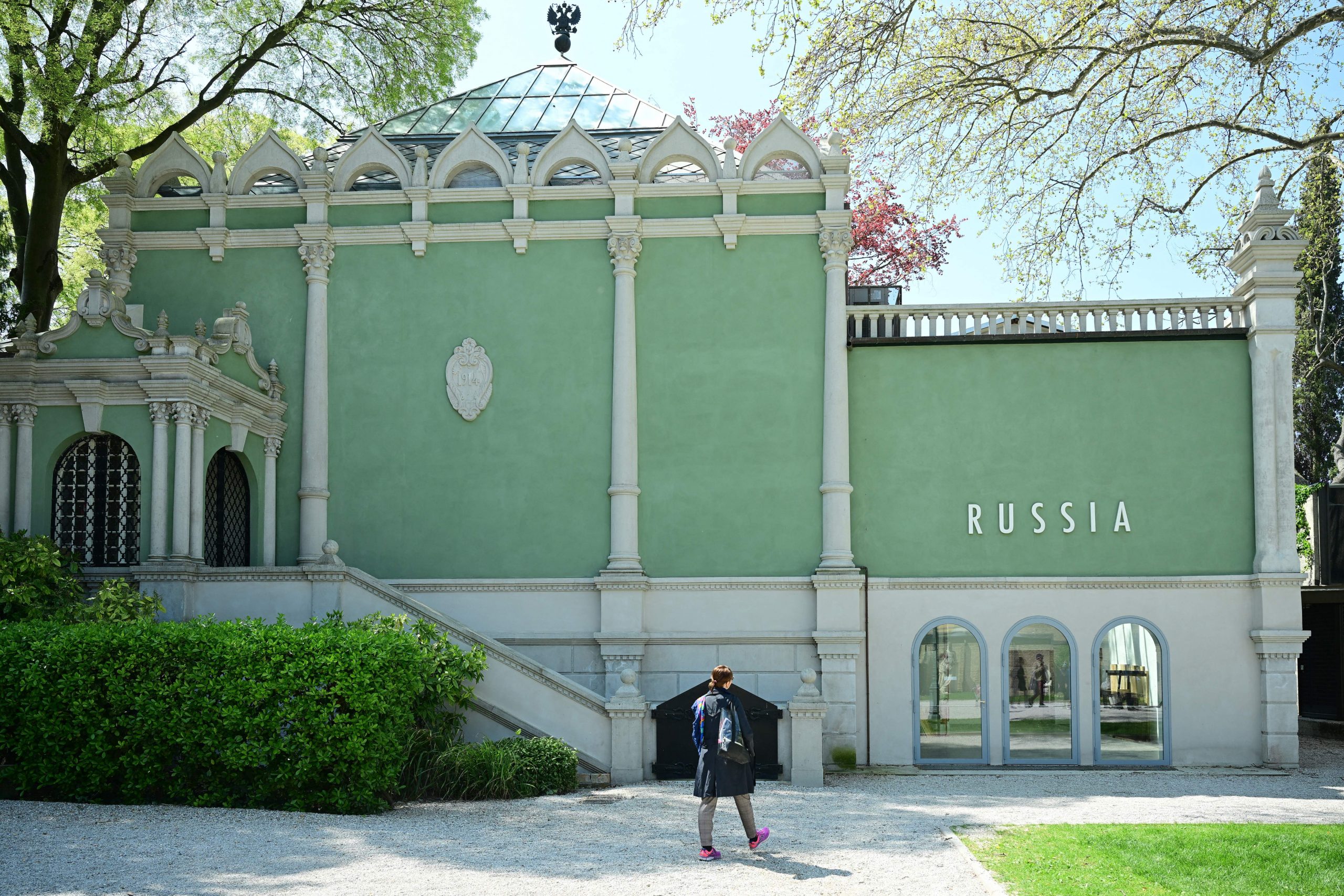
Dozens of artists participating in the 2026 Venice Biennale have withdrawn from consideration for the newly created Visitor Lion awards, replacing the traditional Gold and Silver Lion prizes. A total of 57 artists from the main exhibition and 22 national pavilions signed a statement published on e-flux on May 9, acting in solidarity with the five-person prize jury that resigned on April 30 over the continued participation of Russia and Israel. The jury had objected to awarding prizes to artists from countries whose leaders face International Criminal Court charges, including Russian president Vladimir Putin and Israeli prime minister Benjamin Netanyahu. In response, the Biennale organizers postponed the awards ceremony to November 22 and introduced visitor voting, a move they described as consistent with openness and dialogue. Meanwhile, the Russian Pavilion, which returned after lending its space to Bolivia in 2024, faced protests, closure after previews, and a €2 million funding pull by the European Union for the 2028 Biennale.

Venice Biennale Artists Decline Consideration for Golden Lions Chosen by Public Vote

Nearly half of the artists in the main exhibition of the Venice Biennale have signed a statement declining consideration for the Golden Lion awards, in solidarity with the jury that resigned last month. The statement, published by e-flux, includes prominent names such as Alfredo Jaar, Tuan Andrew Nguyen, Otobong Nkanga, and Walid Raad, as well as national pavilion representatives from France, Lithuania, and the Netherlands. The Biennale had planned to replace the jury-selected Golden Lions with "Visitor Lions" decided by public vote, but the artists' refusal marks an unprecedented protest within the exhibition.

Several Venice Biennale pavilions shut in protest over inclusion of Israel

Several national pavilions at the 2026 Venice Biennale shut down during the final preview day in a strike organized by the Art Not Genocide Alliance (Anga) protesting Israel's inclusion due to its war in Gaza. Pavilions from Belgium, the Netherlands, Austria, Japan, Macedonia, and Korea closed entirely, while others like Britain, Spain, France, Egypt, Finland, and Luxembourg partially closed or reopened later. Artists in the main exhibition added Palestinian flags and posters reading "Palestine is the future of the world." The Israeli pavilion was closed for a private event, and earlier in the week Pussy Riot staged a protest at the Russian pavilion.

Khaled Sabsabi is finally at the Venice Biennale: ‘Being here is already a win’

Khaled Sabsabi has opened his exhibition 'conference of one’s self' at the Australian Pavilion of the 61st Venice Biennale, alongside a second installation 'Khalil' in the Arsenale. This follows a tumultuous period in which Creative Australia rescinded his appointment as Australia’s representative in February 2025, sparking widespread backlash from the art community. After being reappointed in July 2025, Sabsabi presents two monumental multimedia works inspired by Sufi practice, created in Bangkok and described as 'one body with two limbs'.

Drained, Drowning, and Decay: The Best National Pavilions at the Venice Biennale

The 2026 Venice Biennale is defined by themes of ruin and decay, with standout national pavilions exploring bodily, infrastructural, and archaeological collapse. The Slovenian Pavilion features the Nonument Group repurposing materials from past Biennales into a ruin of a mosque for Bosnian Muslim soldiers from World War I. Syria presents its first national pavilion since the Civil War, with Sara Shamma invoking Palmyra, destroyed by ISIS. Germany's pavilion, titled "Ruin," features works by Henrike Naumann (who died in February) and Sung Tieu, questioning the pavilion's fascist architecture and nationalist residue. The Austrian Pavilion, curated by Florentina Holzinger, offers a visceral performance titled "Sea World." The Biennale is also marked by the abrupt resignation of its five-member jury, who refused to consider nations charged with crimes against humanity, leading to awards being chosen by public vote. Additionally, the main exhibition "In Minor Keys" was affected by the death of its curator, Koyo Kouoh.

Venice Diary Day 2: “In Minor Keys” Is a Major Statement on Perseverance and Play

The article is a diary entry from the 2026 Venice Biennale, focusing on the exhibition "In Minor Keys" curated by the late Koyo Kouoh. The author describes an emotional experience, beginning with a poem by Refaat Alareer on the Arsenale wall, and highlights works by Guadalupe Maravilla, Alexa Kumiko Hatanaka, and others that address themes of perseverance, healing, and survival. Maravilla's sculptures reference a child kidnapped by ICE, while Hatanaka's linocuts explore bipolar disorder as an adaptive trait. The show also features artist-led collectives like Denniston Hill and fierce pussy, emphasizing institution-building and world-making.

First Impressions of a Venice Biennale Torn Apart by the Present

The 61st Venice Biennale, titled "In Minor Keys," opens amid turmoil: its curator Koyo Kouoh died of cancer during planning, and the festival jury resigned after a controversial statement about excluding Israel and Russia from prizes, replaced by a Eurovision-style people's choice award. The main exhibition, completed by a team of five collaborators using Kouoh's plans, features over 110 artists and collectives, with highlights including works by Big Chief Demond Melanchon, Tammy Nguyen, Guadalupe Maravilla, Ayrson Heráclito, and a section focused on Michael Armitage's Nairobi Contemporary Art Institute.

In Protest of Israeli Pavilion, Activists and Unions Plan Strike on Venice Biennale’s Opening Day

The Art Not Genocide Alliance (ANGA) has announced a 24-hour strike and rally on May 8, the day before the 2026 Venice Biennale opens to the public, in protest of the Israeli Pavilion. ANGA, formed in opposition to Israel's inclusion in the 2024 Biennale, refers to the current Israeli presentation—featuring Haifa-based artist Belu-Simion Fainaru—as the "Genocide Pavilion." Over 200 artists, curators, and culture workers have signed an open letter demanding Israel's exclusion, and a separate action called Solidarity Drone Chorus involved 60 artists. ANGA is collaborating with local labor and culture organizations including Biennalocene, Vogliamo Tutt'altro, S.a.L.E. Docks, and Mi Riconosci.

Dark clouds, protests and resignations dampen start of 61st Venice Biennale

The 61st Venice Biennale opened under grey skies and rain, with political tensions overshadowing the art world's premier event. The Russian pavilion, absent for two editions due to the Ukraine war, reappeared with a party atmosphere, though the Italian ministry of culture confirmed it would not be open to the public. The Ukrainian culture minister called Russia's symbolic presence powerful. The Iranian pavilion withdrew without explanation, and a protest by 60 artists from the In Minor Keys show marched through the Giardini humming in solidarity against Israel's participation. Over 200 artists, including Lubaina Himid and Alfredo Jaar, signed an open letter demanding the Israeli pavilion's cancellation. The event also proceeded without its curator, Koyo Kouoh, who died in May 2025; her curatorial team delivered the exhibition following her plans.

Venice Biennale’s fierce pussy Group Says City Censored Posters About Queer and Trans People

The lesbian artist collective fierce pussy, comprising Nancy Brooks Brody, Joy Episalla, Zoe Leonard, and Carrie Yamaoka, claims that the city of Venice censored their posters for the Venice Biennale. The posters, which feature phrases like "Welcome queers and trans people" and "we are queers and trans people" alongside a list of occupations, were intended to be pasted across the city. After the city blocked the full-scale posting, the group created stickers and placed them on walls, windows, and advertising spaces. As a concession, La Biennale installed the original posters inside the Arsenale entrance.

Venice Bound? Here’s All the News You Need to Know About This Year’s Biennale

The 61st Venice Biennale is embroiled in geopolitical controversy over Russia's return to the event in 2026, which has sparked widespread backlash. Nearly 10,000 artists and cultural leaders signed an open letter opposing Russia's participation, and the European Union withdrew €2 million in funding for the 2028 edition. Leaked emails reveal Biennale officials worked with Russian pavilion commissioner Anastasia Karneeva to circumvent EU sanctions, while Italy's culture minister Alessandro Giuli plans to boycott the opening week. Meanwhile, activists continue to push for Israel's removal from the Biennale, though Israel will be accommodated in the Arsenale this year.

Venice Biennale’s Prize Ban on Israel and Russia Falls Short for Critics

The jury of the 2026 Venice Biennale has ruled that Israel and Russia will be ineligible for the Golden and Silver Lion prizes, citing International Criminal Court charges of crimes against humanity against their leaders. The decision follows years of activism and political pressure, with the European Union withdrawing €2 million in funding from the event in protest of Russia's participation. While groups like Art Not Genocide Alliance praised the move as an unprecedented step, critics argue it falls short of a full ban on participation. Israel's artist representative, Belu-Simion Fainaru, condemned the policy as discriminatory, and an open letter signed by 70 artists and curators called for excluding all regimes committing war crimes, including the United States.

A Data Analysis of the 2026 Venice Biennale Signals a Shift to the Present

The 2026 Venice Biennale, titled "In Minor Keys," marks a significant pivot from the historical revisionism of recent editions toward a focus on contemporary, mid-career artists. Posthumously realized based on the vision of the late Koyo Kouoh, the exhibition features 111 participants, including a notable inclusion of artist-led organizations from Africa. Data analysis reveals a balanced demographic split between the Global North and South, moving away from the retrospective focus of predecessors like Adriano Pedrosa and Cecilia Alemani to prioritize living artists and subtler, emotional themes.

venice biennale 2026 national pavilions

The 61st Venice Biennale is taking shape as national pavilions announce their participants and curatorial themes for the 2026 edition. Russia has confirmed its return to the Giardini with a multidisciplinary exhibition titled “The Tree is Rooted in the Sky,” following its 2022 withdrawal and the 2024 loan of its pavilion to Bolivia. The upcoming edition, themed “In Minor Keys,” will proceed under the vision of the late curator Koyo Kouoh, who passed away in 2025 after becoming the first African woman appointed to helm the prestigious event.

Li Yi-Fan “Screen Melancholy” at Palazzo delle Prigioni, Venice

The Taipei Fine Arts Museum of Taiwan is presenting a collateral event titled "Screen Melancholy" by Taiwanese artist Li Yi-Fan at the 61st Venice Biennale. The exhibition will take place at the Palazzo delle Prigioni from May 9 to November 22, 2026, featuring a new work by the artist.

Venice Biennale details revealed, Beatriz González and Tracey Emin in London—podcast

The 2026 Venice Biennale has unveiled the artist list and framework for its international exhibition, "In Minor Keys." The project, which was the final vision of the late curator Koyo Kouoh, is being realized by a collaborative team following her death last year. The exhibition aims to explore themes of minor histories and global narratives through a diverse roster of international artists.

Dana Awartani on Representing Saudi Arabia at the 61st Venice Biennale

Dana Awartani, an artist based in Jeddah, will represent Saudi Arabia at the 61st Venice Biennale in 2026, with her pavilion located in the Arsenale under the theme 'Celebrating Visions.' In an interview with ArtReview, Awartani discusses her exhibition, which builds on her practice of foregrounding Arab cultural histories and preserving the region's material heritage. She connects her work to the Biennale's theme 'In Minor Keys' by focusing on repair, healing, and the quiet consequences of conflict, emphasizing craft as a form of quiet resistance against mechanization. The pavilion, she says, reflects the diversity of voices within Saudi Arabia's artistic community rather than a single national narrative.

81 artists withdraw from Venice Biennale competition

Venice Biennale opening marked by protests

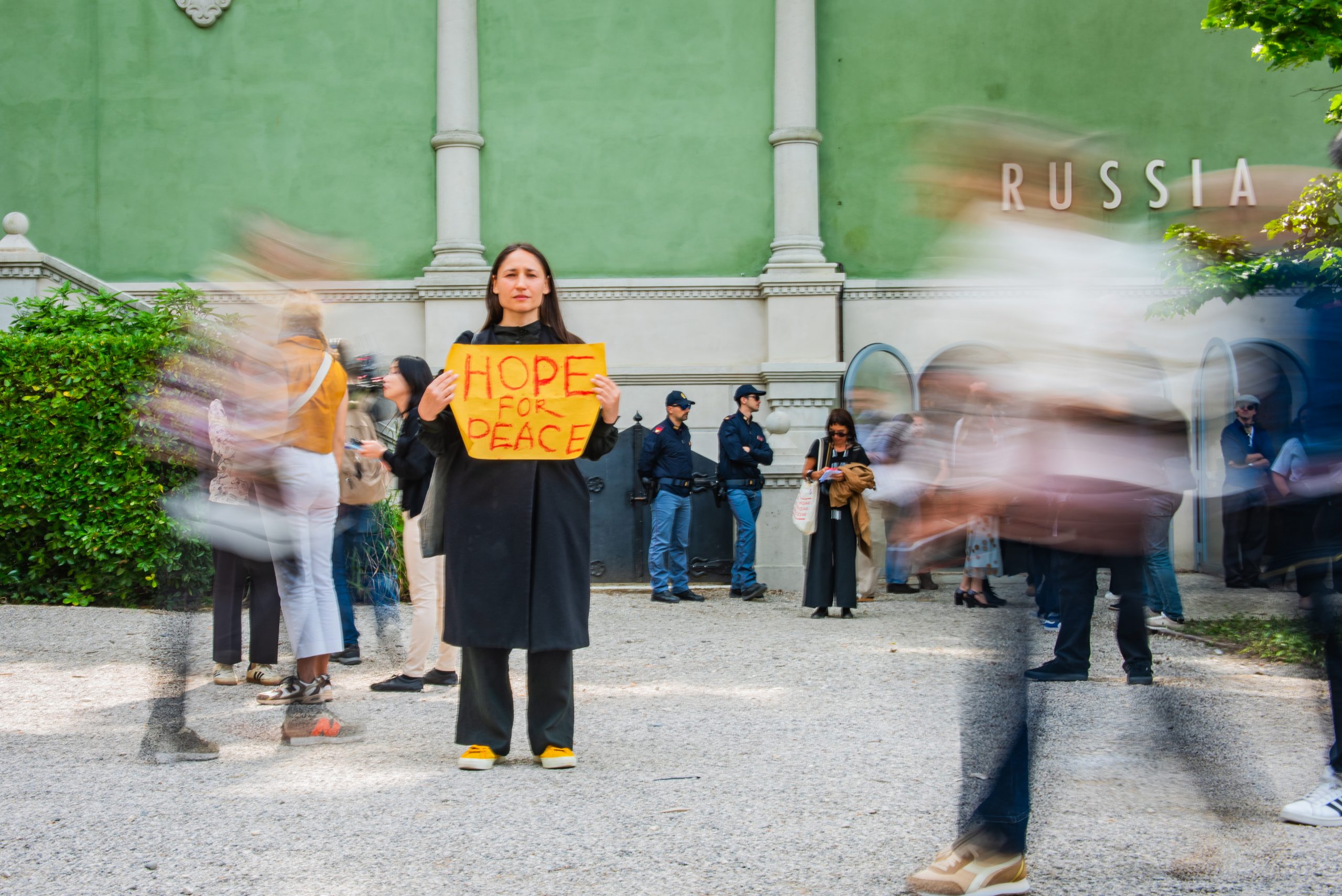
The 2026 Venice Biennale opened for professionals on Tuesday amid a series of protests, with more planned throughout the week. Around 60 artists from the exhibition "In Minor Keys" gathered at the Giardini for a collective action called "Solidarity Drone Chorus," inspired by Gazan composer Ahmed Muin's "Drone Song," to draw attention to genocide and war in Palestine. The Art Not Genocide Alliance (ANGA) organized a 24-hour strike for Friday 8 May, protesting Israel's participation. Pussy Riot staged a protest outside the Russian pavilion, and the Latvian pavilion launched a campaign against Russia's involvement. The protests follow a highly politicized lead-up, including calls for boycotts of the Russian, Israeli, and US pavilions, EU funding cuts over Russia's participation, and the resignation of the Biennale jury.

Goen Choi and Hyeree Ro on Representing South Korea at the 61st Venice Biennale

Goen Choi and Hyeree Ro are representing South Korea at the 61st Venice Biennale, which runs from 9 May to 22 November 2026. In an interview with ArtReview, Choi describes his sculptural installation "Meridian," featuring ruptured copper pipes that traverse the Korean Pavilion in the Giardini, exploring unseen infrastructures and unstable relations between fixed structures. Ro presents "Bearing," a membranelike waxed fabric installation with eight stations for mourning, remembering, and mending, inspired by Korean gardens and temples. Both artists respond to the Biennale's theme "In Minor Keys," emphasizing subtle forces, low vibrations, and contemplative spaces.

Jenna Sutela on Representing Finland at the 61st Venice Biennale

Jenna Sutela, representing Finland at the 61st Venice Biennale, will present an exhibition titled *Aeolian Suite* in the Giardini pavilion. The work features sound sculptures that engage with wind as both a physical and political force, using meteorological data, wind machines, recorders, a children's woodwind orchestra, and recordings of winds from Venice, Helsinki, and beyond. Sutela explores noise as a creative medium, drawing on the concept of deep listening inspired by artist Pauline Oliveros, and connects her project to the Biennale's theme, *In Minor Keys*, curated by Koyo Kouoh.

Genti Korini on Representing Albania at the 61st Venice Biennale

Artist Genti Korini will represent Albania at the 61st Venice Biennale with a new moving-image installation titled 'A Place in the Sun.' Curated by Małgorzata Ludwisiak, the project utilizes 'Zaum'—a transrational language from the Russian Futurist movement—to explore themes of performance, puppetry, and animation. The work investigates Albania’s historical position as a 'somewhere place' often defined by external exoticism and orientalist perceptions rather than its own internal voice.

Manon Awst and Dylan Huw on Representing Wales at the 61st Venice Biennale

Artist Manon Awst and curator Dylan Huw will represent Wales at the 61st Venice Biennale with a project titled "Sownd." The exhibition, located at the Istituto Santa Maria della Pietà, features a sculptural environment inspired by the peatlands of North Wales. Central to the installation is a wooden boardwalk that mirrors both the boggy terrain of the Welsh landscape and the flood-prone pathways of Venice, integrating material samples, oral poetic traditions, and the ancient Welsh craft of cynghanedd.

Strike Rocks Venice Biennale Ahead of Public Opening as Pavilions Close

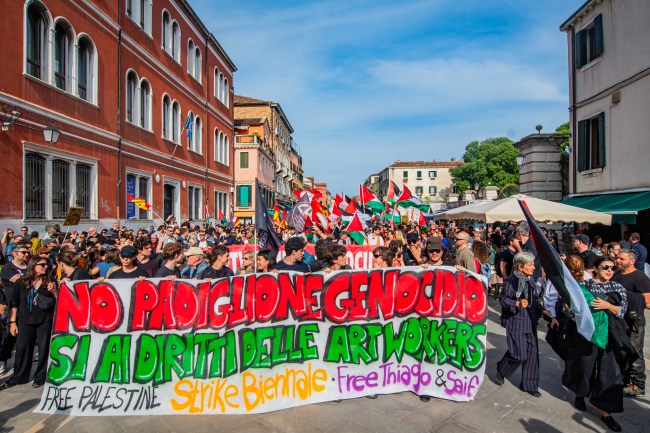
Thousands of protesters marched through Venice to demonstrate against Israel's presence at the Venice Biennale, leading many national pavilions to close in solidarity. Pavilions from Austria, Belgium, Egypt, Japan, the Netherlands, South Korea, and over a dozen other countries shut fully or partially, with some displaying signs reading "We Stand with Palestine." The Israeli pavilion remained closed for its exhibition opening, and armed police clashed with protesters. The main exhibition, curated by Koyo Kouoh, stayed open initially but the Arsenale closed by late afternoon with riot police outside. The 24-hour strike, organized by Art Not Genocide Alliance (ANGA) and Italian activist groups, was described as the largest protest in Biennale history.