filter_list Showing 2322 results for "Chi" close Clear
search
dashboard All 2322 museum exhibitions 1331article local 258article culture 188trending_up market 180article news 158person people 62rate_review review 54article policy 41candle obituary 38gavel restitution 11article architecture 1
date_range Range Today This Week This Month All
Subscribe

Meet the Writer Who Sees Every Single Show at the Venice Biennale

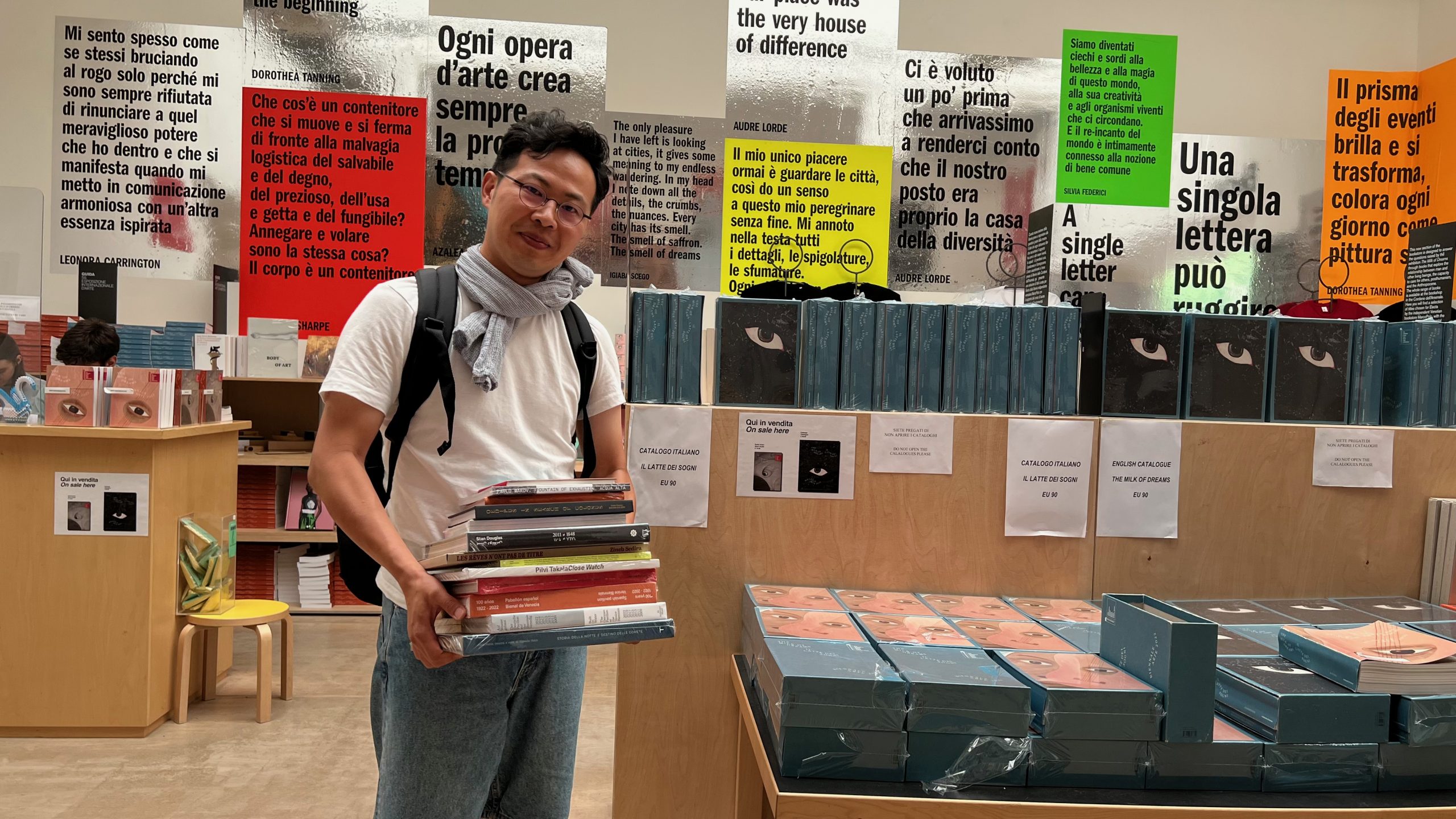
Jaeyong Park, a Seoul-based writer, translator, and interpreter, has attended every edition of the Venice Biennale since 2022—including both art and architecture cycles—and seen every single show, from the central exhibition and national pavilions to collateral and unofficial events. He documents his journeys in regular dispatches and has compiled a free bilingual guide to the biennial. Park organizes his trips with a group of fellow art workers, splitting accommodation costs and sharing reviews over dinner to ensure full coverage.

Rose Finn-Kelcey review – flying puns, smart pranks and prayers for 20p

The Guardian reviews "Rose Finn-Kelcey: House Rules," a posthumous exhibition at the new Arts Collective in Northampton, UK. The show features works by the British conceptual artist (1945–2014), including her 1972 flag installation "Power for the People" at Battersea Power Station, a prayer vending machine titled "It Pays to Pray," and pieces exploring permission, spirituality, and societal restrictions. The exhibition is presented as a homecoming for Finn-Kelcey, who was born in Northampton.

Oleg Prokofiev’s Lost Trove of Paintings Comes to Light After Decades in Hiding

A trove of abstract paintings and sculptures by Russian artist Oleg Prokofiev, hidden for decades in Moscow after he fled the Soviet Union, has been rediscovered and is now on public display for the first time. Prokofiev concealed the works in the 1950s and 1960s to avoid state persecution—abstract art was banned in the USSR, and his relationship with British scholar Camilla Gray made marriage impossible until 1969. After Gray's death and his move to England, the artworks remained safely stored in Moscow, where he found them intact after the Soviet collapse. The collection, including paintings, sculptures, sketchbooks, and letters, is now exhibited at the newly founded Prokofiev Studio in Hackney, London, established by his four children and curator Anzhela Popova.

Genuine Fake Premium Economy review – brilliantly obnoxious millennial rage at a rigged financial world

The exhibition "Genuine Fake Premium Economy" at a London gallery features works by American artists Jenna Bliss, Buck Ellison, and Jasmine Gregory, all born in the mid-1980s. Their pieces—including Bliss's shaky videos of New York's financial district, Ellison's fictional bank advertisements pairing classical paintings with cynical taglines, and Gregory's luxury watch ads stripped of watches—collectively express millennial rage at a rigged financial system and the aftermath of the 2008 crash.

Family of Nonagenarian Sculptor Is Fighting to Halt Demolition of Iconic Brutalist Fountain in Downtown San Francisco

The family of 96-year-old Quebecois sculptor Armand Vaillancourt is fighting to halt the demolition of his 710-ton concrete fountain, known as Québec Libre! or the Vaillancourt Fountain, in San Francisco’s Embarcadero Plaza. The city began dismantling the 1971 public artwork this week, citing a planned plaza renovation, and the disassembly is expected to cost $4 million. Vaillancourt’s son Alexis and the group Friends of the Plaza have filed an appellate petition challenging the city’s use of an emergency exemption under the California Environmental Quality Act, arguing that the fountain’s disrepair does not constitute a sudden emergency requiring immediate action.

New space dedicated to Oleg Prokofiev—whose abstract art was censored by Soviet Russia—opens in London

A new art space called Prokofiev Studio has opened in Hackney, London, dedicated to the Russian artist Oleg Prokofiev. Its inaugural exhibition, 'Bending Time,' presents abstract works from the 1950s that were banned under Soviet censorship and long thought lost. The space was founded by Prokofiev’s children, including composer Gabriel Prokofiev, in collaboration with curator Anzhela Popova. The works were rediscovered in 1994 when Prokofiev returned to his former Moscow home and found them preserved by the new owner.

Portland’s Converge 45 Reveals Theme and Artists, Including Trisha Baga, Rose Salane, and Srijon Chowdhury

Converge 45, a citywide triennial in Portland, Oregon, has announced the theme and 28 participating artists for its upcoming edition, launching August 27. Curated by New York–based Lumi Tan, the exhibition is titled “Here, To you, Now,” borrowing a phrase from Ursula K. Le Guin’s 1985 novel *Always Coming Home*. More than half of the artists are based in Portland, including Srijon Chowdhury, Aaron Cunningham, and keyon gaskin, while out-of-state participants include Trisha Baga, Rose Salane, and Jacqueline Kiyomi Gork. The triennial will take place across 16 venues, including the Portland Institute of Contemporary Art and Oregon Contemporary.

Who is Gladys Hynes? Show reinstates forgotten artist who once represented Britain at the Venice Biennale

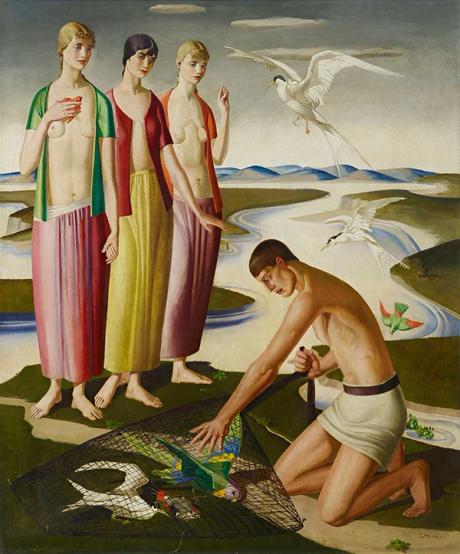
The exhibition "Gladys Hynes: Radical Lives" opens this month at Charleston in Lewes, aiming to resurrect the career of Gladys Hynes (1888-1958), a forgotten artist who once represented Britain at the 1924 Venice Biennale. The show brings together 120 paintings, drawings, graphic designs, and sculptural pieces, including works by Hynes and her contemporaries, curated by Sacha Llewellyn. Hynes trained with Stanhope Forbes, Frank Brangwyn, and William Nicholson, worked with Roger Fry's Omega Workshops, associated with Wyndham Lewis and the Vorticists, and was commissioned by Ezra Pound to illustrate his Cantos. Despite her achievements, only one of her paintings is in a British public collection.

Nymphs, mermaids and rosy cherubs: mansion filled with hidden wall paintings makes Victorian Society’s endangered buildings list

A derelict mansion called Parndon Hall, located within the grounds of Princess Alexandra Hospital in Harlow, Essex, has been named to the Victorian Society’s annual list of the top ten at-risk buildings in England and Wales. The house, built in 1867, contains a hidden trove of wall paintings by the almost-forgotten Victorian artist Elizabeth Arkwright, who covered walls, ceilings, and doors with nymphs, mermaids, and cherubs—many still concealed under Edwardian whitewash. The building has been used for storage and has sat unoccupied since flood repairs in 2024.

Open Letter in Support of the Artist Asel Kadyrkhanova

An open letter initiated by members of the Kazakhstani and international art community protests the removal of artist Asel Kadyrkhanova's work *Machine* (2013) from the Kazakhstan pavilion at the 2026 Venice Biennale. The mixed-media installation, which addresses Stalinist repression through a vintage typewriter, arrest warrants, and red threads, was dismantled on May 5, 2026, reportedly by order of Kazakhstan's Ministry of Culture and Information, just before the pavilion's opening. The artist and curator were allegedly pressured to alter the work beforehand, and the ministry initially cited restrictions from the Italian side, but the Italian Ministry of Defense denied involvement.

Jewellers delve into the Dalíesque with dreamlike pieces

Jewellers are creating a new wave of sculptural, nature-themed pieces inspired by the surrealist artist Salvador Dalí. These dreamlike works draw on Dalí's iconic motifs—melting clocks, fantastical creatures, and organic forms—reimagined in precious metals and gemstones by contemporary designers and luxury houses.

Taking a Deep Dive into a Connecticut Ranch House

Artist couple Janis Provisor and Brad Davis transformed an indoor swimming pool in their Connecticut ranch house into a studio, prioritizing their creative work over leisure. The article explores how they adapted the unconventional space to suit their artistic practices.

A Dutch Art Studio Lights Up Venice’s Grand Canal

Dutch artists Lonneke Gordijn and Ralph Nauta of Studio Drift have installed their kinetic light sculptures along Venice’s Grand Canal, bringing their work outdoors for the first time during the Venice Biennale. The installation transforms the iconic waterway with moving, illuminated forms that interact with the surrounding architecture and water.

This Professor Won the ‘Bauhaus Bathroom’ Design Competition for the Gropius House

The New York Times Art section announced the winner of a competition to design a public restroom at the historic Gropius House in Lincoln, Massachusetts. The winning design, dubbed the 'Bauhaus Bathroom,' was created by a professor whose identity has not been disclosed in the provided text. The competition aimed to add a functional, contemporary restroom that respects the iconic Bauhaus architecture of the house, which was designed by Walter Gropius in 1938.

‘My Father’s Shadow’: Now You See Me

Clive Chijioke Nwonka reviews Akinola Davies Jr.'s film *My Father's Shadow* (2025), a semi-autobiographical story of two adolescent brothers traveling through Lagos with their estranged father during the 1993 Nigerian presidential elections. The film, selected for the Cannes Official Selection, employs a metaphysical narrative style rooted in the Nigerian oral tradition, blending literal and spiritual worlds to explore diasporic identity, memory, and cultural preservation.

Sung Tieu on Representing Germany at the 61st Venice Biennale

Sung Tieu, who is co-representing Germany at the 61st Venice Biennale alongside Henrike Naumann, responds to a questionnaire from ArtReview about her plans for the German Pavilion. She describes her inspiration as her mother and childhood home, a site built for foreign contract workers in the GDR that later became a refuge for the diaspora. Tieu states that her work relates to the Biennale theme "In Minor Keys" through the lens of Gehrenseestrasse, a concrete record of collective memory. She also expresses skepticism about the Biennale's importance, noting that the German Pavilion's fascist architecture compels artists to work against it, and that national pavilions reveal how much work remains in undoing nationalism.

The Interview: Gabrielle Goliath

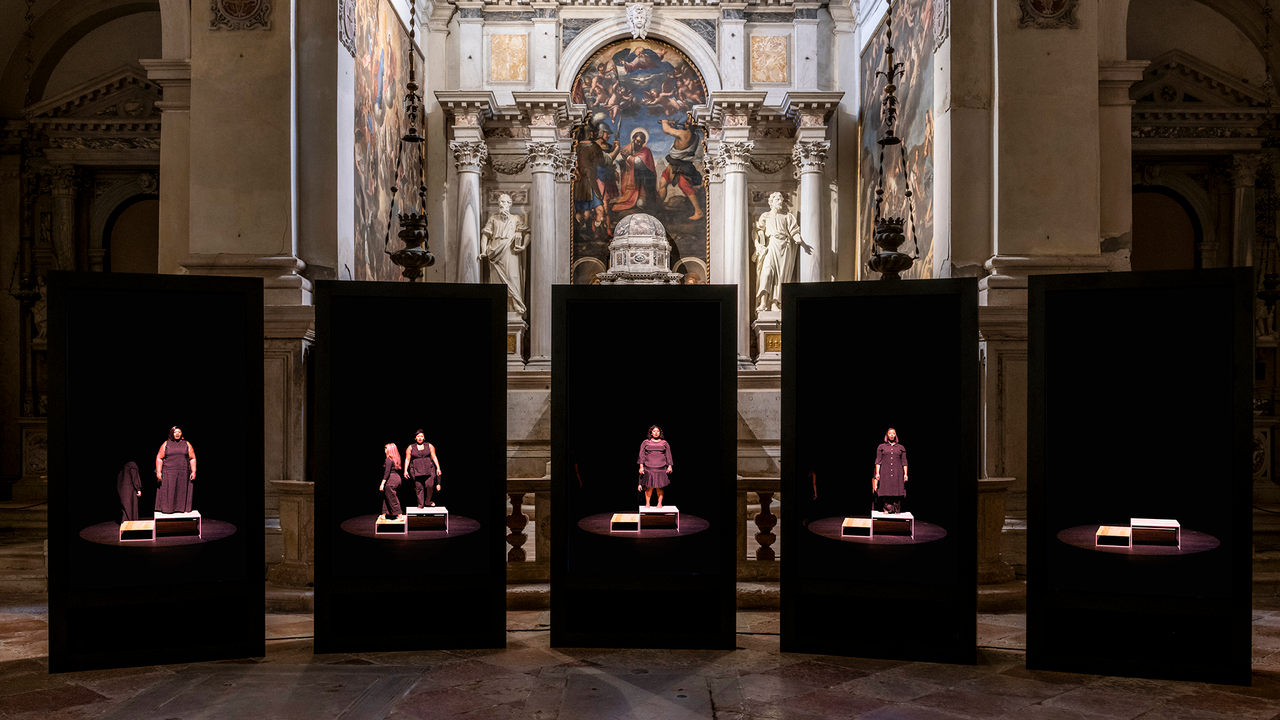
Gabrielle Goliath, a South African artist, created the performance work "Elegy" in 2015 after hearing a father mourn his daughter, Ipeleng Christine Moholane, who was raped and murdered. The piece features seven operatic women sustaining a single note in relay for an hour, evolving over a decade into a series of iterations that address systemic violence and grief. In January 2026, South Africa's Minister of Sport, Arts and Culture, Gayton McKenzie, cancelled Goliath's presentation of the latest version of "Elegy" at the 61st Venice Biennale, which was to include tributes to victims in South Africa, Namibia, and Gaza, including journalist Hiba Abu Nada. Goliath refused to alter the work, took legal action, and will now show it independently at the Chiesa di Sant'Antonin in Venice, while the official South African Pavilion will remain empty for the first time since 2011.

Pavel Brǎila on Representing Moldova at the 61st Venice Biennale

Pavel Brǎila is representing Moldova at the 61st Venice Biennale with an installation titled "Echoes of Harmony and Silent Cries" (2026), featuring flying carpets that fill the pavilion space at Santa Veneranda. In an interview with ArtReview, Brǎila explains that the work was driven by the constant presence of war in the news—Ukraine, Israel and Gaza, and other conflicts—and evolved into a sound installation as the propellers of the carpets created a minor-key resonance. He describes his first visit to the Biennale 25 years ago as a festive art festival, but now sees the platform as a crucial opportunity to represent his country's voice and express his urgent feelings about the world.

Rafał Zajko Is Hatching a Plan

Rafał Zajko's exhibition 'The Egg Egg' at Arsenal Gallery in Białystok, Poland, brings together 50 works from the past decade across two floors of a former power station, organized into nine 'acts'. The show features modular installations like 'Funny Games' (2025), a set of pastel-colored platforms on wheels with ceramic reliefs, and monumental sculptures such as 'Sisyphus' (2025), a suspended ceramic bobbin evoking textile factory tools. Performances by Agnieszka Szczotka, including 'Song to the Siren' (2026), activate works like 'Amber Chamber III Echo' (2025), blending archaism, futurism, and themes of labor and technology.

San Francisco’s Vaillancourt Fountain Catches Fire During Controversial Removal

San Francisco's Vaillancourt Fountain, a Brutalist concrete structure at Embarcadero Plaza since 1971, caught fire on Wednesday morning as workers used blow torches to disassemble it. The fire ignited rubber tubing and debris inside the sculpture's cantilevered arms, producing smoke that forced the temporary evacuation of nearby paddle board courts. The fountain is being removed to make way for a $32.5 million redevelopment of the plaza and playground into a five-acre park.

I cantieri che restaurano i saloni rinascimentali di Palazzo Venezia a Roma si possono visitare (gratis!). Ecco come

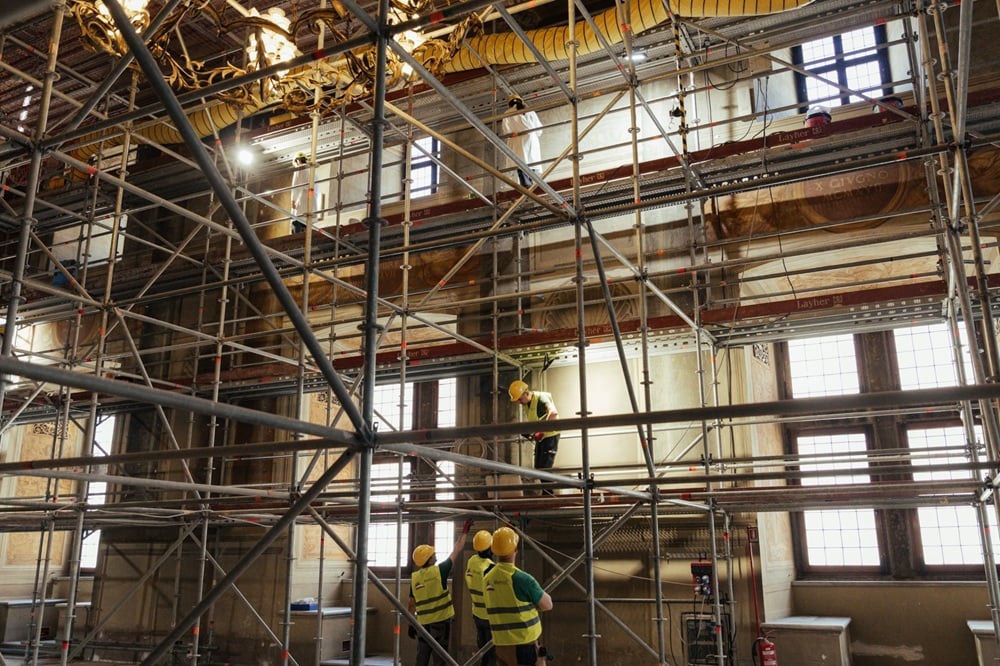
Palazzo Venezia in Rome is opening its monumental Renaissance halls to the public for free guided tours on three dates in 2026—May 23, June 6, and June 20—as part of the "VIVE Cantiere Aperto" project. Visitors will be led by restorers and art historians onto scaffolding to observe the restoration of the Loggia Grande, Sala del Mappamondo, and Sala delle Battaglie, including their wooden ceilings, sculptural decorations, and wall paintings. The halls have served as Venetian embassy, Austro-Hungarian imperial seat, and Mussolini's government headquarters before becoming a museum space.

Ayotunde Ojo Maps Interiority Under the Public Gaze

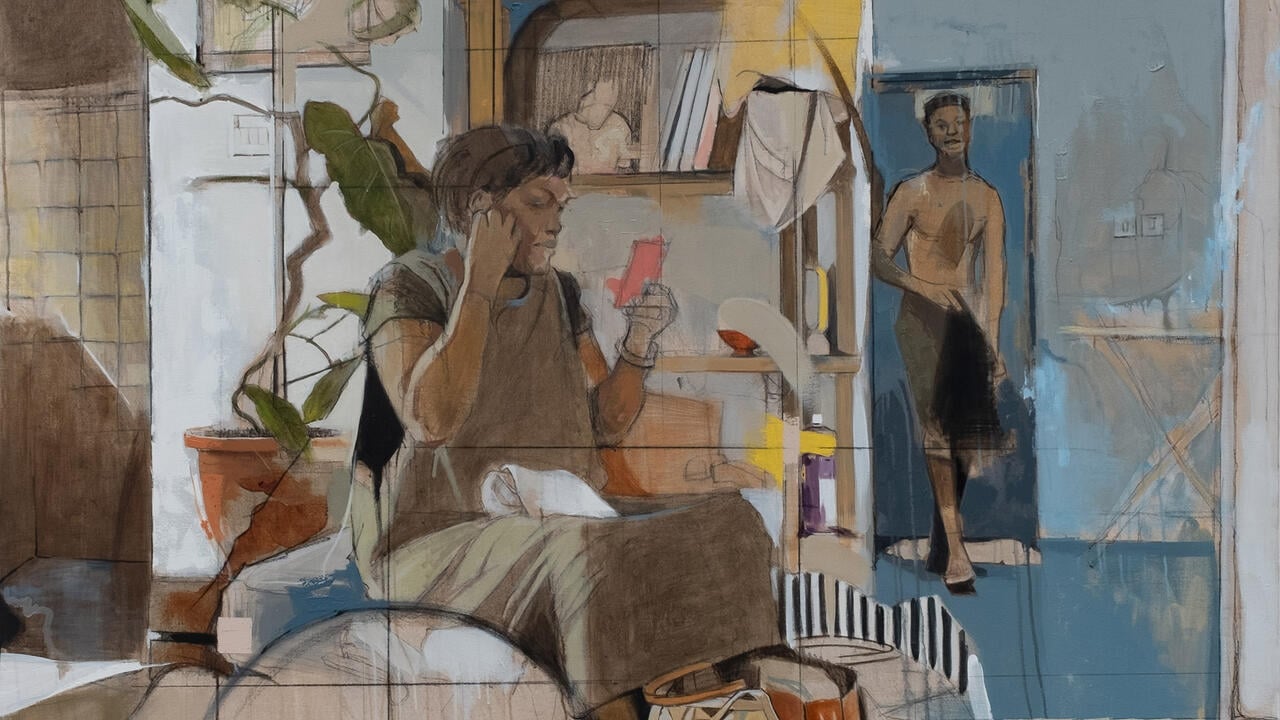
The article, a critic's guide review by Andrew Durbin, contrasts the US national pavilion presentation at an unspecified biennial with those of Britain and Germany. The US presentation is described as vacuous and lacking in meaning, while the British and German installations are praised for being incisive and moving. The review critically examines the thematic and conceptual approaches of each national pavilion, highlighting a disparity in artistic depth and engagement.

Arsenale Review: Where Voices Resist Erasure

At the 2026 Venice Biennale's Arsenale, critic Andrew Durbin reviews national pavilions, finding the US presentation vacuous and lacking meaning, while praising the British and German pavilions for their incisive and moving installations that resist erasure. The review highlights a stark contrast in curatorial ambition and political engagement among the participating nations.

Off-Site Exhibitions Review: The Politics of Listening

Andrew Durbin reviews the national pavilions at an unnamed biennial, contrasting a vacuous US presentation with incisive and moving installations from Britain and Germany. The review critiques the lack of meaningful engagement in the US pavilion while praising the depth and emotional resonance of the British and German contributions.

Risk and Reward: Jason Price Gets Artists Business-Savvy

Jason Price, an artist and entrepreneur, is launching a new initiative called 'Risk and Reward' aimed at helping artists develop business acumen. The program offers workshops and resources on financial literacy, contract negotiation, and marketing strategies tailored specifically for visual artists. Price draws on his own experience navigating the art market to provide practical guidance, with the first sessions scheduled to take place in New York and Los Angeles.

Nikita Kadan Questions Whether War Ever Ends

Ukrainian artist Nikita Kadan, in an interview with Frieze, reflects on his practice and the ongoing psychological and physical toll of war, questioning whether conflict ever truly ends. He discusses his recent works, which grapple with the persistent state of war in Ukraine, the transformation of urban spaces, and the collective trauma that outlasts active hostilities.

National Pavilions Review: Who’s Afraid of Meaning?

Andrew Durbin reviews national pavilions at a major biennial, contrasting a vacuous US presentation with incisive and moving installations from Britain and Germany. The review critiques the lack of meaningful content in the US pavilion while praising the depth and emotional resonance of the British and German contributions.

Artist Pooja Bhansali unveils Grid & Garden exhibition in Mumbai

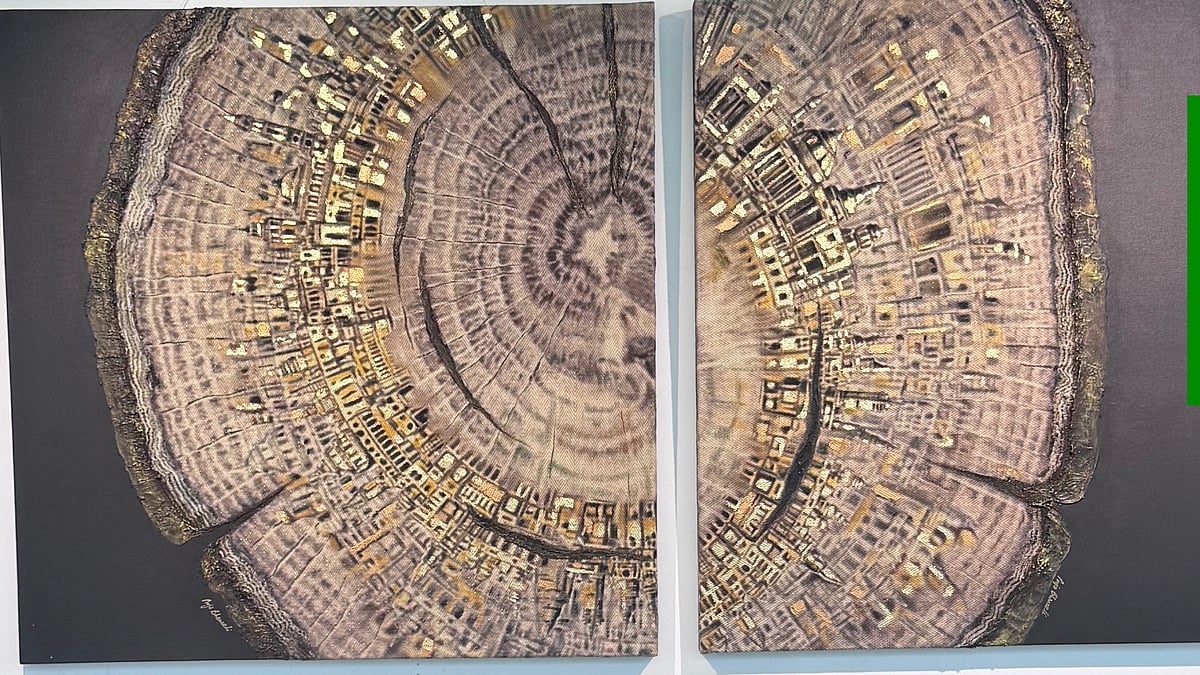
Mumbai-based contemporary artist Pooja Bhansali is making her debut solo exhibition, "Grid & Garden," at Jehangir Art Gallery in Kala Ghoda. The show features works that blend painting, textile, and sculpture, using materials like herringbone tweed, silk brocade, and wool felt on custom wooden structures. Series include "Wave Grid," "The Golden Realm," "The Beehive Series," and "Water Garden Triptych," exploring themes of structure, fluidity, nature, and luxury.

Ten artists serving life have a story to tell. It’s on the walls of this Center City art gallery.

Ten artists serving life sentences at SCI-Phoenix, a Pennsylvania state prison, have their work on display at Morton Contemporary Art Gallery in Philadelphia in an exhibition titled "The Weight of Time." The show is co-curated by artist Keith Andrews, who has been incarcerated for nearly 30 years, and gallerist Debbie Morton. Andrews' painting "Defiant Mercy" explores themes of time, isolation, and confinement, reflecting his own experience. The exhibition includes nearly 50 works by ten artists, each accompanied by biographies detailing their lives inside and outside the carceral system.

Studio SALES presents Concetto Pozzati. 50 years later exhibition in Rome

Studio SALES in Rome presents "Concetto Pozzati. 50 years later," an exhibition revisiting the artist's 1976 retrospective at the Palazzo delle Esposizioni. Organized in collaboration with the Archivio Concetto Pozzati, the show focuses on Pozzati's experimental work from the 1970s, featuring four large canvases from the original exhibition alongside works on paper displayed using plexiglass. The pieces, some unseen since 1976, explore mixed techniques like spray painting and screen-printing, highlighting a period when Pozzati moved away from his signature style.