
filter_list Showing 282 results for "Trevi" close Clear
search
dashboard All 282 museum exhibitions 125person people 41article news 30rate_review review 25article culture 23candle obituary 18article policy 11article local 6gavel restitution 2trending_up market 1
date_range Range Today This Week This Month All
Subscribe

Dries Verhoeven on Representing the Netherlands at the 61st Venice Biennale

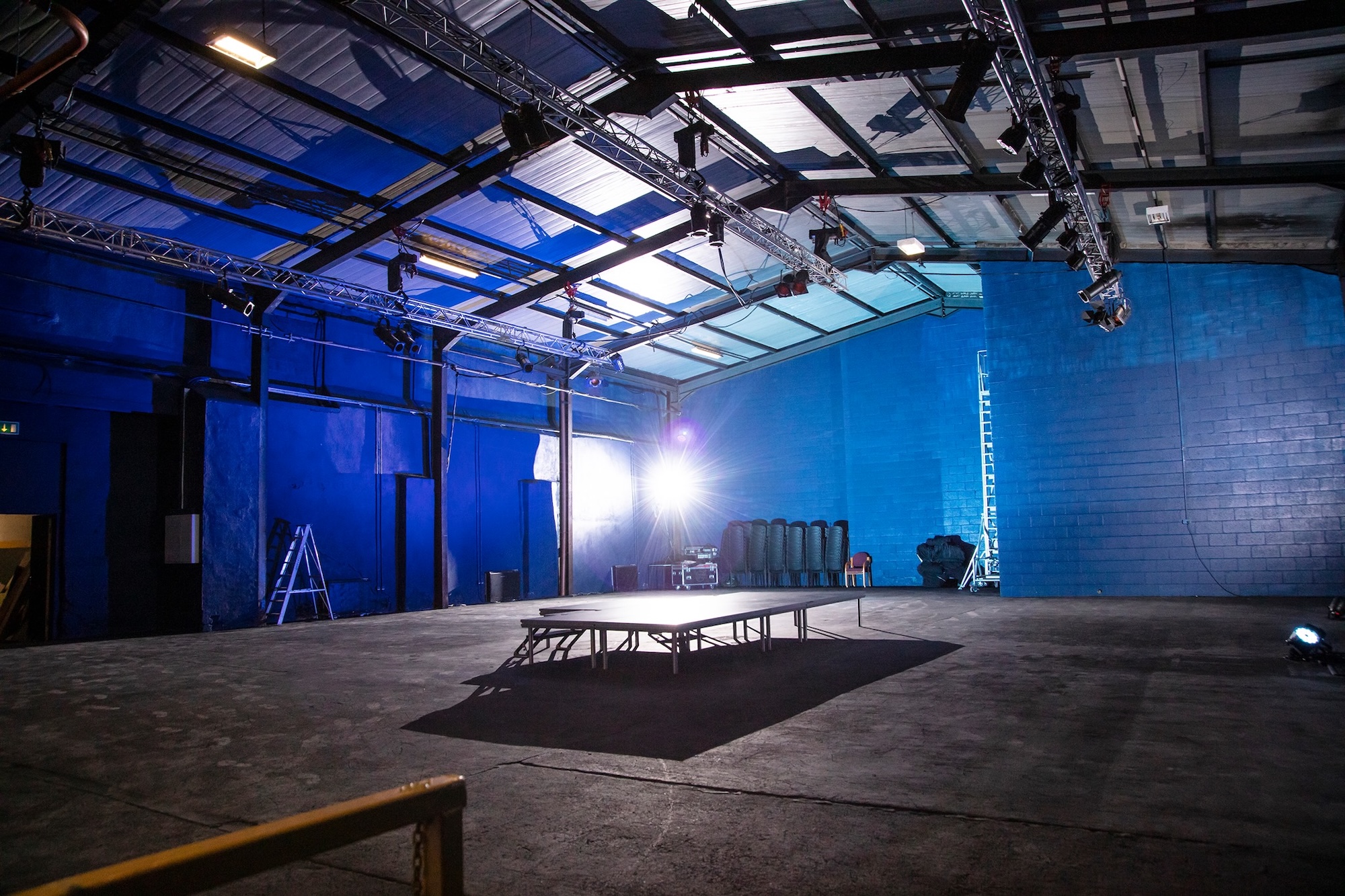
Dries Verhoeven will represent the Netherlands at the 61st Venice Biennale (2026) with a new work titled *The Fortress*, installed in the Dutch Rietveld Pavilion in the Giardini. The 25-minute performance piece transforms the sunlit pavilion into a darkened bunker, featuring a raw vocal composition using only false vocal cords. Verhoeven describes the work as a meditation on transition and self-preservation, reflecting a Western society caught between its enlightened self-image and a dark vision of the future. The piece responds to geopolitical unrest outside the Biennale grounds and is designed to be melancholic and confrontational, contrasting with the main exhibition's theme, *In Minor Keys*.
‘My Year in Paris with Gertrude Stein’ by Deborah Levy, Reviewed

Deborah Levy’s latest novel, *My Year in Paris with Gertrude Stein*, follows a first-person narrator who travels to Paris to research the American writer and collector Gertrude Stein. The narrative slips between the early twentieth century and the autumn of Donald Trump’s 2024 reelection, using stream-of-consciousness prose and liquid metaphors to blur past and present. The narrator’s research into Stein’s role in shaping modernity becomes a vehicle for exploring her own sense of helplessness and lack of agency in a hyperconnected, war-weary present.

‘The Bed Trick’ by Izabella Scott, Reviewed

Izabella Scott's book *The Bed Trick* examines a British rape case in which Gayle Newland was convicted for pretending to be a man named Kai during a two-year relationship with a woman identified as Miss X. Drawing on court transcripts, Scott explores the legal concept of 'fraud vitiates consent' and traces the historical bed-trick trope from medieval folktales to *The Rocky Horror Picture Show*, questioning how much deception invalidates sexual consent.

Sung Tieu on Representing Germany at the 61st Venice Biennale

Sung Tieu, who is co-representing Germany at the 61st Venice Biennale alongside Henrike Naumann, responds to a questionnaire from ArtReview about her plans for the German Pavilion. She describes her inspiration as her mother and childhood home, a site built for foreign contract workers in the GDR that later became a refuge for the diaspora. Tieu states that her work relates to the Biennale theme "In Minor Keys" through the lens of Gehrenseestrasse, a concrete record of collective memory. She also expresses skepticism about the Biennale's importance, noting that the German Pavilion's fascist architecture compels artists to work against it, and that national pavilions reveal how much work remains in undoing nationalism.

Miet Warlop on Representing Belgium at the 61st Venice Biennale

Miet Warlop, the artist representing Belgium at the 61st Venice Biennale (2026), discusses her plans for the Belgian Pavilion in the Giardini in an interview with ArtReview. Her installation, inspired by the Belgian motto 'L'union fait la force' ('unity makes strength'), aims to create a space between a workspace, exhibition, and performance that brings people together in introspection. She cites time spent with Venice's artistic communities, including students at the Accademia, as influential, and notes that her work engages with the Biennale's theme 'In Minor Keys' by incorporating minor-key music to evoke nuanced, introspective emotions.

The Interview: Gabrielle Goliath

Gabrielle Goliath, a South African artist, created the performance work "Elegy" in 2015 after hearing a father mourn his daughter, Ipeleng Christine Moholane, who was raped and murdered. The piece features seven operatic women sustaining a single note in relay for an hour, evolving over a decade into a series of iterations that address systemic violence and grief. In January 2026, South Africa's Minister of Sport, Arts and Culture, Gayton McKenzie, cancelled Goliath's presentation of the latest version of "Elegy" at the 61st Venice Biennale, which was to include tributes to victims in South Africa, Namibia, and Gaza, including journalist Hiba Abu Nada. Goliath refused to alter the work, took legal action, and will now show it independently at the Chiesa di Sant'Antonin in Venice, while the official South African Pavilion will remain empty for the first time since 2011.

Margaret Whyte on Representing Uruguay at the 61st Venice Biennale

Margaret Whyte, an artist from Uruguay, is set to represent her country at the 61st Venice Biennale in 2026, with her pavilion located in the Giardini. In an interview with ArtReview, Whyte discusses her exhibition, which builds on her earlier show "Tiempo de Escuchar" at the National Museum of Visual Arts in Uruguay, curated by Patricia Bentancur. Her work is inspired by Nassim N. Taleb's book "Antifragile" (2012), exploring themes of chaos, uncertainty, and resilience. She sees her antifragile approach as complementary to the Biennale's theme, "In Minor Keys," curated by Koyo Kouoh, emphasizing emotional depth, silence, and healing.

Pavel Brǎila on Representing Moldova at the 61st Venice Biennale

Pavel Brǎila is representing Moldova at the 61st Venice Biennale with an installation titled "Echoes of Harmony and Silent Cries" (2026), featuring flying carpets that fill the pavilion space at Santa Veneranda. In an interview with ArtReview, Brǎila explains that the work was driven by the constant presence of war in the news—Ukraine, Israel and Gaza, and other conflicts—and evolved into a sound installation as the propellers of the carpets created a minor-key resonance. He describes his first visit to the Biennale 25 years ago as a festive art festival, but now sees the platform as a crucial opportunity to represent his country's voice and express his urgent feelings about the world.

Bugarin + Castle on Representing Scotland at the 61st Venice Biennale

ArtReview published a questionnaire response from Bugarin + Castle, the artist duo representing Scotland at the 61st Venice Biennale (2026). Their exhibition, titled "Shame Parade" and curated by Mount Stuart Trust, explores charivari—medieval public shaming rituals involving sound, costume, and cross-dressing. The work draws on the artists' research into how noise and music have been used as tools of control, with particular attention to the Filipino legal definition of charivari as a punishable public disturbance. The exhibition includes sculpture, print, moving image, and a musical score created with Manila-based band Kalye Teresa, and is housed at the Olivolo, Castello pavilion.

Converge 45 announces list of artists for 2026 edition

Converge 45, a city-wide triennial based in Portland, Oregon, has announced the title and list of participating artists for its 2026 edition. The 10th edition, titled 'Here, To you, Now,' will take place from August 27–30 across 16 venues. Curated by Lumi Tan, the event draws inspiration from Ursula K. Le Guin's 1985 novel 'Always Coming Home,' emphasizing impermanence and spontaneous dialogue. The exhibition will feature works by 28 artists, including Trisha Baga, Gerald Clarke, and Rose Salane, among others.

Rafał Zajko Is Hatching a Plan

Rafał Zajko's exhibition 'The Egg Egg' at Arsenal Gallery in Białystok, Poland, brings together 50 works from the past decade across two floors of a former power station, organized into nine 'acts'. The show features modular installations like 'Funny Games' (2025), a set of pastel-colored platforms on wheels with ceramic reliefs, and monumental sculptures such as 'Sisyphus' (2025), a suspended ceramic bobbin evoking textile factory tools. Performances by Agnieszka Szczotka, including 'Song to the Siren' (2026), activate works like 'Amber Chamber III Echo' (2025), blending archaism, futurism, and themes of labor and technology.

Long Live the King?

Sam Jacob's essay in ArtReview uses the upcoming Baz Luhrmann film 'EPIC: Elvis Presley in Concert' (2026) as a springboard to explore the cultural and technical implications of digital restoration. The film, a spinoff from Luhrmann's 2022 Elvis biopic, draws on 59 hours of previously unseen footage from Elvis Presley's 1970 and 1972 Las Vegas performances, recovered from Warner's Kansas salt-mine archive. Using Peter Jackson's Park Road Post technology—including Machine Assisted Learning (MAL) for demixing audio and video—the damaged, fragmented material has been digitally scanned, reconstructed, and enhanced to 4k resolution with 12-channel sound, presented in IMAX cinemas.

Shigeo Toya, artist who looked to nature with his wood sculptures, 1947–2026

Shigeo Toya, the Japanese artist renowned for his chainsaw-hewn wood sculptures, has died at age 79. Born in 1947 in a small village in Nagano Prefecture, Toya began his signature Woods series in 1984, carving rough textures into tall lumber and arranging the pieces like a forest. His series Twenty Eight Deaths featured stacked wooden blocks with cavities and burn marks. Toya represented Japan at the Venice Biennale in 1988 and later exhibited at the Asia Pacific Triennial (1993) and Gwangju Biennale (2000). A major survey of his work was held at the Nagano Prefectural Art Museum and The Museum of Modern Art, Saitama, in 2022–23.

Nilbar Güreş on Representing Turkey at the 61st Venice Biennale

Nilbar Güreş, the artist representing Turkey at the 61st Venice Biennale (2026), responds to a questionnaire from ArtReview about her upcoming exhibition. She expresses exhaustion with having to explain herself to Western audiences and critiques the white, male-dominated art world. Her inspiration for the pavilion comes from this disgust and fatigue, and she states that the Biennale's theme, "In Minor Keys," did not guide her preparation. Güreş also voices disillusionment with the art world's silence on humanitarian crises, particularly the bombing of hospitals and children in Palestine, and notes that artists speaking out on Palestine face censorship and exclusion.

Watch: Khaled Sabsabi and Michael Dagostino in Conversation

Artist Khaled Sabsabi and curator Michael Dagostino discuss their project 'conference of one’s self' for the Australia Pavilion at the 61st Venice Biennale. Sabsabi explains how the work draws on the twelfth-century Sufi poem 'The Conference of the Birds' by Farīd al-Dīn ʿAṭṭār, mapping its seven spiritual valleys and adding an eighth level of 'wholeness and completeness'. He also reflects on his childhood in Lebanon, migration to Australia, and how his return to Lebanon in 2002 reconnected him with his Sufi lineage, which informs his artistic practice focused on memory, displacement, and social justice.

Andreas Angelidakis on Representing Greece at the 61st Venice Biennale

Artist Andreas Angelidakis will represent Greece at the 61st Venice Biennale in 2026 with a project titled 'Escape Room'. He plans to split the Greek Pavilion in two, referencing the National Schism in Greek history, and will create an immersive experience that explores the building's dual identities as a national symbol and an exhibition space, set to the soundtrack of Frankie Goes to Hollywood's 'Relax'.

Marina Xenofontos on Representing Cyprus at the 61st Venice Biennale

Artist Marina Xenofontos will represent Cyprus at the 61st Venice Biennale in 2026. Her exhibition, centered on an animatronic sparrow titled 'Passer' and incorporating folk songs recorded by her grandmother and great-aunts, explores themes of memory, endurance, and the quiet persistence of culture.

Galle Facing

Colombo’s skyline has undergone a radical transformation into a forest of glass and steel towers, epitomized by projects like the Lotus Tower and Port City. This rapid urbanization, driven by a state ambition to create a 'world-class city' following decades of civil war, has resulted in the displacement of local neighborhoods and the burial of historical layers under new infrastructure.

Merike Estna on Representing Estonia at the 61st Venice Biennale

Artist Merike Estna will represent Estonia at the 61st Venice Biennale in 2026 with a project that transforms the national pavilion into an active, open studio. Eschewing the display of finished products, Estna plans to start with empty canvases and complete a series of 22 paintings over the course of the exhibition, allowing visitors to witness the "living" process of creation.

Biennale Jogja 18 Review: Occasional Moments of Brilliance

The 18th edition of Biennale Jogja, titled 'KAWRUH: Land of Rooted Practices,' explores Javanese concepts of lived knowledge and alternative epistemologies to challenge Western, human-centric frameworks. The exhibition is split into two phases: a process-driven residency in Boro Hamlet and a larger presentation featuring 60 artists across 11 venues in Yogyakarta. While the show features standout works like Faisal Kamadobat’s mythological illustrations and Yuta Niwa’s cross-cultural mandalas, the physical experience is marred by unfinished venues and logistical hurdles.

Five Artists on Representing India at the 61st Venice Biennale

India has announced its artist lineup for the 61st Venice Biennale, featuring Alwar Balasubramaniam, Sumakshi Singh, Ranjani Shettar, Asim Waqif, and Skarma Sonam Tashi. The national pavilion, located in the Arsenale, will showcase a diverse range of installations that explore themes of architectural memory, environmental sustainability, and the physical processes of nature. From Tashi’s recreations of Ladakhi homes using recycled materials to Singh’s spectral thread-based architectural fragments, the works collectively examine the fragility of heritage and the shifting relationship between humans and their environments.

Sasaoka Yuriko’s Violent Puppeteering

The Shiga Museum of Art is hosting "Paradise Dungeon," a comprehensive exhibition of Sasaoka Yuriko’s video and sculptural works. The show traces the artist's career from her 2011 response to the Tōhoku earthquake to her latest large-scale installations, characterized by a "grotesque" aesthetic involving marionettes with digitally superimposed human faces. Her work utilizes mediated artifice—including fairground-style soundtracks, repurposed toys, and violent puppetry—to explore themes of consumption, sacrifice, and the dehumanizing nature of digital observation.

Colectivo Los Ingrávidos wins Schering Stiftung Award

The Colectivo Los Ingrávidos, an anonymous film collective based in Tehuacán, Mexico, has been named the winner of the 2026 Schering Stiftung Award for Artistic Research. The group will receive a €15,000 prize, a solo exhibition at Berlin's KW Institute of Contemporary Art featuring a newly produced work, and a publication.

The Distance Between Art and Survival in Rojava

The article is a first-person dispatch from Rojava, a Kurdish-majority region in northeastern Syria, where the author meets artists and fighters living and working on the front lines against jihadist groups. It focuses on artist Diyar Hesso, who has exchanged his camera for a rifle, and YPJ fighter Hevi, who articulates the necessity of armed self-defense for women facing a genocidal enemy. Their stories illustrate the impossible choice between artistic creation and survival in a war zone.

Sara Flores on Representing Peru at the 61st Venice Biennale

Sara Flores will represent Peru at the 61st Venice Biennale in 2026 with an immersive exhibition titled 'From Other Worlds.' The presentation, curated with Issela Ccoyllo and Matteo Norzi, will feature large-scale kené paintings, ethereal sculptures, and a video work in the Arsenale, aiming to create portals to Shipibo-Konibo ancestral knowledge and Indigenous futures.

Alexander Kluge, filmmaker, writer, philosopher, 1932–2026

Alexander Kluge, the influential German filmmaker, writer, and philosopher, has died at the age of 94. A key figure in the New German Cinema movement and a major intellectual heir to the Frankfurt School, Kluge's career spanned law, film, television production, and literature, leaving a significant mark on postwar German culture.

Nintendo, Nostalgia and Gaming as Accumulation

The article examines the Nintendo Museum in Kyoto and the company's 137-year history, tracing its evolution from hanafuda playing cards to global video game dominance. It highlights how the museum curates nostalgia through interactive exhibits and preserved artifacts, framing Nintendo's journey as a sequence of applying technology for fun and profit.

After The Complex: The Dublin Art Scene

The Complex, a major multi-artform venue in Dublin, was evicted from its warehouse building in January 2026 after its lease expired. A public campaign to save it, supported by politicians and cultural officials, failed due to a lack of legal mechanisms to protect grassroots cultural organizations. This closure follows a pattern of similar artist-led spaces folding in Ireland, most recently Ormond Studios.

ArtReview Podcast | Episode 6: Hyeree Ro

ArtReview Podcast episode 6 features artist Hyeree Ro, who speaks with associate editor Jenny Wu about her practice, including her attraction to objects with ambiguous functions. Ro discusses her work *Niro* (2024), a skeletal car installation exploring her relationship with her late father, and her upcoming exhibition at the Korean pavilion for the 61st Venice Biennale. The episode also touches on gardens and maintaining friendships as artists, with references to the Soswaewon garden and Hua Hsu's memoir *Stay True*.

Golnar Adili’s Family Archive

Artist Golnar Adili presents a solo exhibition at Smack Mellon in New York, centered on her family's archive of letters. The show features large-scale text-based sculptures and installations, such as 'Ye Harvest From the Eleven-Page Letter–Installation,' which transforms Persian script from her father's letters into architectural forms, alongside new plaster casts of her body. These works explore the aftermath of her parents' separation due to political exile following the 1979 Iranian Revolution.