filter_list Showing 3 results for "États-Unis" close Clear
search
dashboard All 3 article news 2museum exhibitions 1
date_range Range Today This Week This Month All
Subscribe

Relaxe pour le coupeur de tête

The latest issue of Le Journal des Arts (n°677, May 15, 2026) covers several major art-world stories: the Venice Biennale opening amid controversy, the final adoption of a French law on the restitution of cultural property looted during colonization, the V&A East museum's strategy to attract younger audiences, the uneven economic impact of Monet's legacy on the town of Giverny, and the structuring of the market for Nabis artists.

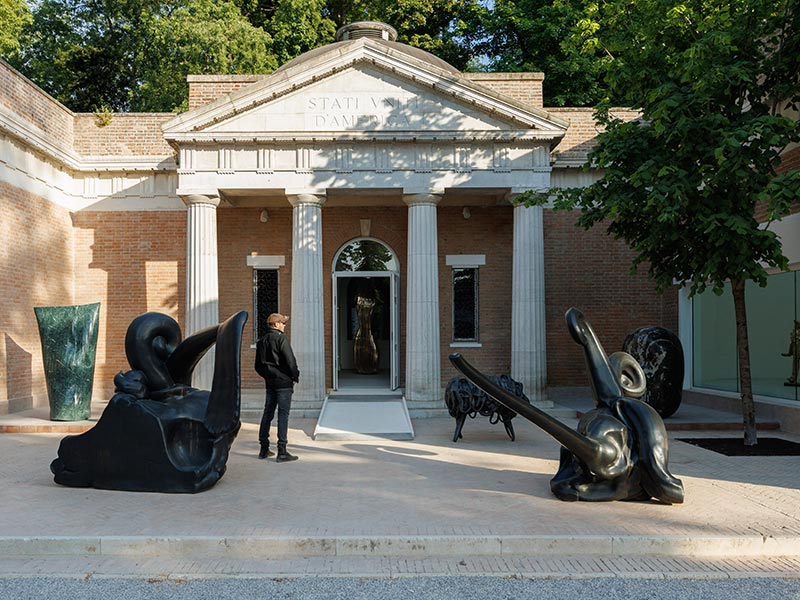
Venice Biennale: A Silent US Pavilion

Biennale de Venise : un Pavillon US silencieux

The US Pavilion at the 2026 Venice Biennale, featuring artist Alma Allen, opened to sparse crowds despite a 10% overall attendance increase at the Biennale. The pavilion was embroiled in controversy before opening: Allen was selected by the American Arts Conservancy (AAC), a private entity created in 2025 at the initiative of Donald Trump after the dissolution of the federal committee that previously oversaw the pavilion. AAC head Jenni Parido, a former pet food executive, chose the self-taught, little-known artist who had never had a solo museum exhibition. Major funders the Ford and Mellon Foundations withdrew, forcing the AAC to launch a public donation appeal. The exhibition features 25 abstract bronze, stone, and burl-wood sculptures that the artist describes as biomorphic landscapes, but critics find them pleasant yet silent, lacking the promised political or visceral resonance.

Le CMN perd le Mont-Saint-Michel

The article reports on several developments in the art world: the Centre des Monuments Nationaux (CMN) loses management of Mont-Saint-Michel; the Venice Biennale opens amid controversy; a law on the restitution of cultural property looted during colonization is definitively adopted; the V&A East museum targets younger audiences; in Giverny, the Monet legacy does not benefit everyone; and the market for the Nabis artists is becoming more structured.