filter_list Showing 7 results for "Battle of Hastings" close Clear
search
dashboard All 7 museum exhibitions 3gavel restitution 2article culture 1article news 1
date_range Range Today This Week This Month All
Subscribe

bayeux tapestry fragment rediscovered in germany

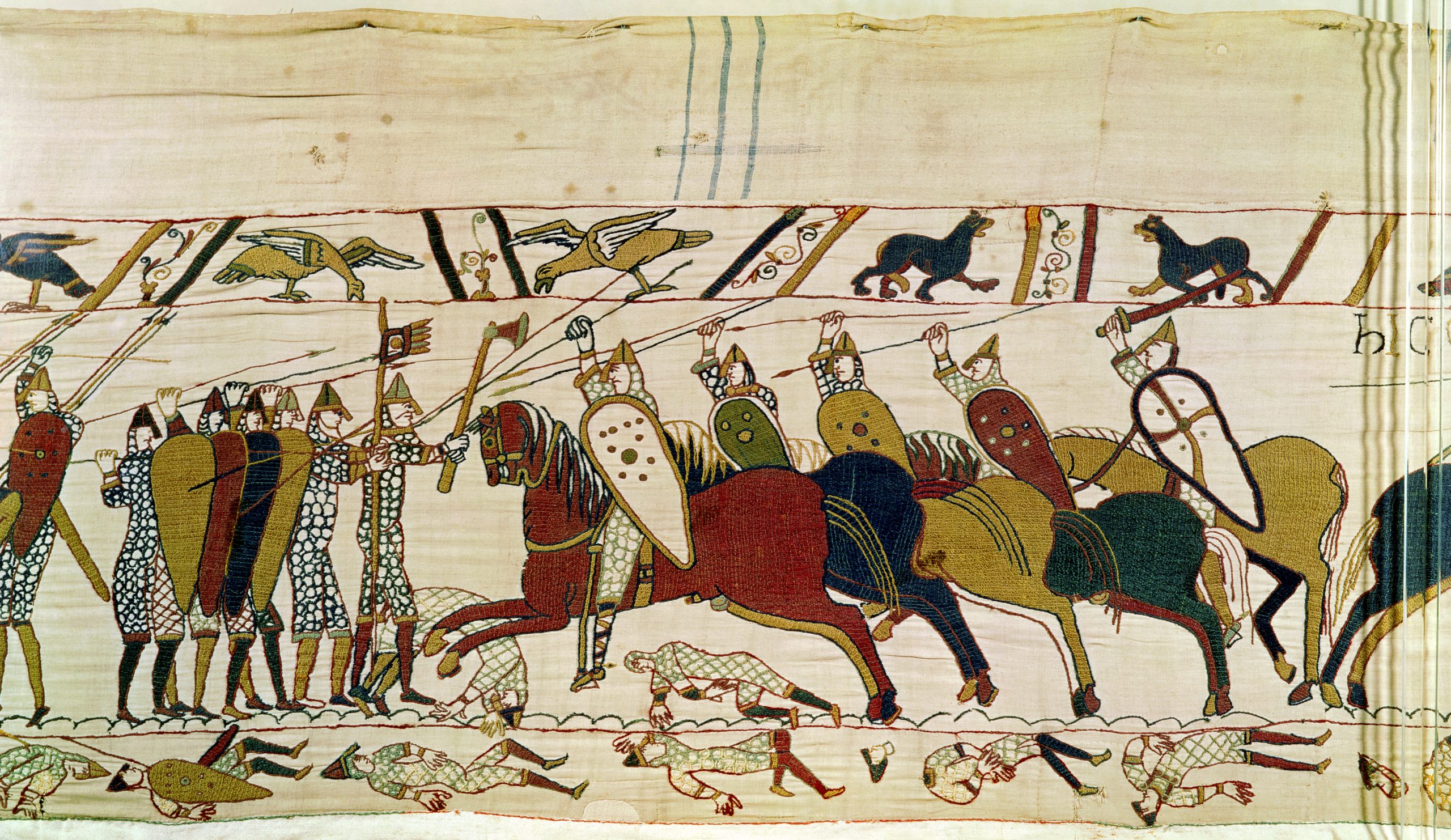
A long-lost fragment of the Bayeux Tapestry, the 11th-century embroidered chronicle of the Norman Conquest of England, has been rediscovered in the Schleswig-Holstein State Archives in Schleswig, Germany. The roughly one-inch linen piece belonged to the estate of archaeologist Karl Schlabow, who had been part of a Nazi-affiliated group that re-measured the tapestry in 1941. The fragment will be repatriated to France later this year, but first it will go on public display at the Museum of Archaeology at Gottorf Castle as part of the exhibition “Viking Twilight: Turning Point in the North” from April 16 through November 2.
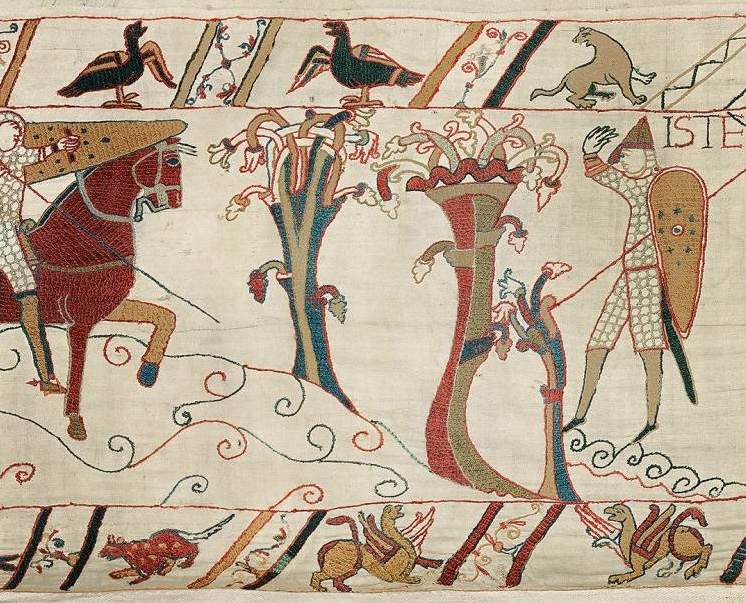
An Installation at the British Museum Recreates the Bayeux Tapestry’s Landscape

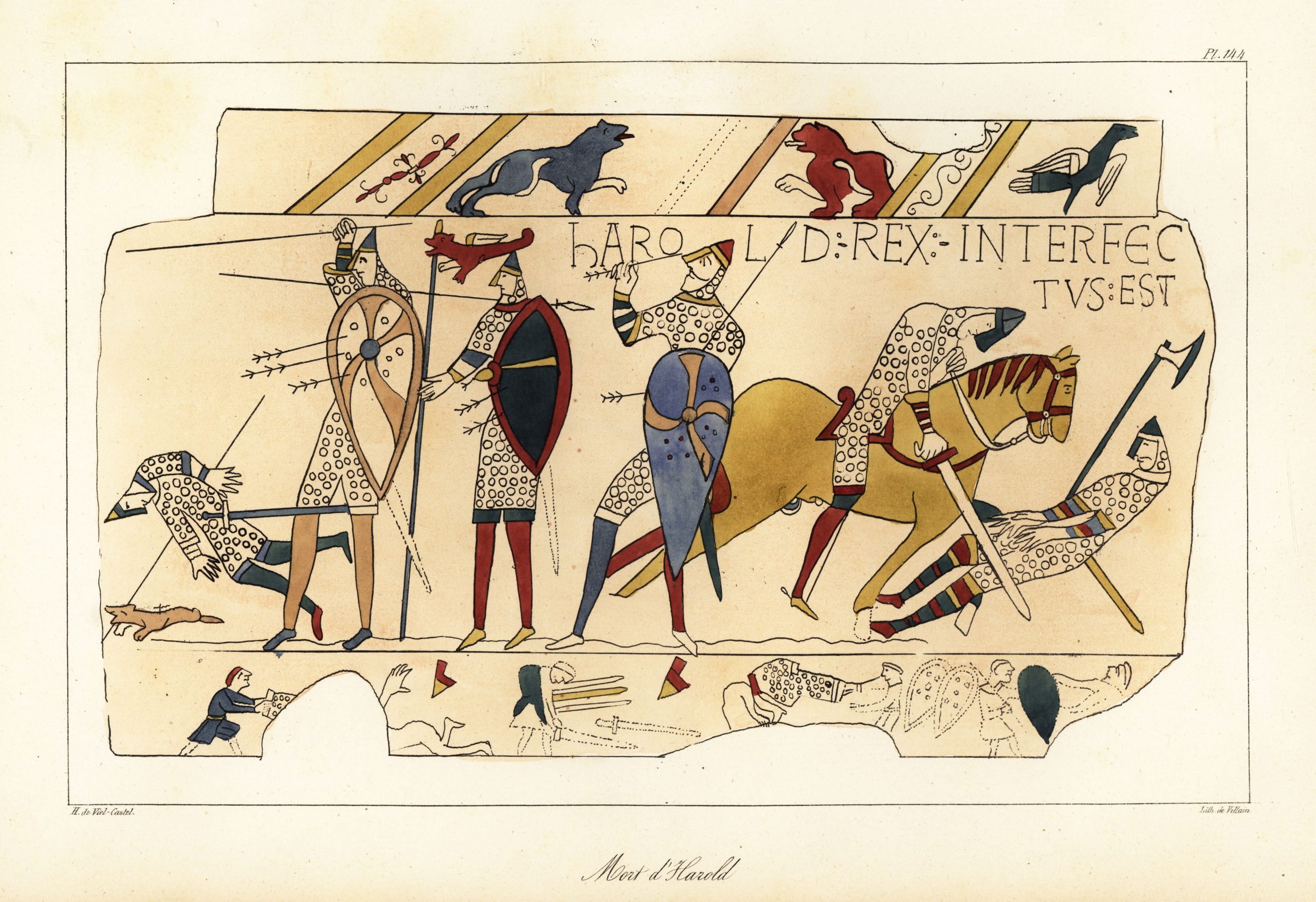
The British Museum will present "Tapestry of Trees," an outdoor installation by garden designer Andy Sturgeon, ahead of its historic exhibition of the Bayeux Tapestry. The installation, on view from May 16 to June 2, 2026, recreates a medieval woodland using plants native to East Sussex, including silver birch, hazel, hawthorn, and field maples, evoking the landscape of the Battle of Hastings depicted in the tapestry. Dyed hessian wrapping on planters and root balls echoes the colors and textures of the embroidery.

bayeux tapestry canterbury mealtime reading

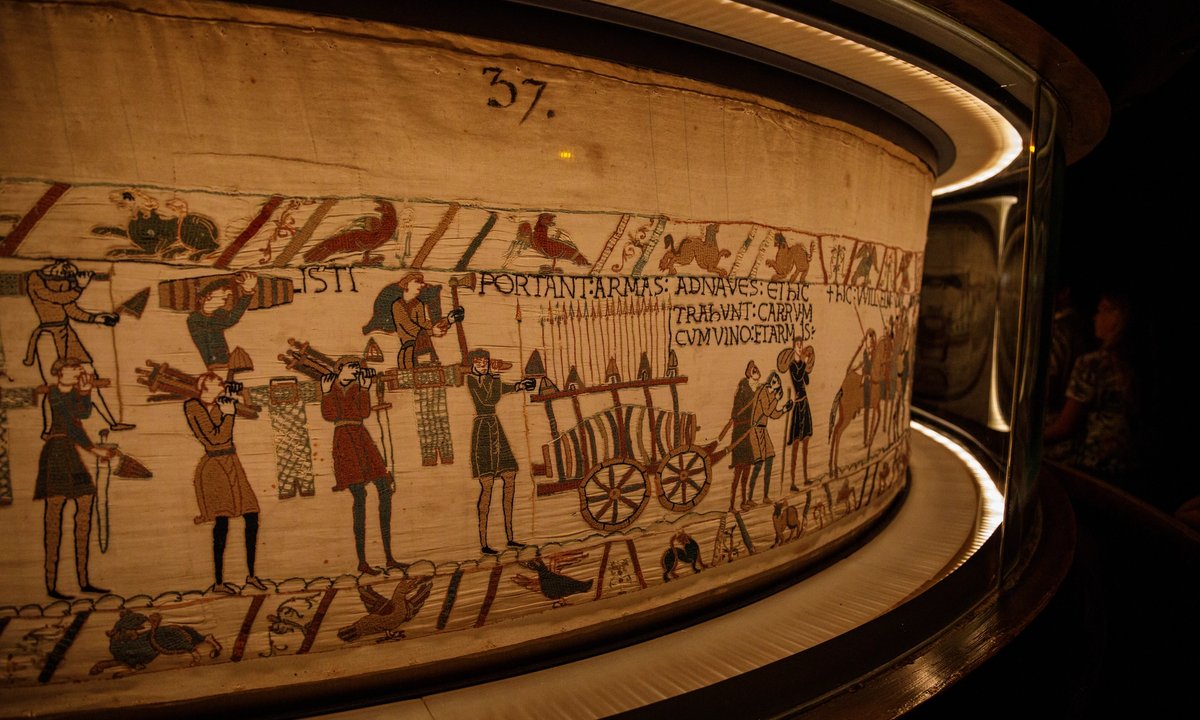
A new study by University of Bristol historian Benjamin Pohl, published in the journal *Historical Research*, proposes that the Bayeux Tapestry was originally designed as mealtime reading for monks in the refectory of St. Augustine’s Abbey in Canterbury. Pohl argues that the tapestry’s moralistic episodes, inclusion of Aesop’s fables, and simple Latin text align with Benedictine rules requiring silent dining accompanied by edifying readings. The theory builds on earlier speculation that the tapestry once hung in a private school’s refectory, but Pohl provides documentary and archaeological evidence for the Canterbury location.

bayeux tapestry 93 penises offer clues

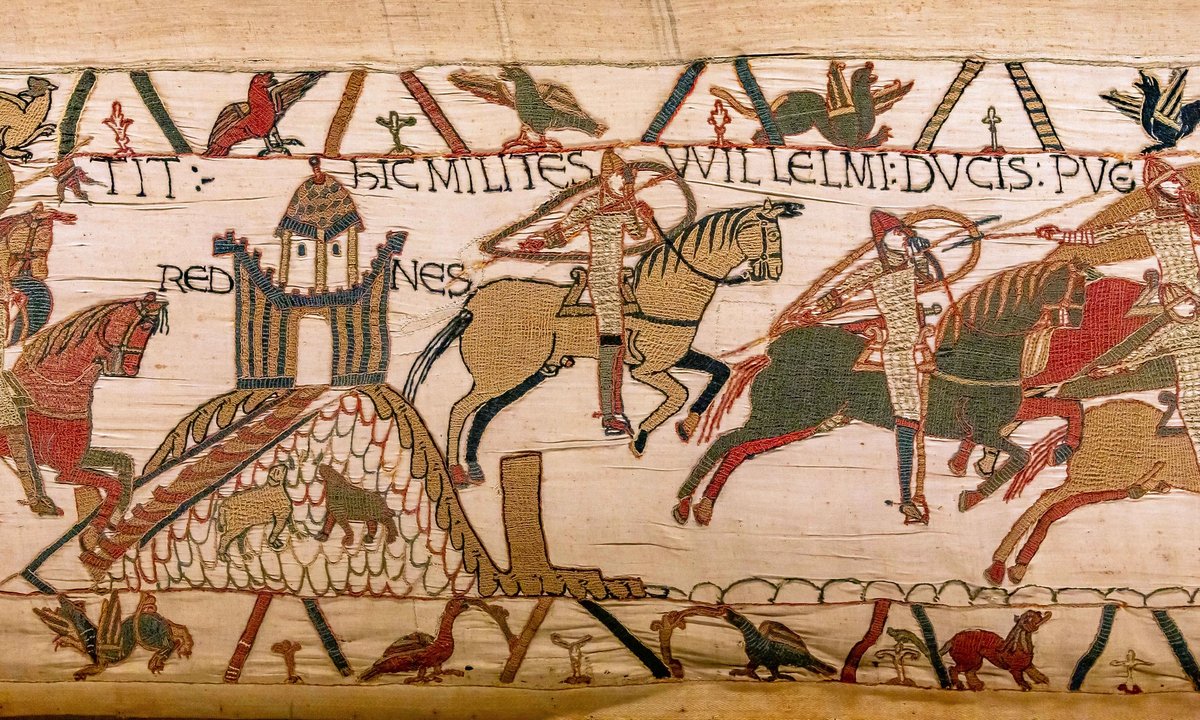
The article examines historian George Garnett's analysis of the 93 penises depicted in the Bayeux Tapestry, a 225-foot-long embroidery chronicling the Norman conquest of England in 1066. Garnett, a professor of Medieval history at Oxford University, argues that the size and placement of these genitalia—88 on horses and five on men—offer clues about the tapestry's meaning. He notes that the largest equine phallus belongs to Duke William's stallion, followed by those of Harold Godwinson and Odo of Bayeux, suggesting a hierarchy of importance. More significantly, Garnett interprets four penises attached to men in the tapestry's border as references to Aesop's fables, indicating themes of deceit, shame, and illicit sex, which he believes challenge the traditional attribution of the tapestry's commission to Odo of Bayeux.

Straight-line storytelling: how will the British Museum display the Bayeux Tapestry?

The British Museum (BM) is planning to display the Bayeux Tapestry from September 2026 to July 2027, following a loan agreement with the French government. The tapestry, owned by the French state, will return to England for the first time in nearly a thousand years after its dedicated museum in Bayeux closed for renovations. The BM's Sainsbury Exhibitions Gallery is long enough to accommodate the 70-meter embroidered strip in a single straight line, a key factor in securing the loan over other contenders like the Victoria and Albert Museum. Conservators will display the tapestry at a 60-degree angle with low lighting to minimize fading, and visitors will likely follow an audio-guided tour with 25 minutes to view the 58 scenes.

Tens of thousands sign petition to stop loan of ‘extremely fragile’ Bayeux Tapestry to UK

Nearly 50,000 people have signed a petition to block the loan of the Bayeux Tapestry to the British Museum, citing warnings from textile restorers that moving the 1,000-year-old embroidered linen could cause irreparable damage. The petition, launched by art historian Didier Rykner, opposes the planned exhibition in London from September 2026 to July 2027, which coincides with the closure of the Bayeux Tapestry Museum in Normandy for renovations. The loan was announced in July by French President Emmanuel Macron and British Prime Minister Keir Starmer. Prominent French cultural figures, including former museum director Isabelle Attard, have voiced strong concerns, and Rykner hopes to ally with British opponents of the exchange, which would also send Anglo-Saxon and Medieval treasures from the British Museum to France.

Bayeux Tapestry to return to UK for first time in almost 1,000 years

The Bayeux Tapestry will be loaned to the British Museum in London for display from September 2026 to July 2027, marking its first return to the UK in nearly 1,000 years. The agreement was announced by UK Prime Minister Keir Starmer and French President Emmanuel Macron during a state visit, as part of a broader cultural partnership that also includes the loan of Sutton Hoo treasures and the Lewis chessmen to French institutions.