filter_list Showing 34 results for "British Pavilion" close Clear
dashboard All 34 museum exhibitions 12rate_review review 8article news 6trending_up market 3article culture 2person people 2candle obituary 1
date_range Range Today This Week This Month All
Subscribe

The Venice Biennale’s Polite Fiction of Being ‘Above the Market’ Is Wearing Thin

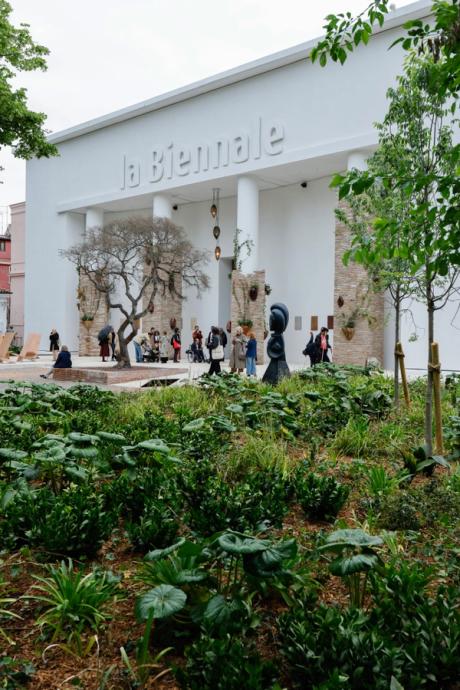
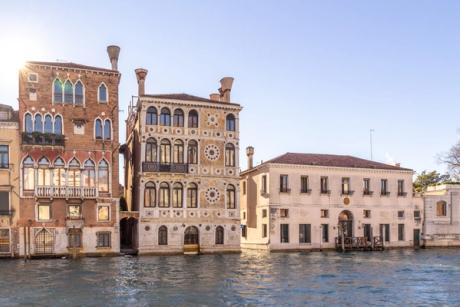
The 61st Venice Biennale is underway, with art world figures flocking to Venice for the opening. While the Biennale is officially a non-selling curatorial platform, commercial interests are increasingly visible: galleries are funding artists' projects to recoup investments, auction houses like Christie's are hosting private selling exhibitions (including a 'Ghost Pavilion' at the Ca' Dario Palazzo), and fashion houses such as Bottega Veneta and Chanel are sponsoring events. Sotheby's has pulled support for the U.S. Pavilion, which is now crowdfunding, while Frieze is bankrolling the British Pavilion for a second time.
artist made furniture 2639835

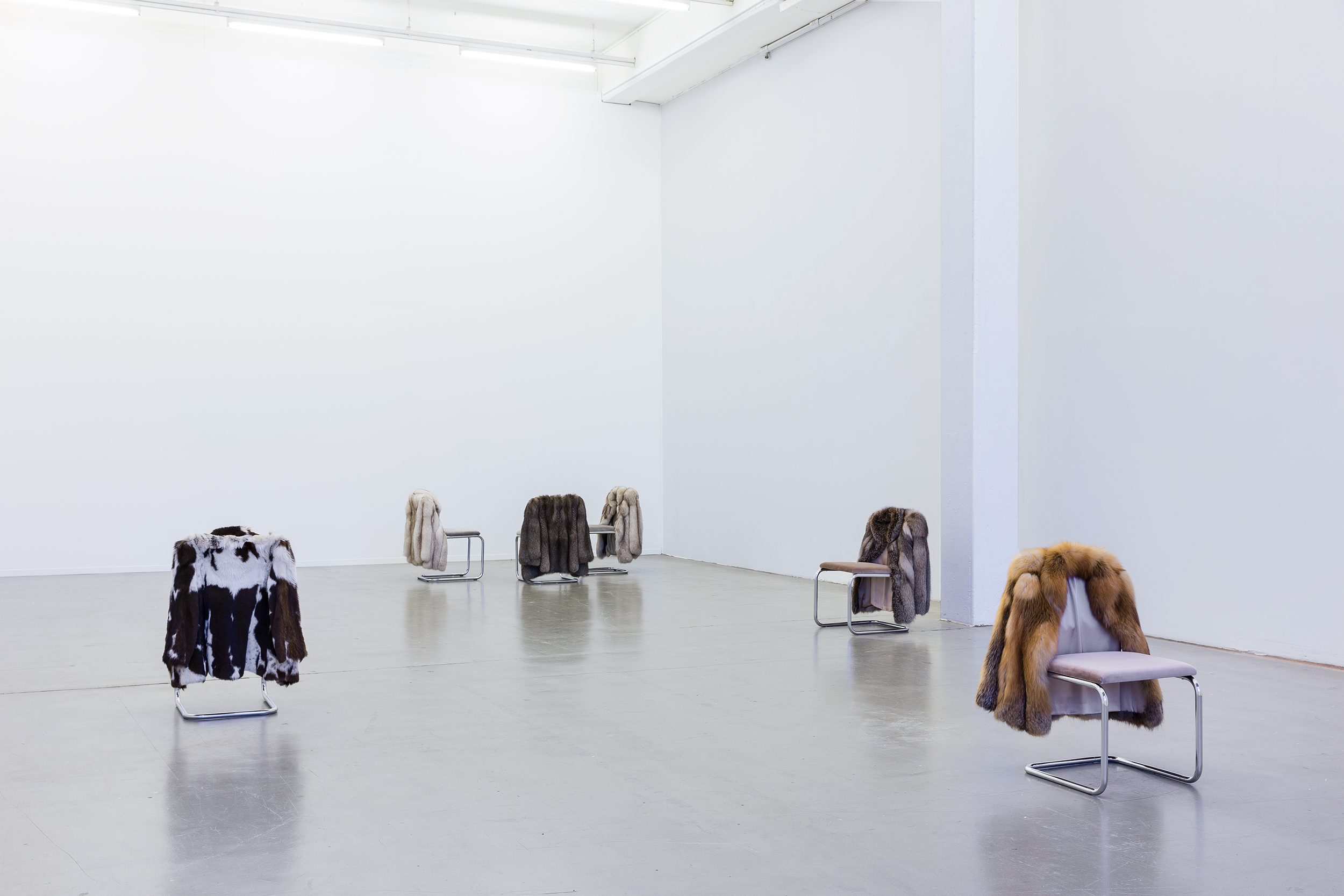
This article explores the growing trend of artist-made furniture, which blurs the line between functional design and fine art. It highlights how artists like Salvador Dalí, Isamu Noguchi, Donald Judd, Tracey Emin, and the duo Les Lalanne have created pieces that invite physical interaction—such as sitting or touching—while retaining high art status. Gallerist Massimo de Carlo notes that collectors are drawn to this merging of art and life, and that such works offer both conceptual depth and investment value. The article also notes market disparities, with editions of furniture costing far less than unique works, though some pieces, like a François-Xavier Lalanne rhinoceros desk, have sold for nearly $20 million at auction.

ralph rugoff leaves hayward gallery 1234751375

Ralph Rugoff, curator of the 2019 Venice Biennale, is leaving his post as director of the Hayward Gallery after 20 years. The Southbank Centre announced his departure for spring 2026, after which he will work as an independent curator and writer. During his tenure, the Hayward staged acclaimed shows like “Kiss My Genders!,” surveys for Kader Attia and Tracey Emin, and Rugoff was named an Officer of the Order of the British Empire in 2019. He previously led the Wattis Institute for Contemporary Art in San Francisco.

Nicholas Pope, sculptor whose career came in two acts, 1949–2026

Nicholas Pope, a British sculptor known for his organic, post-minimalist works, has died at age 76. His career unfolded in two distinct acts: an early phase in the 1970s producing roughly-hewn wooden columns like *Oak Tree Column* (1973) and *Drooping Column* (1975), which earned him a spot in the British Pavilion at the 1980 Venice Biennale, followed by a decades-long hiatus after contracting viral encephalitis in Tanzania. He later returned to sculpture with brighter, brasher works in ceramic, glass, and felt, including *The Apostles Speaking in Tongues Lit By Their Own Lamps* (1993–96) and collaborations like *The Conundrum of the Chalices of the Seven Deadly Sins and Seven Virtues* (2015) with James Maskrey.

alma allen us venice biennale pavilion non political artist 1234761631

Alma Allen, a sculptor known for sleek, abstract works, has been selected to represent the United States at the 2026 Venice Biennale, marking the country's 250th anniversary. The selection process, run by the US State Department and funded by the newly formed American Arts Conservancy—which the article notes is stocked with Trump allies—has drawn criticism for favoring politically neutral art. Allen's sculptures, often made of marble and wood with digital technology, are described as aesthetically inoffensive and reminiscent of Constantin Brâncuși, with no apparent commentary on current US issues.

The galleries on Cork Street join forces for group exhibition celebrating 100 years as a landmark art destination.

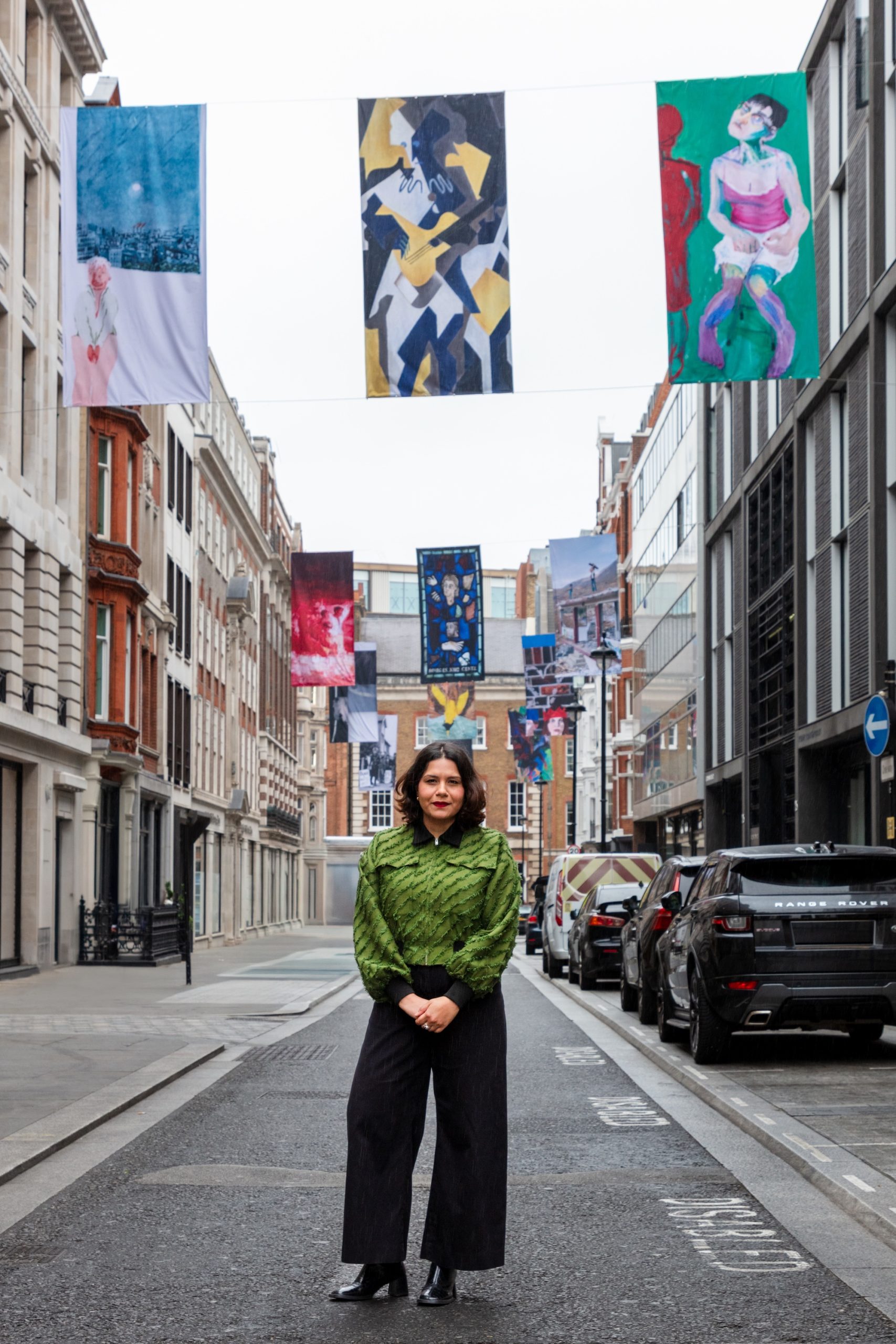
Fifteen galleries on London's historic Cork Street have united for a first-of-its-kind group exhibition titled "Fear Gives Wings To Courage" to mark the street's centennial as a landmark art destination. Curated by Tarini Malik, curator of modern and contemporary art at the Royal Academy of Arts, the exhibition unfolds in three parts: an outdoor banners commission, presentations within each participating gallery from 11 to 25 July 2025, and a special catalogue issue launching during Frieze London 2025. The title references Jean Cocteau's 1938 painting of the same name, which caused controversy when shown at Peggy Guggenheim's gallery Guggenheim Jeune on Cork Street in 1938 and was confiscated by British customs.

Venice Biennale Special 2026—podcast

This episode of The Art Newspaper's podcast is a Venice Biennale special, covering the opening week of the 2026 edition. Host Ben Luke, along with Louisa Buck and Jane Morris, reviews the main exhibition "In Minor Keys," curated by the late Koyo Kouoh and realized by five collaborators. The podcast features interviews with artists Gabrielle Goliath, whose work for the South African pavilion was cancelled and is instead staged in a Venice church, and Lubaina Himid, showing in the British pavilion. It also includes conversations with writer Saidiya Hartman and Daniella Kaliada of Belarus Free Theatre about their collateral projects. The episode concludes with a focus on two restored Tintoretto paintings at the Basilica of San Giorgio Maggiore, funded by Save Venice.

Lubaina Himid on capturing the 'uneasiness' of Britain for her Venice Biennale pavilion

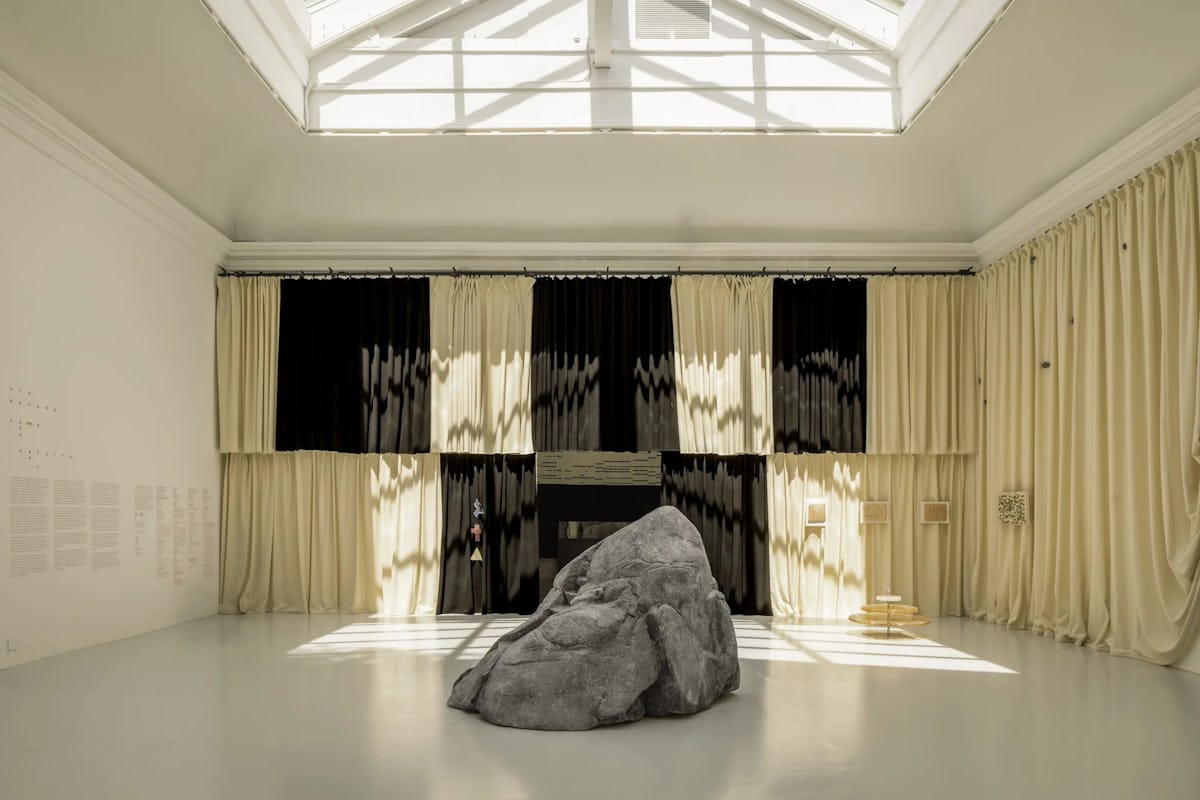
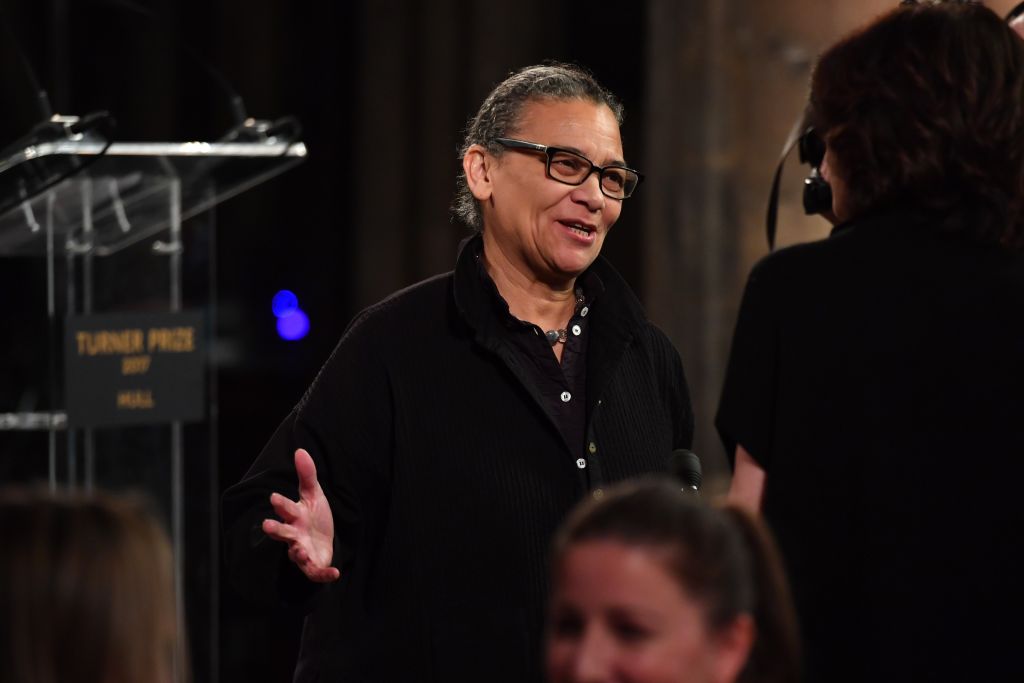
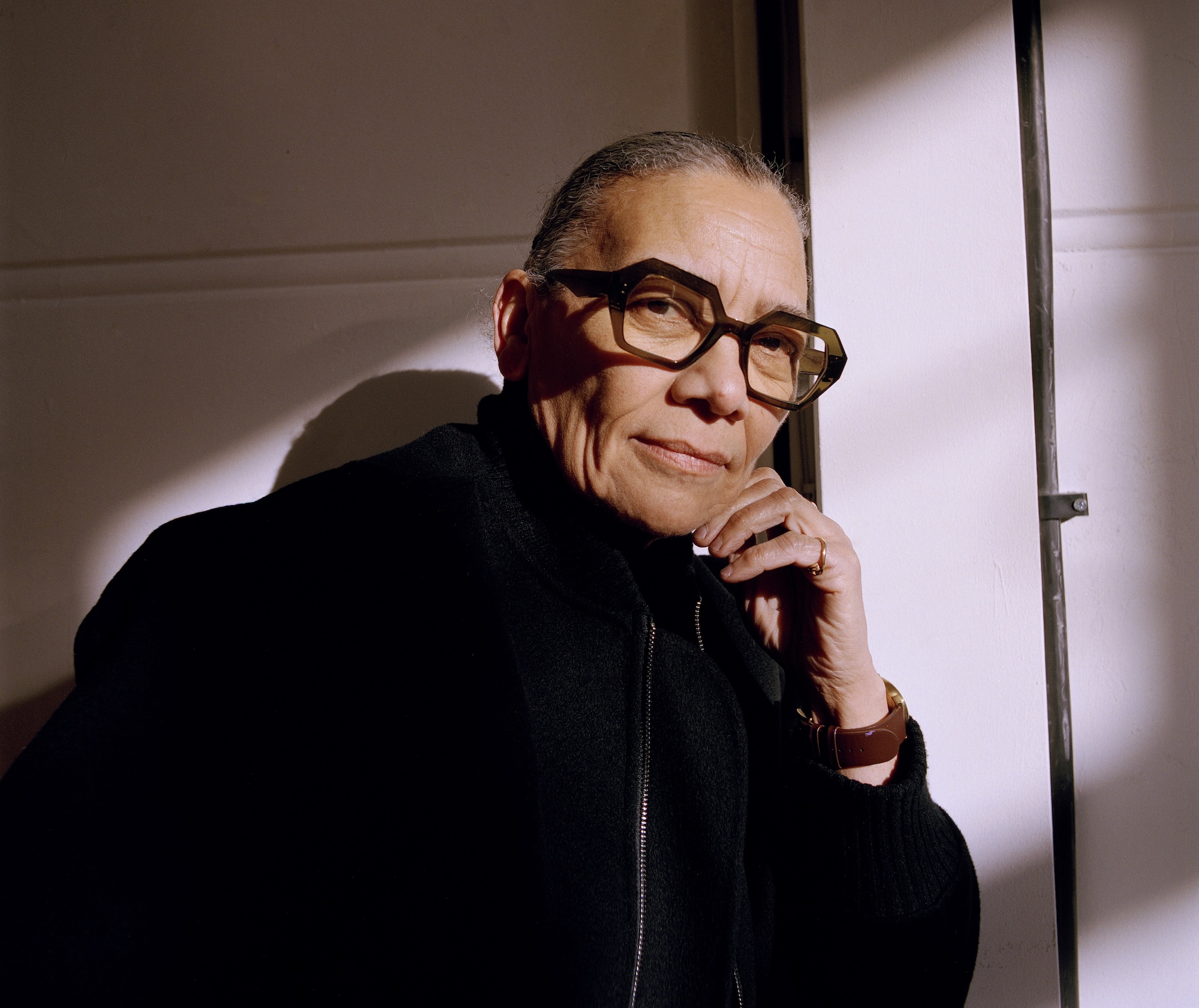
Lubaina Himid, the Turner Prize-winning artist born in Zanzibar and raised in England, is representing Great Britain at the Venice Biennale with a pavilion that captures the 'uneasiness' of living in Britain. The exhibition features her signature paintings, prints, and cutout figures, alongside a soundscape by Magda Stawarska, designed to evoke ambiguous encounters and the gap between a question and an answer. Himid describes the pavilion as a reflection of Britain's everyday pleasantness undercut by a persistent sense of otherness, drawing on her own experience as an East African brought up by English women.

The Venice Biennale has long been a sales platform—now no one is pretending otherwise

The Venice Biennale, traditionally a government-subsidized non-commercial institution where sales were downplayed, is experiencing an unprecedented open embrace of commerce. For the first time, Christie's is hosting an invitation-only selling exhibition in Venice, offering works ranging from Old Masters like Lucas Cranach to Modern and contemporary giants such as Andy Warhol, Louise Bourgeois, and Mark Bradford, with prices from $500,000 to over $35 million. Dealers, auction houses, and private foundations are openly pricing and selling works to collectors, spurred partly by Italy's reduced 5% VAT rate on art imports, now Europe's lowest.

6 Rising Artists to Watch at This Year’s Venice Biennale

The article profiles six rising artists at the 2026 Venice Biennale, focusing on Sung Tieu and Gala Porras-Kim. Tieu transforms the German Pavilion with a tile shell recreating a former housing complex for Vietnamese contract workers, while inside she scatters chocolate ladybugs as a symbol of occupation. Porras-Kim presents work in the Arsenale examining 'institutionally defined damage' and how decay can realign objects with their natural state.

Lubaina Himid has been busy ‘Predicting History: Testing Translation’

Lubaina Himid has been selected to represent the United Kingdom at the 61st International Art Exhibition of La Biennale di Venezia in 2026 with a major solo installation titled 'Predicting History: Testing Translation' at the British Pavilion. The exhibition, running from May 9 to November 2026, features a new series of large, multipaneled paintings in dazzling colors, surreal settings, and a soundscape created in collaboration with artist Magda Stawarska. Himid, a Turner Prize-winning pioneer of the Black British Art Movement and Emeritus Professor at the University of Central Lancashire, explores themes of belonging, migration, and making a home in a new place.

Why our country needs the artist Lubaina Himid right now: "I had to figure out how to represent Britain"

Lubaina Himid has been selected to represent Great Britain at the Venice Biennale, taking over the British Pavilion. The announcement came just before Christmas 2024, shortly before the opening of her first solo exhibition in China at the UCCA Center for Contemporary Art in Beijing, which features major works including 'Naming the Money' (2004). Himid, who was born in Zanzibar and raised in London, is a Turner Prize-winning artist known for centering Black narratives and marginalized histories through theatrical, life-size cut-out figures.

FAD’s Fab Five: 5 Must-See Highlights at the 2026 Venice Biennale

Lee Sharrock selects five must-see highlights at the 61st Venice Biennale, titled "In Minor Keys" and conceived by the late curator Koyo Kouoh, who passed away in 2025. The Biennale runs from May 9 to November 22, 2026, at the Giardini, Arsenale, and various Venetian venues. Featured highlights include Marina Abramović's historic exhibition "Transforming Energy" at the Gallerie dell'Accademia—the first major show for a living woman artist there—the Holy See Pavilion's "The Ear is the Eye of the Soul" with artists like Patti Smith and Brian Eno, and Lubaina Himid's British Pavilion presentation "Predicting History: Testing Translation."

At the Venice Biennale I saw anger at Russia and Israel – and its leadership pretending everything was fine | Charlotte Higgins

At the 2024 Venice Biennale, the Russian pavilion returned with festive performances and prosecco deliveries, drawing sharp criticism from observers who saw it as a propaganda effort to distract from Russia's war in Ukraine. Meanwhile, Ukraine's Kramatorsk was bombed, and protests erupted, including a Pussy Riot intervention. Biennale president Pietrangelo Buttafuoco defended Russia's and Israel's participation, rejecting preemptive bans despite open letters and appeals. European Commission investigated potential sanctions breaches, and culture ministers from Ukraine, Poland, Estonia, and Baltic states boycotted or condemned the biennale's stance, accusing it of yielding to the aggressor.

‘We put our heads above the parapet’: Lubaina Himid on winning her 40-year battle to storm the Venice Biennale

Lubaina Himid, the 71-year-old British artist, is representing Britain at the Venice Biennale with a solo exhibition in the British Pavilion. Known for her decades-long career addressing Black identity and colonial history through paintings, textiles, and cut-out figures, Himid installed her work early and even got married in the lead-up to the biennale. She follows fellow Black British artists John Akomfrah and Sonia Boyce in recent years, completing a trio of artists from the same generation to take over the pavilion.

Lubaina Himid on Representing Great Britain at the 61st Venice Biennale

Lubaina Himid will represent Great Britain at the 61st Venice Biennale in 2026. She plans to exhibit a new installation of large, multi-panel paintings and works on found objects, accompanied by a sound piece by Magda Stawarska, all inspired by her lifelong exploration of belonging. The work aims to navigate melancholy and deep remembering, inviting visitors to bring their own experiences into the pavilion.

Venice Biennale 2026: What are the major trends that will mark the 99 national pavilions?

Biennale de Venise 2026 : quelles sont les grandes tendances qui vont marquer les 99 pavillons nationaux ?

The article previews the 2026 Venice Biennale, highlighting key trends across its 99 national pavilions. Major themes include the hybridization of theater, dance, and performance, particularly in pavilions from Austria, Luxembourg, Belgium, and Lithuania, where artists like Florentina Holzinger, Aline Bouvy, Miet Warlop, and Eglė Budvytytė use radical, body-centric works. Geopolitical engagement is also central, with the Ukrainian pavilion featuring Zhanna Kadyrova's work on resistance and the British pavilion exploring themes of exile and migration. Other notable pavilions include Spain's focus on imagery, a sound installation for the Vatican, a polyphonic piece for Romania, and a film on sign language song for Poland.

There Has Never Been an Apolitical Venice Biennale

The Venice Biennale, with its national pavilion structure, has always been a platform for political expression and soft power, a reality evident from its early 20th-century origins. Contemporary critic Arturo Lancellotti's 1909 review of the German and British pavilions was steeped in geopolitical context, revealing how national artistic displays were interpreted through the lens of imperial power and military alliances.

A brush with… Lubaina Himid — podcast

This podcast episode features a conversation with Lubaina Himid, the Turner Prize-winning artist born in Zanzibar in 1954 and based in Preston, UK. Himid discusses her paintings, sculptures, and installations that center marginalized figures, diasporic cultures, and overlooked histories. She reflects on the influence of artists Stanley Spencer, Bridget Riley, and William Hogarth, as well as writers Audre Lorde and Essex Hemphill. The episode also covers her curatorial work in the 1980s, her role in the Black British Arts movement, and her admiration for peer Claudette Johnson. Upcoming exhibitions include a show with Magda Stawarska at Kettle’s Yard in Cambridge, a group show at the Institute of Contemporary Arts in London, and her representation of the British Pavilion at the 2026 Venice Biennale.

What not to miss at the 2026 Venice Biennale

The article highlights five standout pavilions and installations at the 2026 Venice Biennale. Florentina Holzinger's Austrian pavilion features extreme, nude performances including a woman submerged in a urine-purified tank, drawing police attention. Sanya Kantarovsky presents eerie paintings and a Murano glass sculpture in a historic palazzo. Gabrielle Goliath's 'Elegy'—a hypnotic mourning performance for women killed in violence—was banned by South Africa but staged with London's Ibraaz. Carrie Schneider's 1.5km photographic curl in the Arsenale references Chris Marker's 'La Jetée'. Lydia Ourahmane's delicate sculptural show uses materials sourced from Venice, including a bead curtain made by inmates.

simone leigh on making art under full time fascism 1234753253

Simone Leigh has announced a fall 2027 exhibition at the Royal Academy in London, featuring a series of new monumental sculptures. In an interview with the Guardian, she criticized the United States under the Trump administration, describing it as "full-on fascism" and reflecting on the kind of art produced under such conditions. She also condemned Columbia University's compliance with anti-woke policies, comparing it to the McCarthy era, and noted that artists of color have faced delayed or canceled commissions due to anti-DEI measures. The exhibition is curated by Tarini Malik, who organized the British Pavilion at the 2024 Venice Biennale.

Several Venice Biennale pavilions shut in protest over inclusion of Israel

Several national pavilions at the 2026 Venice Biennale shut down during the final preview day in a strike organized by the Art Not Genocide Alliance (Anga) protesting Israel's inclusion due to its war in Gaza. Pavilions from Belgium, the Netherlands, Austria, Japan, Macedonia, and Korea closed entirely, while others like Britain, Spain, France, Egypt, Finland, and Luxembourg partially closed or reopened later. Artists in the main exhibition added Palestinian flags and posters reading "Palestine is the future of the world." The Israeli pavilion was closed for a private event, and earlier in the week Pussy Riot staged a protest at the Russian pavilion.

Pussy Riot protest at Venice Biennale forces Russian pavilion to briefly close

On the second day of the Venice Biennale preview, the activist group Pussy Riot staged a chaotic protest at the Russian pavilion, forcing it to temporarily close. Wearing pink balaclavas and carrying flares, about 40 activists—including members of Femen—gathered outside the pavilion, shouting slogans like "Blood is Russia's Art" and attempting to enter before being pushed back by police. Founding member Nadya Tolokonnikova led the protest, condemning Europe for allowing Russian participation despite the war in Ukraine. Separately, the Art Not Genocide Alliance (Anga) demonstrated outside the Israeli pavilion, which was locked from inside, over Israel's war in Gaza.

Lubaina Himid’s British pavilion at the Venice Biennale review – alienation in a green and pleasant land

Lubaina Himid's installation at the British pavilion of the Venice Biennale presents monumental paintings and a wall of painted oars depicting tailors, cooks, architects, gardeners, and sailors—figures who shape Britain. The work is accompanied by an audio piece of bucolic country sounds, but the black figures in the paintings exchange sideways glances of discomfort, questioning whether they truly belong. The exhibition is anchored by 26 philosophical questions on the wall, such as "Can flies settle here?" and "Can poison taste delicious?"

Frieze’s Christine Messineo Takes a Tour of Chelsea

Andrew Durbin reviews national pavilions at the Venice Biennale, contrasting a vacuous US presentation with incisive and moving installations from Britain and Germany. The review highlights the disparity in thematic depth and emotional resonance among the three pavilions.

Jerald Cooper’s Top Picks from Frieze New York 2026

Andrew Durbin reviews the national pavilions at the 2026 Venice Biennale, contrasting a vacuous US presentation with incisive and moving installations from Britain and Germany. The article critiques the lack of meaning in the American pavilion while praising the depth and emotional resonance of the British and German contributions.

Arsenale Review: Where Voices Resist Erasure

At the 2026 Venice Biennale's Arsenale, critic Andrew Durbin reviews national pavilions, finding the US presentation vacuous and lacking meaning, while praising the British and German pavilions for their incisive and moving installations that resist erasure. The review highlights a stark contrast in curatorial ambition and political engagement among the participating nations.

‘Afterimages’: What Does It Mean to See Through Overload?

Andrew Durbin reviews the national pavilions at the Venice Biennale, contrasting a vacuous US presentation with incisive and moving installations from Britain and Germany. The article critiques the lack of meaningful engagement in the US pavilion while praising the depth and emotional resonance of the British and German contributions.

What’s Showing in Chelsea During Frieze Week New York

This article is a critic's guide reviewing national pavilions during Frieze Week New York. Andrew Durbin contrasts a vacuous US presentation with incisive and moving installations from Britain and Germany, questioning the meaning and depth of the American contribution.

Venice Biennale Diary: An Editor on the Ground

Andrew Durbin reviews national pavilions at the Venice Biennale, contrasting a vacuous US presentation with incisive and moving installations from Britain and Germany. The article is part of Frieze's Critic's Guides series, published on May 6, 2026.