filter_list Showing 14 results for "Erased" close Clear
dashboard All 14 museum exhibitions 7article policy 2article local 1article news 1trending_up market 1person people 1article culture 1
date_range Range Today This Week This Month All
Subscribe

The rise and fall of ‘buy-one, give-one’ art sales

A once-common sales tactic in the contemporary art market, known as "buy-one, give-one" or "bogo," has significantly declined. Under this arrangement, collectors gained preferential access to in-demand artists' paintings by agreeing to purchase two works and donating one to a museum. The practice peaked from 2021 to 2023, with institutions like the Metropolitan Museum of Art and the Institute of Contemporary Art, Miami, acquiring works this way.
Elucidating the Esoteric with Hilma's Ghost

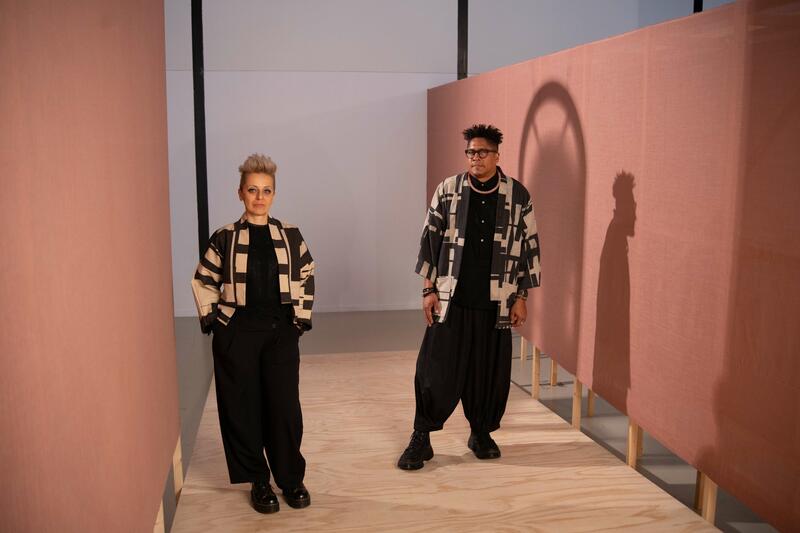
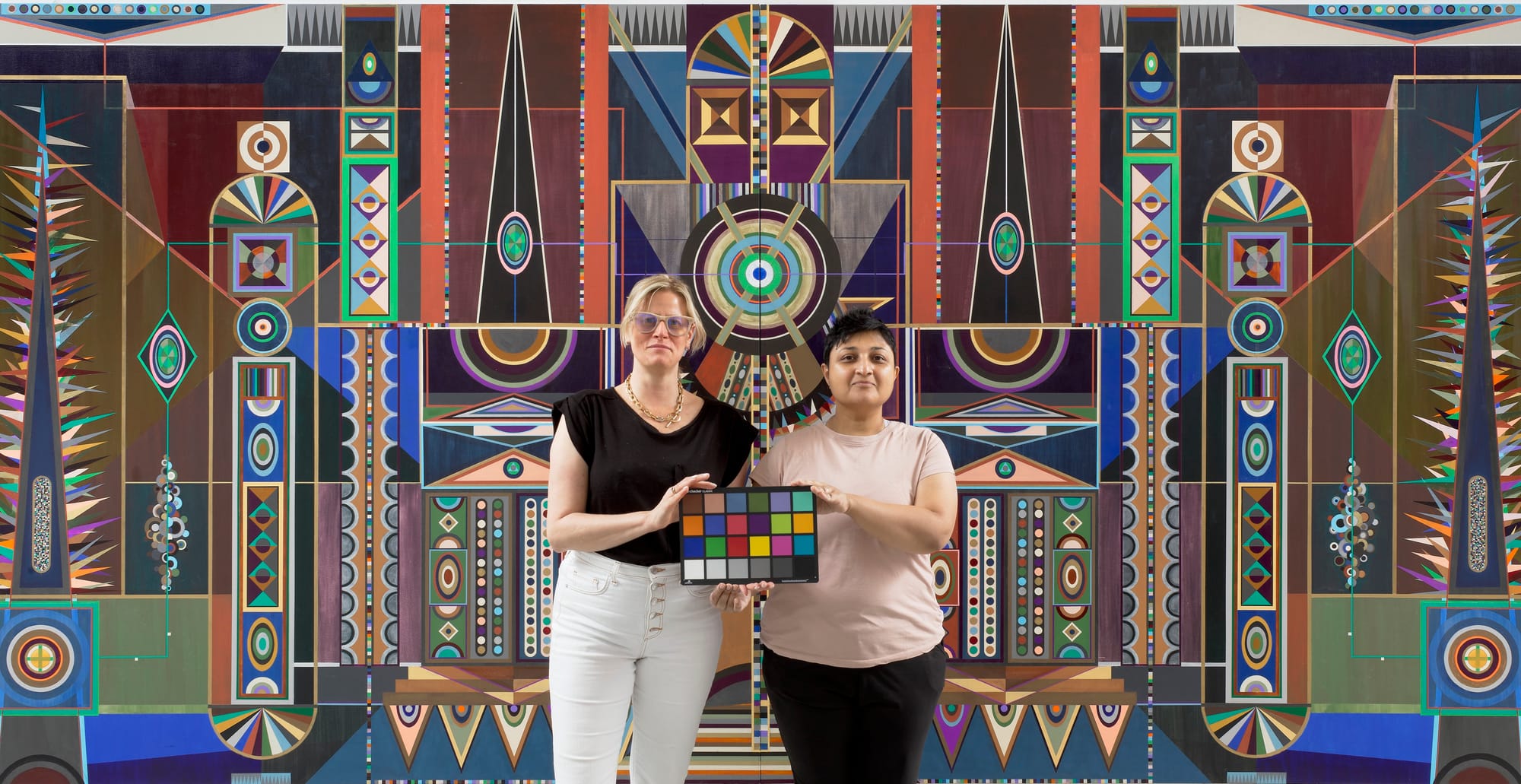
The feminist art collective Hilma’s Ghost, founded by artists Dannielle Tegeder and Sharmistha Ray, is reclaiming the role of alternative spiritualities and the occult within art history. Sparked by the 2018 Hilma af Klint retrospective at the Guggenheim, the collective emerged during the COVID-19 pandemic as a research-based project that bridges artmaking with esoteric practices like tarot, witchcraft, and neo-tantric cosmologies. Through workshops and collaborative paintings, the duo explores how women and queer artists have historically been erased from the canon due to their unconventional, mystical methods.

‘We Are Here’: Queer Presence and Memory in African Art

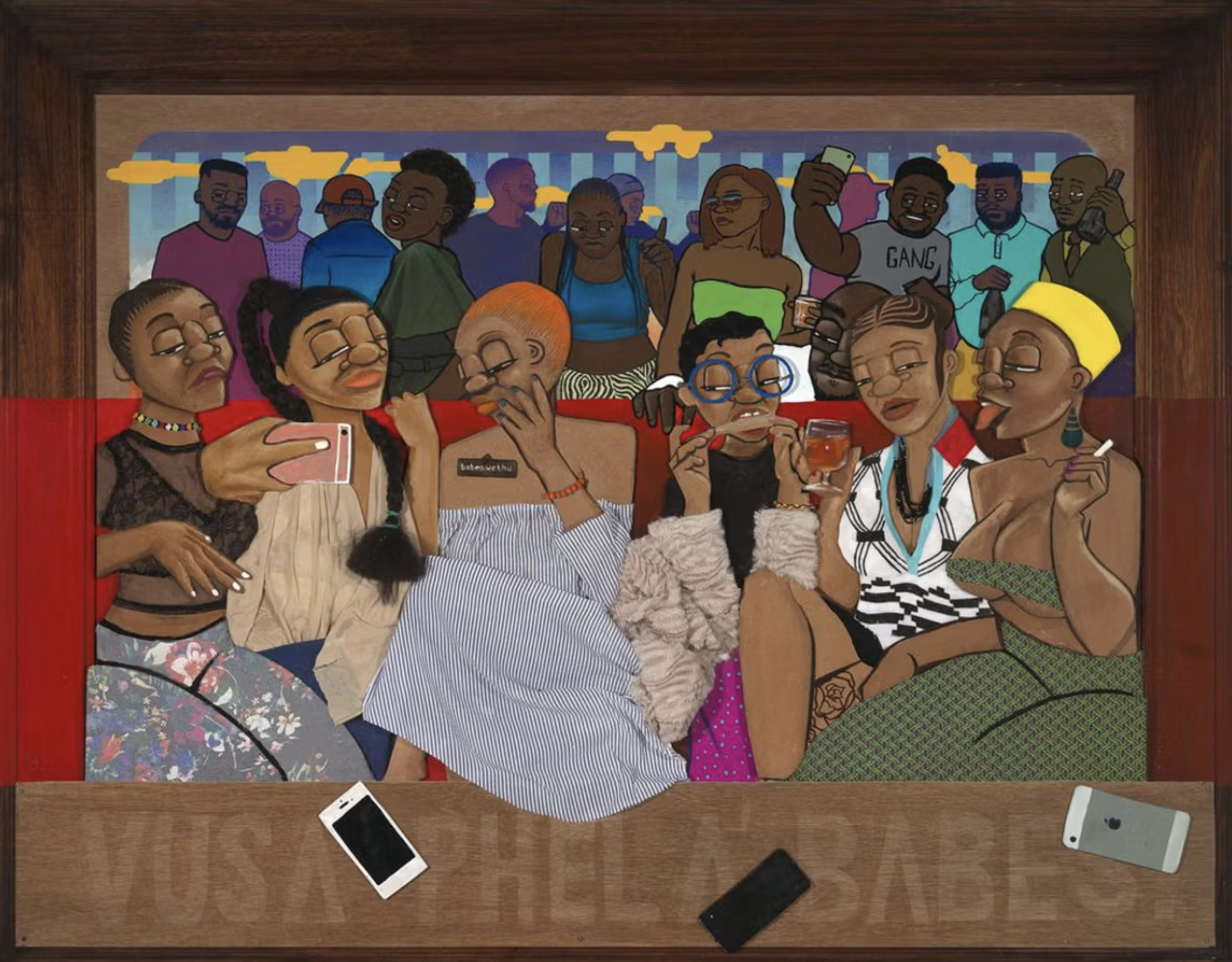
The Smithsonian's National Museum of African Art has opened 'Here: Pride and Belonging in African Art,' an exhibition curated by Kevin D. Dumouchelle and Serubiri Moses. Developed through years of direct dialogue with LGBTQ+ artists across Africa and its diaspora, the show foregrounds self-representation and community, ensuring artists defined the terms of their inclusion. It features contemporary works alongside historical precedents, creating a continuum of queer presence in African art history.

Hera Büyüktaşçıyan Channels Istanbul’s Haunted Histories

Hera Büyüktaşçıyan Channels Istanbul’s Haunted Histories

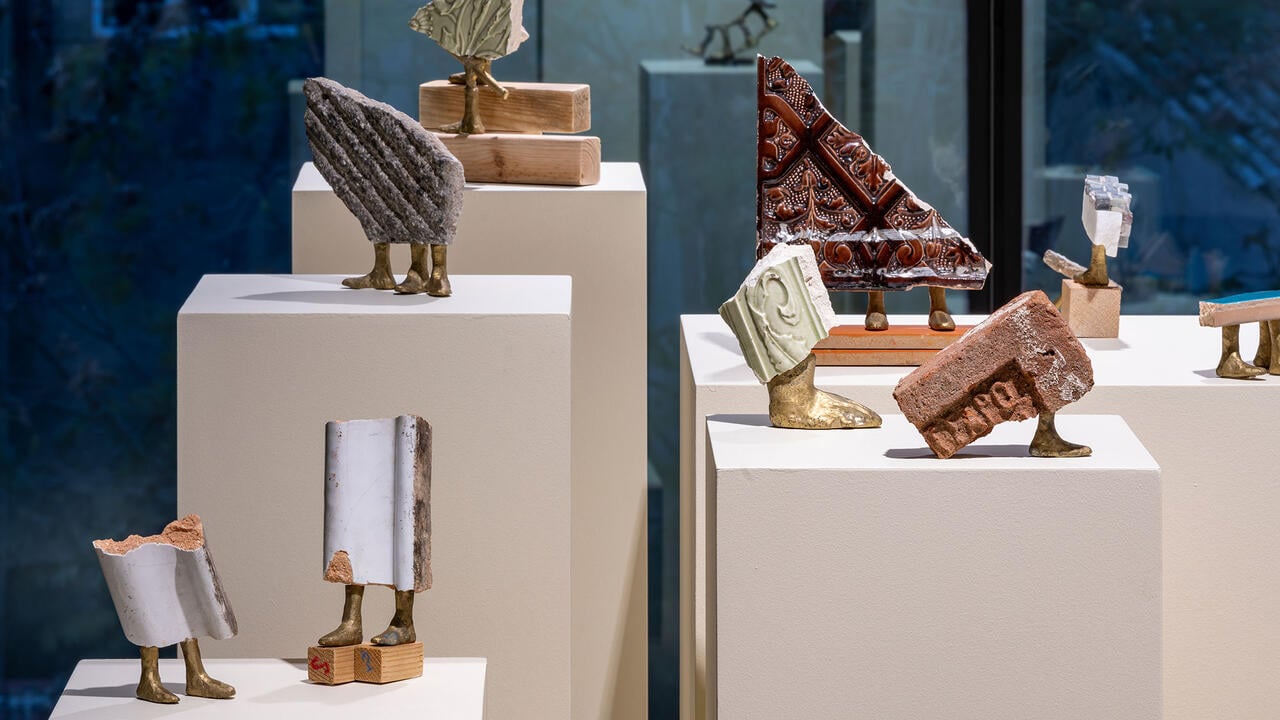
Hera Büyüktaşçıyan has opened a major solo exhibition, 'I Know You As Her', at Istanbul's Arter museum. The show features new and existing works, including sculptures, installations, and watercolors, that explore submerged histories and spectral presences within the city's urban fabric, particularly around the historic Pera district.

Saad Khan Archives the Detritus of Censored Culture

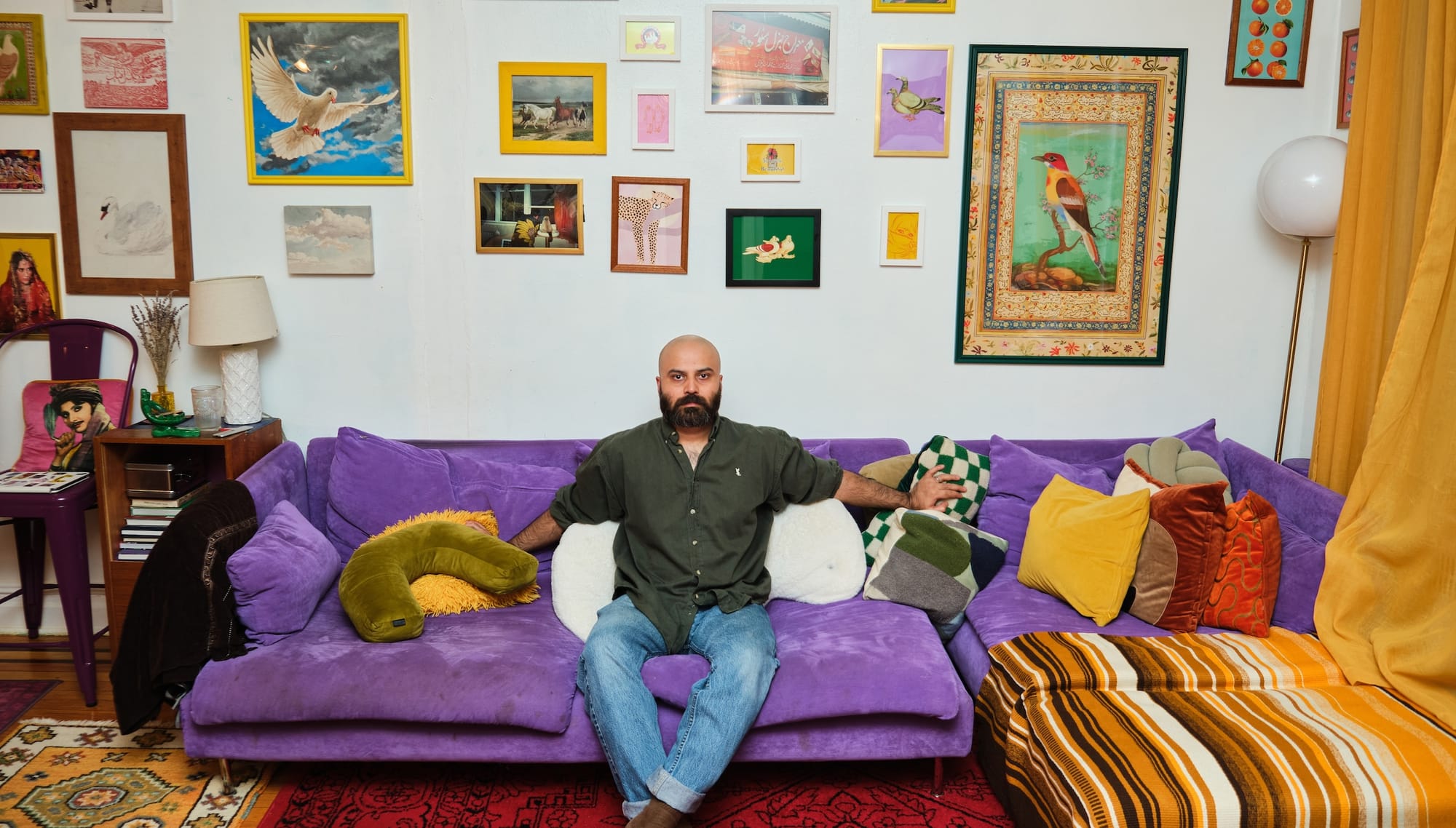
Saad Khan, a New York-based archivist, has developed Khajistan, an expansive digital and physical archive dedicated to preserving censored and overlooked mass media from South Asia to the Maghreb. The collection features a diverse array of ephemera, including homoerotic imagery, working-class street posters, and banned magazines that are often erased from official cultural records. By documenting everything from WhatsApp forwards to vintage film posters, Khan creates a space where the lived experiences of queer, trans, and working-class individuals in these regions are validated and archived.

The Invisible Pain: The Story of the Asylum in Alessandro Bencivenga's Latest Film

Il dolore che non si vede: il racconto del manicomio nell’ultimo film di Alessandro Bencivenga

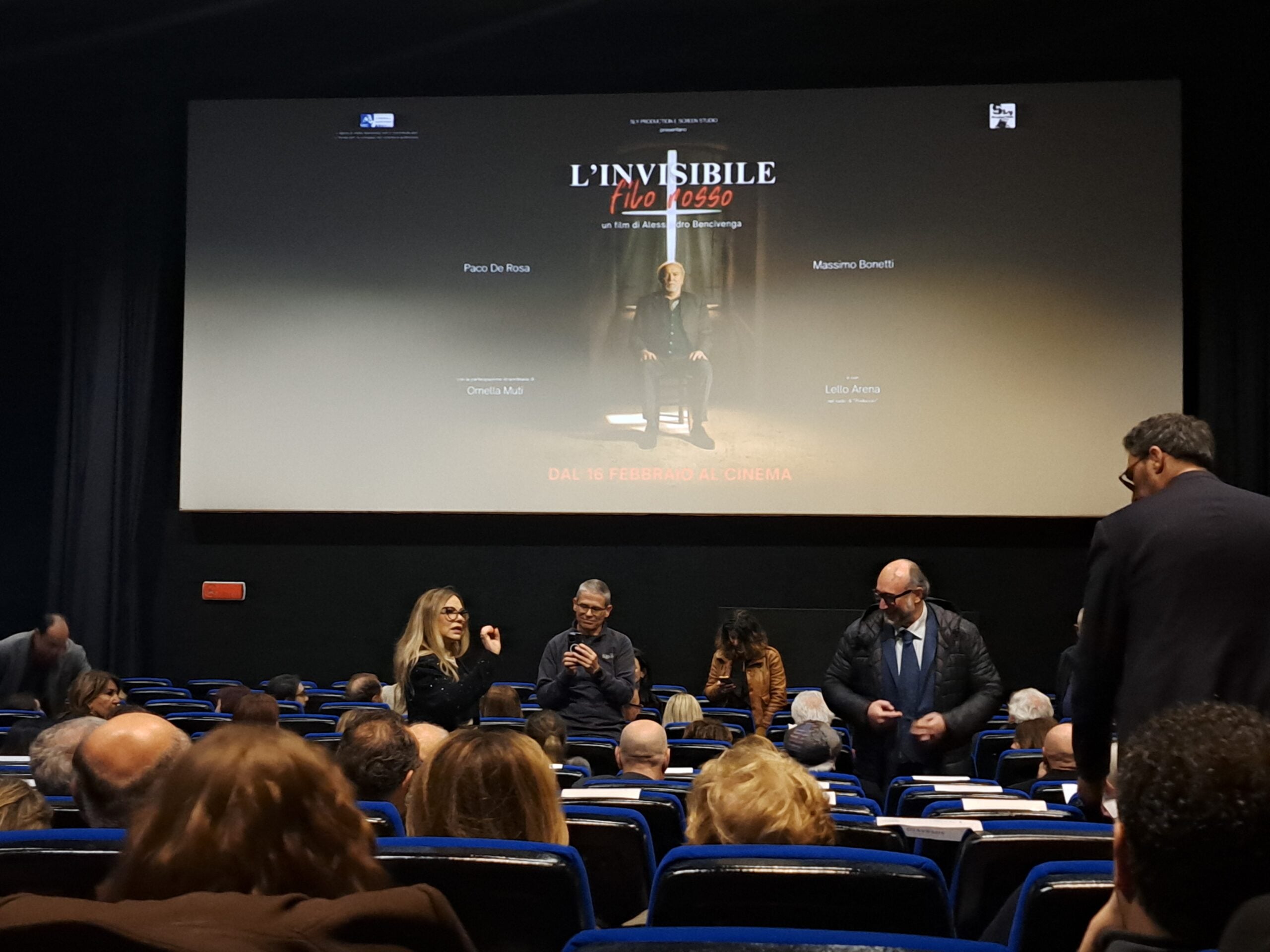
Director Alessandro Bencivenga’s new film, L’invisibile filo rosso, debuted out of competition at the 82nd Venice Film Festival, offering a poignant look at the Pergine Valsugana psychiatric hospital in the 1950s. Based on extensive archival research, the narrative follows a young nurse from Ischia who witnesses the hidden horrors and human dignity within the asylum. The film features a notable cast including Massimo Bonetti, who portrays the real-life figure Giovanni Giulio Anesini, and Ornella Muti as Ida Dalser, the persecuted first wife of Benito Mussolini.

TROPICAL HYPERSTITION A SPACE OF MEMORY AND RESISTANCE AT THE BIENNALE DI VENEZIA 2026

Panama will present its second National Pavilion at the 2026 Venice Biennale, featuring a large-scale installation and performance titled 'Tropical Hyperstition' by the artistic duo Antonio José Guzmán and Iva Jankovic (Mensajeros del Sol). The project, curated by Ana Elizabeth González and Mónica Kupfer, is organized by Panama's Ministry of Culture and several cultural foundations.

Embodying Code: Artist Alida Sun and the physical craft of code art

Berlin-based artist Alida Sun has reached a milestone of 2,500 consecutive days of creating digital art, using a custom-built system that translates physical movement into light and sound. Her recent exhibition, "RITES" at Method Delhi, bridges the gap between digital code and physical craft by transforming her generative algorithms into hand-woven tapestries. This collaboration with women artisans from the Swami Sivananda Memorial Institute of Fine Arts & Crafts (SSMI) highlights the historical and technical links between textile weaving and computer programming.

Drawn to life: Northampton artist's dry erase art exhibit 'Linescapes' on display at city's senior center

Northampton artist Michaela Stock has installed an exhibition titled 'Linescapes' at the city's senior center. The show features her unique dry erase marker drawings on large panels, creating intricate, temporary landscapes that will be erased at the end of the run.

Tiffany Chung’s exhibition at the AD&A Museum maps history within deep geological time

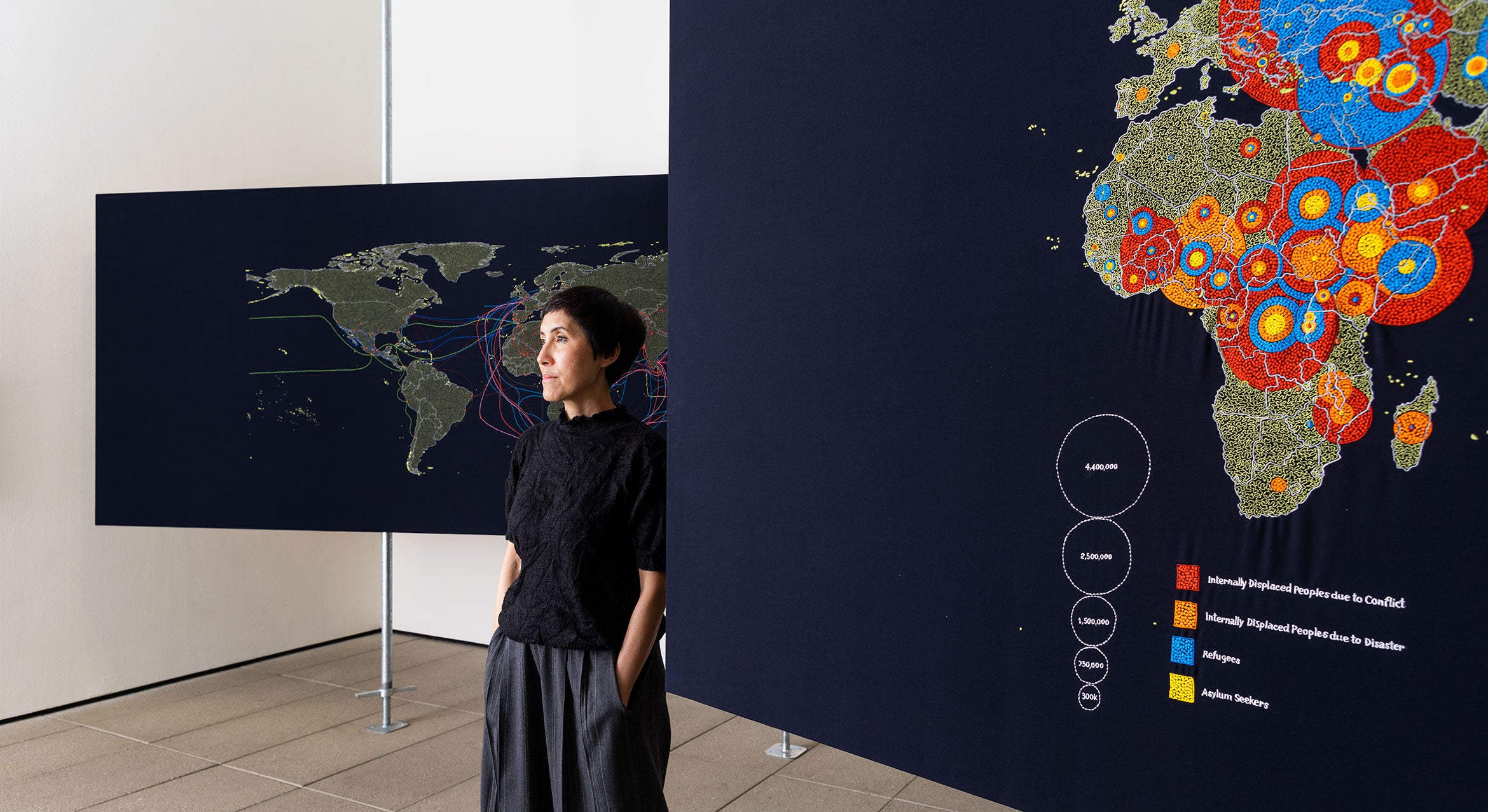
The Art, Design & Architecture (AD&A) Museum at UC Santa Barbara has launched "Tiffany Chung: indelible traces," a mid-career survey of the Vietnamese American artist and UCSB alumna. The exhibition features over 70 works spanning 25 years, including her signature hand-drawn and embroidered maps, video, and sculptural installations. Curated by Orianna Cacchione, the show highlights Chung’s use of cartography to challenge colonial narratives and document the complexities of forced migration, climate crises, and the movement of botanical organisms across continents.

200 Works By Female Artists Make A Statement At Museum Of Modern Art In Warsaw

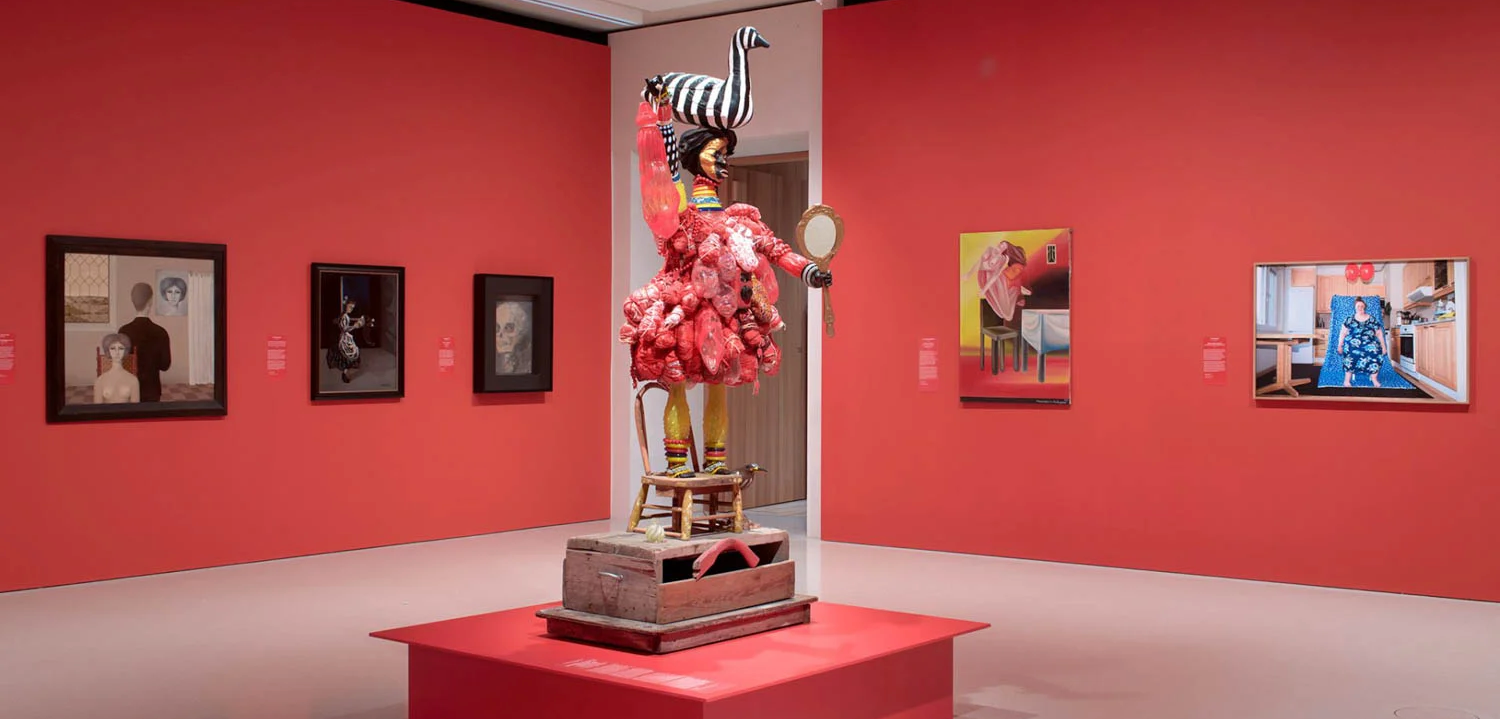
The Museum of Modern Art in Warsaw has launched "The Woman Question 1550-2025," a landmark exhibition featuring 200 works by nearly 150 female artists spanning five centuries. Curated by Alison M. Gingeras and designed by Dorota Terlecka of Biuro Kreacja, the show is organized into nine thematic sections within the museum’s new contemporary building. The exhibition design utilizes a minimalist approach, featuring neutral palettes and intentional spatial proportions to ensure the diverse artworks remain the primary focus.

Artist Bria Edwards presents solo exhibition, What We Do, We've Always Done

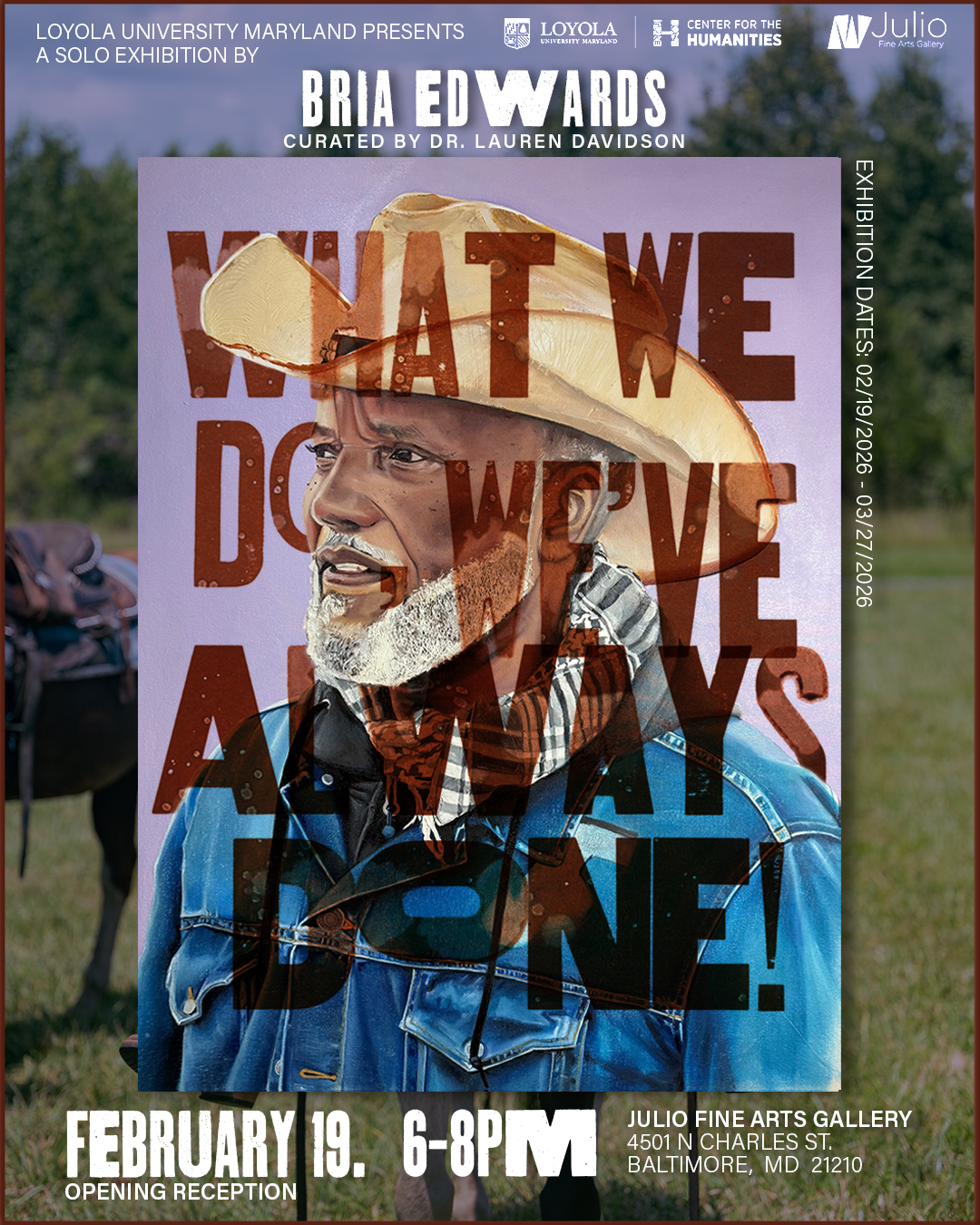
Artist Bria Edwards has debuted a solo exhibition titled "What We Do, We've Always Done" at the Julio Fine Arts Gallery at Loyola University Maryland. The multidisciplinary showcase features oil paintings, photography, and video work resulting from two years of fieldwork and interviews with Black equestrians across Maryland. Curated by Lauren Davidson of Museum Nectar Art Consultancy, the exhibition explores the historical and contemporary presence of Black horse riders, moving from the era of enslavement to modern-day leisure and competitive spaces.

British Museum Removed 'Palestinian' From Displays After Pressure From Pro-Israel Group

british museum removed palestinian uk lawyers for israel 1234773499

The British Museum in London removed the word 'Palestinian' from certain display texts related to the ancient Middle East, replacing it with terms like 'Canaanite.' This action followed a letter from the pro-Israel advocacy group UK Lawyers for Israel (UKLFI) to the museum's director, Nicholas Cullinan, arguing that using 'Palestine' to describe the ancient region was historically inaccurate and erased the Kingdoms of Israel and Judea. The museum stated the changes were made last year, prior to receiving the letter, and that it uses UN terminology for modern maps and 'Palestinian' as a cultural identifier where appropriate.

british museum removed palestinian uk lawyers for israel 1234773499

The British Museum in London removed the word 'Palestinian' from certain display texts concerning the ancient Middle East, replacing it with terms like 'Canaanite.' This action followed a letter from the pro-Israel advocacy group UK Lawyers for Israel (UKLFI) to the museum's director, Nicholas Cullinan, which argued that using 'Palestine' to describe the ancient region was historically inaccurate and erased the Kingdoms of Israel and Judea.