filter_list Showing 40 results for "German pavilion" close Clear
dashboard All 40 museum exhibitions 19rate_review review 10candle obituary 4article culture 3article news 3person people 1
date_range Range Today This Week This Month All
Subscribe

What You Should Definitely Avoid in Venice

Was man in Venedig unbedingt vermeiden sollte

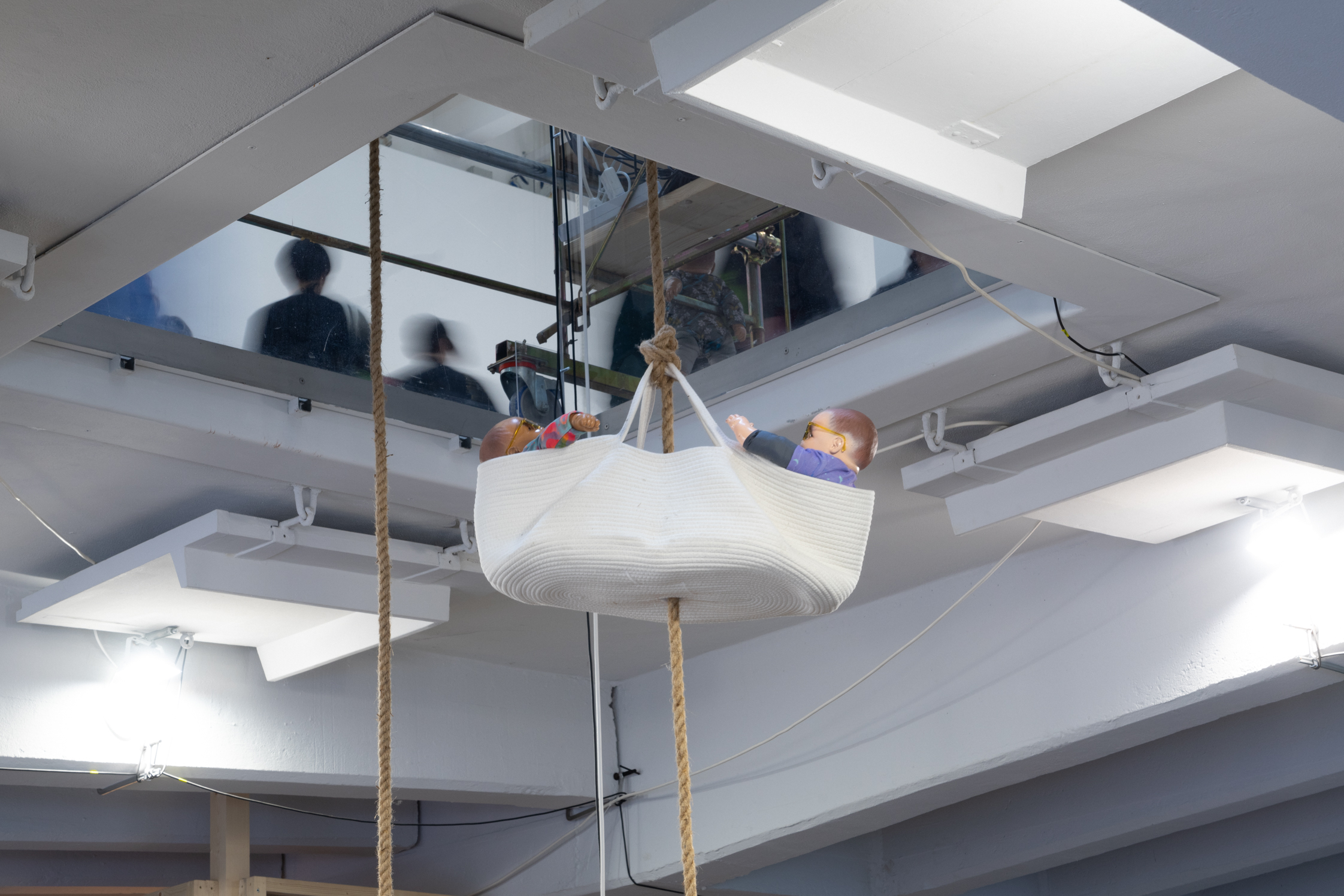
The article humorously critiques the Venice Biennale, highlighting several disappointments. It describes a Japanese pavilion installation by Ei Arakawa-Nash featuring baby dolls for diaper-changing, which a critic dismisses as a male artist over-romanticizing parenthood. Other flops include long queues for the German and Austrian pavilions, underwhelming main exhibition "In Minor Keys," and annoying self-promotional performers outside venues. The piece also laments the presence of loud American collectors and donors who dominate the event.

The Only Guide to This Year’s Venice Biennale You Will Ever Need

The 61st Venice Biennale opens amid significant turmoil. The entire jury of the International Art Exhibition resigned after a statement about withholding prizes from countries with leaders charged with crimes against humanity by the ICC, leading to the cancellation of the Golden Lion awards in favor of 'Visitors' Lions' to be given at the exhibition's end. The event has been further marred by the sudden death of artistic director Koyo Kouoh from liver cancer in early 2025, and the death of artist Henrike Naumann, who was set to debut work in the German pavilion. Additionally, the selection process for the American pavilion artist, Mexico-based sculptor Alma Allen, sparked controversy after a delayed grant application process.

‘I shared a single bed with my mother for three years’: Sung Tieu on her monument to immigrant workers in Venice

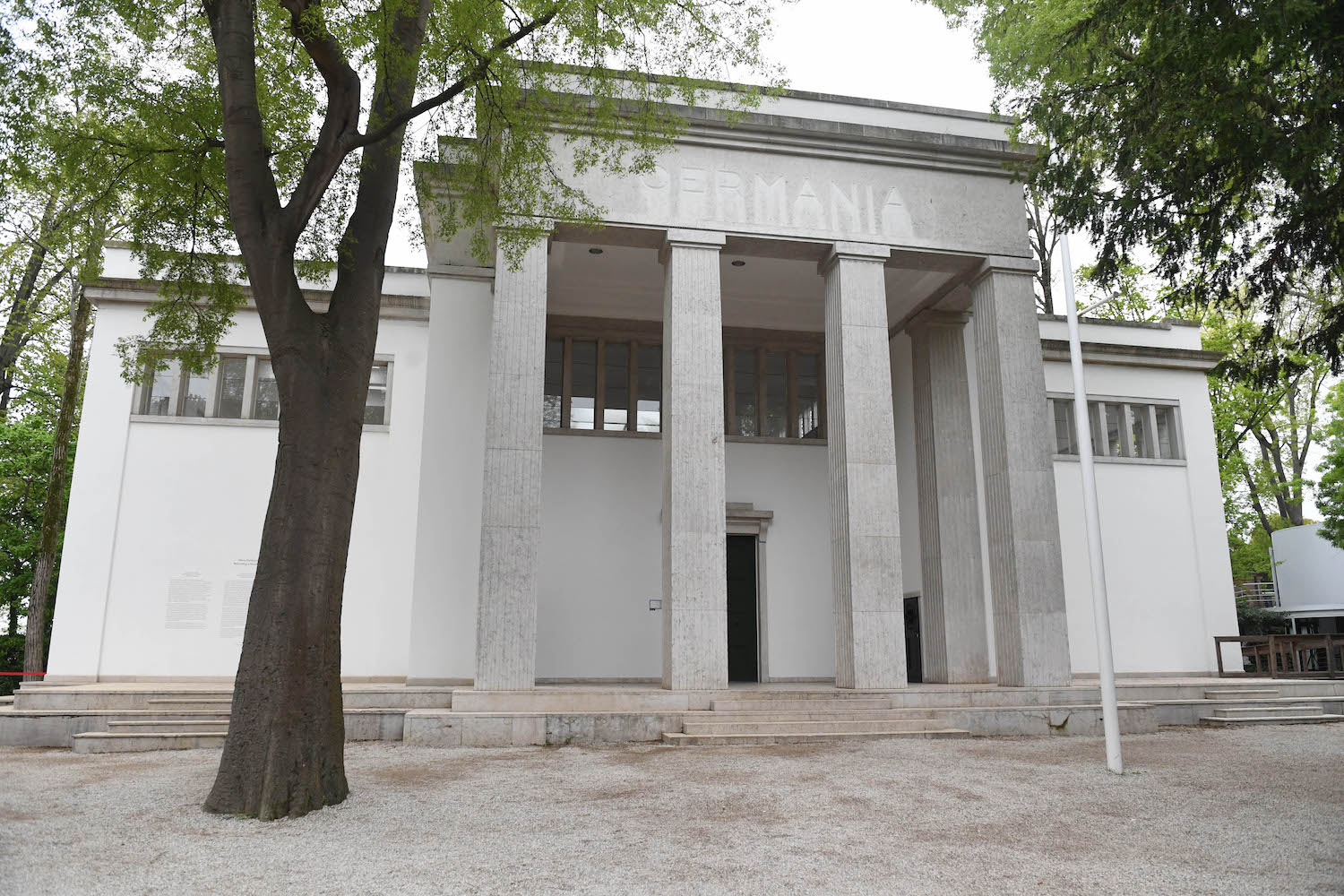
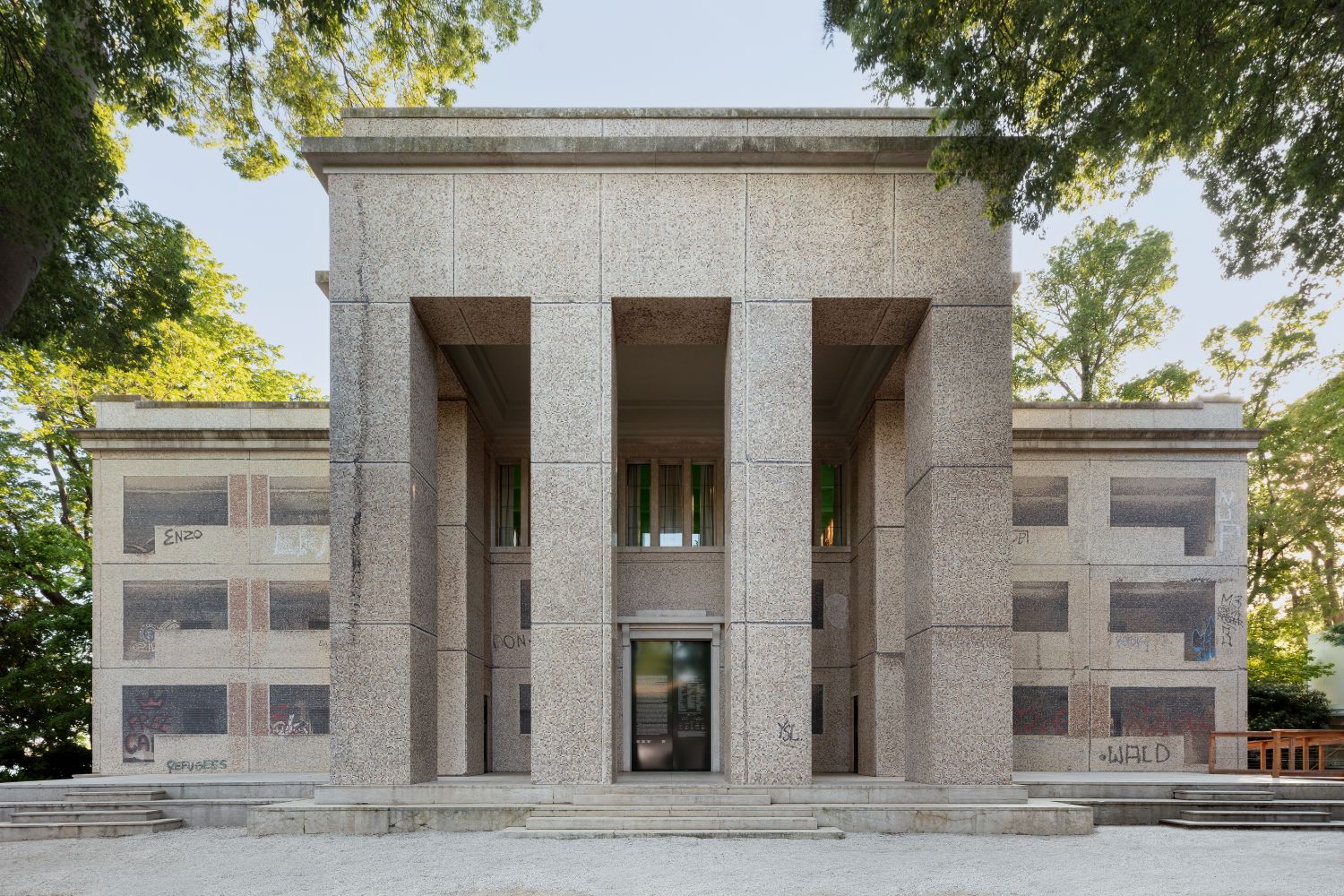
Artist Sung Tieu has clad the German pavilion at the 2024 Venice Biennale with a mosaic replica of the Gehrenseestrasse complex, a now-abandoned housing estate in Berlin where she lived as a child. The work, titled "Human Dignity Shall Be Inviolable," uses three million mosaic stones to recreate the facade of the prefabricated blocks that housed Vertragsarbeiter—contract workers from Vietnam, Mozambique, Angola, and Cuba who bolstered East Germany's economy. Tieu, who shared a single bed with her mother in the complex for three years, conceived the pavilion alongside the late artist Henrike Naumann.

First Details of the German Pavilion

Erste Details zum deutschen Pavillon

The German Pavilion at the upcoming Venice Biennale will present an exhibition titled "Ruin," featuring works by the late Henrike Naumann and artist Sung Tieu. Curated by Kathleen Reinhardt, the exhibition explores historical ruptures and the lingering effects of political and social voids following German reunification. Tragically, Naumann passed away shortly after completing her contributions, and her studio team is now working to realize her final artistic vision for the prestigious international stage.

6 Rising Artists to Watch at This Year’s Venice Biennale

The article profiles six rising artists at the 2026 Venice Biennale, focusing on Sung Tieu and Gala Porras-Kim. Tieu transforms the German Pavilion with a tile shell recreating a former housing complex for Vietnamese contract workers, while inside she scatters chocolate ladybugs as a symbol of occupation. Porras-Kim presents work in the Arsenale examining 'institutionally defined damage' and how decay can realign objects with their natural state.

A brush with... Hew Locke—podcast

This episode of 'A brush with...' features artist Hew Locke, who discusses his career and artistic practice. Born in Edinburgh in 1959 to artists Donald and Leila Locke, he moved to Guyana as a child and returned to the UK to study art in 1980. Over three decades, Locke has created sculptures, installations, photographs, drawings, and textiles exploring nationhood, culture, and power, often using found objects and cardboard. He reflects on influences including his parents, a tutorial with Paula Rego, and Hans Haacke's 1993 Venice Biennale pavilion, and discusses his upcoming exhibitions: 'Gilt' at Compton Verney (2025-2027), 'Passages' at the Yale Center for British Art (2025-2026), 'Armada' at Newlyn Art Gallery, and 'Cargoes' at King Edward Memorial Park.

henrike naumann obituary 2745997

German installation artist Henrike Naumann has passed away at the age of 41 following a battle with cancer. At the time of her death, Naumann was preparing for the pinnacle of her career: representing Germany at the upcoming 61st Venice Biennale. The German pavilion organizers have confirmed that they will work closely with her studio team to realize her finalized artistic vision for the exhibition as planned this May.

Venice in Crisis Mode

Venedig im Krisenmodus

The 61st Venice Biennale has opened under extraordinary circumstances, marked by political protests, a jury resignation, and canceled awards. The Biennale's jury resigned en masse after announcing they would exclude Israeli and Russian contributions from their decisions, leading to the cancellation of the Golden Lion awards and a crisis over the international competition's legitimacy. A newly introduced audience prize also faced boycotts from artists in solidarity. Protests, closed pavilions, and pro-Palestinian actions dominated the preview days, with artists pasting protest posters directly onto their works, reflecting heightened tensions.

Deutscher Pavillon wird zum Plattenbau

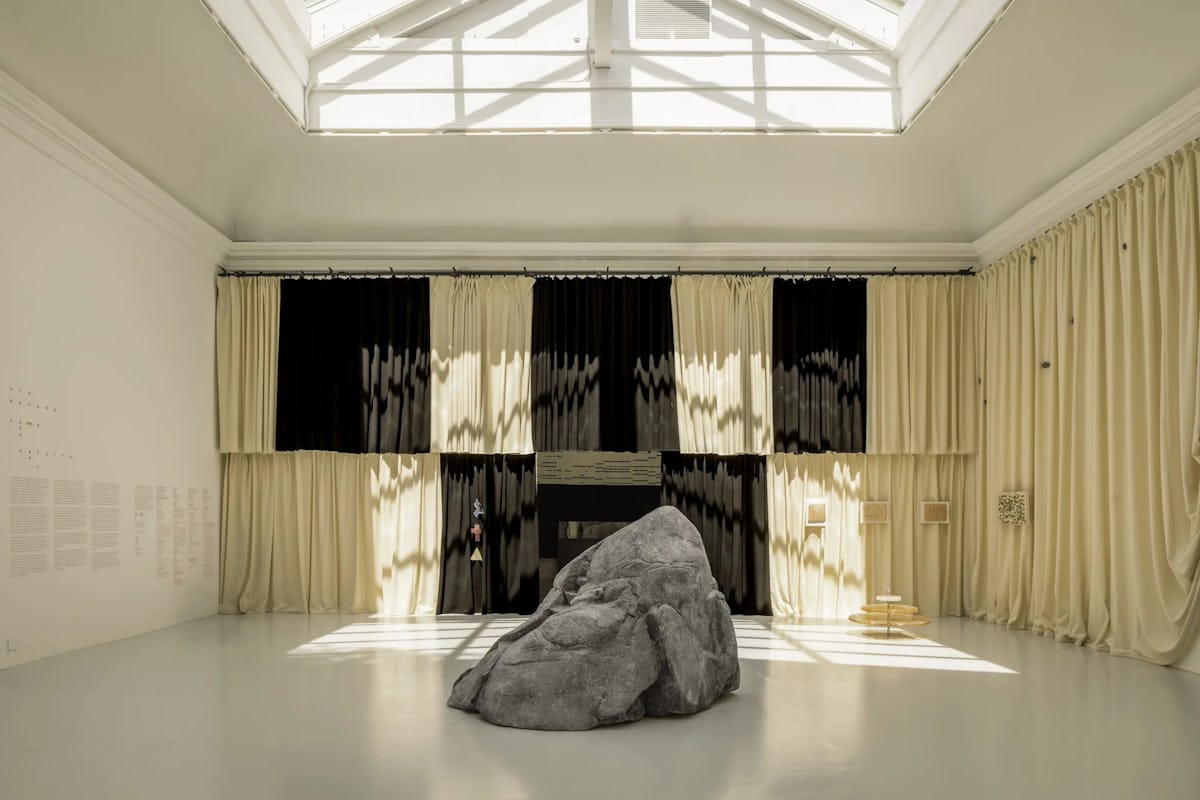
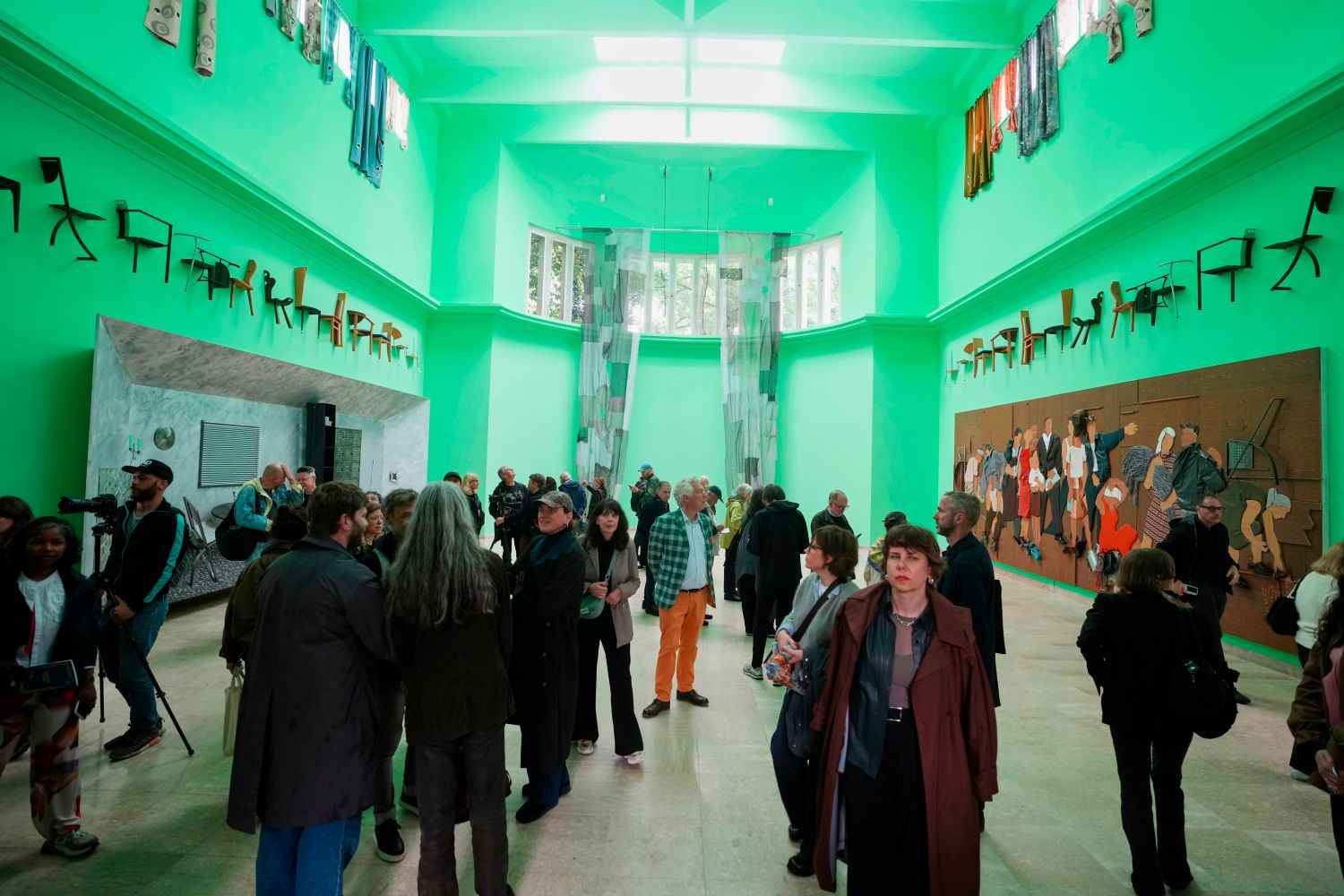
The German Pavilion at the Venice Art Biennale has been transformed into a prefabricated concrete slab building (Plattenbau) for this year's edition, designed by artists Sung Tieu and the late Henrike Naumann, who died suddenly in February at age 41 from cancer. Curator Kathleen Reinhardt described the pavilion as part of a highly political Biennale, with Tieu covering the 1938 fascist-era building with a mosaic of over three million tiles depicting a Berlin apartment block that once housed Vietnamese contract workers. Naumann's interior installation features mint-green references to Soviet barracks in East Germany, a cartography of war, and works including a relief of chairs, a curtain of chainmail, and the performance "Trümmerfrau."

Drained, Drowning, and Decay: The Best National Pavilions at the Venice Biennale

The 2026 Venice Biennale is defined by themes of ruin and decay, with standout national pavilions exploring bodily, infrastructural, and archaeological collapse. The Slovenian Pavilion features the Nonument Group repurposing materials from past Biennales into a ruin of a mosque for Bosnian Muslim soldiers from World War I. Syria presents its first national pavilion since the Civil War, with Sara Shamma invoking Palmyra, destroyed by ISIS. Germany's pavilion, titled "Ruin," features works by Henrike Naumann (who died in February) and Sung Tieu, questioning the pavilion's fascist architecture and nationalist residue. The Austrian Pavilion, curated by Florentina Holzinger, offers a visceral performance titled "Sea World." The Biennale is also marked by the abrupt resignation of its five-member jury, who refused to consider nations charged with crimes against humanity, leading to awards being chosen by public vote. Additionally, the main exhibition "In Minor Keys" was affected by the death of its curator, Koyo Kouoh.

A Pavilion of Ruins: Germany Reconsiders Its Past in Venice

The German Pavilion at the 61st Venice Biennale features a dual presentation exploring the country's layered political history. Artist Sung Tieu has cloaked the pavilion's fascist-era facade with a mosaic reconstruction of a GDR housing estate for Vietnamese contract workers, where she lived as a child. Inside, the late Henrike Naumann's immersive installation 'The Home Front' uses furniture and design to stage a confrontation between East and West German domestic and political ideologies. Naumann died in February 2025 at age 41, but her fully realized concept was completed collaboratively by her partner and curator Kathleen Reinhardt.

‘In every drop of paint he slurped, you see the Holocaust’: the genius and torments of Georg Baselitz

Georg Baselitz, the German painter and sculptor known for his provocative confrontations with Nazi history, has died. Born in 1938, he was one of the last living artists with direct childhood memories of the Third Reich. His early works, such as *Die große Nacht im Eimer* (1961) and his upside-down German eagles, deliberately shocked postwar West Germany by depicting obscene, shameful images of a society trying to forget the Holocaust. He famously exhibited a zombie Hitler woodcarving at the 1980 Venice Biennale alongside Anselm Kiefer, insisting on confronting rather than ignoring the Nazi heritage of the German Pavilion.

Nel Padiglione Germania alla Biennale di Venezia un gruppo di donne riflette sulle rovine del passato per capire il mondo

The German Pavilion at the 2026 Venice Biennale will present the work of two women artists, Henrike Naumann and Sung Tieu, following the death of Naumann at age 41 in February 2026. Curated by Kathleen Reinhardt, director of the Georg Kolbe Museum in Berlin, the pavilion's project, titled "Ruin," explores the dual meanings of the word in English and German—architectural decay versus economic, social, or moral collapse. The exhibition draws on research into East Germany (DDR) and the post-reunification period, using the pavilion's fascist architecture as a lens to examine historical ruptures and their impact on the present. For the first time in its history, the German Pavilion is represented solely by women, mirroring the Italian Pavilion.

72 Hours in Venice: Palazzos, Protests, and a Biennale on the Brink

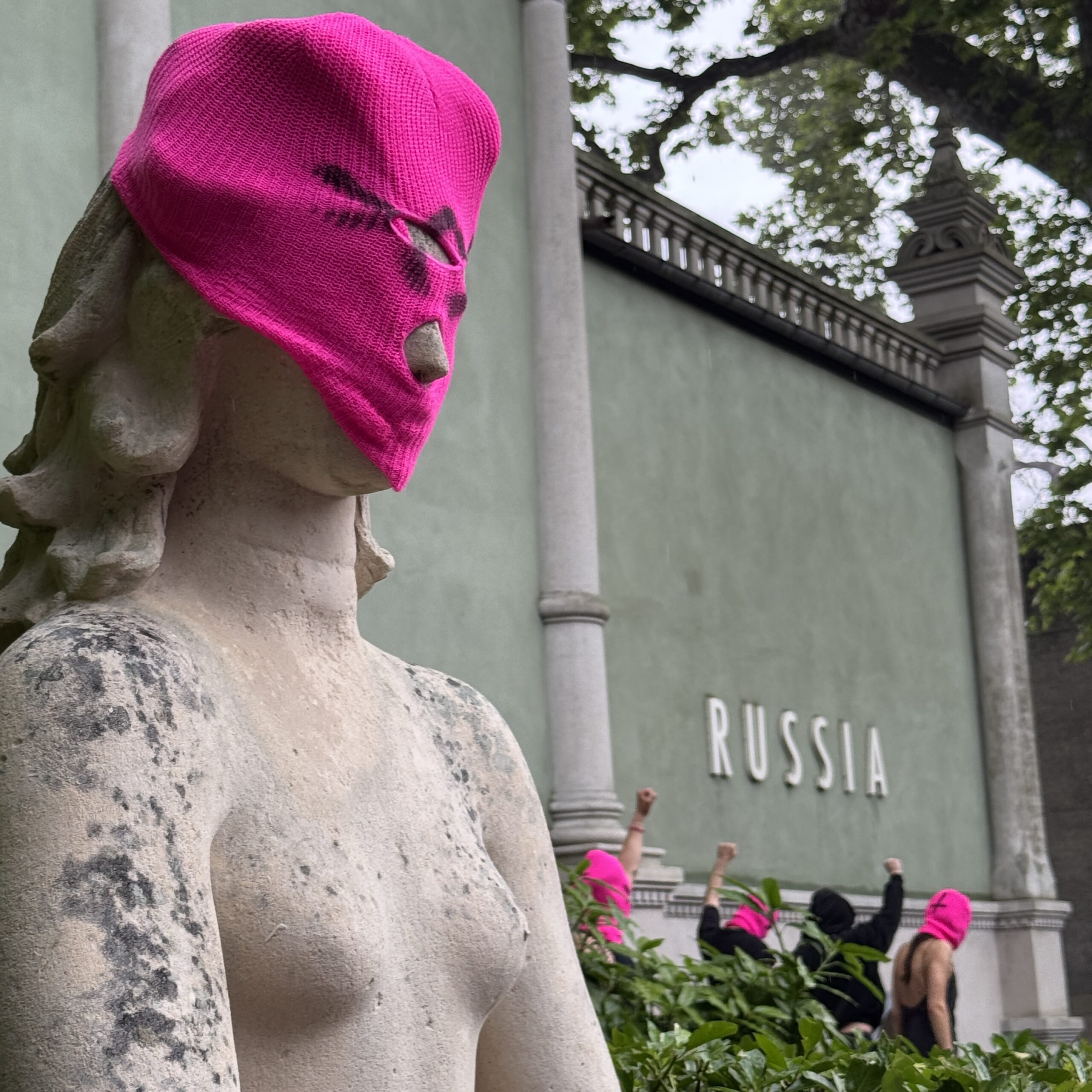
The article recounts a journalist's 72-hour visit to the Venice Biennale, beginning with a protest by Pussy Riot and Femen at the Russian Pavilion. The action features pink smoke, chants of "Blood is Russia's art," and a guerrilla performance of the song "Disobey," set against a backdrop of internal Biennale strife—including juror resignations over countries whose leaders face ICC arrest warrants (Netanyahu and Putin). The narrative also notes the presence of alt-right figures like Ryan Coyne and sculptor Alma Allen's troubled U.S. pavilion representation.

Is Berlin not over yet?

Ist Berlin doch noch nicht over?

Çağla Ilk, who curated the German Pavilion at the Venice Biennale two years ago, has presented her plans as the new artistic director of the Maxim Gorki Theater in Berlin. Her program reimagines theater from the perspective of visual art, signaling a major shift in the city's theater landscape. The announcement comes amid broader reforms in Berlin's theater scene, including Matthias Lilienthal's upcoming takeover of the Volksbühne, and was met with both anticipation and anxiety, reminiscent of Chris Dercon's failed tenure at the Volksbühne in 2017.

"Gesundheitseffekt der Künste auf biologischer Ebene"

A roundup of art news covers multiple stories: Stefan Trinks criticizes Berlin's 'MuseumsMeileMitte' as a symptom of urban and cultural misdevelopment, where museums are co-opted by real estate marketing. At the Venice Biennale, the German Pavilion by Henrike Naumann and Sung Tieu explores East German identity and post-reunification trauma, while Patti Smith performed a 'sonic prayer' at the Vatican Pavilion curated by Hans Ulrich Obrist and Ben Vickers. A study from University College London suggests regular arts engagement may slow biological aging.

A sturdy soldier in a sequin dress

"Eine kräftige Soldatin im Paillettenkleid"

Media reviews of the Venice Biennale's opening week offer contrasting takes on the German and US pavilions. Critics describe the German pavilion, curated by Sung Tieu and Henrike Naumann, as a dense, ironic East-West narrative that layers Nazi architecture with DDR prefab construction, creating what Jörg Häntzschel calls a "shockingly seamless symbiosis." The US pavilion, featuring sculptures by Alma Allen, is panned by Maximilíano Durón in ArtNews as politically timid and empty, lacking the clear colonial critiques of previous editions by Simone Leigh and Jeffrey Gibson.

"Eine Idee, die gut ist, kann fast alles verändern"

Henrike Naumann's final major artistic project, the German Pavilion at the Venice Biennale, is completed posthumously by friends after her death from cancer at age 41. Meanwhile, the sudden death of curator Koyo Kouoh at 57 has left her team to finish the central exhibition "In Minor Keys" for the Biennale, opening May 9. The US Pavilion is openly crowdfunding for its 2026 presentation by sculptor Alma Allen, citing opaque funding under the Trump administration. Israel's foreign ministry has accused the Venice Biennale jury of boycotting its artist Belu-Simion Fainaru by excluding countries whose leaders face International Criminal Court charges.

Venice Diary Day 1: At the Giardini, Artists Refuse to Make Fascism Cozy

Henrike Naumann's posthumous installation at the German Pavilion, which retains its 1938 Nazi-era fascist architecture, refuses to make the space 'cozy' by adorning windows with violently ripped domestic fabrics. The 2026 Venice Biennale is the first under president Pietrangelo Buttafuoco, associated with neo-fascist politics, and is overshadowed by controversy over his 'neutrality' policy allowing all countries to participate despite human rights concerns. The exhibition jury initially announced it would not consider pavilions from countries whose leaders are charged with crimes against humanity, then abruptly quit, leaving the situation unresolved. The US Pavilion features unimpressive blobs by Alma Allen, while the Russian Pavilion offers cut flowers and free vodka, and Andreas Angelidakis responds to fascist aesthetics at the Greek Pavilion.

Henrike Naumann, Sculptor Set to Represent Germany at Venice Biennale, Dies at 41

henrike naumann sculptor dead germany venice biennale 1234773488

The German art world is mourning the death of sculptor Henrike Naumann, who passed away in Berlin at age 41 following a brief battle with cancer. Naumann was a rising star known for her immersive installations that utilized furniture and domestic objects to explore the complex sociopolitical legacy of East Germany and the psychological tensions of reunification. Her death comes just months before she was scheduled to represent Germany at the 2024 Venice Biennale.

Sung Tieu on Representing Germany at the 61st Venice Biennale

Sung Tieu, who is co-representing Germany at the 61st Venice Biennale alongside Henrike Naumann, responds to a questionnaire from ArtReview about her plans for the German Pavilion. She describes her inspiration as her mother and childhood home, a site built for foreign contract workers in the GDR that later became a refuge for the diaspora. Tieu states that her work relates to the Biennale theme "In Minor Keys" through the lens of Gehrenseestrasse, a concrete record of collective memory. She also expresses skepticism about the Biennale's importance, noting that the German Pavilion's fascist architecture compels artists to work against it, and that national pavilions reveal how much work remains in undoing nationalism.

Venice Biennale Diary: An Editor on the Ground

Andrew Durbin reviews national pavilions at the Venice Biennale, contrasting a vacuous US presentation with incisive and moving installations from Britain and Germany. The article is part of Frieze's Critic's Guides series, published on May 6, 2026.

Alison Roman’s Top Picks from the Frieze Viewing Room

Andrew Durbin reviews the national pavilions at the Venice Biennale, contrasting a vacuous US presentation with incisive and moving installations from Britain and Germany. The review highlights the thematic and emotional depth of the British and German pavilions while critiquing the lack of meaning in the US entry.

Frieze’s Christine Messineo Takes a Tour of Chelsea

Andrew Durbin reviews national pavilions at the Venice Biennale, contrasting a vacuous US presentation with incisive and moving installations from Britain and Germany. The review highlights the disparity in thematic depth and emotional resonance among the three pavilions.

Arsenale Review: Where Voices Resist Erasure

At the 2026 Venice Biennale's Arsenale, critic Andrew Durbin reviews national pavilions, finding the US presentation vacuous and lacking meaning, while praising the British and German pavilions for their incisive and moving installations that resist erasure. The review highlights a stark contrast in curatorial ambition and political engagement among the participating nations.

‘Afterimages’: What Does It Mean to See Through Overload?

Andrew Durbin reviews the national pavilions at the Venice Biennale, contrasting a vacuous US presentation with incisive and moving installations from Britain and Germany. The article critiques the lack of meaningful engagement in the US pavilion while praising the depth and emotional resonance of the British and German contributions.

Jerald Cooper’s Top Picks from Frieze New York 2026

Andrew Durbin reviews the national pavilions at the 2026 Venice Biennale, contrasting a vacuous US presentation with incisive and moving installations from Britain and Germany. The article critiques the lack of meaning in the American pavilion while praising the depth and emotional resonance of the British and German contributions.

‘In Minor Keys’ Review: Its Best Moments Live in the Institutions Koyo Kouoh Built

Andrew Durbin reviews the national pavilions at the 2026 Venice Biennale, contrasting a vacuous US presentation with incisive and moving installations from Britain and Germany. The review highlights how the best moments of the exhibition live in the institutions built by curator Koyo Kouoh, who organized the Biennale's main exhibition.

What’s Showing in Chelsea During Frieze Week New York

This article is a critic's guide reviewing national pavilions during Frieze Week New York. Andrew Durbin contrasts a vacuous US presentation with incisive and moving installations from Britain and Germany, questioning the meaning and depth of the American contribution.

National Pavilions Review: Porta-Potties, Porn and a Defiant Rave

Frieze critic Andrew Durbin reviews national pavilions at an unnamed biennial, contrasting a vacuous US presentation with incisive and moving installations from Britain and Germany. The US pavilion is criticized for lacking meaning, while the British and German pavilions feature incisive and moving works, including a defiant rave and provocative content like porta-potties and porn.