filter_list Showing 30 results for "Guardian" close Clear
dashboard All 30 museum exhibitions 9article news 6article culture 5rate_review review 5person people 2article policy 2gavel restitution 1
date_range Range Today This Week This Month All
Subscribe

From Mother Mary to Foo Fighters: your complete entertainment guide to the week ahead

This article is a weekly entertainment guide from The Guardian, covering cinema, gigs, art, stage, streaming, games, albums, and brain food. In the art section, it highlights two exhibitions: "Handpicked: Painting Flowers from 1900 to Today" at Kettle's Yard in Cambridge, featuring artists like Henri Rousseau and Lubaina Himid; and a show of South African photographer George Hallett's work at the John Lennon School of Art and Design in Liverpool, documenting black resistance in 1970s Britain. It also mentions an open house for Lonnie Holley's new works at Edel Assanti gallery in London.
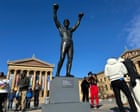

New US exhibition explores power of monuments – with help from Rocky

The Philadelphia Museum of Art has opened a new exhibition titled "Rising Up: Rocky and the Making of Monuments," which uses the iconic Rocky Balboa statue as a focal point to explore the power and meaning of monuments across two millennia of boxing and celebrity culture. Curated by Paul Farber, co-founder of Monument Lab, the show features ancient sculptures, 19th-century works, images from boxing's golden age, and contemporary pieces by artists including Andy Warhol, Keith Haring, Jean-Michel Basquiat, and Glenn Ligon. The Rocky statue, placed on the museum's steps in 1982, attracts an estimated 4 million visitors annually, rivaling the Statue of Liberty.

"Etwas zaghaft, etwas ängstlich, etwas sicher"

The article surveys recent art-world commentary, focusing on a critical review of the Turner Prize shortlist in The Guardian, where Eddy Frankel calls the selection "timid, anxious, safe" and laments a self-perpetuating, elitist system. It also covers a Hyperallergic essay by Lisa Siraganian questioning whether artworks can possess personhood, sparked by Pierre Huyghe's Venice exhibition. Additionally, it reports on controversy at the Venice Biennale, where the jury preemptively excluded countries whose leaders are sought by the International Criminal Court—namely Russia and Israel—drawing sharp criticism from Die Welt's Marcus Woeller. A podcast interview with US sculptor Alma Allen, selected for the US Pavilion, rounds out the coverage.

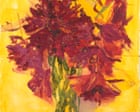
Handpicked review – delightful dancing dahlias and petals so pillowy you can feel them

The Guardian reviews "Handpicked," an exhibition at Kettle's Yard in Cambridge that brings together over 40 artists from the 20th century to the present, all sharing a floral passion. The show features works by Rory McEwen, Vanessa Bell, Cedric Morris, Christopher Wood, Tirzah Garwood, Celia Paul, Gluck, and Caroline Walker, among others, displayed on white and leaf-green walls inspired by the fresh flowers and floral paintings in the neighboring house. The review highlights specific pieces, such as McEwen's exquisite tulip watercolor and Garwood's poignant painting from the last year of her life, noting the technical variety and emotional depth across the exhibition.

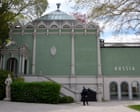
Venice Biennale jury ‘will not award artists from countries facing war crimes charges’

The jury of the Venice Biennale has announced it will not award prizes to artists from countries whose leaders face charges of crimes against humanity by the International Criminal Court, a decision widely seen as targeting Russia and Israel. The five-member jury, appointed by the late curator Koyo Kouoh, stated its commitment to human rights and will exclude artists from nations whose governments are under ICC investigation when selecting winners of the Golden and Silver Lion awards for the 2026 edition, which opens on 9 May. The move follows controversy over Russia’s participation in the biennale, with the European Commission threatening to suspend a €2m grant due to Russia’s involvement, and Italy’s far-right government opposing the decision.

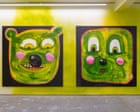
Shreg the green ogre, a grey obsessive and Vermeer’s boiled egg – the week in art

This week's art roundup from The Guardian highlights a range of exhibitions across the UK, including Bruce Asbestos's 'Bootleg Shreg 2' at Exeter Phoenix Gallery, a playful show featuring a green ogre that parodies copyright rules. Other notable shows include Roy Oxlade's primitive paintings at Alison Jacques, May Morris's craft legacy at Lady Lever Art Gallery, a 30-year anniversary group show at Timothy Taylor, and Alan Charlton's monochrome grey works at Annely Juda Fine Art. The article also features an image of a naturally sculpted rock on Kangaroo Island, a review of the Turner Prize nominees, and a masterwork analysis of Vermeer's 'The Guitar Player' at Kenwood House, which was stolen in the 1970s and recovered with the help of a clairvoyant.

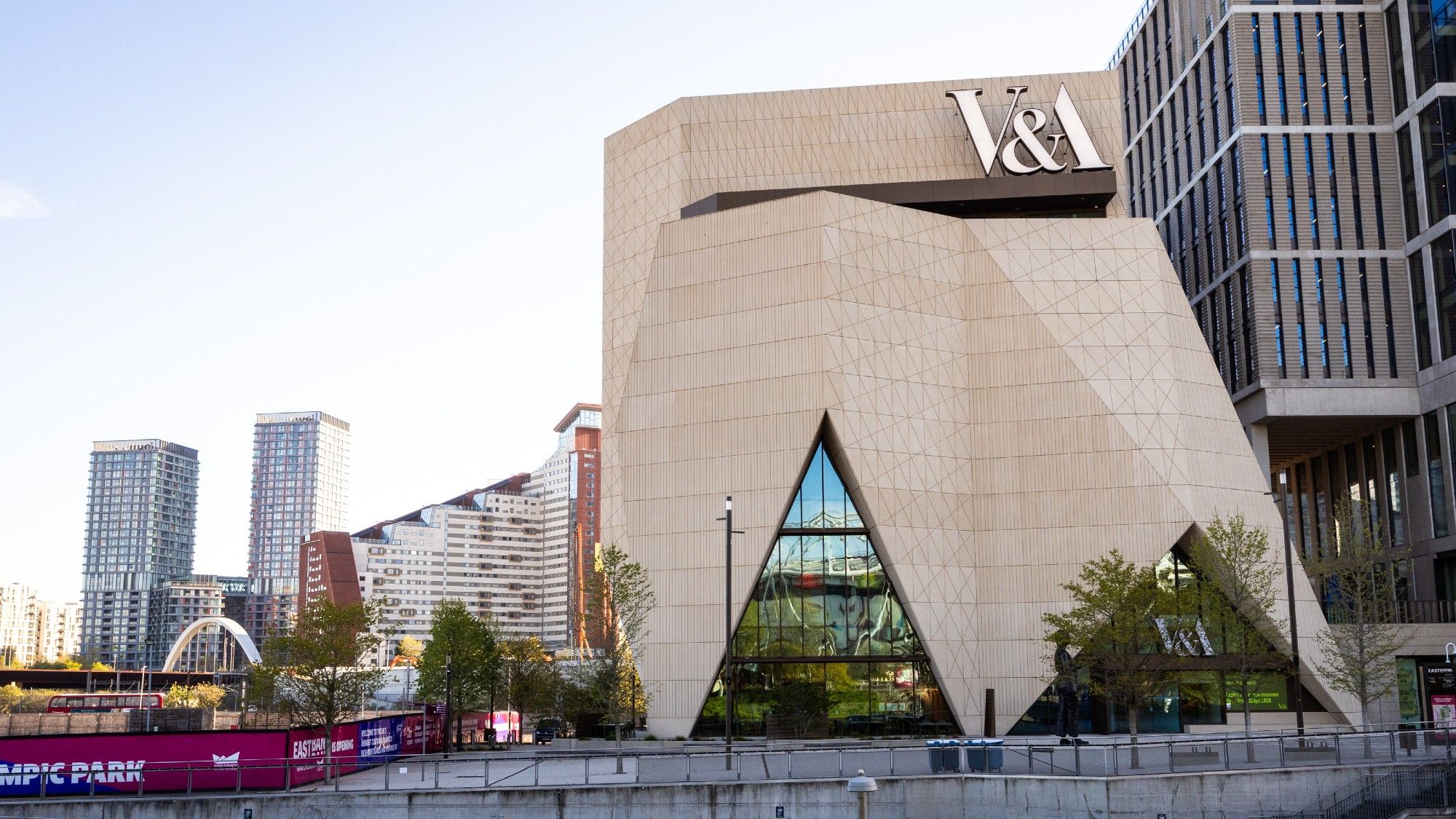
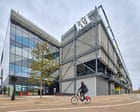
The new London museum that looks like a ‘reconstructed Toblerone’

The V&A has opened a new outpost in east London's Lower Lea Valley, a former industrial area transformed into a cultural quarter after the 2012 Olympics. The museum, described as looking like a 'reconstructed Toblerone', is the latest addition to the 'Olympicopolis' vision, which aimed to create a cultural legacy akin to west London's Albertopolis. The article, written by Catherine Slessor in The Guardian, offers a mixed review: praising the beauty and craftsmanship of the galleries while criticizing overuse of trendy phrases like 'lived experience' and 'transcultural identities'.

‘It’s not much but, at the same time, it’s very much’: the enduring impact of Sade’s style

The article discusses the enduring style of Sade Adu, frontwoman of the British group Sade, following the band's announcement of their induction into the 2026 Rock and Roll Hall of Fame. It highlights how Adu's signature look—scraped-back hair, red lipstick, hoop earrings, and simple black dresses or denim—has become iconic and influential, with her outfits featured in exhibitions like V&A East's 'The Music is Black' and referenced by celebrities such as Drake. The piece traces the origins of her style to her fashion design studies at Saint Martin's School of Art and her early work with designer Fiona Dealey.

The Turner Prize Has Revealed Its 2026 Nominees—and Already Courted Controversy

The Turner Prize has announced its 2026 nominees: Simon Barclay, Kira Freije, Marguerite Humeau, and Tanoa Sasraku. The award, administered by Tate Britain, includes a £25,000 prize for the winner. For the first time, the nominees' exhibition will be held at Teesside University's Middlesbrough Institute of Modern Art, an academic setting. The selection has already drawn criticism for being tame and safe, with Guardian critic Eddy Frankel describing the prize as "timid" and "fearful." Tate Britain director Alex Farquharson defended the nominees, praising the diversity and sculptural focus of their work.

Turner prize shortlist announced

The Turner Prize shortlist for 2026 has been announced, featuring four artists: Simeon Barclay, nominated for his spoken-word performance 'The Ruin'; Tanoa Sasraku, recognized for her solo exhibition 'Morale Patch' exploring the political history of oil; Kira Freije, shortlisted for her first major solo show 'Unspeak the Chorus'; and Marguerite Humeau, nominated for her exhibition 'Torches'. The shortlist was selected by a jury chaired by Alex Farquharson, director of Tate Britain, who praised the diverse range of work spanning installation, performance, and sculpture. An exhibition of the shortlisted artists will be held at Teesside University's Middlesbrough Institute of Modern Art (Mima) from September 2026 to March 2027, with the winner announced on December 10, 2026, receiving £25,000.

Playing it safe: this year’s Turner prize nominees lack the anger – and joy – of previous years

The 2026 Turner Prize nominees have been announced, featuring artists Marguerite Humeau, Tanoa Sasraku, Kira Freije, and Simeon Barclay. The shortlist is notably lacking in painting, video art, and overtly political work, instead offering sci-fi utopianism, jazz performance poetry, ephemeral sculpture, and anti-corporate satire. Critics describe the selection as timid and safe compared to previous years, missing the anger, radicalism, and transformative joy of past editions.

World Press Photo 2026 winners – in pictures

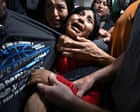
The World Press Photo 2026 winners have been announced, with Carol Guzy awarded the top honor for her image of distraught girls clinging to their father as ICE agents detain him after an immigration hearing in New York City. Finalists include Saber Nuraldin’s photograph of Palestinians scrambling for aid in Gaza, Victor J Blue’s image of Achi women outside a Guatemala City court, and other powerful works documenting climate displacement in Mexico, a wedding during a typhoon in the Philippines, police detaining a priest at a pensioners’ protest in Argentina, and a social robot in Europe.

‘They tore up everything’: the wolf hunters of Kyrgyzstan – in pictures

Photographer Luke Oppenheimer traveled to the remote Kyrgyz village of Ottuk in 2021 for a short assignment on wolves preying on livestock, but ended up staying for four years. His project, titled 'Ottuk' and published by Aliens in Residence, documents the lives of shepherds who hunt wolves to protect their herds in the Tien Shan mountains, capturing their ancient way of life, harsh winters, and the legends that shape their community.

‘We’re attached to this land like a tree is rooted in soil’: unexpectedly timely exhibition speaks up for the people of south Lebanon

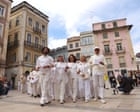
An exhibition titled 'Forget Me Not: South Lebanon in Memory and Motion' was held at London's Palestine House earlier this month. It featured archival news footage from 2000, photographs, audiovisual materials, and children's drawings to document the history, culture, and resilience of southern Lebanon, a region experiencing renewed conflict.

Has the world grown weary of art biennials? In search of an antidote, a Portuguese festival turns to anarchism

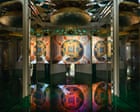
Anozero, a biennial art festival held in Coimbra's Monastery of Santa Clara-a-Nova, has opened a ghostly edition that uses installations—including Taryn Simon's sound piece of laments in multiple languages—to protest plans by the Portuguese government to redevelop the 17th-century convent into a hotel under its Revive programme. Festival co-founder Carlos Antunes threatens to cancel the biennial if the development proceeds, framing the event as a warning to the developer about the spirits that haunt the building.

Dutch Commission Recommends New Guardianship for ‘Orphaned’ Nazi-Looted Art

A Dutch government-appointed committee has proposed transferring guardianship of thousands of unclaimed Nazi-looted artworks from a state agency to a Jewish foundation, preferably housed at the Jewish Museum in Amsterdam. The plan includes funding for exhibitions and explanatory labels to publicly display the so-called "orphaned" art from the Netherlands Art Property Collection.

Art for art’s sake, but for people’s health too | Letter

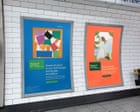
Art Fund director Jenny Waldman responds to a philosophical article about art's intrinsic value, arguing that while art should be enjoyed for its own sake, promoting its measurable health benefits can serve as a crucial entry point for new audiences. She cites the organization's National Art Pass adverts and recent research with King's College London, which demonstrated immediate physiological responses to viewing original art, as tools to invite people who might otherwise feel excluded from cultural institutions.

Isaac Julien review – Gwendoline Christie meets a cyborg starfish in a pleasure-seeker’s postmodern parlour

A new film by artist Isaac Julien, featuring actors Sheila Atim and Gwendoline Christie as science-fiction deities, is on view at the Cosmic House in London. The 25-minute work, which incorporates themes from Octavia E. Butler's novel *Parable of the Sower*, explores concepts of change, interconnectedness, and fluid identity through a visually rich, postmodern lens.

Emma the joke-telling robot cracks up the care home: Paula Hornickel’s best photograph

Photographer Paula Hornickel captured a moment between an elderly care home resident named Waltraud and a social robot named Emma in Albershausen, Germany. The robot, designed for companionship in settings with staff shortages, engages residents in conversation, tells jokes, and discusses topics like favorite flowers, simulating social interaction.

Ghosts, nudes and lesbian pageant queens: highlights from NYC’s Photography Show – in pictures

Aipad: The Photography Show is taking place at the Park Avenue Armory in New York from April 22-26, 2026, featuring works from over 70 galleries. The exhibition highlights include Bill Brandt's 1952 nude, Rania Matar's portrait of a young woman in Lebanon, and Zanele Muholi's 2009 portrait of a lesbian pageant queen, alongside works by Tania Franco Klein, Ruth Thorne-Thomsen, and others that explore themes of identity, anxiety, and alternative realities.

The Wonderful World that Almost Was by Andrew Durbin review – the queer artists who shaped New York cool

Andrew Durbin's new book, 'The Wonderful World that Almost Was,' is a double biography of painter and sculptor Paul Thek and photographer Peter Hujar. It chronicles their artistic maturation, their open and unapologetic gay relationship, and their central role in defining the 'cool' of the New York creative scene from the 1950s to the mid-1970s, before their deaths from AIDS.

‘I’m not trying to make him handsome’: Polly Samson on photographing husband David Gilmour – in pictures

Polly Samson, acclaimed author and wife of Pink Floyd guitarist David Gilmour, presents her first solo photography exhibition at Leica Gallery London, featuring intimate images taken over two decades of Gilmour on tour and in the studio. The show, titled 'Polly Samson – Between This Breath and Then,' runs until 7 May 2026 and coincides with the release of her book 'David Gilmour: Luck and Strange – Studio/Live,' published by Thames & Hudson. Samson's photographs capture candid moments of Gilmour, their family, and the creative process behind albums including 'Luck and Strange.'

David Bowie: You’re Not Alone review – Ziggy glam and Berlin grime in a bum-shaking yet sanitised immersion

A new immersive film exhibition titled 'David Bowie: You’re Not Alone' has opened at London's Lightroom. Directed by Mark Grimmer, who previously designed the V&A's 2013 Bowie exhibition, the hour-long 360-degree film focuses on the artist's most-streamed hits and features unseen performance footage, including from his 1978 Earls Court show. It aims to appeal to both die-hard fans and a younger audience.

Picasso’s Guernica is the ultimate emblem of the horrors of war. It has no place in Spain's partisan squabbles | María Ramírez

A political dispute has erupted in Spain over the potential temporary relocation of Pablo Picasso's iconic anti-war painting *Guernica*. The president of the Basque Country, Imanol Pradales, has formally requested the work be moved from Madrid's Reina Sofía museum to the Guggenheim Museum Bilbao for several months in 2027, framing it as a form of "reparation" for the Basque people. The Spanish government has rejected the request on conservation grounds, while conservative politicians have used the proposal to attack Basque nationalism.

Martin Parr: Global Warning review – the great photographer in all his gluttonous, giddy glory

A major retrospective exhibition of photographer Martin Parr's work, titled 'Global Warning,' has opened at the Jeu de Paume museum in Paris. The show, which Parr helped plan before his death in December 2023, is on track to become the museum's most visited exhibition, showcasing his signature saturated, ironic, and unflinching observations of global tourism and consumerism.

Grimes joining LinkedIn is artwashing at its most brazen. I should know – I released my new film on there

Artist Alan Warburton critiques the migration of creative professionals to LinkedIn, sparked by musician Grimes' recent pivot to the platform to promote her appearance at an Nvidia tech conference. Warburton, who recently released his AI-focused film 'Image Empire' on the site, describes the move as a desperate response to the 'enshittification' of traditional creative platforms like Twitter and Vimeo, which have been overrun by bots and AI-generated content.

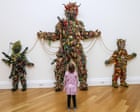
My toddler threw a toy pig at an artwork – and inspired this guide for small kids in galleries

A journalist recounts a stressful visit to the Royal Academy with her toddler, where a toy pig was thrown toward a Kerry James Marshall painting. This incident serves as the catalyst for a new series exploring the compatibility of small children and art galleries, addressing the anxieties parents face regarding museum etiquette, accessibility, and the fear of damaging artworks.

V&A East Storehouse and Norwich Castle among finalists for museum of the year

The Art Fund has announced the five finalists for the 2025 Museum of the Year award, the UK's most prestigious museum prize. The shortlist features major institutions that have recently completed significant expansions or refurbishments, including the V&A East Storehouse in Stratford, the National Gallery in London, The Box in Plymouth, the Fitzwilliam Museum in Cambridge, and Norwich Castle Museum & Art Gallery. The winner, to be announced on June 25, will receive £120,000, while the other finalists will each receive £20,000.

LensCulture portrait awards 2026 – in pictures

The LensCulture Portrait Awards 2026 have announced their winning and shortlisted photographers, showcasing a diverse range of styles from documentary realism to conceptual invention. Highlights include an Australian photographer's winning portrait of a 'barefoot volcanologist' and poignant series documenting the ongoing conflict in Ukraine and the reclamation of identity in post-colonial contexts.

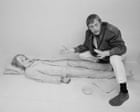
Hamnet-era mourning jewel from celebrated painting rediscovered after 400 years

A rare 17th-century mourning jewel, depicted in the celebrated 1635 painting 'Sir Thomas Aston at the Deathbed of His Wife' by John Souch, has been rediscovered after 400 years. The heart-shaped pendant, which contains a tassel of hair from Aston’s deceased son Robert, was identified by its current owners during a chance visit to an exhibition featuring the portrait. Valued at £650,000, the gold and enamel memento mori features intricate Latin inscriptions that were previously illegible in the painting.