filter_list Showing 31 results for "Khaled Sabsabi" close Clear
search
dashboard All 31 museum exhibitions 24article news 5article culture 1rate_review review 1
date_range Range Today This Week This Month All
Subscribe

Venice Biennale 2026: all the national pavilions, artists and curators so far

The 61st edition of the Venice Biennale, the world's oldest and most prestigious art biennial, will open on 9 May 2026 and run through 22 November. The main exhibition follows the curatorial plan of the late Koyo Kouoh, while national pavilions have been announcing their participating artists and organizers. The article provides a comprehensive list of confirmed pavilions so far, including artists such as Genti Korini (Albania), Matías Duville (Argentina), Khaled Sabsabi (Australia), Florentina Holzinger (Austria), Faig Ahmed (Azerbaijan), and many others, with details on venues and organizers.
2026 Venice Biennale pavilions: your go-to list [Updated]

ArtReview has compiled a running list of national pavilions for the 61st Venice Biennale, running from 9 May to 22 November 2026. The Biennale was set to be curated by Koyo Kouoh, who died on 10 May 2025. Recent announcements include Haitham Al Busafi representing Oman, Genti Korini representing Albania with a three-channel video installation titled 'A Place in The Sun (still)', and Matías Duville representing Argentina with an interactive salt-and-charcoal installation. The Australia Pavilion will feature artist Khaled Sabsabi and curator Michael Dagostino, who were initially dropped due to controversy over Sabsabi's 2007 film 'You' but later reinstated. Florentina Holzinger will represent Austria with a water-themed performance.

10 Must-See Shows During the Venice Biennale 2026

The 2026 Venice Biennale is embroiled in multiple controversies, including the cancellation and reinstatement of Australia's representative artist Khaled Sabsabi, ongoing calls to bar Israel from participating, criticism over allowing Russia to participate, and mounting voices to exclude the U.S. in response to President Donald Trump's actions in Iran. Despite these disputes, the article highlights that many of the city's most exciting shows will take place away from the main Biennale venues.

Archibald prize 2026: Jacob Collins portrait wins the Packing Room prize as finalists revealed

The Packing Room prize for the 2026 Archibald Prize has been awarded to Sean Layh for his portrait of actor Jacob Collins, titled 'The tragicall historie of Hamlet, Prince of Denmarke'. The prize, worth $3,000, is chosen by Art Gallery of NSW staff who unpack and hang the exhibition. Layh, a self-taught Melbourne-based painter, drew inspiration from Collins' performance as Hamlet in a 2024 Melbourne Shakespeare Company production. The Archibald Prize main announcement, along with the Wynne and Sulman prizes, will take place on 8 May, with finalists including portraits of Bondi shooting hero Ahmed al-Ahmed, journalists Virginia Trioli and Jan Fran, surfer Layne Beachley, and artist Khaled Sabsabi.

Archibald prize 2026 finalists: Virginia Trioli, Jan Fran, Ahmed al-Ahmed and more – in pictures

The Guardian has announced the finalists for the 2026 Archibald Prize, Australia's premier portraiture award, featuring 30 works including Loribelle Spirovski's 'Fingerpainting of Daniel Johns', Vincent Namatjira's self-portrait 'The Dust Bowl', and portraits of notable sitters such as Virginia Trioli, Jan Fran, Ahmed al-Ahmed, Layne Beachley, and Governor-General Sam Mostyn. The list also includes the Packing Room Prize winner, Sean Layh's 'The tragicall historie of Hamlet, Prince of Denmarke', and works by artists like Mitch Cairns, Marikit Santiago, and Michael Zavros, with all finalist images published in a photo gallery.

Khaled Sabsabi on Representing Australia at the 61st Venice Biennale

Khaled Sabsabi, the artist representing Australia at the 61st Venice Biennale (2026), will exhibit works both in the Australia Pavilion in the Giardini and in the main Biennale exhibition titled "In Minor Keys." His pieces explore spirituality, migration, and shared humanity through Tasawwuf (Sufi) sensibilities, emphasizing flux and collective experience. Sabsabi is the first Australian artist to have work in both the national pavilion and the main exhibition in the same year, and he honors the curatorial vision of the late Koyo Kouoh.

Hyperallergic’s Guide to the 2026 Venice Biennale

Hyperallergic has published its guide to the 2026 Venice Biennale, detailing what to see and do at this year's edition. The guide covers the three main categories of the Biennale—the Giardini with 29 permanent national pavilions, the Arsenale with temporary rented spaces, and collateral events across the city. Key developments include the return of Russia to its permanent Giardini pavilion and Israel's participation with a new contractual stipulation preventing its artist from closing the pavilion, after Ruth Patir's protest in 2024. South Africa withdrew following the cancellation of Gabrielle Goliath's video installation 'Elegy,' which mourns victims of Israel's genocide in Gaza and will now be shown at a historic church. The United States will be represented by Alma Allen after Barbara Chase-Riboud stepped down, and Qatar is set to become the first country in decades to build a new pavilion in the Giardini.

Previews: 61st Venice Biennale: In Minor Keys

The 61st Venice Biennale, titled "In Minor Keys" and curated by the late Koyo Kouoh, opens amid global turmoil and internal controversy. Kouoh, who passed away in May 2025, conceived the exhibition around the metaphor of a "creole garden," emphasizing deep affinities between 111 artists from diverse locations such as Dakar, Beirut, and Salvador. The Biennale is overshadowed by recent geopolitical events, including US-Israeli airstrikes on Iran, and faces protests: over 70 participating artists signed an open letter opposing the participation of Israel, Russia, and the US, while the Australian pavilion saw the reinstatement of Khaled Sabsabi after being dropped, and South Africa withdrew its official pavilion over Gabrielle Goliath's femicide project, which she will still present independently.

The art of chaos

The 61st Venice International Art Biennale has opened in Venice, running until November, amid unprecedented turmoil. The main exhibition, "In Minor Keys," was curated by Koyo Kouoh, who died of cancer shortly after presenting her vision featuring 111 artists including Carsten Höller, Alvaro Barrington, and Laurie Anderson. Her death has eliminated the Lifetime Achievement Award this year. Additionally, the Biennale faces a funding crisis as the EU threatens to withdraw its €2 million subsidy over Russia's participation with 38 artists following the invasion of Ukraine. Iran, Nigeria, and Israel are absent from their pavilions, while the US Pavilion, now organized by the American Arts Conservancy under inexperienced leadership, features self-taught artist Alma Allen.

The art of politics: how global conflicts are playing out in this year's Venice Biennale

Israel is making a controversial return to the 2025 Venice Art Biennale after its pavilion was locked in 2024 with a note demanding a ceasefire in Gaza. The artist representing Israel, Belu-Simion Fainaru, will present his project "Rose of Nothingness" in the Arsenale, while Russia also returns to the Biennale after its Giardini pavilion was reassigned to Bolivia in 2024. The Art Not Genocide Alliance (ANGA) has renewed calls for a boycott and is organizing strike action to disrupt the event, accusing Israel of genocide.

The Must-See Biennale Exhibitions in Venice

The 61st International Art Exhibition of La Biennale di Venezia, titled "In Minor Keys," opens May 9 as a tribute to its late curator Koyo Kouoh. Alongside the Biennale, Venice hosts numerous concurrent exhibitions: Marina Abramović's "Transforming Energy" at Gallerie dell'Accademia (the only living female artist with a major show there); the Matthew Wong Foundation's inaugural exhibition "Interiors" featuring unseen works by the late Chinese Canadian artist; retrospectives of Michael Armitage at Palazzo Grassi and Lorna Simpson at Punta della Dogana; Hernan Bas's new paintings at Ca' Pesaro; Lu Yang's "DOKU The Illusion" at Espaces Louis Vuitton Venezia; and "Minimal Legends" at the Vincenzo de Cotiis Foundation, staging a dialogue among Minimalist masters.

Adelaide’s Tarnanthi is going on tour

Tarnanthi, the Art Gallery of South Australia's annual exhibition of Aboriginal and Torres Strait Islander art, is launching a national tour titled 'Tarnanthi on Tour: Too Deadly' starting July. The touring exhibition features over 30 works from the past decade of the festival, many conceived for Tarnanthi and never seen outside Adelaide. It will visit six regional galleries across Queensland, New South Wales, Victoria, and Western Australia over the next two years, including Rockhampton Museum of Art, Maitland Regional Art Gallery, Ngununggula, Caboolture Art Gallery, Geelong Gallery, and Lawrence Wilson Art Gallery.

Australian artist Khaled Sabsabi reveals details of presentations in the Australia Pavilion and in the International Exhibition In Minor Keys at Biennale Arte 2026 – News Hub

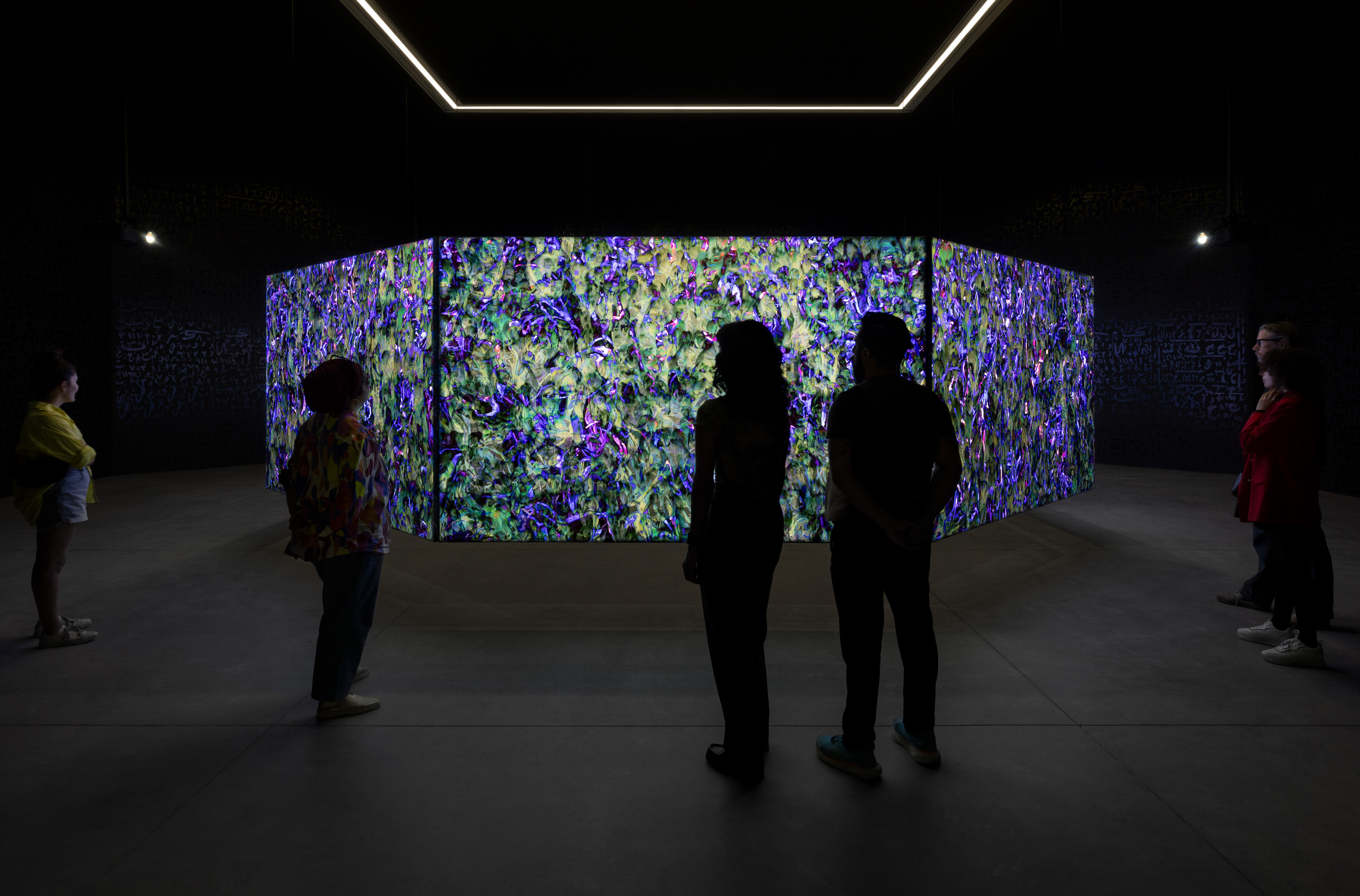
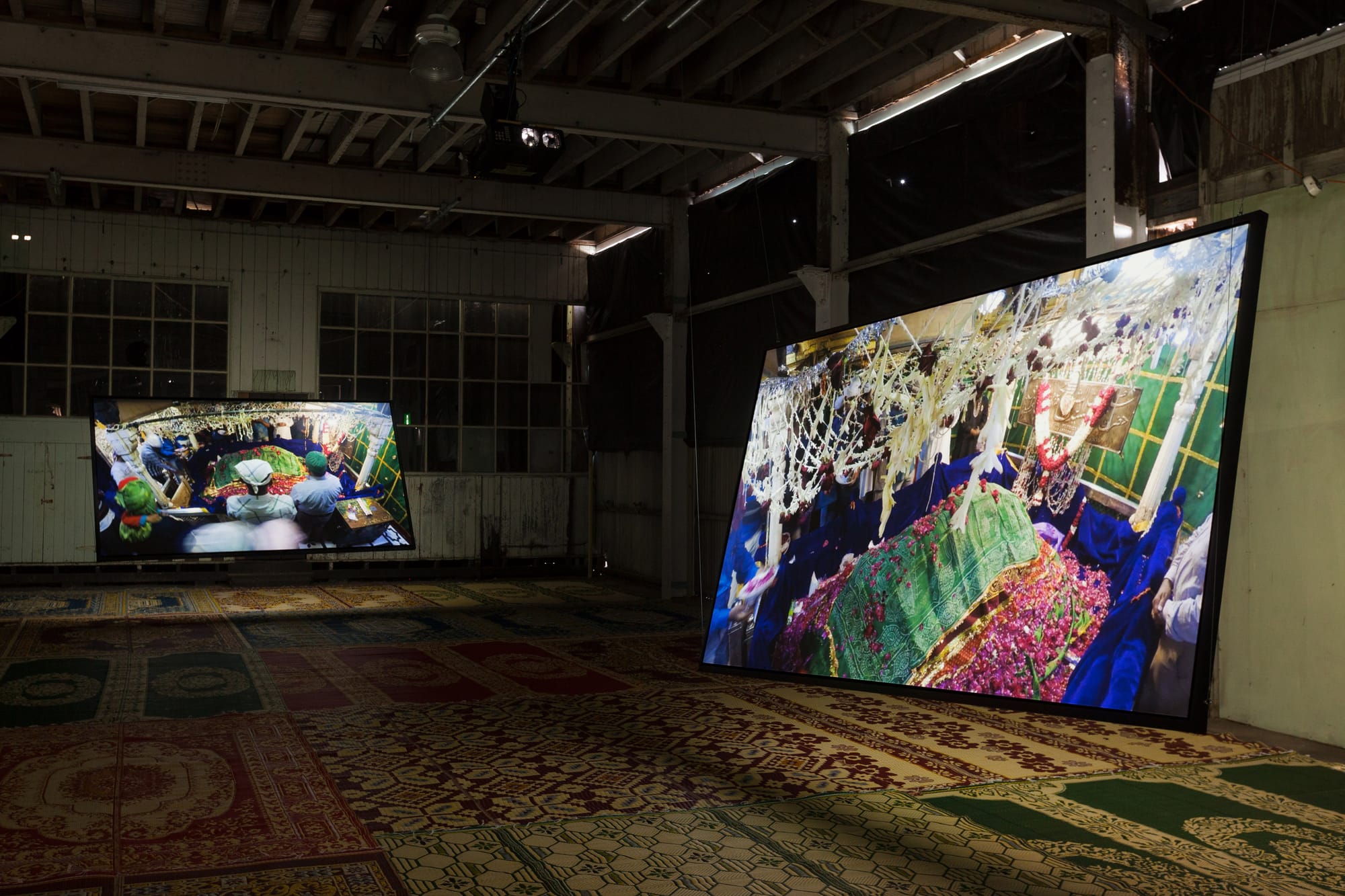
Australian artist Khaled Sabsabi will present two major installations at the 2026 Venice Biennale. At the Australia Pavilion, he unveils "conference of one’s self," an immersive multisensory work featuring eight monumental canvas paintings, video projections, and a soundscape inspired by a 12th-century Sufi allegory. Simultaneously, he becomes the first Australian artist to also exhibit in the International Exhibition, titled "In Minor Keys" curated by Koyo Kouoh, with a second installation called "khalil" at the Arsenale. Both works explore spirituality, migration, and shared humanity through a framework of Sufi thought.

Khaled Sabsabi Unveils Biennale Arte 2026 Showcase

Khaled Sabsabi will represent Australia at the 61st Venice Biennale in 2026 with two major installations. At the Australia Pavilion, he presents "conference of one's self," an immersive multisensory installation featuring eight monumental canvas paintings, suspended video projectors, and an analogue soundscape, all inspired by the 12th-century Sufi allegory "The Conference of the Birds." In a historic first for an Australian artist, Sabsabi also debuts a second work, "khalil," in the Biennale's main exhibition "In Minor Keys" curated by Koyo Kouoh at the Arsenale. Both works explore spirituality, migration, and shared humanity through a Sufi philosophical framework.

Venice Bound? Here’s All the News You Need to Know About This Year’s Biennale

The 61st Venice Biennale is embroiled in geopolitical controversy over Russia's return to the event in 2026, which has sparked widespread backlash. Nearly 10,000 artists and cultural leaders signed an open letter opposing Russia's participation, and the European Union withdrew €2 million in funding for the 2028 edition. Leaked emails reveal Biennale officials worked with Russian pavilion commissioner Anastasia Karneeva to circumvent EU sanctions, while Italy's culture minister Alessandro Giuli plans to boycott the opening week. Meanwhile, activists continue to push for Israel's removal from the Biennale, though Israel will be accommodated in the Arsenale this year.

Khaled Sabsabi is finally at the Venice Biennale: ‘Being here is already a win’

Khaled Sabsabi has opened his exhibition 'conference of one’s self' at the Australian Pavilion of the 61st Venice Biennale, alongside a second installation 'Khalil' in the Arsenale. This follows a tumultuous period in which Creative Australia rescinded his appointment as Australia’s representative in February 2025, sparking widespread backlash from the art community. After being reappointed in July 2025, Sabsabi presents two monumental multimedia works inspired by Sufi practice, created in Bangkok and described as 'one body with two limbs'.

Statement of Resignation

The international jury for the 61st edition of La Biennale di Venezia, titled “In Minor Keys” and curated by Koyo Kouoh, has resigned as of April 30, 2026. The jury members—Solange Oliveira Farkas, Zoe Butt, Elvira Dyangani Ose, Marta Kuzma, and Giovanna Zapperi—cite their earlier Statement of Intention issued on April 22, 2026, as the basis for their collective resignation.

Editor’s Letter: Still, Listening

The 61st Venice Biennale, titled "In Minor Keys" and curated by the late Koyo Kouoh, opens in May 2026, shifting focus from Eurocentric narratives to quieter, relational, and improvisational voices from the Global South. ArtAsiaPacific's May/June issue honors Kouoh's vision with features on artists including Gala Porras-Kim (a 2025 MacArthur Fellow), Khaled Sabsabi (representing Australia), and others like Liang Yuanwei, Yuko Mohri, Mona Hatoum, Tadanori Yokoo, Gayane Umerova, Li Yi-Fan, Hyeree Ro, and Ei Arakawa-Nash, with contributions from a curatorial team that carried Kouoh's work forward after her death in 2025.

Koyo Kouoh’s Venice Biennale Looks to Ancient Wisdom to Mend a Fractured Present

Koyo Kouoh's Venice Biennale, titled after ancient wisdom, opens with a focus on healing and historical reimagination. The exhibition features works by artists such as Alexa Kumiko Hatanaka, Khaled Sabsabi, Daniel Lind-Ramos, Guadalupe Maravilla, Kennedy Yanko, and Ayrson Heráclito, alongside a strong emphasis on artist-led schools and institutions like Denniston Hill, blaxTARLINES KUMASI, and RAW Material Company. During the opening, the Koyo Kouoh Foundation was announced, set to launch in Basel to support Pan-African cultural infrastructure. The show includes Refaat Alareer's poem "If I Must Die" and addresses political realities, blending spiritual, ecological, and technological themes to explore collective care and restoration.

The Female Artists To See at This Year's Venice Biennale

The 61st Venice Biennale returns amid controversy, including calls to exclude Israel, scrutiny over Russia's participation, and the reinstatement of Australian artist Khaled Sabsabi. Despite the political tensions, the exhibition will feature a strong lineup of female artists, from established names like Marina Abramović and Jenny Saville to emerging voices such as Maja Malou Lyse, who becomes the youngest artist to represent Denmark. The 2026 edition also introduces dedicated spaces for Black and Indigenous artists for the first time, with works exploring themes from male fertility to patriarchal violence and resilience.

72 Hours in Venice: Palazzos, Protests, and a Biennale on the Brink

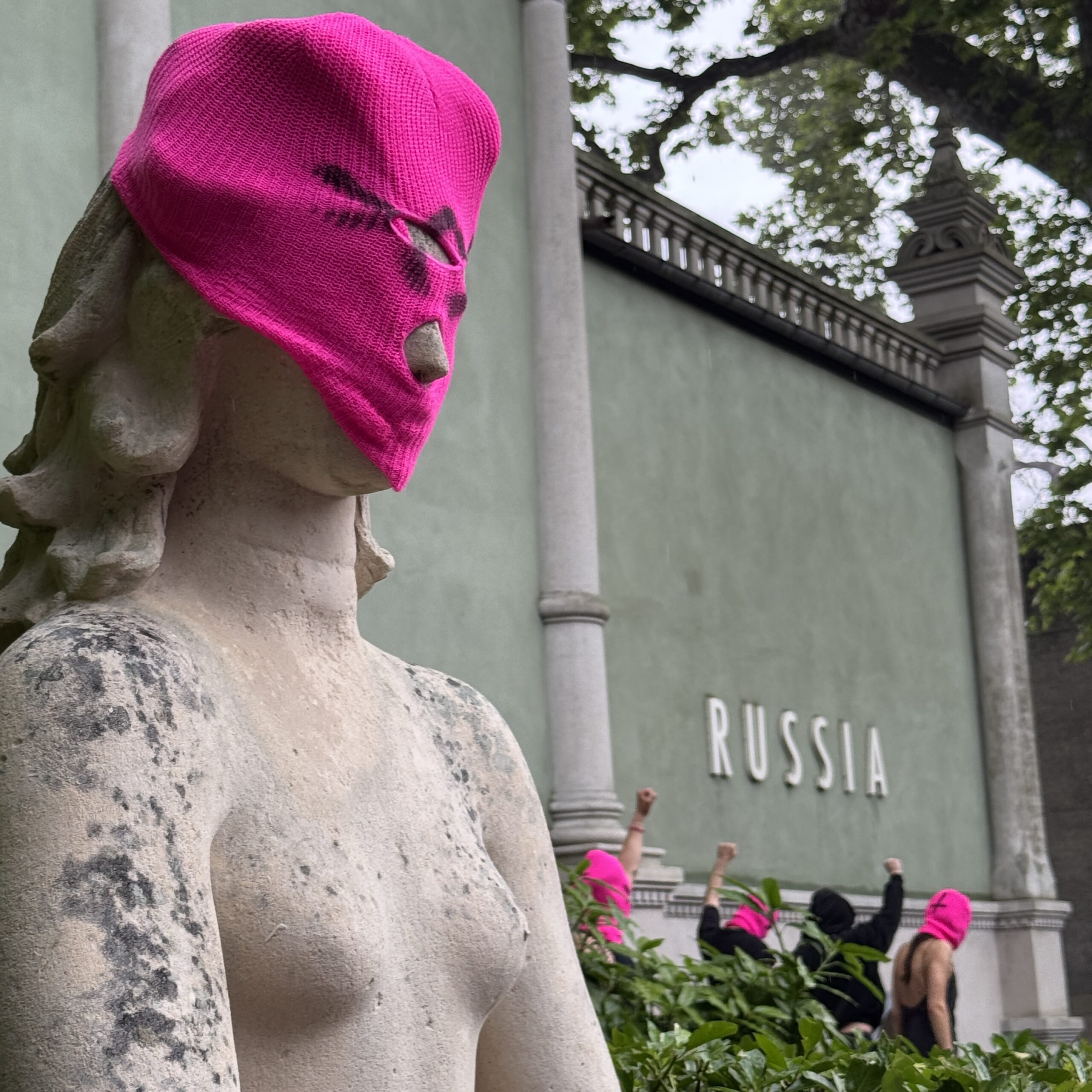
The article recounts a journalist's 72-hour visit to the Venice Biennale, beginning with a protest by Pussy Riot and Femen at the Russian Pavilion. The action features pink smoke, chants of "Blood is Russia's art," and a guerrilla performance of the song "Disobey," set against a backdrop of internal Biennale strife—including juror resignations over countries whose leaders face ICC arrest warrants (Netanyahu and Putin). The narrative also notes the presence of alt-right figures like Ryan Coyne and sculptor Alma Allen's troubled U.S. pavilion representation.

Wer vertritt wen in Venedig?

Khaled Sabsabi’s Rocky Road From Australia to the Biennale

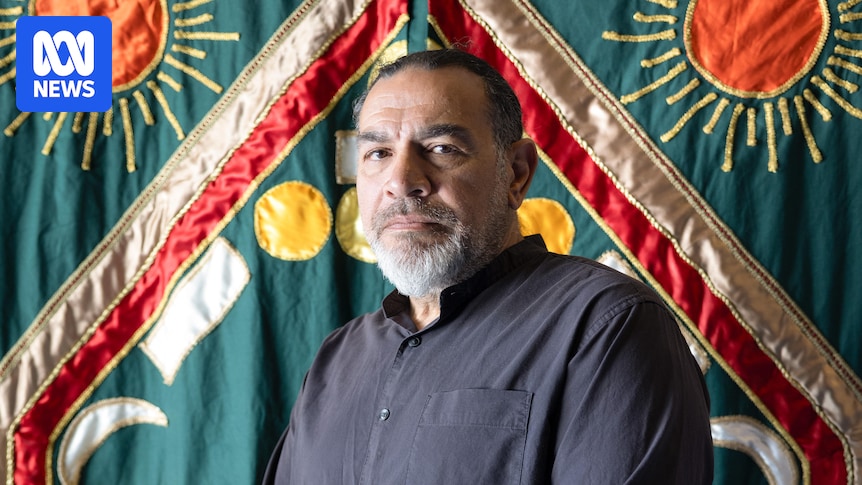
Lebanese-Australian artist Khaled Sabsabi was nearly removed from his commission for the Venice Biennale after being accused of supporting terrorism, but was later reinstated. He is now arriving in Venice to present not one but two works at the prestigious international exhibition.

Watch: Khaled Sabsabi and Michael Dagostino in Conversation

Artist Khaled Sabsabi and curator Michael Dagostino discuss their project 'conference of one’s self' for the Australia Pavilion at the 61st Venice Biennale. Sabsabi explains how the work draws on the twelfth-century Sufi poem 'The Conference of the Birds' by Farīd al-Dīn ʿAṭṭār, mapping its seven spiritual valleys and adding an eighth level of 'wholeness and completeness'. He also reflects on his childhood in Lebanon, migration to Australia, and how his return to Lebanon in 2002 reconnected him with his Sufi lineage, which informs his artistic practice focused on memory, displacement, and social justice.

Khaled Sabsabi: Splintered Worlds

Khaled Sabsabi, a Lebanese Australian artist, explores the intersection of spirituality and perception through video and mixed-media installations rooted in Sufism. His work, such as the 18-minute video *Lefke Morning* (2012–18), captures the Naqshbandi-Haqqani Sufi Order's dawn meditations, using blurred imagery and soundscapes to challenge Islamophobic media tropes and evoke a sense of unity. Sabsabi's practice also draws on hip-hop, which he performed as "Peacefender" in the 1980s, using music to address social issues and support marginalized communities in Western Sydney.

The 2026 Venice Biennale is light and conscious

Quella del 2026 è una Biennale di Venezia leggera e consapevole

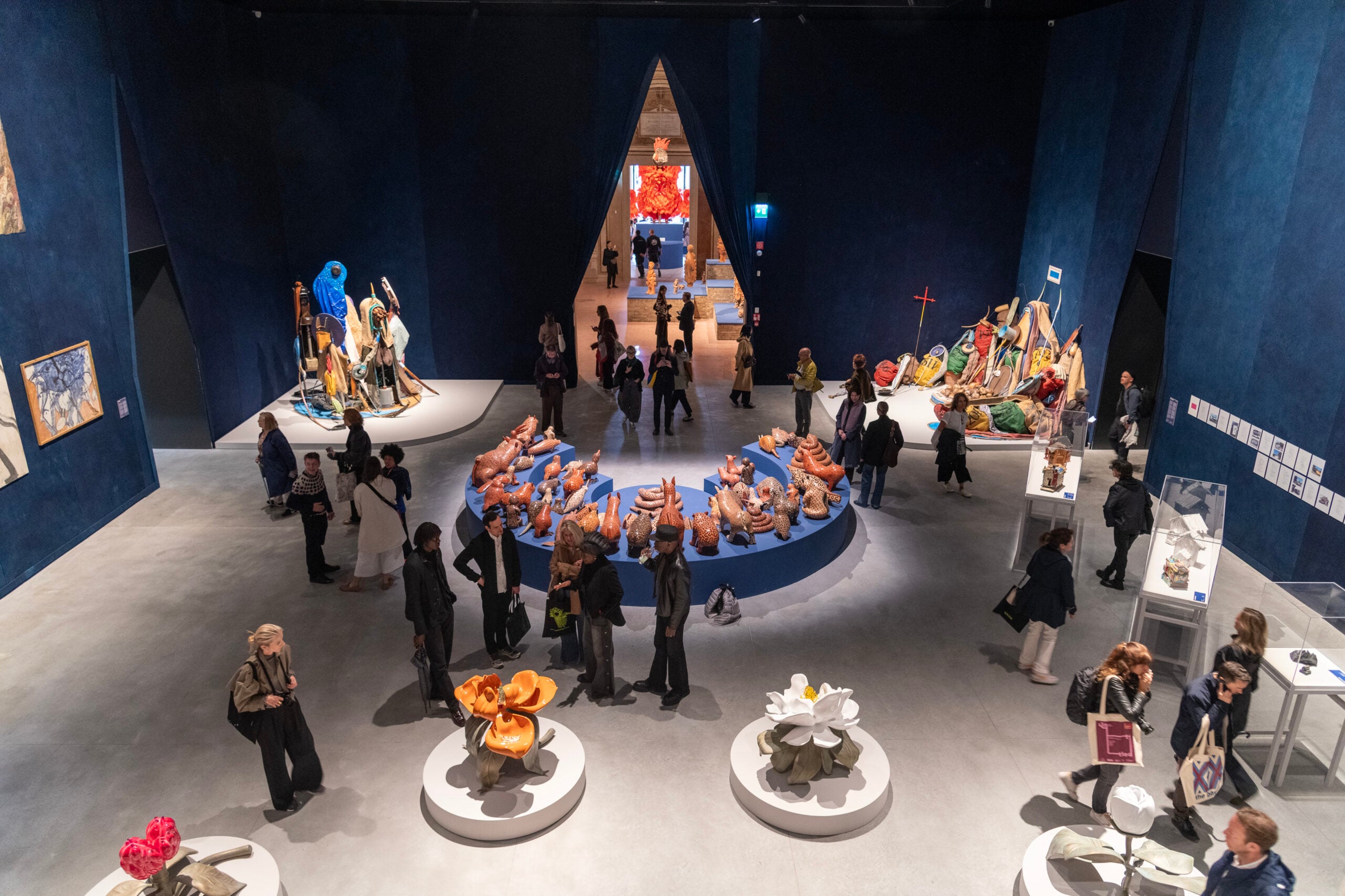
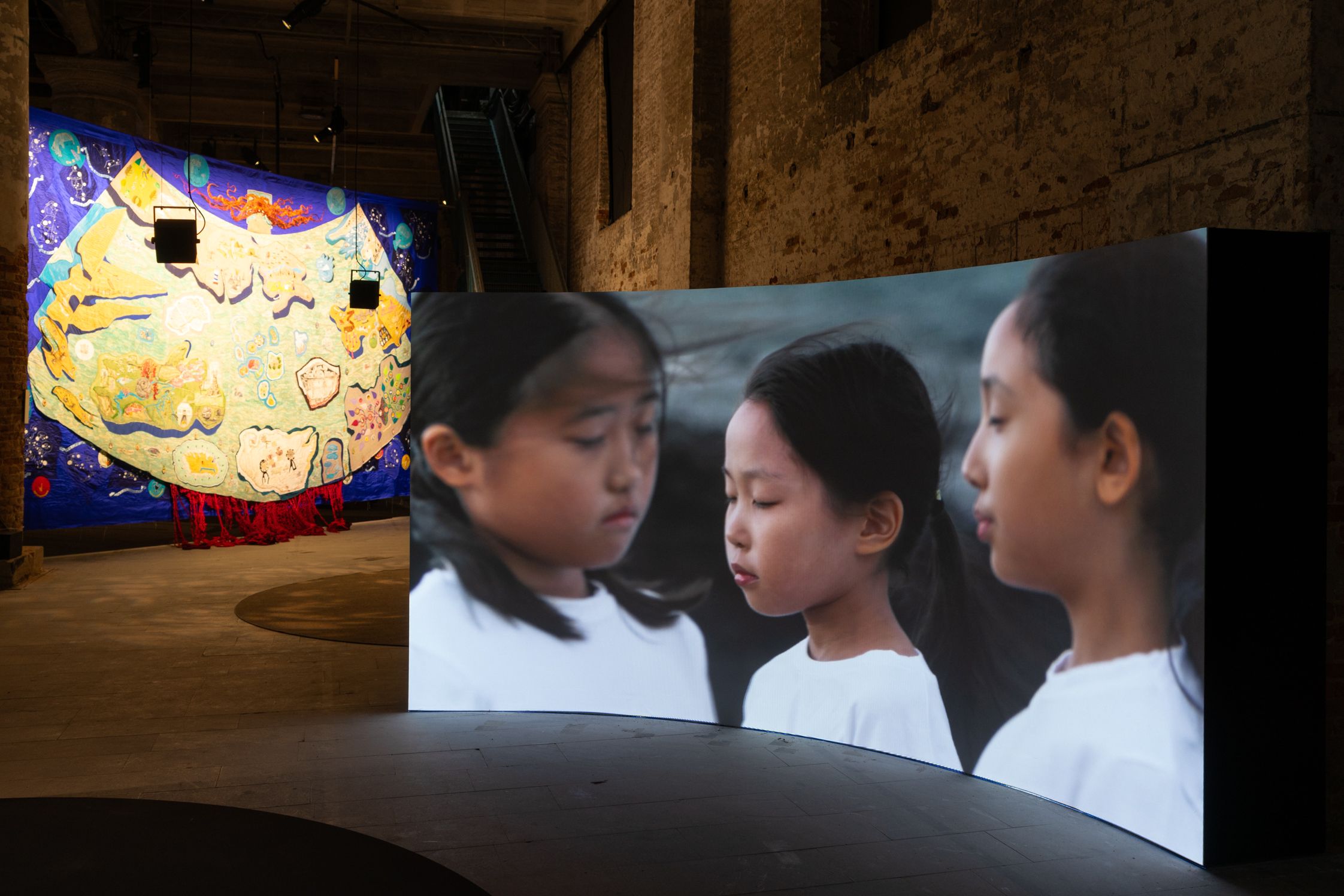
The 2026 Venice Biennale, titled "In Minor Keys" and curated by the late Koyo Kouoh, has opened with a focus on ecology and humanity's relationship with nature. The central pavilion at the Giardini presents a festive, craft-heavy exhibition that emphasizes connections with plants and animals, while the Arsenale offers a more spacious, symphonic experience featuring standout works such as Alfredo Jaar's "End of the World" (2023-2024) and Kader Attia's "Whisper of Traces" (2026). National pavilions, including those of Austria, Denmark, France, Germany, and Spain, explore themes of the body, memory, and ruin with notable installations.

What is the international exhibition of the Venice Biennale like? Review of "In minor keys" by Koyo Kouoh

Com’è la mostra internazionale della Biennale di Venezia? Recensione di “In minor keys” di Koyo Kouoh

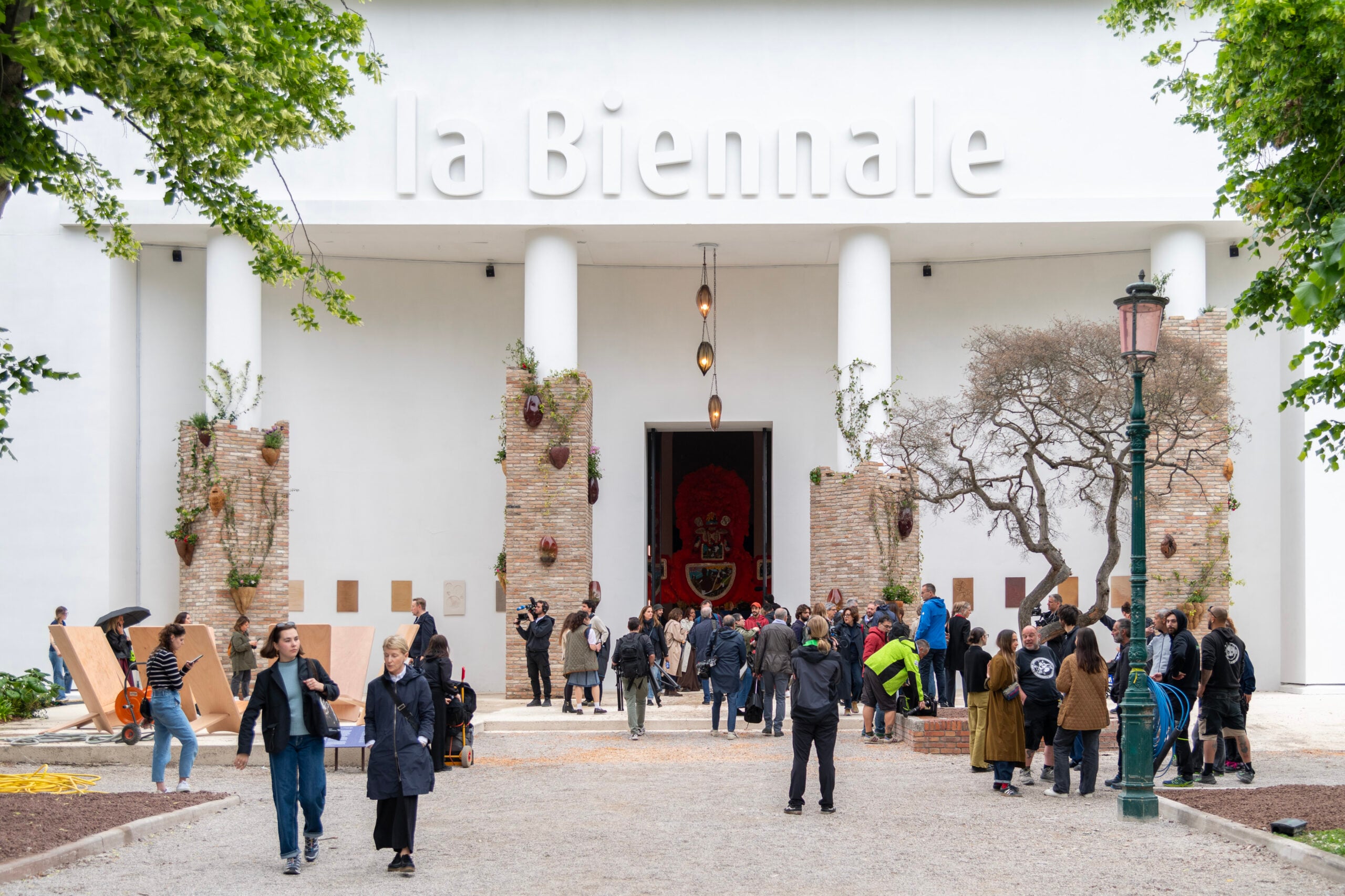
The 2026 Venice Biennale, titled "In minor keys" and curated by the late Koyo Kouoh, opens to the public on May 9 amid controversies including the absence of the president's name in the colophon at the Arsenale entrance. The exhibition, organized by Kouoh's team (Rory Tsapayi, Siddharta Mitter, Marie Helene Pereira, Gabe Beckhurst Feijoo, and Rasha Salty), unfolds across the Giardini and the Arsenale's Corderie, featuring works that balance strength and beauty with a harmonious mix of voices and themes. The Giardini section is particularly compelling, with a non-linear, polycentric layout that feels like a living organism, while the Arsenale offers further depth.

Artist appointed, axed then reinstated from Venice Biennale triumphs

Khaled Sabsabi, a Lebanese Australian artist, presents his installation 'conference of one's self' at the Australia Pavilion of the Venice Biennale, alongside a second work 'khalil' in the main exhibition 'In Minor Keys' curated by Koyo Kouoh. His participation follows a tumultuous period in February 2025 when he was initially appointed to represent Australia, then controversially sacked by Creative Australia's board after a political dispute triggered by Senator Claire Chandler's comments, and later reinstated. Sabsabi is now one of only three artists in the Biennale's 131-year history to show in both a national pavilion and the main exhibition.

‘In Minor Keys’: discover the themes that define the 61st Venice Biennale exhibition

The 61st Venice Biennale's main exhibition, 'In Minor Keys', curated by the late Koyo Kouoh, has opened after her sudden passing in 2025. Kouoh had fully planned the exhibition before her death, and a team of seven realized her vision. The show features 110 artists, including Wangechi Mutu, Nick Cave, Alfredo Jaar, and emerging talents like Ranti Bam. It opens with a poem by Refaat Alareer and an installation by Khaled Sabsabi, setting a contemplative tone amid themes of mourning, grief, and healing. The exhibition also highlights minority perspectives, including Caribbean and Central American artists, and confronts colonial histories through works like Florence Lazar's film on a hurricane-exposed necropolis.

Venice Biennale in crisis: The controversies explained

The Venice Art Biennale's official awards ceremony, scheduled for May 9, has been canceled after the entire five-member jury resigned days before the event. The jury had previously announced they would not consider countries whose leaders face International Criminal Court charges, directly impacting Russia and Israel. Instead of jury-selected prizes, visitors will vote throughout the Biennale's run, with "Visitor Lions" awarded on November 22. The event, running from May 9 to November 22, features 100 national participations, including seven first-time countries, and a posthumous main exhibition titled "In Minor Keys" curated by the late Koyo Kouoh, the first African woman to lead the show. Iran withdrew on May 4 amid Middle East tensions, while Russia's return to the Biennale in 2026 has sparked EU threats to cut funding.