filter_list Showing 6 results for "Lecci" close Clear
dashboard All 6 museum exhibitions 3article culture 1candle obituary 1rate_review review 1
date_range Range Today This Week This Month All
Subscribe

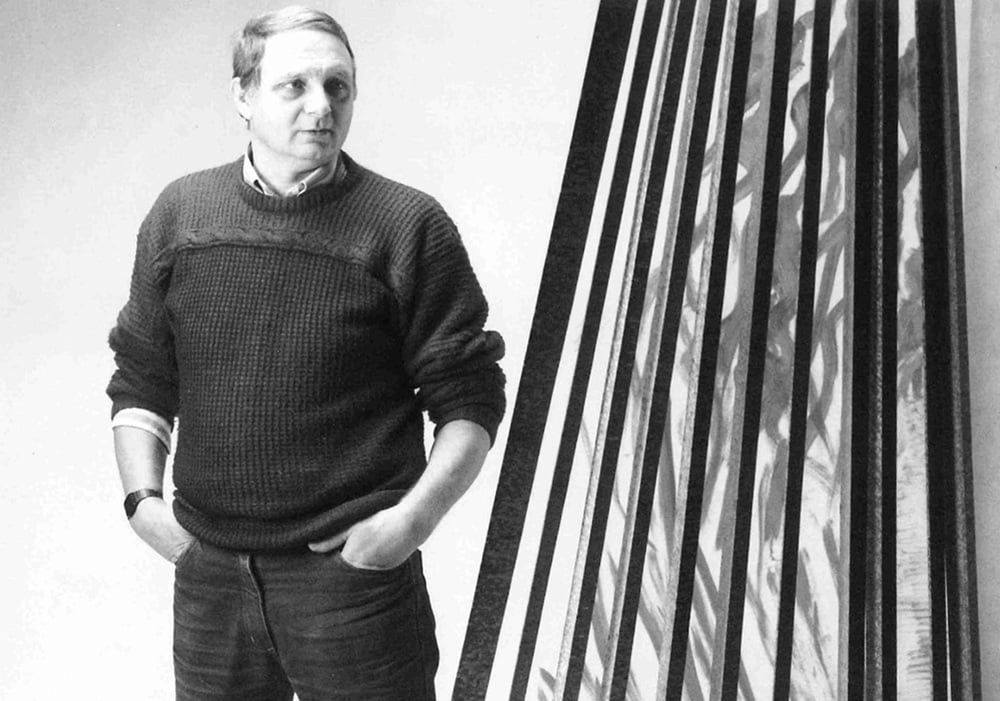
È morto Paolo Masi. La lunga ricerca dell’artista fiorentino sulla trasformazione dei materiali poveri

Paolo Masi, the Florentine artist known for his lifelong exploration of poor materials and their transformation, died in Florence on Wednesday, May 6, just days before his 93rd birthday. His career spanned from informal experiments in the 1950s through a rigorous investigation of materials in the 1960s, including his first solo show at the Strozzina in 1960. He joined the aesthetic research group Centro F/Uno alongside Baldi, Lecci, and Nannucci, and later co-founded the collective spaces Zona (1974) and Base (1998) with Mario Mariotti and Maurizio Nannucci. Masi participated in the Venice Biennale (1978) and the Rome Quadriennale (1986), and his works are held by major museums and foundations internationally. His later years saw significant retrospectives at the Museo MAGA in Gallarate (2018) and at Le Murate in Florence (2018), as well as a 2023 solo show at Florence's Galleria Frittelli, which remembered him as an extraordinary artist and dear friend.

Losing Frida Kahlo in "The Making of an Icon"

The article critiques the Museum of Fine Arts, Houston's (MFAH) exhibition "Frida: The Making of an Icon," arguing that it perpetuates a fetishized, commercialized view of Frida Kahlo by focusing on her biography—her marriage to Diego Rivera, her affairs, her accident—rather than her artistic skill. The author contrasts this with a visit to the Museo de Arte Moderno (MAM) in Mexico City, where the exhibition "Relatos modernos. Obras emblemáticas de la Colección Gelman Santander" presents Kahlo's work alongside other Mexican masters in a quiet, understated manner that allows viewers to appreciate her technical abilities without overwhelming narrative.

Feeling Nature According to Nicolas Poussin

Ressentir la nature d’après Nicolas Poussin

An exhibition titled "Le sentiment de la nature. L’art contemporain au miroir de Poussin" has opened at the NMNM – Villa Paloma in Monaco. Curated by Guillaume de Sardes, it places Nicolas Poussin's 1651 painting *L'Orage* in dialogue with works by over twenty contemporary artists, including Sarah Moon, Christo and Jeanne-Claude, Thomas Demand, Pierre Thoretton, Ange Leccia, Marine Wallon, and Claudio Parmiggiani.

HARRY CHÁVEZ: DONDE MUERDE EL MITO

Harry Chávez: Donde muerde el mito was the first presentation of Peruvian artist Harry Chávez's work at the Museo de Arte de Lima (MALI), held as part of the MALI Colecciones. Intervenciones contemporáneas program. The exhibition recently won the Premio Luces 2026 from El Comercio in the best exhibition category, a public-vote award reflecting its impact. The show explores symbolic conflicts between serpent and feline in Andean and Amazonian mythology, featuring works like 'Salto mortal' and 'Nacimiento del dragón' that depict cosmic struggles and hybrid transformations.

Collecting in Madrid: 50 Ways to Build the Contemporary

COLECCIONAR EN MADRID: 50 FORMAS DE CONSTRUIR LO CONTEMPORÁNEO

The exhibition 'Madrid Colecciona. 50 colecciones de arte contemporáneo' opened at CentroCentro, showcasing a hundred works from fifty private collections in Madrid. It shifts focus from the artwork and artist to the often-opaque figure of the collector, allowing each collector to present two pieces: one of personal significance and one recent acquisition, accompanied by their own explanatory texts.

NICOLÁS GÓMEZ ECHEVERRI: “LA TRASCENDENCIA DEL MUSEO ES VULNERABLE A LA IMPOSICIÓN DE MODAS POR PARTE DEL ALGORITMO”

Nicolás Gómez Echeverri, director of the Unidad de Artes y Otras Colecciones at the Banco de la República de Colombia, reflects on the challenges facing museums in Iberoamérica in an interview published for International Museum Day. He oversees institutions including the Museo de Arte Miguel Urrutia (MAMU), the Museo Botero, and the Casa de Moneda. Gómez Echeverri describes the museum as a "radar" that captures decentralized artistic practices and integrates them into collective narratives, while emphasizing the need for mediation, public debate, and long-term cultural projects amid economic constraints and the pressures of digital immediacy.