filter_list Showing 12 results for "President" close Clear
dashboard All 12 museum exhibitions 4article news 4article culture 2article local 1rate_review review 1
date_range Range Today This Week This Month All
Subscribe

LACMA Responds to Anger Over Pedro Reyes Sculpture, New Louvre President Reveals His Plans, and More: Morning Links for May 6, 2026

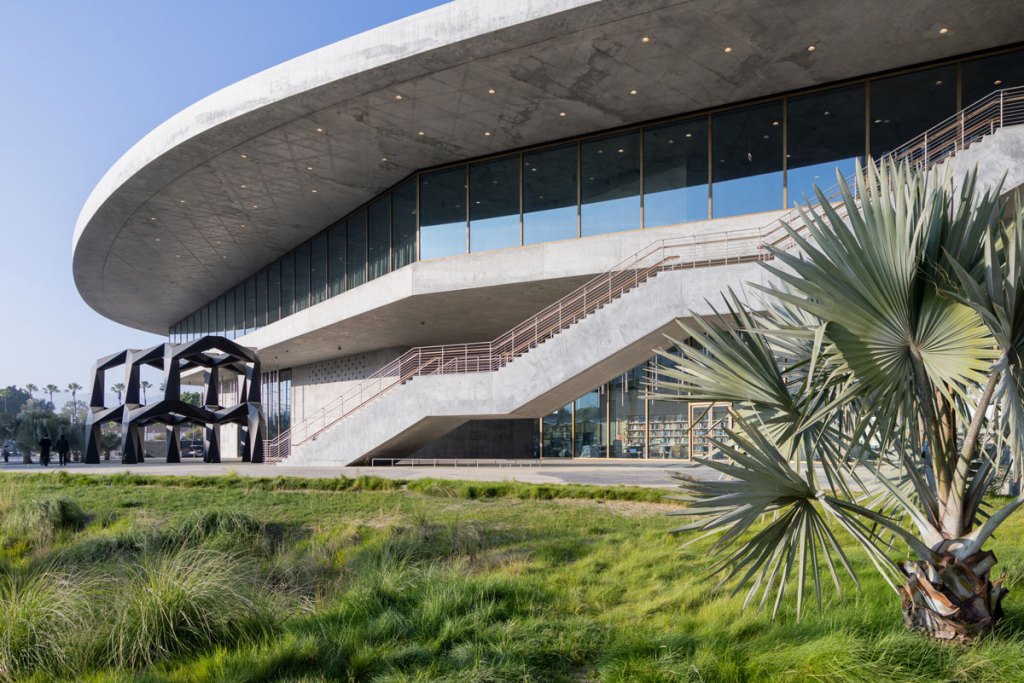
A sculpture at LACMA's new David Geffen Galleries has sparked controversy. Pedro Reyes's large stone work *Tlali* (2026) resembles a 2021 project for Mexico City that was canceled because Reyes is not Indigenous. A letter signed by nearly 80 people accuses LACMA of lacking "memory" for displaying the piece. LACMA defends the work as "entirely different in purpose and meaning," and director Michael Govan suggested the figure may be androgynous, not female. Separately, new Louvre president Christophe Leribault outlined plans to reduce contemporary art projects and acquisition spending, while a jury will select an architect for the Louvre-Nouvelle Renaissance renovation. Other news includes Georg Baselitz's final exhibition at Fondazione Giorgio Cini, a planned strike at the Venice Biennale's Israel Pavilion, and the Lucas Museum's first "Star Wars" exhibition.

A Venise, trois maîtres redéfinissent la nature morte

The article announces an exhibition titled "Picasso, Morandi, Parmiggiani – Still lifes" at the Istituzione Fondazione Bevilacqua La Masa in Venice, running from May 7 to July 25, 2026. The show brings together three masters—Pablo Picasso, Giorgio Morandi, and Claudio Parmiggiani—to redefine the still-life genre through a curated dialogue of their works across six rooms. The exhibition is co-organized by Tornabuoni Art, the Musée national Picasso-Paris, and the Fondazione Musei Civici di Venezia, with Cécile Debray, president of the Musée national Picasso-Paris, serving as curator. A fully illustrated catalogue accompanies the show.

La nature morte : une exposition novatrice

Le Journal des Arts reports on a new exhibition titled "La nature morte" (Still Life), presented by a gallery as a continuation of its previous monographic shows on Boetti and Burri and the thematic exhibition "On Fire." The exhibition focuses on the classical genre of still life, positioning it as a field of experimentation that accompanies the renewal of painting in the 20th century. It brings together three artists—Picasso, Morandi, and Parmiggiani—who, though not from the same school or direct lineage, each explore the subject through distinct artistic languages: Picasso asserts the presence of the object, Morandi delves into its meditative and silent dimension, and Parmiggiani pushes the reflection toward a form of disappearance. The show is curated by Cécile Debray, president of the Musée national Picasso-Paris, and involves collaborations with institutions such as the Museo Morandi.

Cécile Debray : « Une proposition poétique de dialogue entre trois œuvres pour une délectation esthétique »

Cécile Debray, president of the Musée national Picasso-Paris, discusses a rare collaboration with galleries to present a three-artist exhibition in Venice during the Biennale. The show brings together Pablo Picasso, Giorgio Morandi, and Claudio Parmiggiani around the theme of the object and still life, highlighting unexpected philosophical and poetic connections. Debray explains how the selection of 14 Picasso works balances iconic pieces with lesser-known ones, including sculptures, to create a dialogue with Morandi's rigorous, serial approach and Parmiggiani's metaphysical art.

Vanités contemporaines

The article explores the enduring relevance of still life and vanitas in contemporary art, tracing their evolution from the biblical proclamation "Vanity of vanities; all is vanity" through modern masters like Paul Cézanne, Pablo Picasso, and Giorgio Morandi to contemporary practitioners such as Claudio Parmiggiani. It highlights how artists continue to use everyday objects—compotes, skulls, pitchers, apples—as vehicles for formal experimentation and philosophical reflection, with still life serving as a minimalist device that allows infinite plastic research.

Pussy Riot Storms Russia Pavilion at Venice Biennale

Pussy Riot staged a dramatic protest at the Russia Pavilion during the Venice Biennale, releasing pink smoke and waving Ukrainian flags while chanting slogans like 'Blood is Russia’s art.' Around 50 protesters, including members of Femen, occupied the area. Pussy Riot founder Nadya Tolokonnikova called for the pavilion to be closed and given to oppressed peoples, challenging Biennale president Pietrangelo Buttafuoco to meet her. The protest lasted about 20 minutes, with performers climbing the pavilion and exposing political slogans on their chests.

Venice Diary Day 1: At the Giardini, Artists Refuse to Make Fascism Cozy

Henrike Naumann's posthumous installation at the German Pavilion, which retains its 1938 Nazi-era fascist architecture, refuses to make the space 'cozy' by adorning windows with violently ripped domestic fabrics. The 2026 Venice Biennale is the first under president Pietrangelo Buttafuoco, associated with neo-fascist politics, and is overshadowed by controversy over his 'neutrality' policy allowing all countries to participate despite human rights concerns. The exhibition jury initially announced it would not consider pavilions from countries whose leaders are charged with crimes against humanity, then abruptly quit, leaving the situation unresolved. The US Pavilion features unimpressive blobs by Alma Allen, while the Russian Pavilion offers cut flowers and free vodka, and Andreas Angelidakis responds to fascist aesthetics at the Greek Pavilion.

The Sports Are Just the Tip of the Iceberg. Here’s What Else to Expect From the 2028 Olympics.

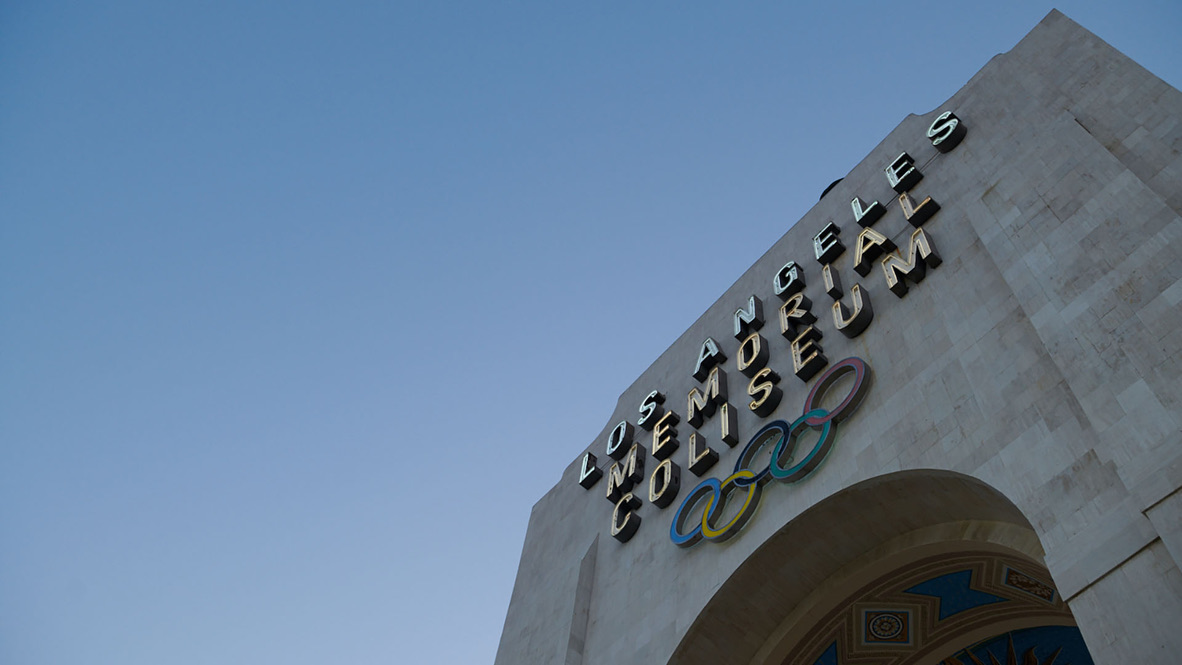
Los Angeles is preparing a comprehensive Cultural Olympiad for the 2028 Olympic and Paralympic Games, led by LA28 senior vice president Dwayne Jones and executive director Nora Halpern. The program will feature free sports movie screenings, live music, food experiences, art installations, community events, and special exhibitions at local museums. Sixteen local artists have been commissioned to create posters honoring the games, with a dedicated gallery exhibition planned for July 2027. A new digital calendar and mapping tool will help residents and visitors navigate the cultural offerings, and institutions like LACMA, the LA Philharmonic, and the Museum of Latin American Art have already expressed support.

The Biennale Isn’t a Court. Tell That to the Protesters.

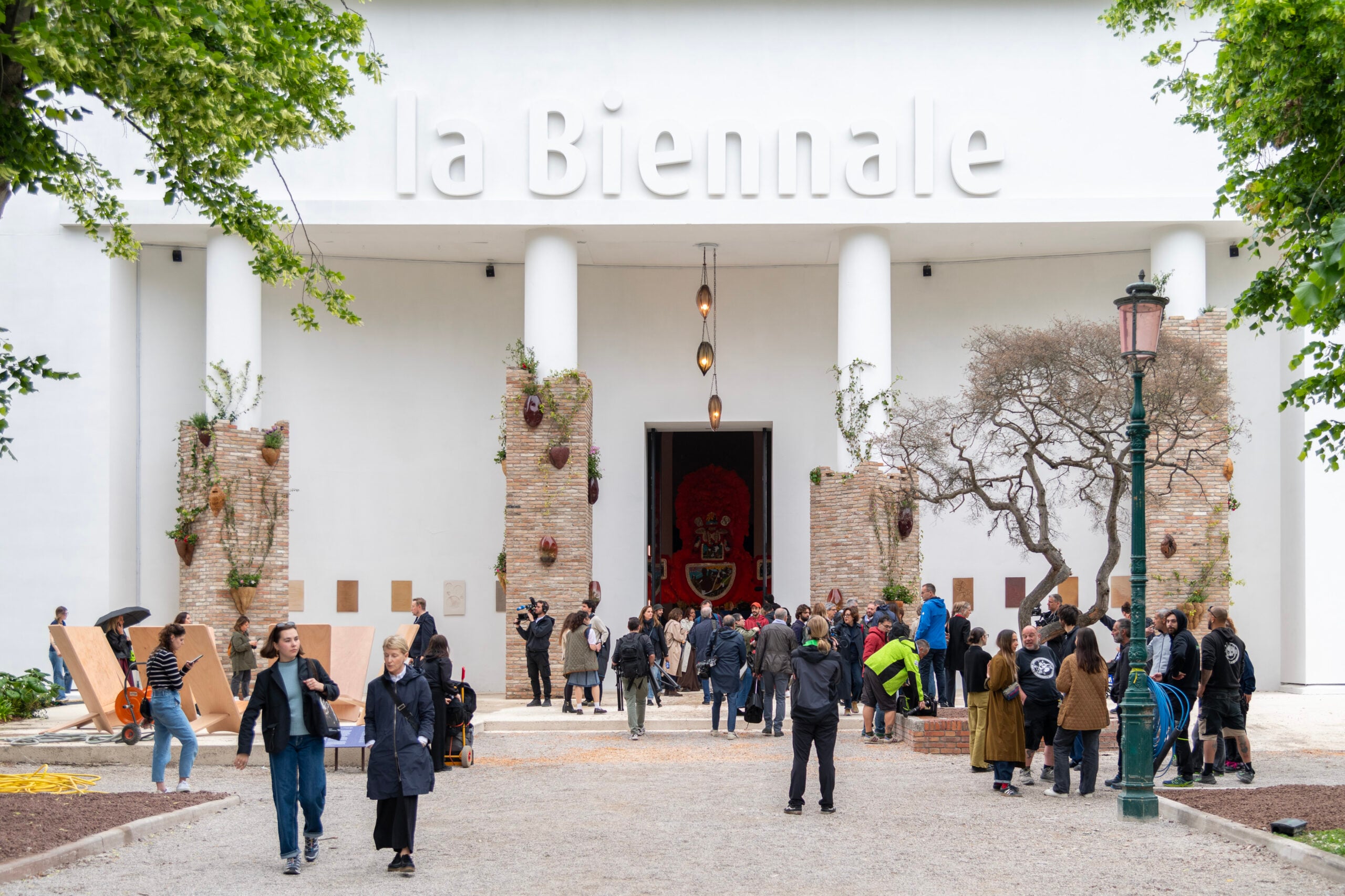
Pietrangelo Buttafuoco, president of the Venice Biennale, defended the decision to allow Russia to reopen its pavilion for the first time since its 2022 invasion of Ukraine, stating that the Biennale is "not a court; it is a garden of peace." The move has sparked widespread backlash, including threats to pull €2.3 million in EU funding. Protests have erupted on the ground, with Pussy Riot and FEMEN staging a theatrical demonstration outside the Russian Pavilion, setting off smoke flares and chanting slogans. Separately, around 60 artists performed a "Solidarity Drone Chorus" to protest Israel's participation, and the Art Not Genocide Alliance has called for a 24-hour strike and rallies across Venice. The Russian Pavilion will be open only during press preview days due to EU sanctions, with video projections visible from outside for the rest of the Biennale's run.

Comment | Degenerate art all over again? Nazi attack on Modern art is not far away from trends in today’s world

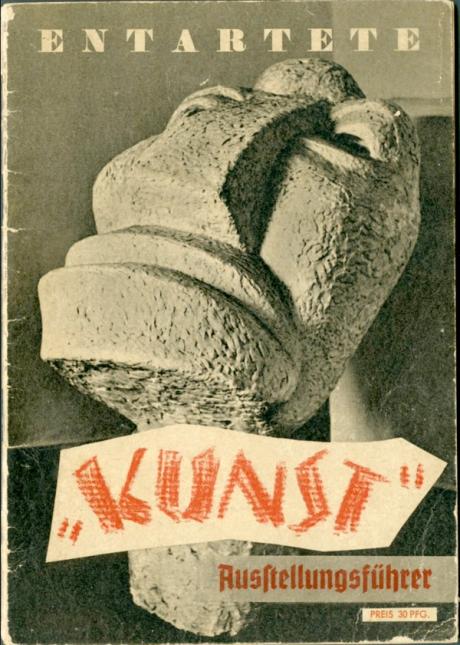
The article draws a provocative parallel between the Nazi regime's attack on modern art—epitomized by the 1937 "Degenerate Art" (Entartete Kunst) exhibition—and contemporary political aesthetics, particularly around President Donald Trump. It traces the Nazi party's early use of visual spectacle, mass rallies, and monumental art to forge a national identity, contrasting this with Trump's proposed National Garden for American Heroes and stalled White House Ballroom, which the author dismisses as kitsch but lacking the cohesive fascist aesthetic of Albert Speer's masterplans.

What is the international exhibition of the Venice Biennale like? Review of "In minor keys" by Koyo Kouoh

Com’è la mostra internazionale della Biennale di Venezia? Recensione di “In minor keys” di Koyo Kouoh

The 2026 Venice Biennale, titled "In minor keys" and curated by the late Koyo Kouoh, opens to the public on May 9 amid controversies including the absence of the president's name in the colophon at the Arsenale entrance. The exhibition, organized by Kouoh's team (Rory Tsapayi, Siddharta Mitter, Marie Helene Pereira, Gabe Beckhurst Feijoo, and Rasha Salty), unfolds across the Giardini and the Arsenale's Corderie, featuring works that balance strength and beauty with a harmonious mix of voices and themes. The Giardini section is particularly compelling, with a non-linear, polycentric layout that feels like a living organism, while the Arsenale offers further depth.

US Border Wall Construction Damages 1,000-Year-Old Indigenous Land Art in Arizona

Construction crews building a barrier between the United States and Mexico have damaged a 200-foot-long etching of a fish embedded in the land in Arizona, known as the Las Playas Intaglio, which is thought to be 1,000 years old. According to a report in the Washington Post, workers destroyed a 60-to-70-foot portion of the ancient Indigenous land art as part of President Donald Trump’s $46.5 billion border-wall project. Satellite imagery confirmed the destruction, showing bulldozer marks running through about a third of the fish formation. U.S. Customs and Border Protection acknowledged the incident, stating that a contractor inadvertently disturbed the cultural site on April 23, 2026, and that the remaining portion has been secured.