filter_list Showing 6 results for "Sale Docks" close Clear
dashboard All 6 article news 5museum exhibitions 1
date_range Range Today This Week This Month All
Subscribe

A Time of Transition

During the preview week of the 61st Venice Biennale, escalating protests targeted the national pavilions of Israel and Russia, with demonstrations by Pussy Riot, ANGA (Art Not Genocide Alliance), and Baltic pavilions. A major protest on May 8 drew over 3,000 people in solidarity with Palestine, and 27 national pavilions—including Austria, the Netherlands, France, and Japan—staged a strike, the first at the Biennale since 1968. The Golden Lion jury resigned after declaring they would not consider countries under ICC investigation (Israel and Russia), and the Biennale administration replaced the prize with a visitors' award, from which half the artists in the main exhibition have withdrawn.
Across Venice, Artists Defy Censorship to Mourn and Memorialize Gaza

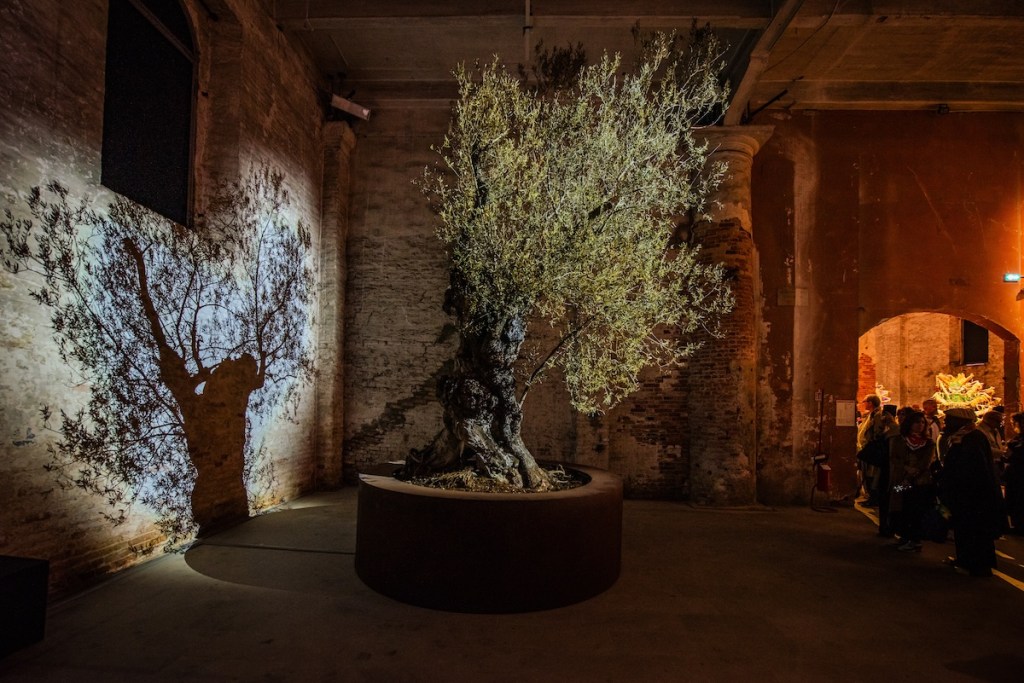
The 2026 Venice Biennale, titled “In Minor Keys,” features numerous artworks that mourn and memorialize the destruction of Gaza, despite censorship pressures. The main exhibition opens with a poem by slain Palestinian poet Refaat Alareer, and includes works by artists such as Theo Eshetu, Mohammed Joha, Manuel Mathieu, and Avi Mograbi that directly or indirectly address the conflict. Outside the official Biennale, South African artist Gabrielle Goliath’s performance series “Elegy” was censored by her country’s culture minister after she proposed a version honoring murdered Palestinian poet Hiba Abu Nada, leading her to present the work independently at a church in Venice.

Numerous Venice Biennale Pavilions and Artists Go on Strike in Protest over Israel’s Participation

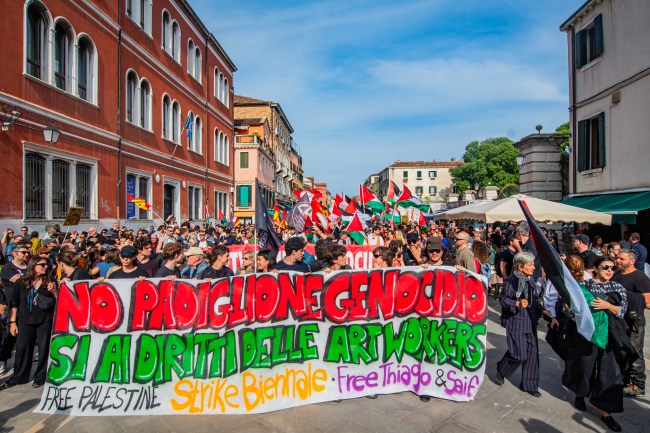
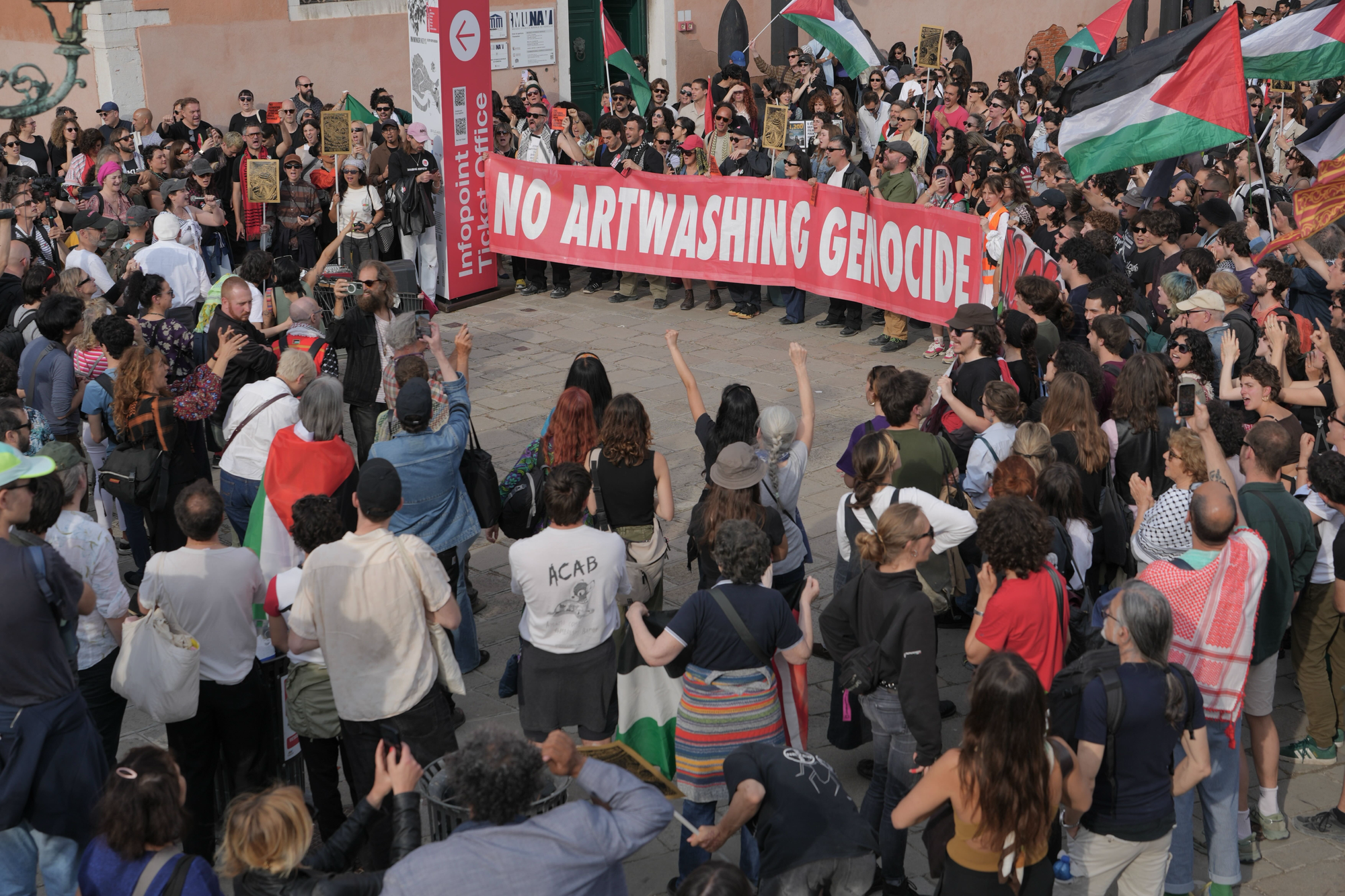
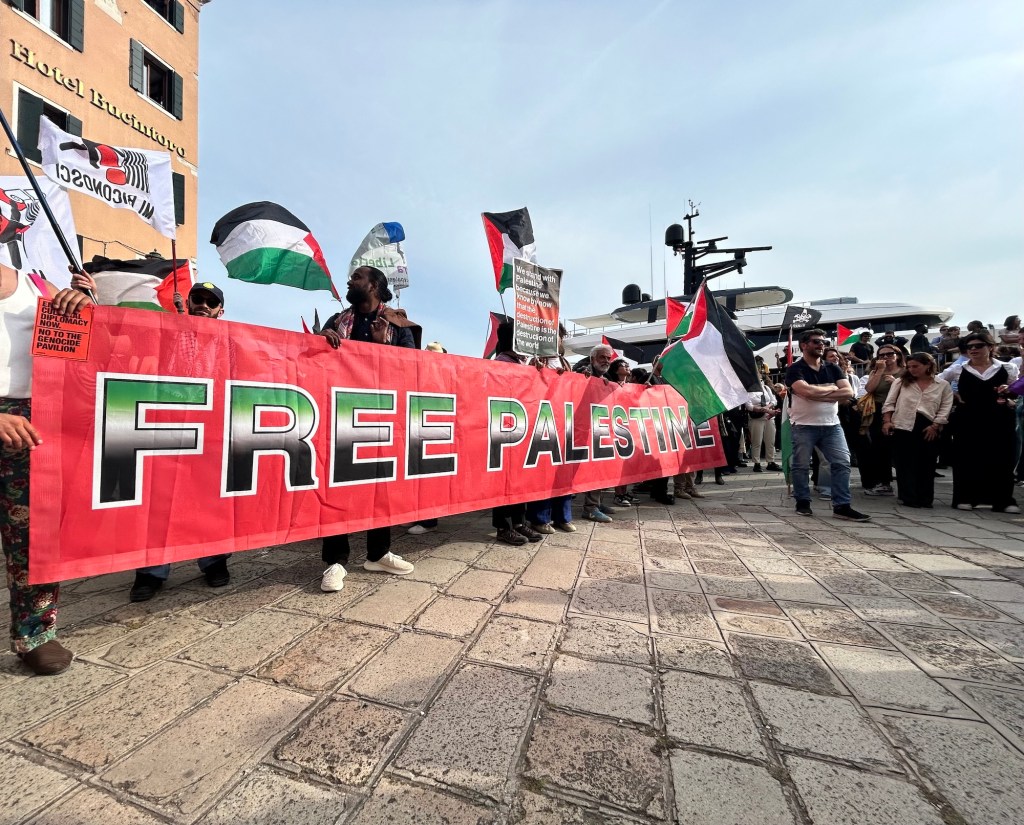
Thousands of protesters marched through Venice on the eve of the Venice Biennale's public opening, organized by Art Not Genocide Alliance (ANGA), to demand Israel's exclusion from the event. At least 18 national pavilions—including Austria, Belgium, France, Great Britain, and Ukraine—participated in a 24-hour strike, shutting down completely or partially. Protesters chanted slogans, waved Palestinian flags, and carried banners reading "no genocide pavilions," while ANGA released a statement with 236 signatories calling for Israel's removal, citing the humanitarian crisis in Gaza.

Strike Rocks Venice Biennale Ahead of Public Opening as Pavilions Close

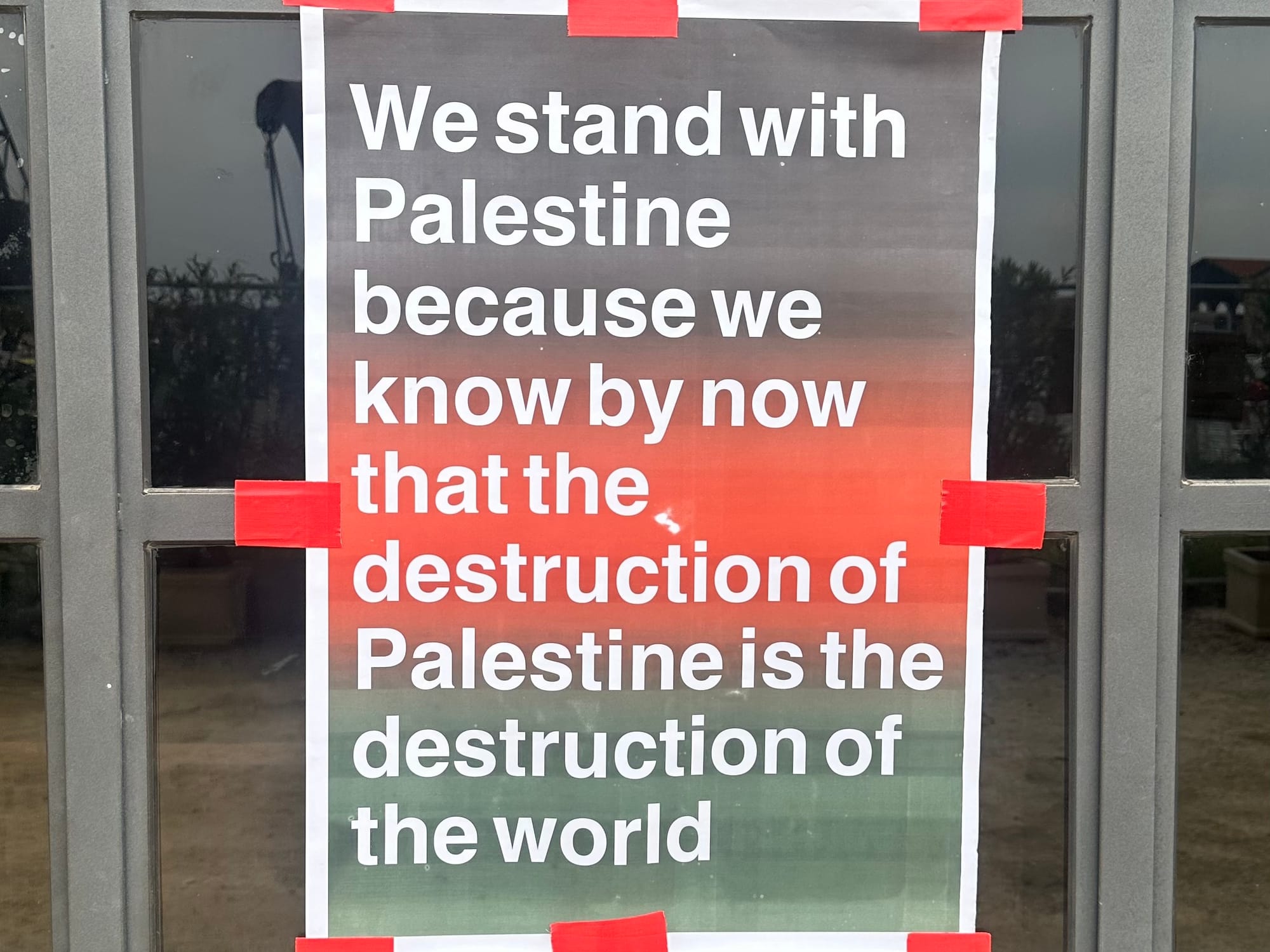
Thousands of protesters marched through Venice to demonstrate against Israel's presence at the Venice Biennale, leading many national pavilions to close in solidarity. Pavilions from Austria, Belgium, Egypt, Japan, the Netherlands, South Korea, and over a dozen other countries shut fully or partially, with some displaying signs reading "We Stand with Palestine." The Israeli pavilion remained closed for its exhibition opening, and armed police clashed with protesters. The main exhibition, curated by Koyo Kouoh, stayed open initially but the Arsenale closed by late afternoon with riot police outside. The 24-hour strike, organized by Art Not Genocide Alliance (ANGA) and Italian activist groups, was described as the largest protest in Biennale history.

Historic Strike Disrupts Biennale as Thousands March in Venice

On May 8, 2026, artists and cultural workers staged the first strike in the 131-year history of the Venice Biennale, disrupting the pre-opening of the international exhibition. At least 27 of the 100 national pavilions were partially or fully shut down, and thousands marched through Venice to the Arsenale, which was barricaded by Italian riot police. The strike, organized by the Art Not Genocide Alliance (ANGA) and local activist groups, was a 24-hour action for Palestine and workers' rights, with some artists altering or draping their works in the main exhibition, "In Minor Keys."

Dozens of Pavilions Close During Strike at 61st Venice Biennale

On May 8, 2026, a 24-hour strike organized by the Art Not Genocide Alliance (ANGA) and several Italian activist groups brought the 61st Venice Biennale to a standstill. Approximately 27 of the 100 national pavilions closed fully or partially in solidarity with protesters demanding Israel’s exclusion from the event, including those of Austria, Belgium, France, Great Britain, Japan, South Korea, and Ukraine. Over 3,500 people marched through Venice, with speakers including artist Gabrielle Goliath and curator Caroline Dumalin. The main exhibition, "In Minor Keys," curated by the late Koyo Kouoh, closed by late afternoon, and riot police were stationed outside the Arsenale. The Israeli pavilion, already shuttered during previews, remained closed.