
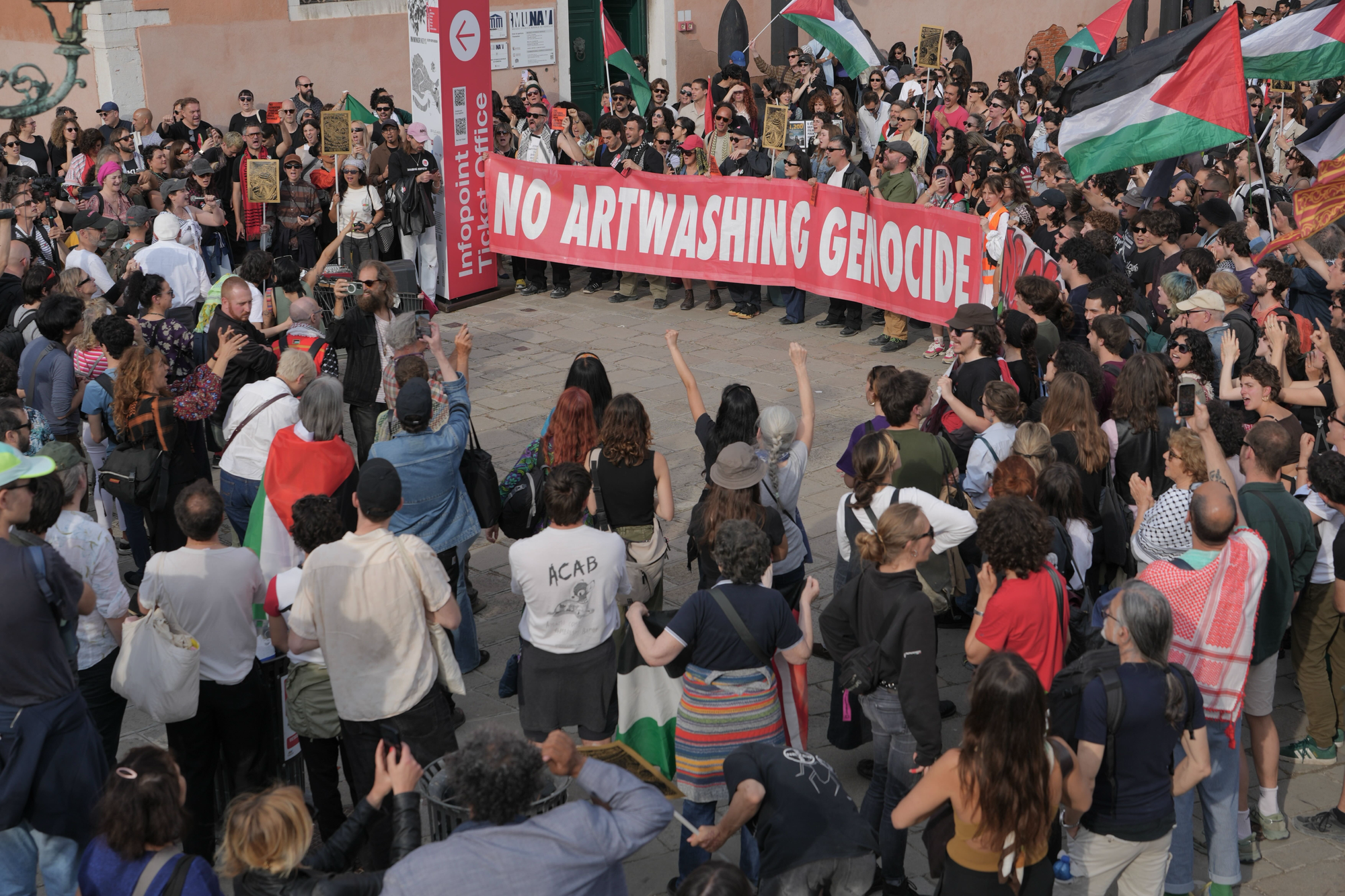
On May 8, 2026, artists and cultural workers staged the first strike in the 131-year history of the Venice Biennale, disrupting the pre-opening of the international exhibition. At least 27 of the 100 national pavilions were partially or fully shut down, and thousands marched through Venice to the Arsenale, which was barricaded by Italian riot police. The strike, organized by the Art Not Genocide Alliance (ANGA) and local activist groups, was a 24-hour action for Palestine and workers' rights, with some artists altering or draping their works in the main exhibition, "In Minor Keys."
This strike matters because it marks an unprecedented political mobilization within one of the world's most prestigious art events, directly challenging the Biennale's institutional neutrality. By shutting down pavilions and marching en masse, participants asserted that art institutions cannot remain silent on what they describe as genocide in Gaza. The action also highlights growing labor activism in the cultural sector, as unions joined to protect striking workers, signaling a shift toward collective action against both political complicity and poor working conditions in the art world.