filter_list Showing 4 results for "The Crucified Christ" close Clear
search
dashboard All 4 rate_review review 2article culture 1museum exhibitions 1
date_range Range Today This Week This Month All
Subscribe

Zurbarán review – ecstatic visions, primitive surrealism … and the finest loincloths ever painted

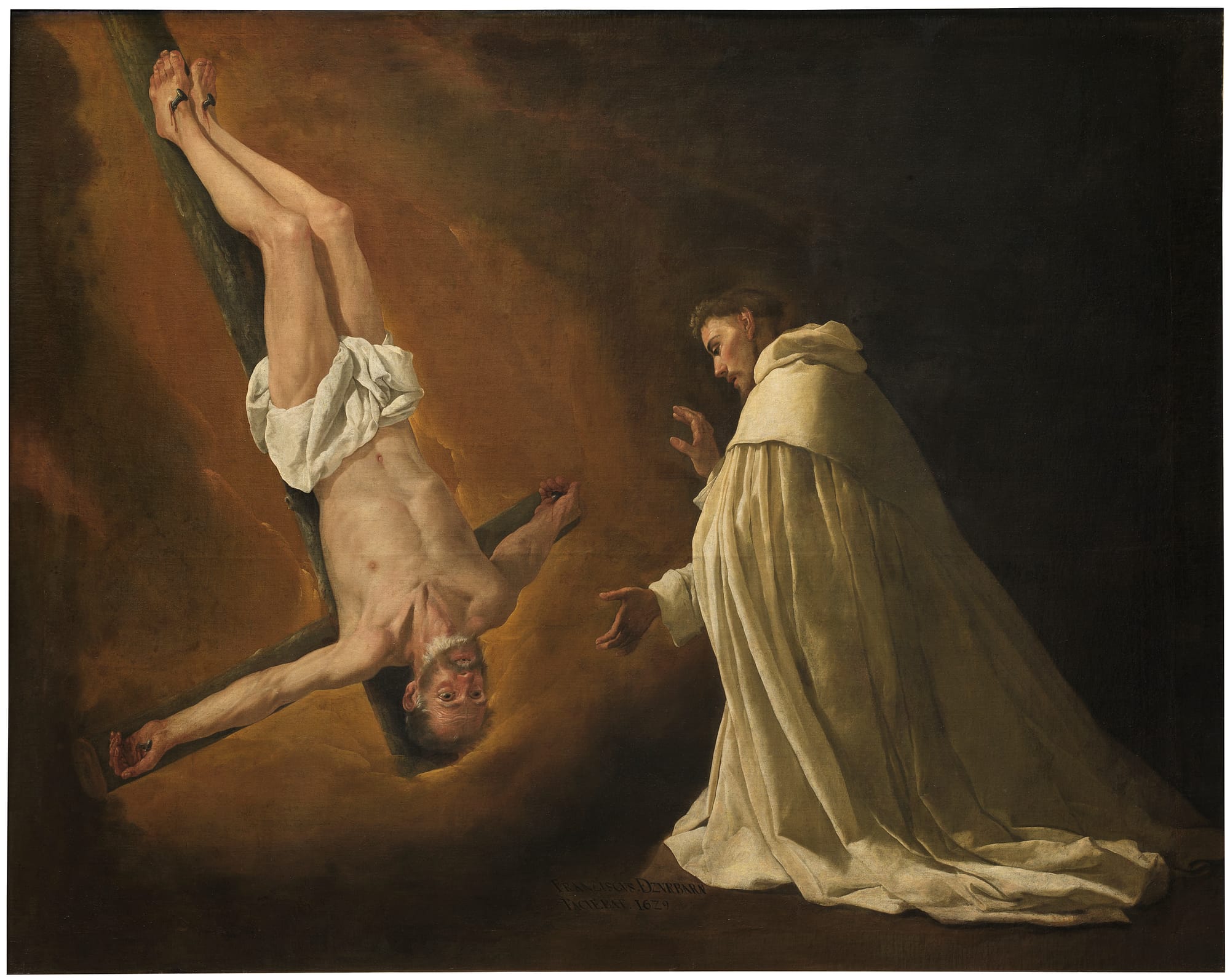
The Guardian reviews a major exhibition of 17th-century Spanish painter Francisco de Zurbarán, highlighting his visionary and surrealist qualities. The show features works such as "The Apparition of Saint Peter to Saint Peter Nolasco" (1629), newly attributed paintings including a giant mask, and iconic pieces like "The Crucified Christ" and "Saint Serapion," all drawn from collections including the Prado and the National Gallery, London. The review emphasizes Zurbarán's ability to paint supernatural subjects with naturalistic conviction, his exquisite rendering of fabrics—especially loincloths—and his influence on modern artists like Salvador Dalí.
The must-see exhibitions of 2026: from Duchamp in New York to Baldessari in Beijing

The article previews major art exhibitions scheduled for 2026, highlighting two standout shows. At Basel's Fondation Beyeler, a Cezanne exhibition from January to May will focus on the artist's later works, featuring around 60 oil paintings and 20 watercolours, half from private collections. Highlights include a privately owned oil study of 'The Bathers' (around 1902-06) and 'The Boy in the Red Vest' (1888-90), with curator Ulf Küster emphasizing Cezanne's fragmentary, radical perspective. Separately, the traveling exhibition 'Edmonia Lewis: Said in Stone' will premiere at the Peabody Essex Museum in February, showcasing 30 sculptures by the 19th-century Black and Indigenous artist, organized after a 2016 acquisition by the Georgia Museum of Art spurred curators to track down her works.

The glories of Francisco de Zurbarán’s paintings | Letters

Two letters to the editor respond to Charlotte Higgins's article on Francisco de Zurbarán. Paul McGilchrist critiques the physical inaccuracy of crucifixion depictions, including Zurbarán's *The Crucified Christ*, noting that most paintings fail to convey the true weight and distortion of a body suspended by nails. Jean Wilson highlights Zurbarán's series *Jacob and his 12 Sons* at Auckland Palace in Bishop Auckland, describing its history since 1756 and its connection to Bishop Trevor's support for Jewish rights.

Did Zurbarán Believe What He Painted?

An exhibition of Francisco de Zurbarán's 17th-century religious paintings at London's National Gallery prompts a critic to question whether the artist's personal faith influenced his artistic skill. The show features monumental works from Spanish churches and monasteries, displayed dramatically against black walls, including crucifixion scenes, monks, and saints. The critic notes that no personal records of Zurbarán survive—only contracts—leaving his beliefs unknown, and compares him to Agnolo Bronzino, who painted pious scenes but wrote obscene verses. A small painting of a crucified Christ with a painter, possibly a self-portrait of Bronzino, is presented as ambiguous evidence of faith.