
filter_list Showing 3 results for "Turkey" close Clear
dashboard All 3 museum exhibitions 2article news 1
date_range Range Today This Week This Month All
Subscribe

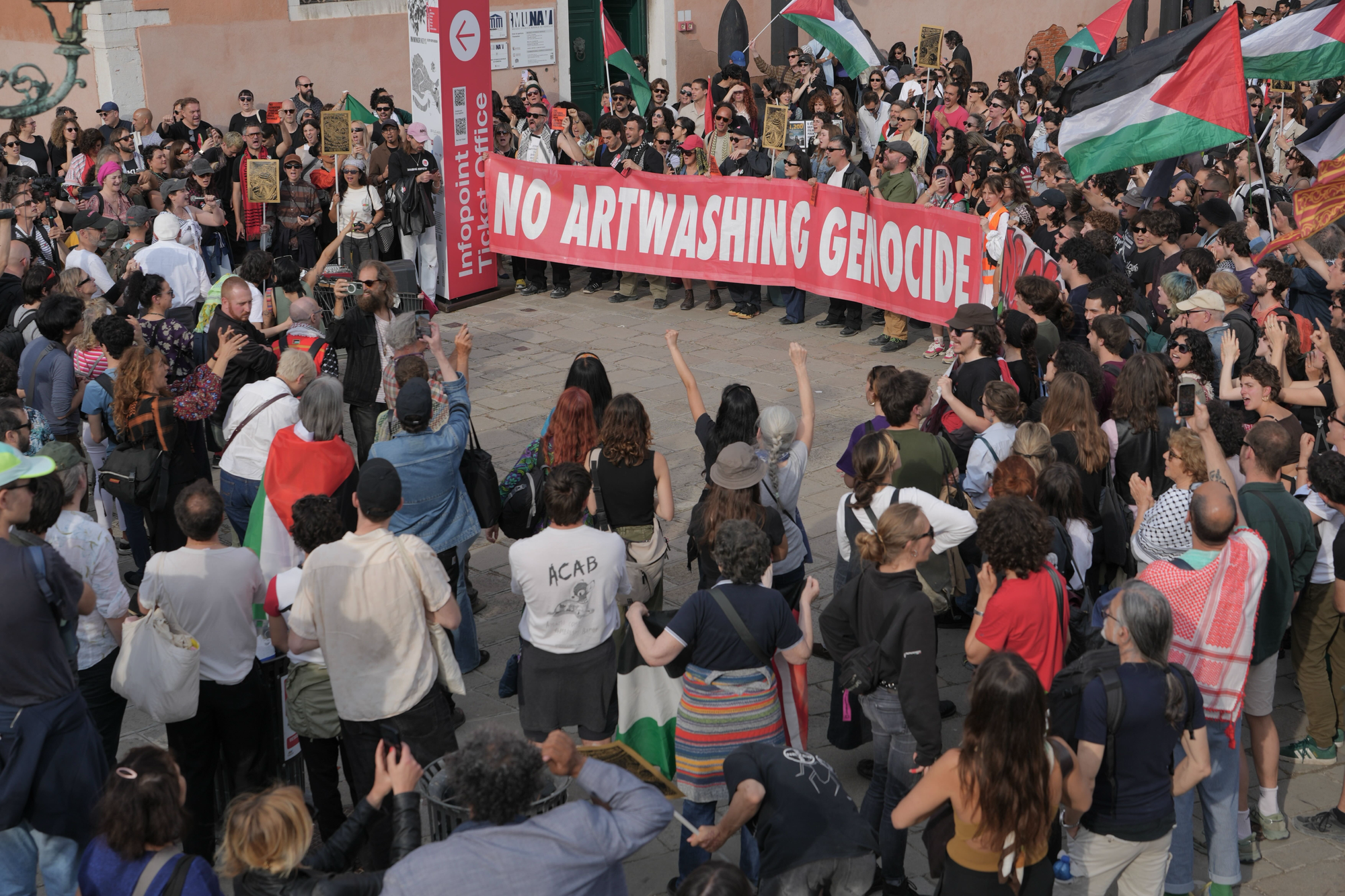
Historic Strike Disrupts Biennale as Thousands March in Venice

On May 8, 2026, artists and cultural workers staged the first strike in the 131-year history of the Venice Biennale, disrupting the pre-opening of the international exhibition. At least 27 of the 100 national pavilions were partially or fully shut down, and thousands marched through Venice to the Arsenale, which was barricaded by Italian riot police. The strike, organized by the Art Not Genocide Alliance (ANGA) and local activist groups, was a 24-hour action for Palestine and workers' rights, with some artists altering or draping their works in the main exhibition, "In Minor Keys."

With Nearly 30,000 Clay Earth Bricks, Dana Awartani Remakes History in the Saudi Arabia Pavilion

Dana Awartani, a Jeddah- and New York-based artist of mixed Palestinian, Saudi, Jordanian, and Syrian descent, has created the Saudi Arabia Pavilion at the Venice Biennale using nearly 30,000 clay earth bricks. The installation, titled "May your tears never dry, you who weep over stones," replicates traditional mosaic motifs sourced from over 20 cultural heritage sites across the Arab world that have been destroyed by human conflict. Awartani emphasizes collaboration, crediting numerous skilled craftsmen—economic migrants to Saudi Arabia—who worked alongside her, and her practice blends formal training at Central St. Martins with Islamic geometry and illumination studies in Turkey.

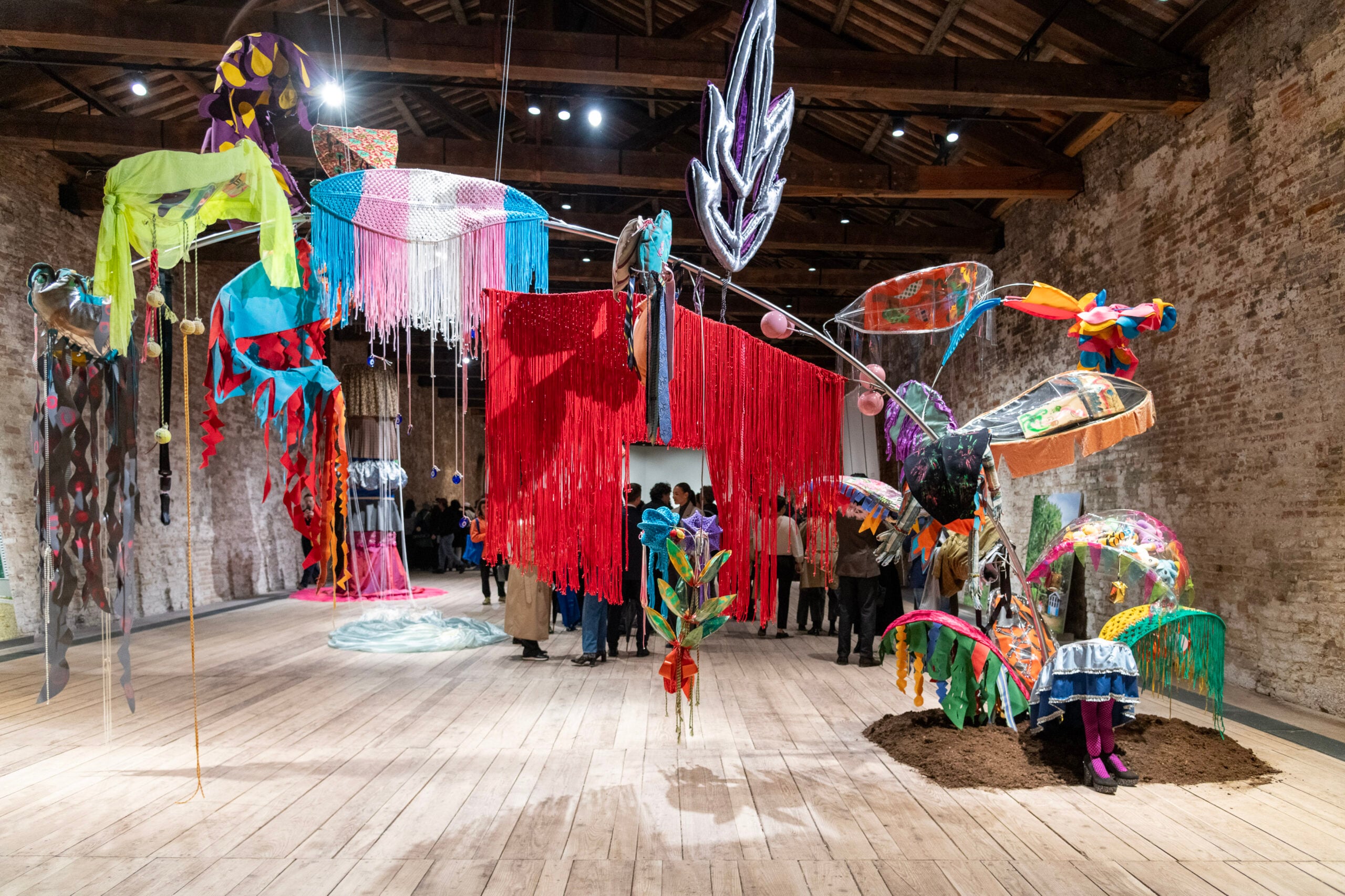
Delicacy as Resistance. Interview with the Curator of the Turkey Pavilion at the Venice Biennale

La delicatezza come resistenza. Intervista alla curatrice del Padiglione Turchia alla Biennale di Venezia

For the 2026 Venice Biennale, the Turkey Pavilion, commissioned by the Istanbul Foundation for Culture and Arts (İKSV), will present "A Kiss on the Eyes" by artist Nilbar Güreş, curated by Başak Doğa Temür. The exhibition takes its title from a Turkish expression conveying affectionate closeness without intrusion, and features a mix of new productions and earlier works spanning sculpture, installation, painting, and works on paper and fabric. In an interview, curator Temür explains that the project avoids a retrospective or didactic approach, instead creating a spatial rhythm of approach, pause, and slight withdrawal, where intimacy, politics, irony, and fragility press against one another.