
filter_list Showing 5 results for "US pavilion" close Clear
dashboard All 5 museum exhibitions 3article news 1rate_review review 1
date_range Range Today This Week This Month All
Subscribe

Alma Allen Flops in Venice

Hyperallergic reports on the 2026 Venice Biennale, with Editor-in-Chief Hakim Bishara criticizing the U.S. pavilion's exhibition of Alma Allen's work as a disappointing departure from the previous editions' profound explorations of Indigenous life and Black sovereignty. Editor-at-Large Hrag Vartanian offers a positive review of the main exhibition "In Minor Keys," while Greta Rainbow covers a poetry procession honoring the late artistic director Koyo Kouoh. Additional stories include a review of the film "The Christophers" about an artist and forger, and news of workers at the American Folk Art Museum picketing for higher wages.
Is the US about to be humiliated on the world’s most prestigious cultural stage?

More than 70 prominent international artists have signed an open letter demanding the exclusion of the United States, Israel, and Russia from the 2026 Venice Biennale, accusing those governments of committing war crimes and atrocities. The controversy centers on the US pavilion, which will feature Mexico-based American artist Alma Allen, whose abstract, anodyne sculptures were chosen by a last-minute commissioner with no art-world experience—a luxury pet food store owner from Florida who reportedly gained the role through connections at Mar-a-Lago. The Biennale's five-person jury has already resigned amid the furor, and Russia is returning to the event for the first time since its 2022 invasion of Ukraine.

The US pavilion's curator on the controversial choice of Alma Allen for the Venice Biennale

The US pavilion at the Venice Biennale has selected Alma Allen, a Utah-born, Mexico-based sculptor, as its representative artist—a controversial and surprising choice given his relative obscurity compared to past pavilion artists. The selection process was unusually fraught: the first artist chosen was dropped before official announcement, and the announcement was delayed by the US government shutdown. The pavilion's curator, Jeffrey Uslip, discusses the exhibition titled "Call Me the Breeze," which will feature Allen's sculptures in stone, bronze, and wood that appear to defy their own weight, emphasizing artistic autonomy despite the State Department's framing of the choice as showcasing "American excellence."

A Whole Lot of Nothing at the US Pavilion

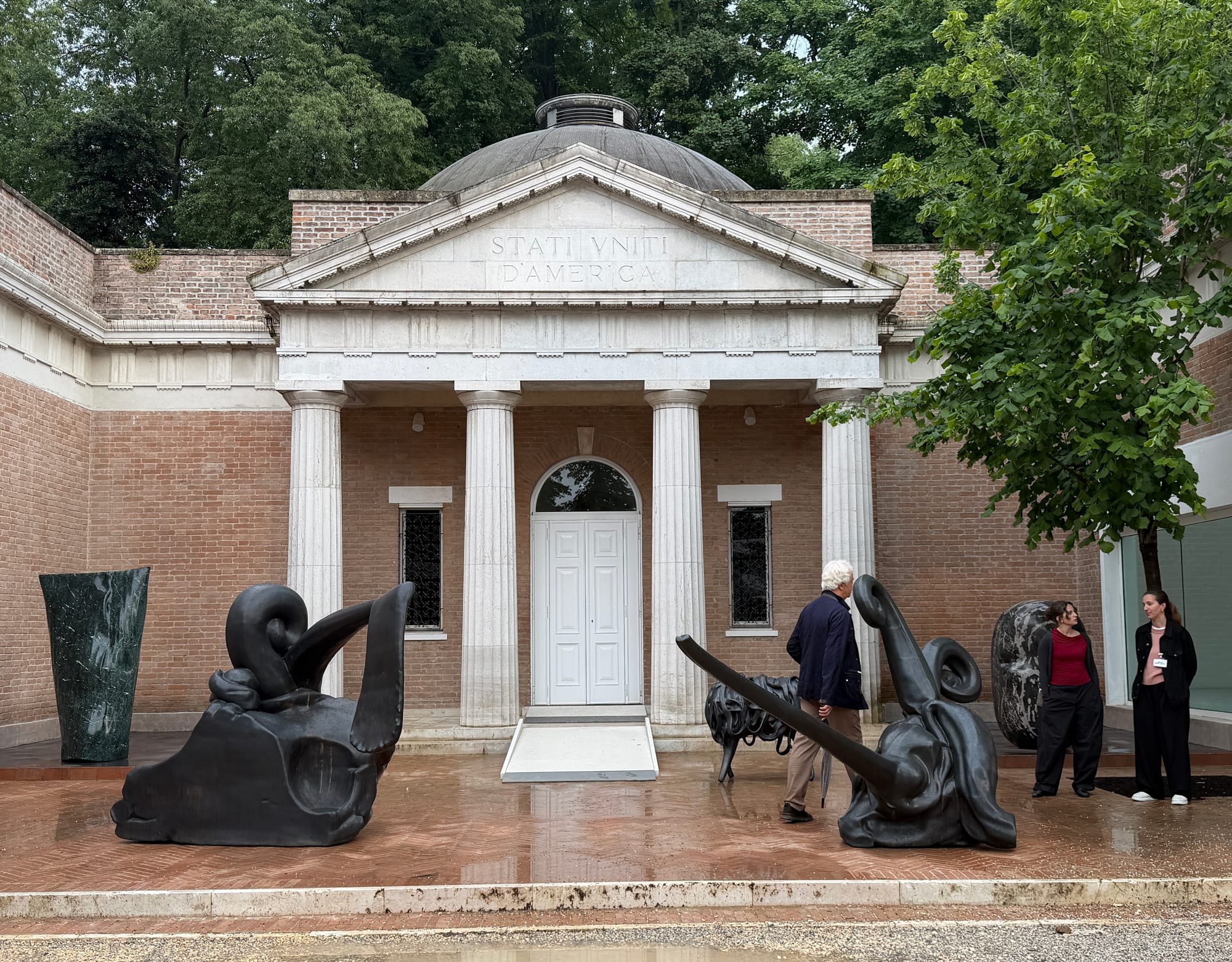
The US Pavilion at the 2026 Venice Biennale features sculptor Alma Allen's exhibition "Call Me the Breeze," curated by Jeffrey Uslip. The show presents untitled, amorphous sculptures in bronze, wood, and stone, including Colorado Yule marble. The selection process was controversial: after the Trump administration excluded the National Endowment for the Arts, the State Department initially picked artist Robert Lazzarini and curator John Ravenal, but that plan collapsed. The American Arts Conservancy, a new nonprofit led by Jenni Parido (a former pet food store operator with Mar-a-Lago ties), then took over, hiring Uslip, who approached Barbara Chase-Riboud and William Eggleston before settling on Allen. Donors include businessman John Phelan and fashion designer Tommy Hilfiger.

An outsider artist takes the world's biggest stage with the US Pavilion at the Venice Biennale

U.S. artist Alma Allen, a self-taught sculptor from Utah who works in Mexico, has been selected to represent the United States at the Venice Biennale with his exhibition "Call Me the Breeze" at the U.S. Pavilion. The selection process was fraught and opaque, with institutions declining to bid for the commission due to concerns about administration politics after the open call removed diversity, equity and inclusion language in favor of promoting "American values." A prior proposal for artist Robert Lazzarini fell apart after its institutional sponsor backed out, and Allen's project was quickly assembled with the American Arts Conservancy as sponsor and Jeffrey Uslip as curator. Allen, who has lived outside the critical art world for three decades, created a bronze evil eye for the pavilion's exterior and a headless sheep sculpture as a self-portrait of an outsider.