filter_list Showing 54 results for "Ukraine" close Clear
dashboard All 54 article news 25article policy 12museum exhibitions 11article culture 4person people 2
date_range Range Today This Week This Month All
Subscribe

Time Magazine’s 100 Most Influential List Includes Artist Cao Fei and Photojournalist Lynsey Addario

Time magazine has named artist Cao Fei and photojournalist Lynsey Addario to its 2026 list of the 100 most influential people in the world. Cao Fei is recognized for her multidisciplinary work exploring digital technology and modernity, while Addario is honored for her decades of courageous reporting from global conflict zones, including her Pulitzer Prize-winning coverage of the war in Ukraine. The list also acknowledges prominent art patrons Susan and Michael Dell.

There Has Never Been an Apolitical Venice Biennale

"Es hat niemals eine unpolitische Venedig-Biennale gegeben"

The Venice Biennale is embroiled in political controversy, with the US Pavilion's selection process criticized for bypassing traditional curatorial expertise in favor of a politically connected outsider. Simultaneously, a collective of artists and academics is protesting Russia's return to the Biennale, arguing it uses art as a political instrument to normalize its actions amid the war in Ukraine. An analysis in ArtReview contends the Biennale has never been apolitical, serving as a stage for geopolitical power plays since its inception.

‘It’s essential for understanding what is going on in Ukraine’: new exhibition explores wartime limb loss

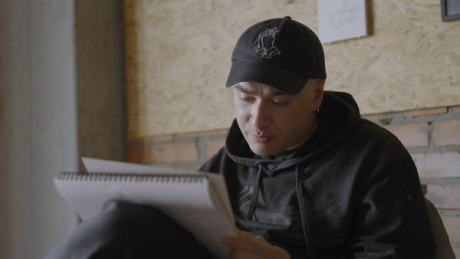
Prominent Ukrainian artist Nikita Kadan is launching a new exhibition titled 'A New Integrity' at Pavilion 13 in Kyiv. The installation features prostheses suspended in mid-air, accompanied by a soundscape of recorded testimonies from veterans who have experienced limb loss during the ongoing Russian invasion. The project, commissioned by the non-profit RIBBON International, uses these mechanical replacements to symbolize the broader losses of territory, people, and future perspectives that Ukraine has endured.

‘Even more beautiful than I imagined’: the nifty Japanese printing gadget uniting artists worldwide

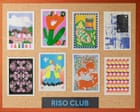
Designer Gabriella Marcella has curated a new exhibition at Glasgow’s Glue Factory Galleries celebrating the global community of risograph printing. The show highlights work from her 'Riso Club' initiative, a non-profit program that distributes monthly sets of artist-designed postcards from cities ranging from Kyiv to Damascus. Originally developed in Japan in the 1980s as an affordable office tool, the risograph has been reclaimed by independent creatives for its unique soy-ink aesthetic and tactile, screenprint-like quality.

Ukrainian Dreamers from Kharkiv: photography exhibition of the Radvila Palace Museum of Art – on courage to dream and create

The Radvila Palace Museum of Art in Vilnius, Lithuania, has opened a major exhibition titled 'Ukrainian Dreamers: The Kharkiv School of Photography.' The show, created in collaboration with the Museum of Kharkiv School of Photography, presents the work of 33 artists and groups across four generations, featuring hundreds of photographs, videos, and archival objects. It traces the school's evolution from its rebellious origins in the 1970s under Soviet censorship through Ukraine's independence and up to the present day of ongoing Russian military aggression.

EU confirms Venice Biennale funding cut over Russia feud

The European Union has confirmed it will cut its funding to the Venice Biennale following the event's decision to allow Russia's return to the exhibition. EU foreign policy chief Kaja Kallas announced the move, which was previously threatened, during a press conference focused on supporting Ukraine. Latvia and Finland have also stated they will not send government representatives if Russia's participation is maintained.

What You Need to Know About the Venice Biennale’s Russian Pavilion Controversy

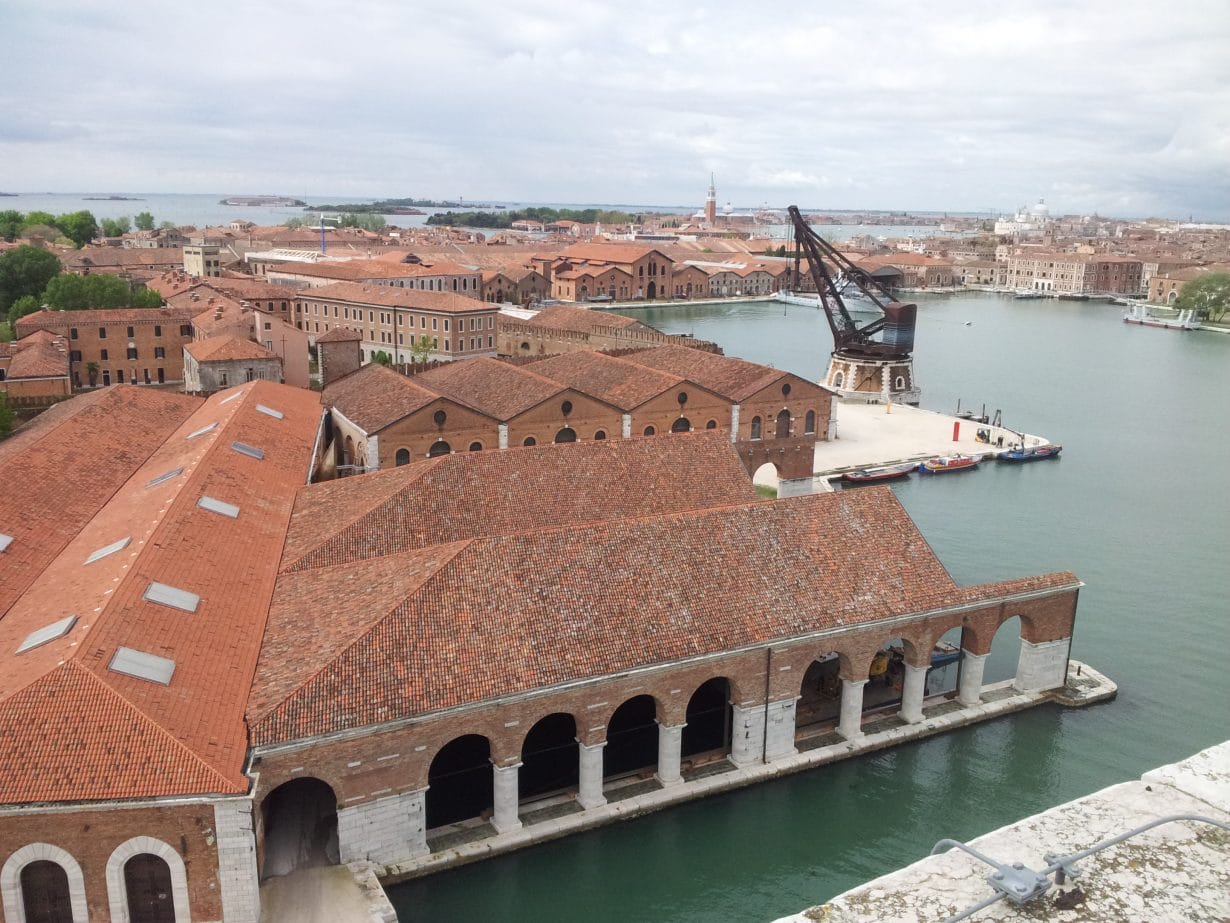
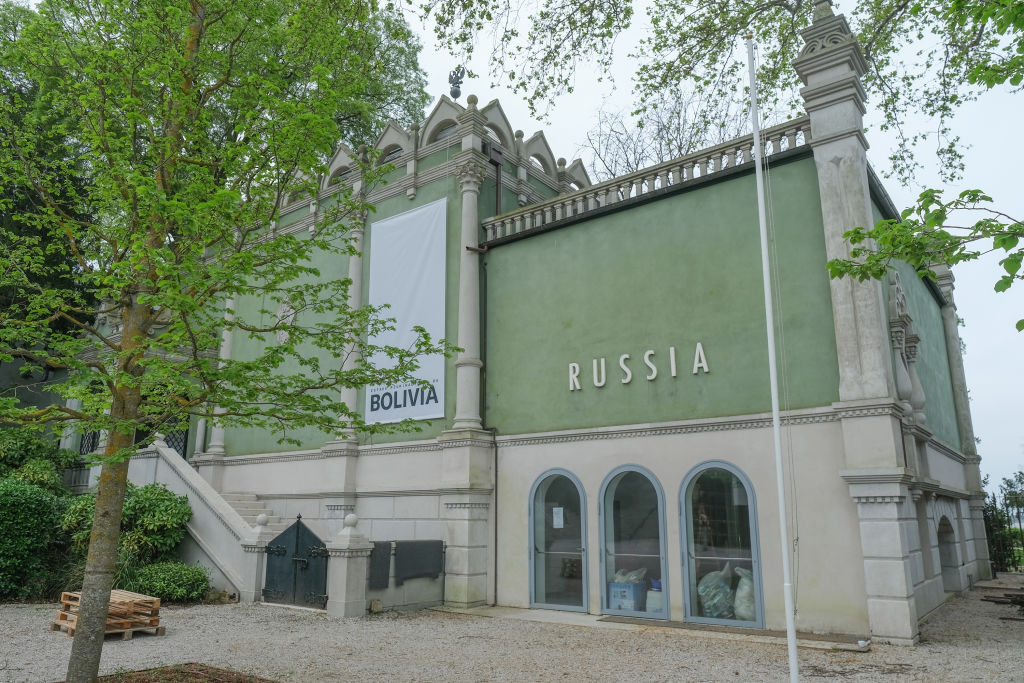
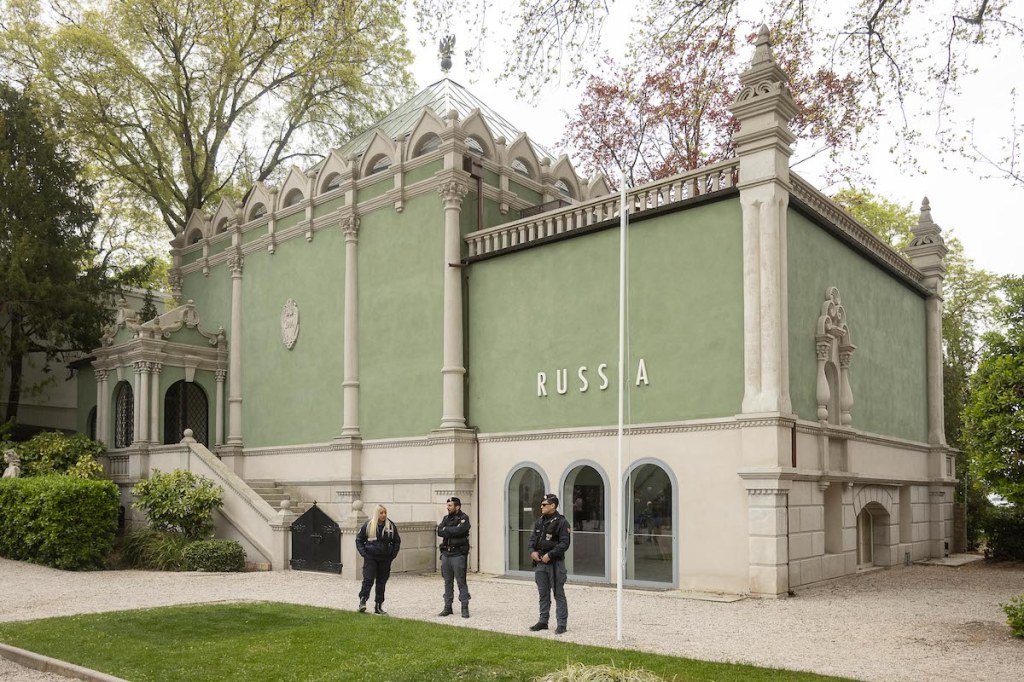
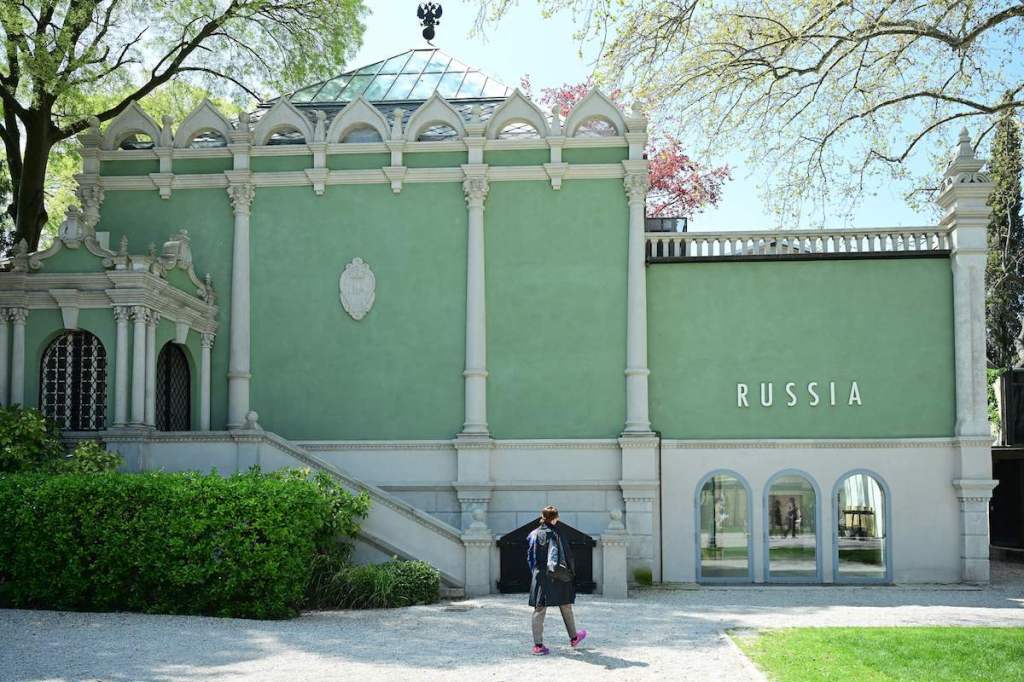
The Russian pavilion is set to return to the Venice Biennale for the first time since the 2022 invasion of Ukraine, presenting an exhibition titled 'The tree is rooted in the sky.' This has sparked significant controversy, with artists, curators, and politicians from Ukraine and several European nations calling for the pavilion's exclusion, citing the ongoing war and sanctions. The Biennale organizers have refused to remove Russia, stating they lack the authority to exclude a state recognized by Italy and emphasizing the event's role as a neutral space for cultural dialogue.

Venice Biennale Jury Bars Israel and Russia from Official Prizes

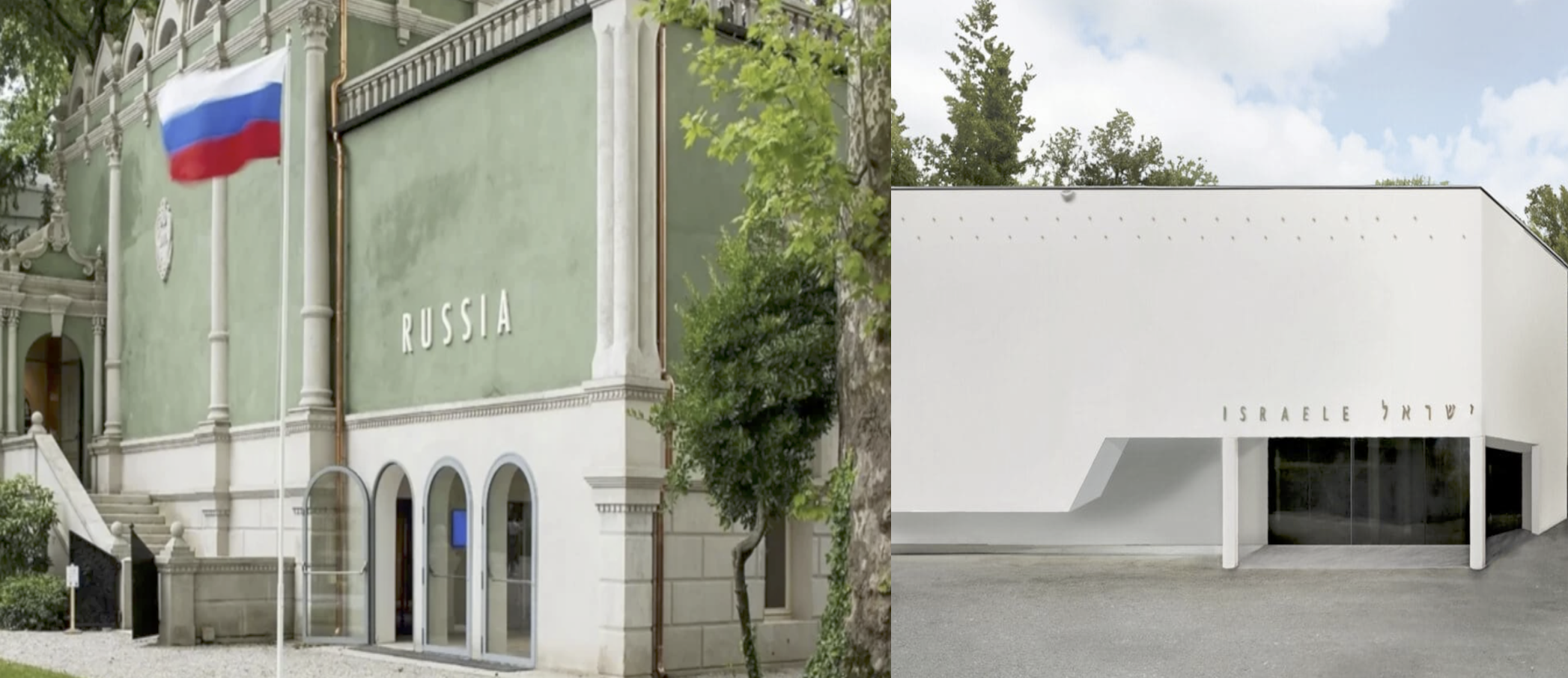
The international jury of the 61st Venice Biennale announced on April 23 that it will not consider the Israeli and Russian pavilions for official prizes, including the Golden Lion for national participation. The five-member, all-women panel—comprising Solange Farkas, Zoe Butt, Elvira Dyangani Ose, Marta Kuzma, and Giovanna Zapperi—said it would exclude countries whose leaders are currently charged with crimes against humanity by the International Criminal Court, a criterion that applies to Israel and Russia due to ICC arrest warrants for Benjamin Netanyahu and Vladimir Putin. The decision comes amid mounting controversy over the Biennale's decision to host both pavilions, with Russia returning after its artists withdrew in 2022 over the Ukraine invasion and Israel reopening after its 2024 pavilion remained closed pending a Gaza ceasefire. The European Commission had also threatened to suspend a €2 million grant over the Russian pavilion's reopening.

Treated as Cannon Fodder

"Als Kanonenfutter behandelt"

Artist Mario Pfeifer has created a new film, "Wutame / Caché," which portrays two men from Cameroon who fought for Russia in the war against Ukraine before deserting. The film is currently featured in the "Tirailleurs" exhibition at Berlin's Haus der Kulturen der Welt (HKW). Pfeifer's work focuses on the men's personal accounts of being deceived, poorly treated, and used as "cannon fodder," employing anonymized voices and altered imagery to protect their identities while allowing their stories to unfold.

The soap opera continues. Minister Giuli will boycott the inauguration of the Venice Biennale

La telenovela continua. Il Ministro Giuli diserterà l’inaugurazione della Biennale di Venezia

Alessandro Giuli, Italy's Minister of Culture, has announced he will boycott the pre-opening and inauguration ceremony of the 61st Venice Biennale on May 9, 2026, escalating a political and cultural crisis. The dispute began when Biennale president Pietrangelo Buttafuoco allowed the Russian pavilion to reopen, absent since 2022 due to the Ukraine invasion, citing artistic freedom. Giuli demanded the removal of ministry representative Tamara Gregoretti from the Biennale board for failing to oppose the decision. Tensions flared during the Italy Pavilion press conference, where journalists were confined to a separate streaming room and questions were restricted. The European Commission condemned the Russian pavilion's reopening, cutting €2 million in funding and issuing a 30-day ultimatum, while 22 European countries signed a letter pressuring the institution. The Biennale's international jury, led by Solange Oliveira Farkas, then excluded Russia and Israel from award consideration, citing ethical guidelines against countries whose leaders face International Criminal Court charges for crimes against humanity.

Saving the Street Art of the Bombs: A True Story from Ukraine

Salvare la street art delle bombe: una storia vera dall’Ucraina

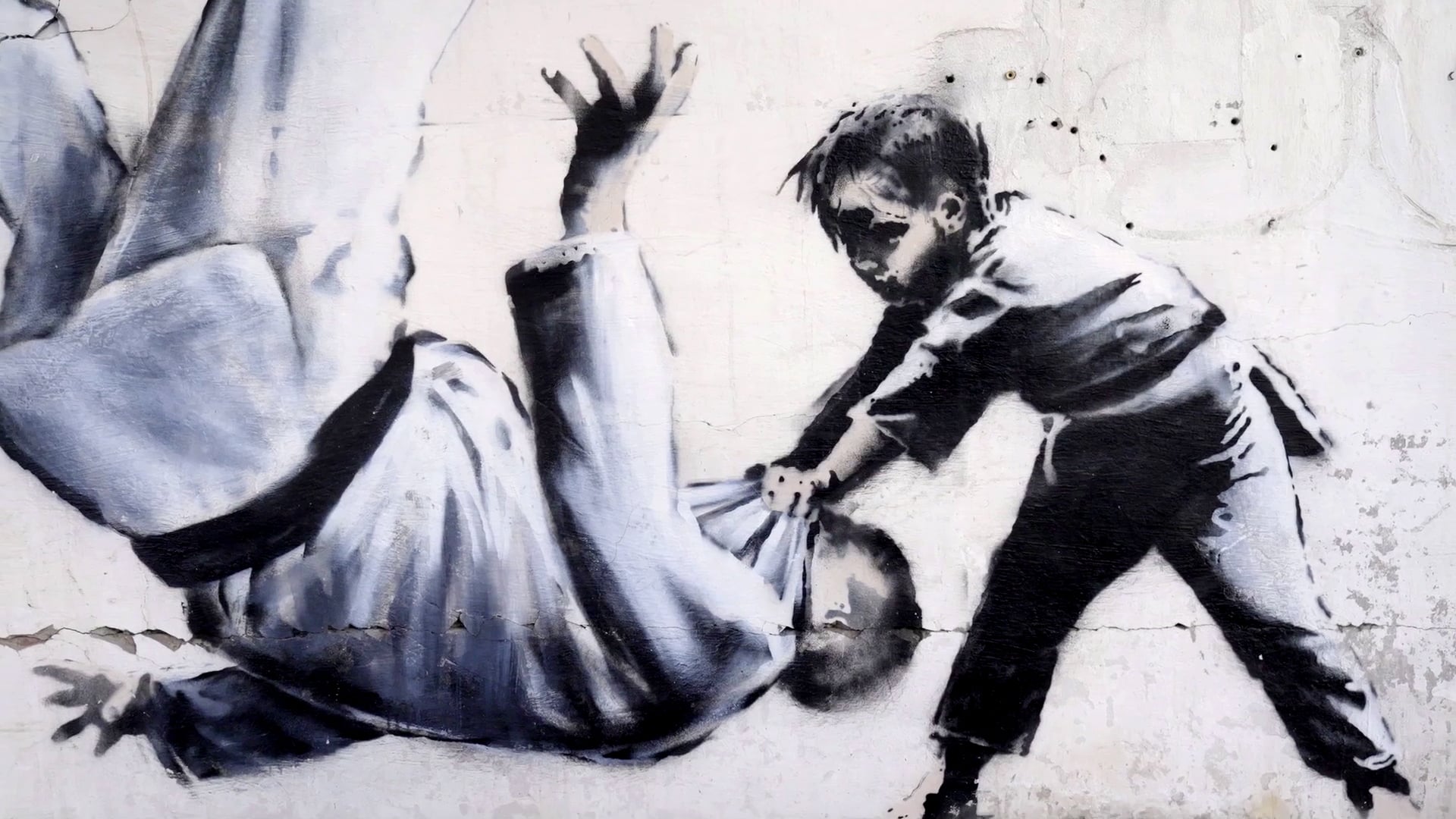
A documentary titled "Arte vs Guerra – Banksy e C215 a Borodyanka, Ucraina" will air on Sky Arte on April 26, recounting how street artists Banksy and C215 created murals in Borodyanka, Ukraine, shortly after the Russian invasion began in February 2022. The works include Banksy's "La Ginnasta" and "Davide e Golia," as well as C215's portraits of war victims like Dmytro Kotsiubaylo. The film also follows three Italian restorers—Paola Ciaccia, Alessandro Cini, and Maria Colonna—who risked their safety to preserve these murals from war damage and landmines.

A Delightful Short Film Highlights the Remarkable Self-Taught Art of George Voronovsky

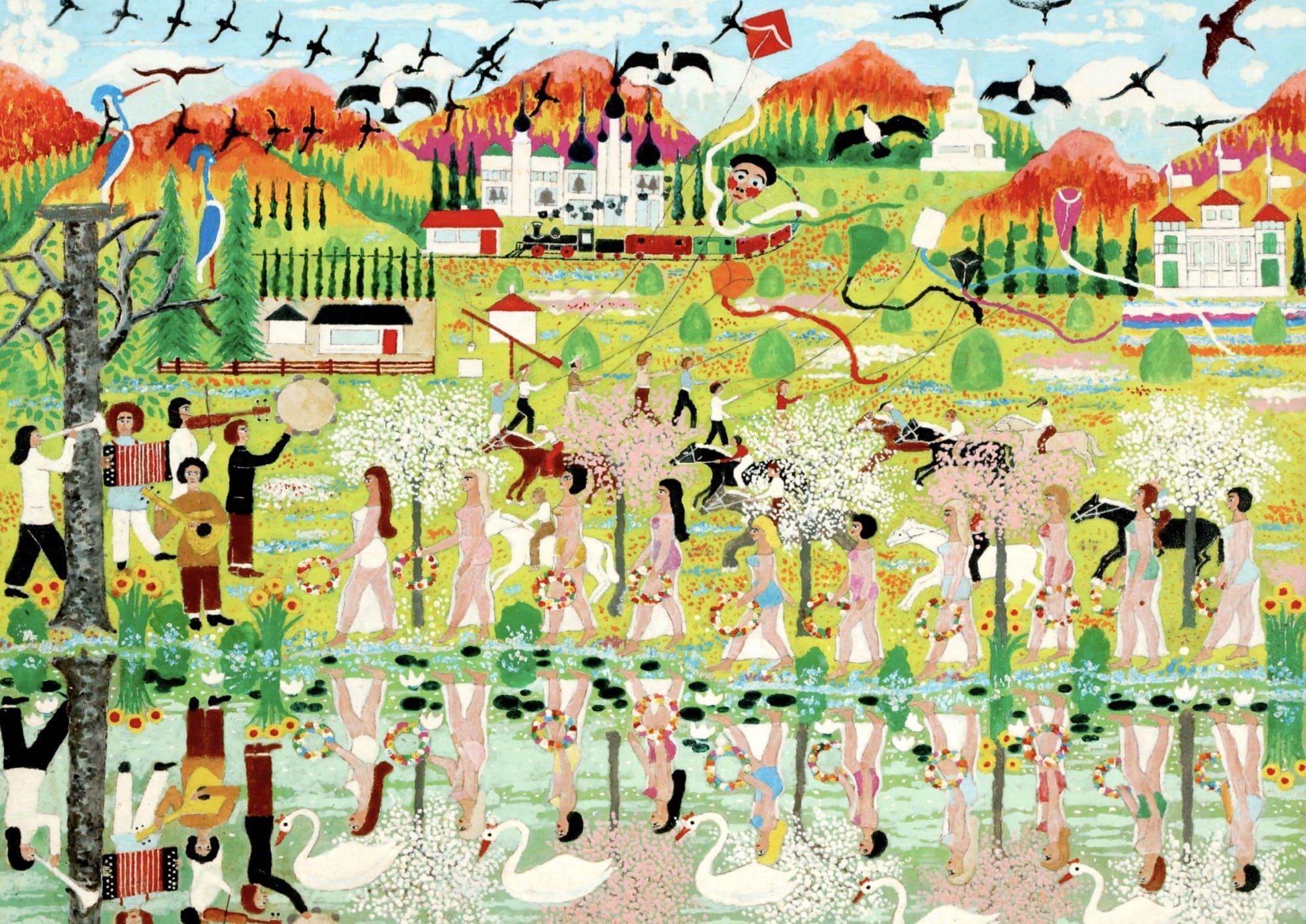
Ukrainian-born artist Jonko “George” Voronovsky transformed his modest retirement room at Miami’s Colony Hotel into a dense, vibrant sanctuary of over 5,000 artworks. After surviving the horrors of the Russian Revolution, Nazi labor camps, and permanent separation from his family, Voronovsky immigrated to the U.S. and spent his final years creating "memoryscapes." These works, crafted from found materials like pizza boxes and soda cans, depicted idyllic, colorful scenes of his youth in Ukraine, contrasting sharply with the trauma of his past.

Venice Biennale Jury Says It Won’t Consider Countries Charged with Crimes Against Humanity, Including Israel and Russia

The Venice Biennale's jury announced it will not consider nations whose leaders are charged with crimes against humanity by the International Criminal Court, effectively excluding Israel and Russia from competing for top honors. The jury, led by Videobrasil founder Solange Farkas, stated this decision aligns with curator Koyo Kouoh's vision and the Biennale's historical role as a platform connecting art to urgent issues. The ICC has issued arrest warrants for Israeli Prime Minister Benjamin Netanyahu and Russian President Vladimir Putin, while other indicted leaders like Sudan's Omar al-Bashir and Afghan officials lack Biennale pavilions.

How Pussy Riot Is Challenging Russia’s Return to the Venice Biennale

The feminist art collective Pussy Riot is campaigning to replace the official Russian exhibition at the 2024 Venice Biennale with their own show, "Resistance Imprisoned." The alternative exhibition features art created by nearly 30 current and former political prisoners in Russia, using improvised materials like envelopes, bedding, and blood. The collective's founder, Nadya Tolokonnikova, aims to expose the country's repressive system, drawing from her own experience in a penal colony.

Venice Biennale jury ‘will not award artists from countries facing war crimes charges’

The jury of the Venice Biennale has announced it will not award prizes to artists from countries whose leaders face charges of crimes against humanity by the International Criminal Court, a decision widely seen as targeting Russia and Israel. The five-member jury, appointed by the late curator Koyo Kouoh, stated its commitment to human rights and will exclude artists from nations whose governments are under ICC investigation when selecting winners of the Golden and Silver Lion awards for the 2026 edition, which opens on 9 May. The move follows controversy over Russia’s participation in the biennale, with the European Commission threatening to suspend a €2m grant due to Russia’s involvement, and Italy’s far-right government opposing the decision.

The Politics of Russia’s Return to the Venice Biennale

Russia has announced its intention to return to the Venice Biennale in 2026, marking its first participation since the full-scale invasion of Ukraine in 2022. The proposed pavilion, titled "The Tree is Rooted in the Sky," plans to feature 38 participants from Russia and several Global South nations. The announcement has sparked intense backlash from the European Commission and culture ministers across 22 countries, who argue that Russia’s presence undermines democratic values and serves as a tool for "dark cultural diplomacy."

EU Cuts Venice Biennale Funding Over Russia Involvement

The European Commission has withdrawn a $2.3 million grant from the Venice Biennale, following through on a threat made last week. The funding cut is a direct response to the Biennale's decision to readmit Russian artists as a government-funded delegation for its 2026 edition, which the EU argues violates sanctions and provides Russia a cultural platform during its war against Ukraine.

EU Says It ‘Intends’ to Cut Funding to Venice Biennale Because of Russian Pavilion

The European Union has declared its intention to cut its €2 million funding contribution to the Venice Biennale in response to the exhibition's decision to host a Russian national pavilion for the first time since Russia's 2022 invasion of Ukraine. EU foreign policy chief Kaja Kallas stated that allowing Russia to exhibit while it "bombs museums, destroys churches and seeks to erase Ukrainian culture" is morally wrong, marking the union's strongest condemnation to date.

Finland Pulls Back Venice Biennale Presence Over Return of Russian Pavilion

Finland’s political leadership has announced it will boycott the Venice Biennale if the Russian Pavilion proceeds with its planned exhibition. While Finnish public officials will still attend to support their own national artists, the Ministry of Education and Culture stated that Russia should be excluded as long as the war in Ukraine continues. This move follows an open letter from 22 European nations and a warning from the European Commission regarding potential sanctions violations.

European Commission Tells Venice Biennale to ‘Clear Its Name’ Regarding Russian Pavilion or Risk Losing $2.3 M. Grant for 2028

The European Commission has issued a 30-day ultimatum to the Venice Biennale, threatening to withdraw a €2 million ($2.3 million) grant for the 2028 edition unless the organization addresses concerns regarding the Russian Pavilion's inclusion in 2026. The Commission alleges that hosting a government-funded delegation violates EU sanctions and provides a cultural platform for Russian state interests amidst the ongoing war in Ukraine. The Biennale's president, Pietrangelo Buttafuoco, must respond by May 11, just two days after the exhibition's public opening.

Ukraine Sanctions Russian Culture Figures Linked to Country’s Participation in Venice Biennale

Ukrainian President Volodymyr Zelenskyy has issued a decree imposing sanctions on five Russian cultural figures involved in the Russian Pavilion for the 2026 Venice Biennale. The sanctioned individuals include pavilion commissioner Anastasia Karneeva, former culture minister Mikhail Shvydkoy, and three performers from the Intrada Ensemble. Ukrainian officials argue that these figures use international art platforms to legitimize Russian aggression and spread state propaganda, specifically citing past activities in occupied territories like Crimea and Donetsk.

Finland’s political leadership to retract from Venice Biennale over Russian Pavilion

Finland's Minister of Science and Culture, Mari-Leena Talvitie, announced that the country's political leadership will not participate in the upcoming Venice Biennale if Russia's national pavilion is allowed to take part. This decision follows a joint letter signed by Talvitie and 21 other European ministers in March, which deemed Russia's return to the Biennale since its 2022 invasion of Ukraine as 'unacceptable'. Finnish public officials and cultural representatives, however, will still attend to support Finnish artists.

The Emptiness That Will Still Be There Should the War End Tomorrow

"Die Leere, die noch da sein wird, sollte der Krieg morgen enden"

The group exhibition "Looking into the Gaps" at the Jam Factory in Lviv presents works by artists living in Ukraine or in exile, as well as by those killed on the front lines. Curated by Ukrainian artist Nikita Kadan, it is the fourth installment of a series exploring the fractures and diverse experiences within Ukrainian society, with this iteration focusing on the theme of loneliness rather than collective identity.

European Commission Tells Venice Biennale to Ditch Russian Pavilion

The European Commission has formally accused the Venice Biennale of violating EU sanctions against Russia by planning to reopen the Russian Pavilion for the 2026 edition. In a letter to the Biennale's president, the Commission argues that hosting a government-funded national pavilion constitutes accepting indirect support from the Russian state during its ongoing war in Ukraine. The organization has threatened to withhold a $2.3 million grant intended for the 2028 edition unless the Biennale addresses these concerns by May 11.

Two new ceramic exhibitions open at the Yellowstone Art Museum in Billings

The Yellowstone Art Museum in Billings, Montana, has launched two new ceramic-focused exhibitions: "Folktales and Fanfare" and "Embedded in the Overlap." A central highlight of the new programming is the work of Ukrainian ceramicist Janina Myronova, whose exhibition features whimsical stoneware figures and drawings that explore themes of home, hope, and human connection. Myronova’s work, including her 2023 piece "Two Heads Are Better Than One," blends traditional ceramic techniques with dreamlike narratives.

Russia and Israel cannot win any prizes at the next Venice Art Biennale 2026. The jury takes a stand

Russia e Israele non potranno vincere nessun premio alla prossima Biennale Arte di Venezia 2026. La giuria prende posizione

The international jury for the 61st Venice Biennale, led by Solange Farkas, has unanimously declared it will not consider countries whose leaders are currently accused of crimes against humanity by the International Criminal Court. This means Russia and Israel are excluded from competing for the Golden Lion awards, including Best National Participation and Best Artist. The jury's statement, published on e-Flux Notes, emphasizes the Biennale's historical role as a platform connecting art with contemporary urgencies and acknowledges the complex relationship between artistic practice and state representation.

Tania Yakunova’s Expressive Figures Entwine with Plant Life in Digital and Graphite Illustrations

Kyiv-born illustrator Tania Yakunova creates lush digital and graphite illustrations characterized by grainy textures, gestural lines, bold shapes, and vibrant colors. Her work, which often features expressive human figures entwined with plant life, conveys brand narratives and personal emotions, such as homesickness following her 2023 move from Ukraine to London.

Funding Feud Over Russia's Return To The Venice Biennale

Russia is set to return to the Venice Biennale with its national pavilion for the first time since its 2022 full-scale invasion of Ukraine. This has sparked a funding feud, with the European Commission threatening to withhold a €2 million grant from the event if Russia's exhibit proceeds, a move criticized by Italian Deputy Prime Minister Matteo Salvini.

Unpacking the Venice Biennale controversies and highlights

The 2026 Venice Art Biennale is proceeding with a posthumous main exhibition, "In Minor Keys," curated by the late Cameroonian-born artistic director Koyo Kouoh, who died in May 2025. The event features 100 national participations, including seven first-time countries, and has reinstated Russia's pavilion after its voluntary withdrawal following the 2022 invasion of Ukraine.

LensCulture portrait awards 2026 – in pictures

The LensCulture Portrait Awards 2026 have announced their winning and shortlisted photographers, showcasing a diverse range of styles from documentary realism to conceptual invention. Highlights include an Australian photographer's winning portrait of a 'barefoot volcanologist' and poignant series documenting the ongoing conflict in Ukraine and the reclamation of identity in post-colonial contexts.