filter_list Showing 8 results for "Venedig-Biennale" close Clear
dashboard All 8 museum exhibitions 3article culture 2article news 2rate_review review 1
date_range Range Today This Week This Month All
Subscribe

What You Should Definitely Avoid in Venice

Was man in Venedig unbedingt vermeiden sollte

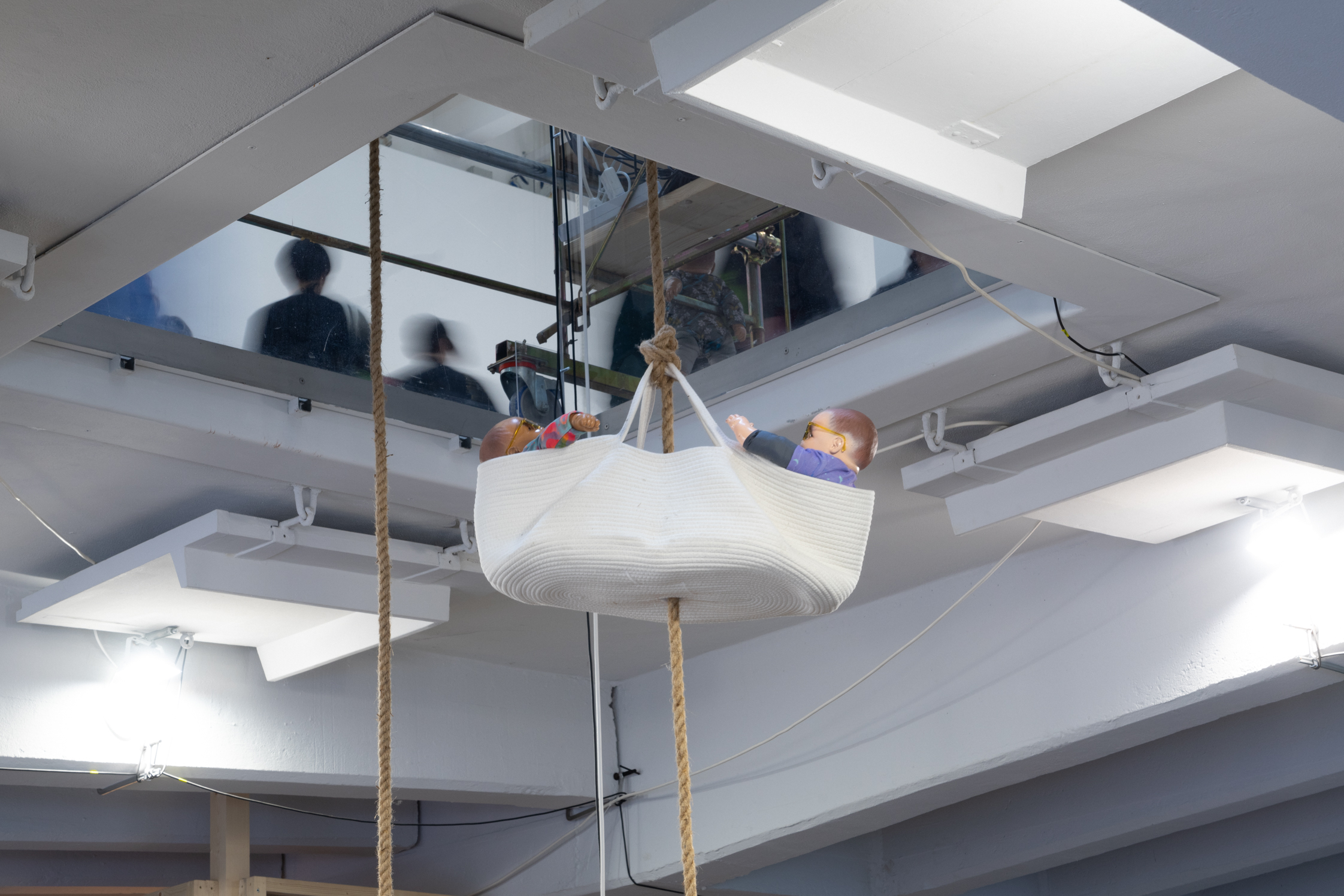
The article humorously critiques the Venice Biennale, highlighting several disappointments. It describes a Japanese pavilion installation by Ei Arakawa-Nash featuring baby dolls for diaper-changing, which a critic dismisses as a male artist over-romanticizing parenthood. Other flops include long queues for the German and Austrian pavilions, underwhelming main exhibition "In Minor Keys," and annoying self-promotional performers outside venues. The piece also laments the presence of loud American collectors and donors who dominate the event.

Delegitimation, Denunciation and Insecurity

"Delegitimation, Denunziation und Verunsicherung"

German cultural critic Georg Seeßlen warns in his taz column of a right-wing 'war of conquest' targeting liberal cultural institutions through systematic delegitimation, denunciation, and intimidation. Meanwhile, a new Berlin artist study reveals that the average annual income from artistic work is just €6,000, highlighting a structural dysfunction in the art system. Additionally, Jonathan Meese's play 'Alaska Kid' has been canceled at the Volksbühne Berlin following the death of his mother Brigitte Meese, who was his organizer, muse, and confidante.

Überraschende Begegnungen

The ninth edition of the "Various Others" festival in Munich brings together institutions, off-spaces, and galleries for a city-wide series of exhibitions in May. Highlights include Walter Storms Galerie presenting Anselm Reyle's first Munich solo show with Istanbul's Dirimart; Kraupa-Tuskany Zeidler collaborating with Rome's T293 to show Simon Denny's tech-critical works; Max Goelitz pairing Lukas Heerich and Rindon Johnson with Eva Hesse in dialogue with Hauser & Wirth; Lohaus Sominsky and Paris's Mennour featuring Ilit Azoulay and Alicja Kwade; and Rüdiger Schöttle hosting Milena Muzquiz and Elif Saydam. A new parcours exhibition, "Vectors," inspired by Jan Hoet's "Chambres d'Amis," places contemporary art in tech company offices across Munich.

"Man besitzt Kunst nicht, man ist nur ihr Verwalter"

The 61st Venice Biennale opened on Saturday without ceremony or an opening celebration, amid political turmoil over the participation of Russia and Israel. Italy's Culture Minister Alessandro Giuli criticized Biennale director Pietrangelo Buttafuoco for not informing the government about Russia's participation request, suggesting it could have been used as leverage for a ceasefire in Ukraine. The entire jury resigned after attempting to exclude both Russia and Israel from prize awards, leading to the cancellation of the traditional jury decision in favor of a public vote, which over 70 participating artists have protested by withdrawing from this year's prizes. Separately, a rare photograph from the early 1940s has surfaced showing Lucas Cranach the Elder's painting "Venus with Cupid as Honey Thief" in Adolf Hitler's Munich apartment, raising unresolved questions about whether the work was looted from Jewish owners before 1935.

"Gesundheitseffekt der Künste auf biologischer Ebene"

A roundup of art news covers multiple stories: Stefan Trinks criticizes Berlin's 'MuseumsMeileMitte' as a symptom of urban and cultural misdevelopment, where museums are co-opted by real estate marketing. At the Venice Biennale, the German Pavilion by Henrike Naumann and Sung Tieu explores East German identity and post-reunification trauma, while Patti Smith performed a 'sonic prayer' at the Vatican Pavilion curated by Hans Ulrich Obrist and Ben Vickers. A study from University College London suggests regular arts engagement may slow biological aging.

I'm a punk artist, I don't give a damn

"Ich bin Punk-Künstlerin, ich geb einen Scheiß drauf"

During the opening week of the Venice Biennale, the Russian activist and Pussy Riot member Nadya Tolokonnikova staged a protest against the Russian pavilion, wearing pink balaclavas and chanting slogans like "Blood is Russia's Art." Meanwhile, Florentina Holzinger's Austrian pavilion, subtitled "I Live in Your Piss," drew massive crowds with its scatological installations and extreme performances, causing wait times of up to two and a half hours. German media critics have widely covered the Biennale's heightened political tone, with debates over boycotts of Russia and Israel, and the tension between art and activism.

Our Highlights from the Supporting Program

Unsere Highlights aus dem Rahmenprogramm

This article from Monopol highlights the must-see collateral events at the Venice Biennale, focusing on exhibitions and performances beyond the main show. It features Arthur Jafa and Richard Prince at Fondazione Prada, as well as works by Marina Abramović and other artists across video and performance art.

Pavilions of the Venice Biennale go on strike

Pavillons der Venedig-Biennale werden bestreikt

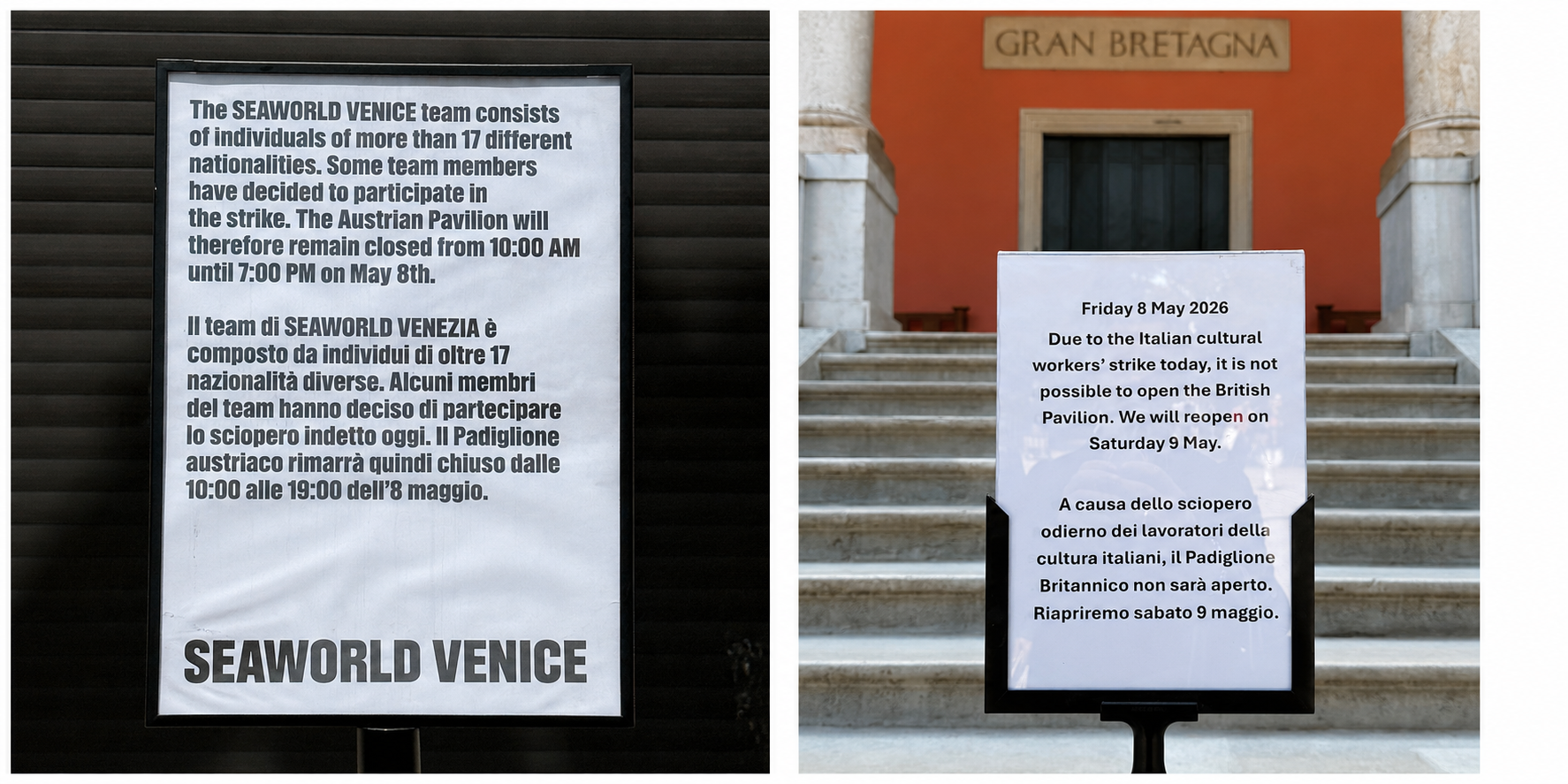
Cultural workers and participants of the Venice Biennale went on strike on Friday, protesting Israel's participation in the art exhibition. Organized by the Art Not Genocide Alliance (ANGA) alongside several cultural groups and Italian grassroots unions, the 24-hour walkout led to the closure of several national pavilions on the final preview day. A rally was planned near the Arsenale grounds. The strike aims to oppose the "normalization of genocide in culture" and poor working conditions at the Biennale, following an earlier open letter signed by over 230 artists and curators demanding the exclusion of the Israeli pavilion. Israel is represented by sculptor Belu-Simion Fainaru, who opposes cultural boycotts and advocates for dialogue. The Biennale's leadership has distanced itself from the strike, emphasizing adherence to regulations and support for freedom of speech and pluralism.