
Pavillons der Venedig-Biennale werden bestreikt
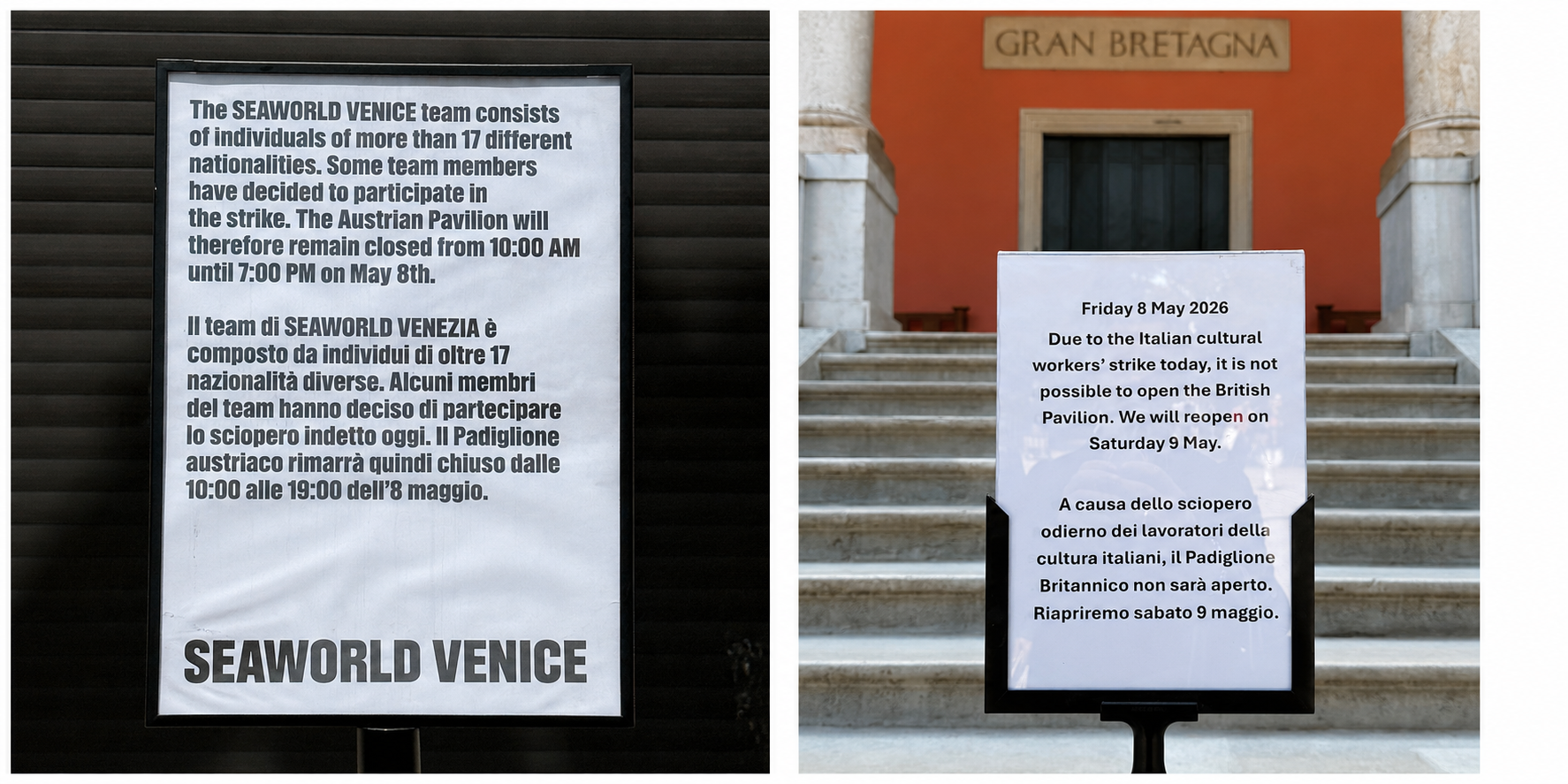
Cultural workers and participants of the Venice Biennale went on strike on Friday, protesting Israel's participation in the art exhibition. Organized by the Art Not Genocide Alliance (ANGA) alongside several cultural groups and Italian grassroots unions, the 24-hour walkout led to the closure of several national pavilions on the final preview day. A rally was planned near the Arsenale grounds. The strike aims to oppose the "normalization of genocide in culture" and poor working conditions at the Biennale, following an earlier open letter signed by over 230 artists and curators demanding the exclusion of the Israeli pavilion. Israel is represented by sculptor Belu-Simion Fainaru, who opposes cultural boycotts and advocates for dialogue. The Biennale's leadership has distanced itself from the strike, emphasizing adherence to regulations and support for freedom of speech and pluralism.
The protest underscores deepening political tensions surrounding the Venice Biennale, one of the world's most prestigious art events, as it grapples with controversies over the participation of nations facing international scrutiny. The strike, alongside the recent resignation of the entire five-member prize jury over disputes involving states with alleged crimes against humanity, highlights how geopolitical conflicts increasingly disrupt the art world. This matters because it reflects a broader cultural debate about the role of art institutions in addressing human rights issues, potentially influencing future exhibition policies and the relationship between art and activism on a global stage.