filter_list Showing 18 results for "looting" close Clear
dashboard All 18 gavel restitution 6museum exhibitions 5article policy 4article news 2article culture 1
date_range Range Today This Week This Month All
Subscribe

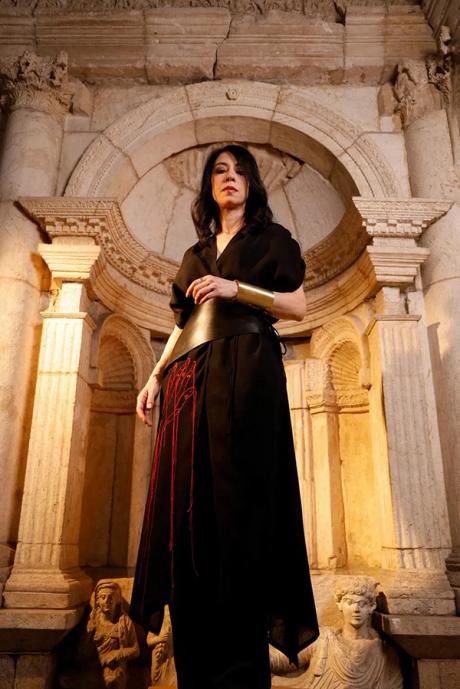
‘This is an opportunity that will never happen again’: Syrian artist Sara Shamma on rebuilding her country

Syrian artist Sara Shamma has been selected to represent Syria at the 2026 Venice Biennale, marking the country's return to the event with a single-artist national pavilion for the first time. Her immersive installation, 'The Tower Tomb of Palmyra,' curated by Yuko Hasegawa and commissioned by Syria's ministry of culture, combines painting, architecture, light, sound, and scent. It draws on the ancient funerary towers of Palmyra destroyed by Islamic State in 2015, addressing cultural loss and the possibility of reconstruction. Shamma, who returned to Syria in September 2024 after eight years abroad, describes living through the fall of the Assad regime and the country's rebirth as a transformative personal and national moment.

France reckons with Nazi-looted art in a new Paris museum gallery

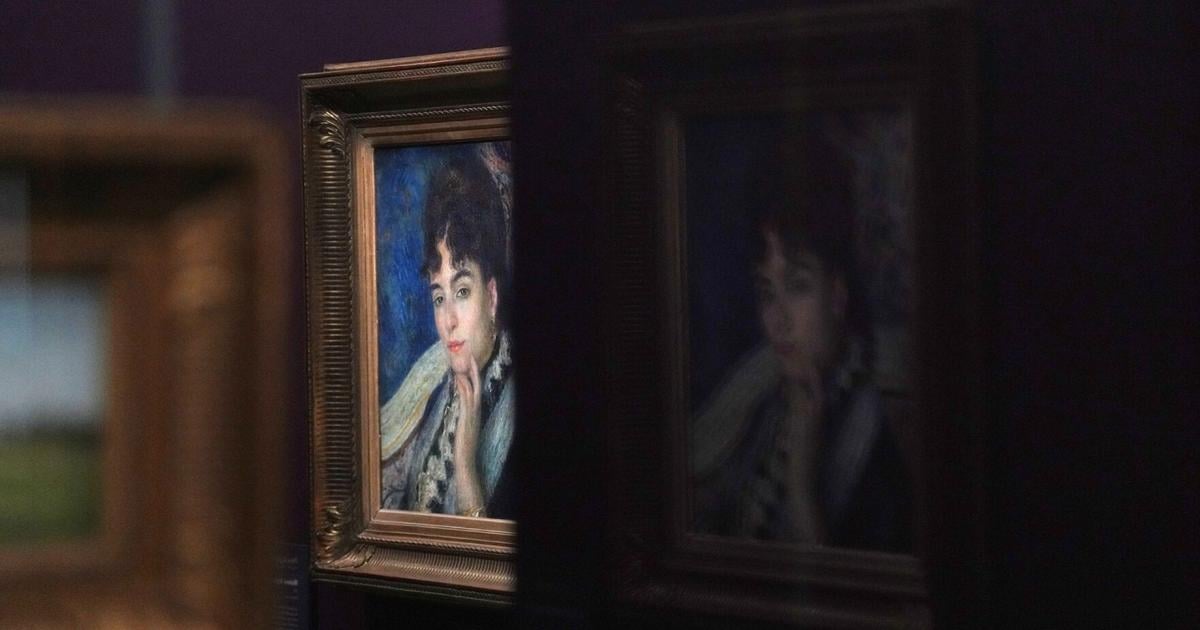
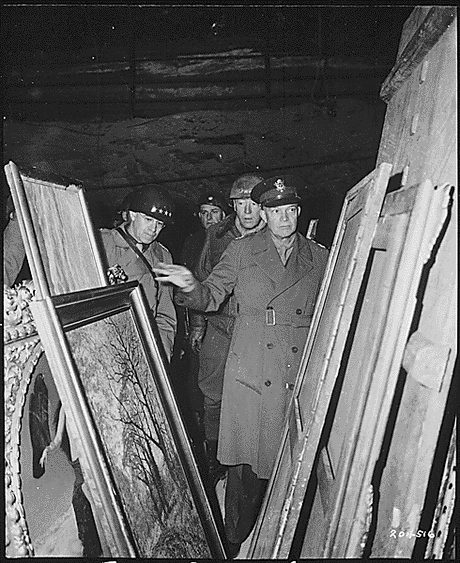
France has opened a new permanent gallery at the Musée d'Orsay in Paris dedicated to displaying Nazi-looted artworks that remain unclaimed. The gallery features 13 works from the MNR (Musées Nationaux Récupération) collection, including a painting by Alfred Stevens originally destined for Hitler's planned museum in Linz. The display is the first in the museum's history to show the backs of paintings, revealing stamps, labels, and inventory marks that trace how each piece moved from private Jewish homes into Nazi hands. The museum also launched its first research unit to trace rightful heirs, led by Ines Rotermund-Reynard.

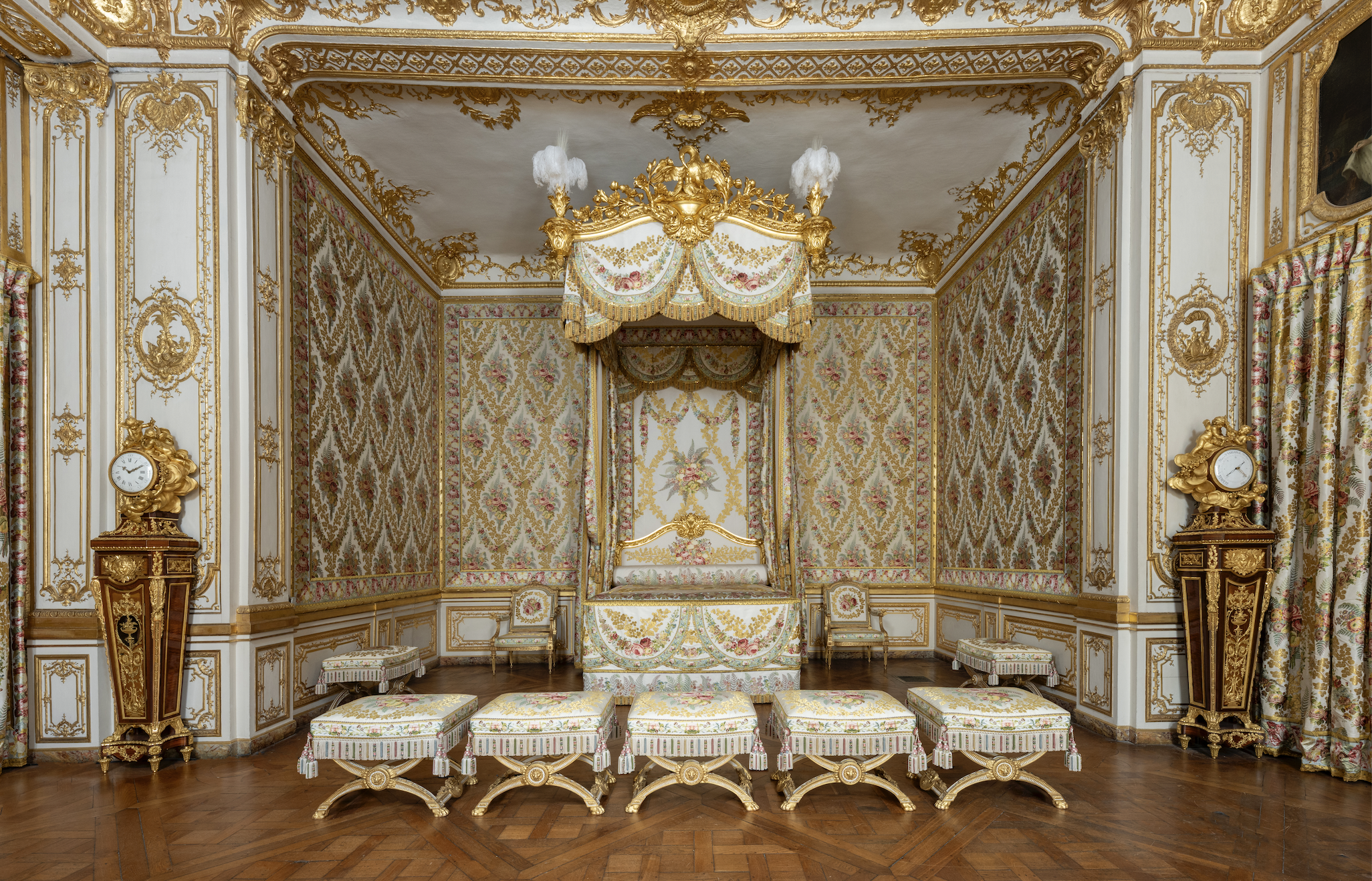
Versailles Restores Royal Bedroom to Its 1789 Splendor

The Palace of Versailles has completed a multi-decade restoration of the King’s Private Bedroom, meticulously recreating the space as it appeared on October 6, 1789, the day the royal family fled the French Revolution. The project involved an intergenerational team of curators and master craftspeople who utilized archival descriptions and surviving fabric scraps to reconstruct the room's ornate Rocaille embellishments, silk tapestries from Lyon, and a central gilded bed carved from linden wood.

Sur Arte Radio et dans une expo, l’enquête d’Adrianna Wallis sur les traces de sa grand-mère peintre spoliée par les nazis

Artist Adrianna Wallis (born 1981) discovers that her paternal grandmother, painter Diane Esmond (1910–1981), was a victim of Nazi looting during World War II. After being contacted by historians Patricia Helletzgruber and Sophie Juliard, Wallis learns that much of Esmond's work was systematically destroyed by the ERR, the Nazi organization responsible for art theft in occupied countries. This revelation sparks a personal investigation that becomes a podcast for Arte Radio titled "Il restera la gravité," blending documentary, autobiographical inquiry, and sound installation. Wallis delves into archives, examining microfilms and lists that detail 46 of Esmond's paintings—each methodically described and declared destroyed, such as "Woman in blue evening dress: annihilated."

Musée d’Orsay opens gallery dedicated to still-unclaimed works stolen by Nazis in WWII

The Musée d'Orsay in Paris has opened a permanent gallery dedicated to artworks believed to have been looted by the Nazis from Jewish owners during World War II, but whose rightful owners have not been identified. The exhibition, titled "Who owns these works?", features a rotating selection of 225 such pieces held by the museum, with twelve paintings and one sculpture currently on display. Works by Renoir, Degas, Rodin, and Alfred Stevens are included, alongside provenance research detailing their murky histories—such as a Degas ballroom scene acquired by a Jewish collector later murdered at Auschwitz.

Pio Abad Explores Home and Diaspora for the 2026 Venice Biennale

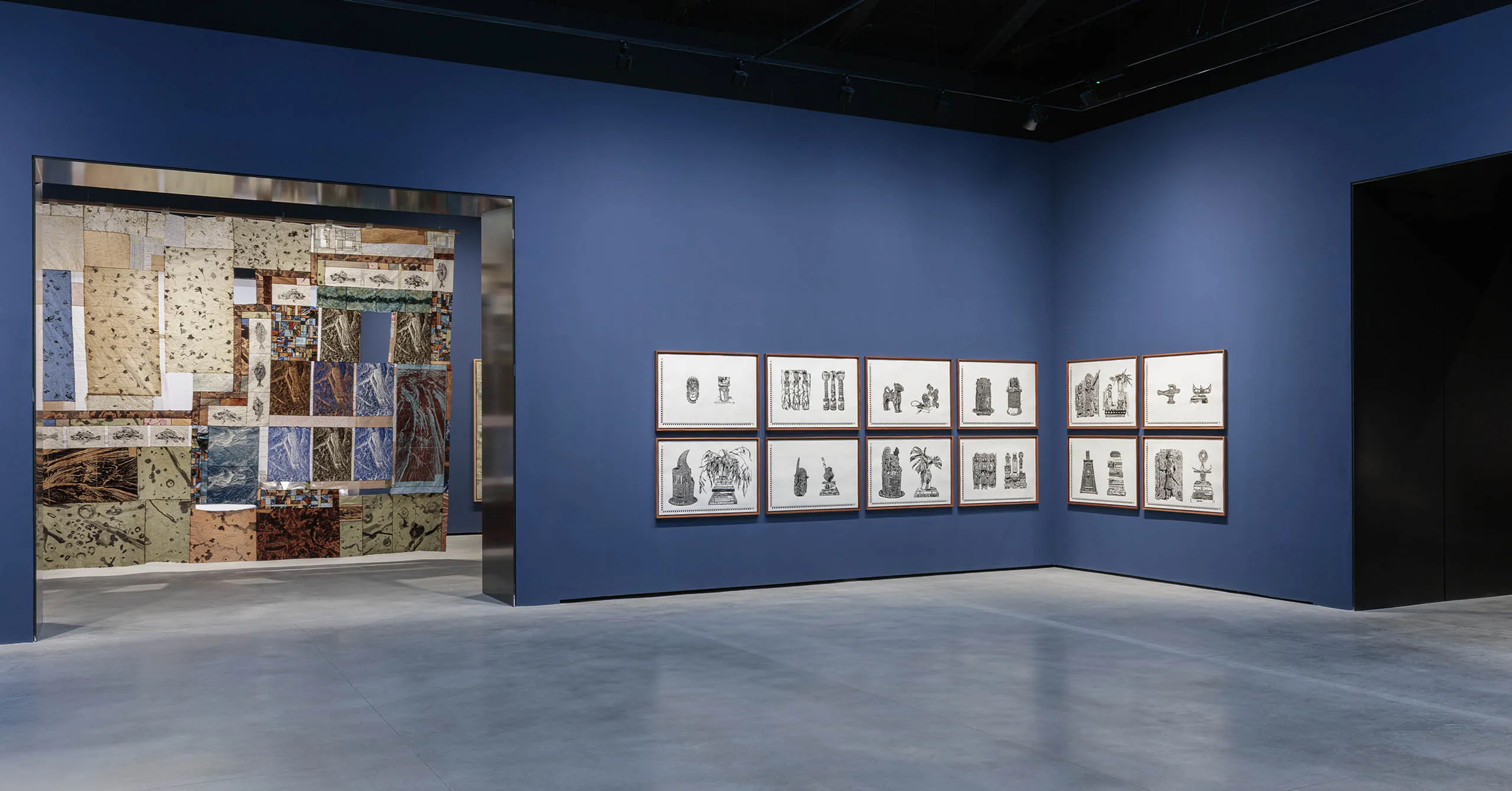
Filipino artist Pio Abad is presenting a series of intricate, hand-drawn works at the 2026 Venice Biennale as part of the exhibition "In Minor Keys," conceived by the late curator Koyo Kouoh. The works, created over four years with a 0.3-millimeter pen, include pieces such as "I’m Singing a Song That Can Only Be Born After Losing a Country" (first shown at the Ashmolean Museum in 2024), "Banua" (his first drawing on fabric), and "1897.76.36.18.6," which reflects on the looting of the Benin Bronzes. Abad, born in the Philippines and based in London, explores themes of migration, memory, exile, and the itinerant nature of objects and language.

Director of the Hermitage Museum Sanctioned by the European Union

Le directeur du Musée de l'Ermitage sanctionné par l'Union européenne

The European Union has imposed sanctions on Mikhail Piotrovsky, the 81-year-old director of the State Hermitage Museum in Saint Petersburg, as part of its 20th sanctions package against Russia. Piotrovsky was blacklisted for supporting the war in Ukraine and overseeing illegal archaeological excavations in occupied Crimea. The EU cited his use of Kremlin war rhetoric—calling the museum's exhibition policy a "cultural special operation"—and the Hermitage's role in incorporating Ukrainian cultural objects from occupied territories into Russia's state museum fund. Additionally, under his leadership, unauthorized digs were conducted at the ancient Greek site of Myrmekion in Crimea, led by Hermitage archaeologist Alexander Butyagin, who was arrested in Warsaw and later released in a prisoner exchange.

How the State Supports Provenance Research

Comment l’État soutient la recherche de provenance

The French Ministry of Culture has created two specialized missions to assist museums in researching the provenance of their collections, addressing looted artworks, human remains, colonial acquisitions, and illicit trafficking. The Mission for Research and Restitution of Looted Cultural Property (M2RS), established in 2019, focuses on Nazi-era spoliations (1933-1945) with a budget of €220,000 annually, while the newer Mission "Provenance," launched in 2024 under curator Catherine Chevillot, covers human remains, colonial-era objects, and illicit goods with a €450,000 budget. These missions provide expertise, funding, and coordination with institutions like the Commission for the Restitution of Property and Compensation of Victims of Anti-Semitic Spoliation (CIVS), though most museums still only initiate provenance checks during acquisitions or donations.

Who Owns These Artworks? Musée d’Orsay Hopes Visitors Can Help Find Out.

The Musée d’Orsay in Paris has opened a new room in its permanent display featuring 13 artworks recovered from Germany and Austria after World War II, whose provenance remains unknown. The museum is inviting visitors to help identify the original owners of these pieces, which were looted or displaced during the war and later restituted to France.

Condemned by Francoism, a writer rehabilitated by the Spanish Congress

Condamné par le franquisme, un écrivain réhabilité par le Congrès espagnol

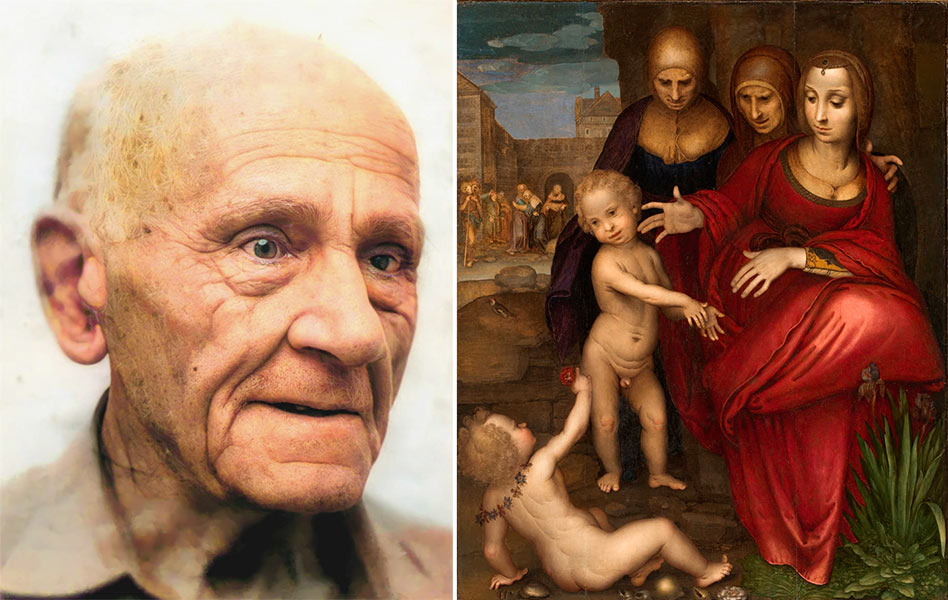
The Spanish Congress has officially rehabilitated Cipriano Salvador (1894-1975), a Republican intellectual wrongly accused by the Franco regime of stealing a Renaissance painting he actually saved. During the Spanish Civil War, Salvador hid Fernando Yáñez's "La Santa Generación" (c. 1525-1532) from destruction. After Franco's victory, a priest sold the work to the Prado Museum for 15,000 pesetas, while Salvador was arrested, sentenced to death (later commuted to 30 years), and spent seven years in prison. He died in 1975 without exoneration. The rehabilitation motion passed with 32 votes in favor, 3 against, and 1 abstention, with only far-right party Vox opposing.

337 œuvres et objets volés récupérés : la vaste opération italienne de lutte contre le trafic de biens culturels aux États-Unis

On April 29, Italy's carabinieri dedicated to cultural heritage protection announced the recovery of 337 looted or stolen artworks and objects repatriated from the United States between December 2025 and April 2026. The haul includes archaeological artifacts, archival documents, and other artworks, such as a marble head of Alexander the Great from the 1st century AD, a bronze sculpture stolen from Herculaneum, and two Egyptian basalt sculptures. The objects were dispersed through international markets using forged provenance documents, and their return involved U.S. agencies including the FBI.

La loi-cadre sur les restitutions définitivement adoptée par le Parlement

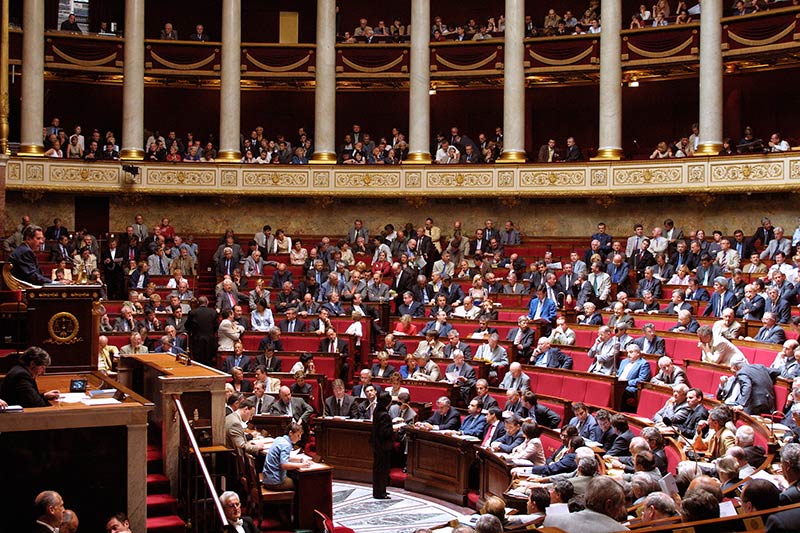
The French Parliament has definitively adopted a framework law on the restitution of cultural property that was illicitly acquired. The Senate unanimously approved the conclusions of the joint committee on May 7, following the National Assembly's approval on May 6, after an agreement was reached on April 30. The law establishes a general mechanism for returning objects from French public collections without requiring a specific law for each case, covering items acquired through looting, theft, forced sale, or other illicit means before the 1970 UNESCO Convention. It creates a permanent national commission and a bilateral scientific committee to assess claims, with restitution ultimately decided by government decree subject to legal review by the Council of State.

Les États-Unis restituent près de 300 biens culturels à l’Italie

Italy presented 337 cultural artifacts repatriated from the United States at the Caserma "La Marmora" in Rome, following operations between December 2025 and April 2026. The objects span from the 5th century BCE to the 3rd century CE, including Roman sculptures, bronze works, pottery, jewelry, coins, and architectural fragments. Among the notable pieces is a marble head attributed to Alexander the Great, stolen from a Roman museum in 1960, and a bronze sculpture looted from Herculaneum. The recovery involved the Manhattan District Attorney's office, the FBI, Homeland Security Investigations, and Christie's New York, with 221 items seized through the DA's collaboration and 116 returned in April.

Today’s war, tomorrow’s loot: attempts at stemming the illicit trade in art

The article examines the ongoing challenge of preventing the illicit trade in cultural property looted from conflict zones. It discusses the Hague Convention of 1954 and its protocol, which require signatory countries to prevent theft and pillage during armed conflict and to seize and repatriate unlawful exports. However, the protocol only applies to situations of 'occupation,' leaving a gap for looting that occurs in the chaos of war beyond formal occupation. The article also notes UN Security Council Resolutions that restrict unlawfully removed cultural property from Iraq and Syria, but no similar consensus exists for countries like Afghanistan, Libya, Ukraine, Lebanon, Yemen, Sudan, and Iran. EU Regulation 2019/880 is highlighted as a measure that prohibits introducing goods removed unlawfully from their place of origin into the EU, though its scope has expanded beyond its original anti-terrorist financing purpose.

U.S. and Italy Honor Alliance to Curb Art Looting, Amid Broader Tensions

Officials from the United States and Italy gathered near dozens of repatriated artifacts to celebrate their ongoing alliance against art looting, which has resulted in the return of thousands of artworks to Italy. The event highlighted collaborative efforts between the two nations to curb the illegal trafficking of cultural property, even as broader diplomatic tensions persist.

The Rothschilds and Sèvres Porcelain: A Collector's Passion at the Heart of an Exhibition in Paris

Les Rothschild et la porcelaine de Sèvres : une passion de collectionneurs au cœur d’une exposition à Paris

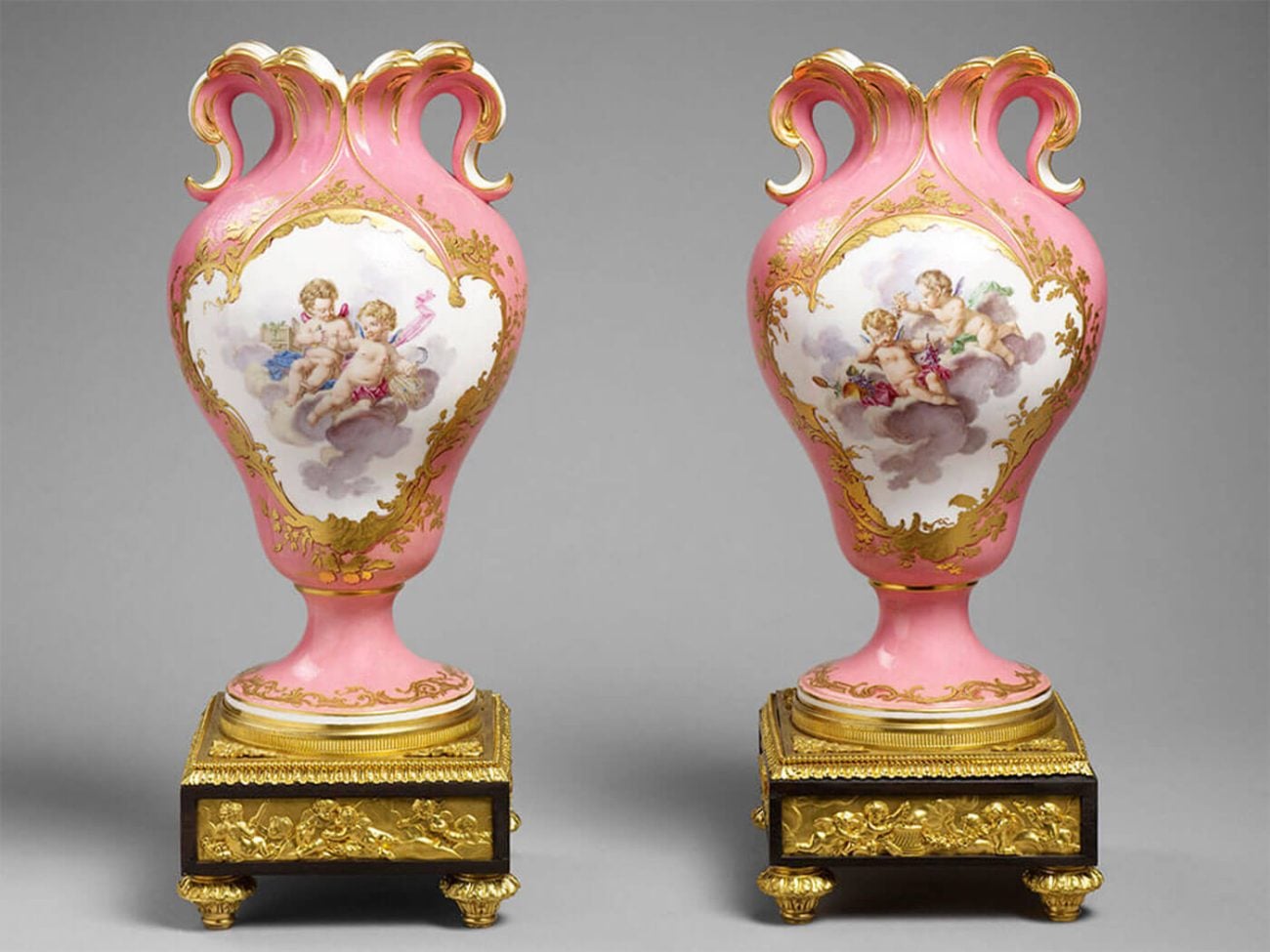
An exhibition at the Galerie des Gobelins du Mobilier national in Paris explores the Rothschild family's centuries-long passion for Sèvres porcelain. Titled "Sèvres, une passion Rothschild. De la Villa Ephrussi à Paris," it traces how the banking dynasty collected, traded, and bequeathed these delicate objects from the Ancien Régime, with a centerpiece table setting featuring pieces lent by family members from Vienna, England, and beyond. The show also highlights Béatrice Ephrussi de Rothschild, who amassed thousands of pieces and left them to the Villa Ephrussi de Rothschild, and includes a section on the Nazi looting of Rothschild collections in 1940, during which 22 Sèvres pieces were acquired by the Musée de Sèvres.

A 1st-Century Roman Cargo Uncovered in Lake Neuchâtel

Une cargaison romaine du Ier siècle mise au jour dans le lac de Neuchâtel

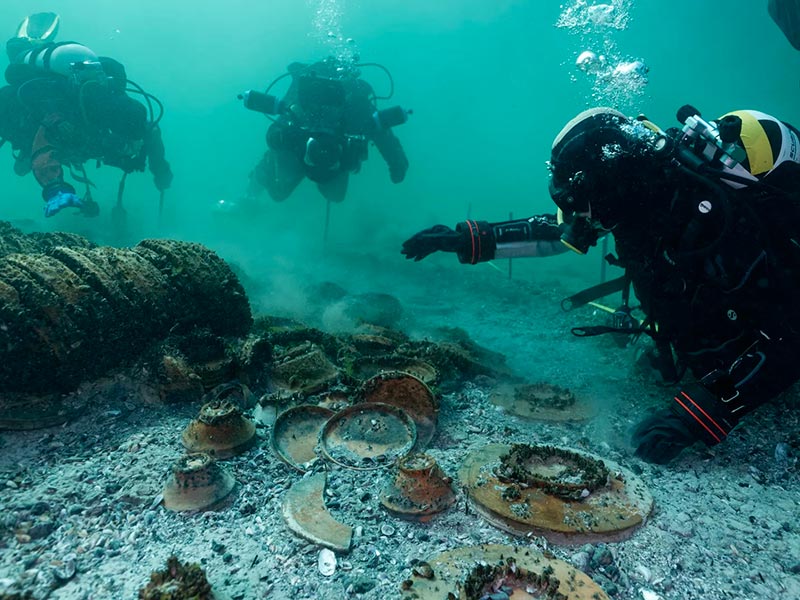
Archaeologists have completed two major underwater excavation campaigns in Lake Neuchâtel, Switzerland, recovering over 1,000 artifacts from a Roman cargo shipment dating between 20 and 50 AD. The discovery, initially spotted via aerial photography in 2024, includes exceptionally well-preserved items such as Spanish olive oil amphorae, tableware, military weaponry, and rare organic materials like a wicker basket and chariot wheels. The site was kept secret for two years to prevent looting while divers meticulously retrieved the historical treasures.

The Foreign Ministry presented art prints of stolen paintings from the Kherson Art Museum

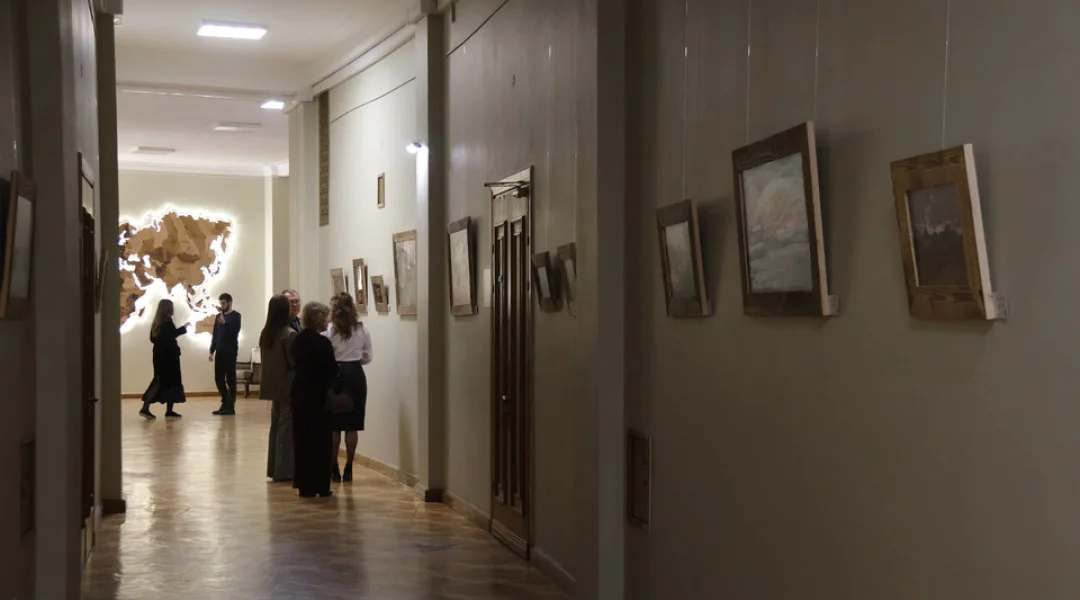
The Ukrainian Foreign Ministry has opened an exhibition titled "Return of Kherson’s Memory. Stolen Art Preserved in Museum Artprints," featuring 30 high-quality reproductions of masterpieces stolen by Russian forces from the Kherson Regional Art Museum named after Oleksii Shovkunenko in autumn 2022. The stolen works include pieces by artists Mykola Pymonenko, Ivan Aivazovsky, and Viktor Zaretsky, among over 10,000 items illegally removed from the museum just before Kherson’s de-occupation. The exhibition was organized by the museum team and the art platform Vivid Fusion.