
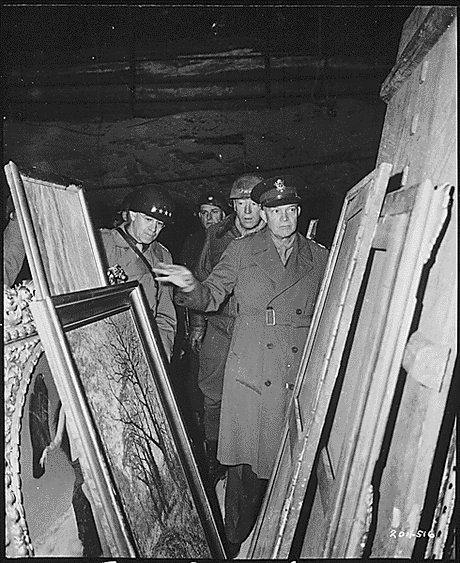
The article examines the ongoing challenge of preventing the illicit trade in cultural property looted from conflict zones. It discusses the Hague Convention of 1954 and its protocol, which require signatory countries to prevent theft and pillage during armed conflict and to seize and repatriate unlawful exports. However, the protocol only applies to situations of 'occupation,' leaving a gap for looting that occurs in the chaos of war beyond formal occupation. The article also notes UN Security Council Resolutions that restrict unlawfully removed cultural property from Iraq and Syria, but no similar consensus exists for countries like Afghanistan, Libya, Ukraine, Lebanon, Yemen, Sudan, and Iran. EU Regulation 2019/880 is highlighted as a measure that prohibits introducing goods removed unlawfully from their place of origin into the EU, though its scope has expanded beyond its original anti-terrorist financing purpose.
This matters because war loot often enters the art market after a delay of several years, typically through the 'grey market' of online sales via closed networks, exploiting waning public vigilance. The article underscores the moral and legal obligation for dealers and buyers to conduct due diligence, using resources like the Art Loss Register and ICOM Red Lists to check provenance. The failure to extend UN resolutions to more conflict-affected countries and the limitations of existing legal frameworks leave significant loopholes, making it imperative for the art world to remain vigilant against the trade in conflict antiquities.