filter_list Showing 22 results for "pavilion controversy" close Clear
dashboard All 22 article news 12article policy 5museum exhibitions 4rate_review review 1
date_range Range Today This Week This Month All
Subscribe

There Has Never Been an Apolitical Venice Biennale

"Es hat niemals eine unpolitische Venedig-Biennale gegeben"

The Venice Biennale is embroiled in political controversy, with the US Pavilion's selection process criticized for bypassing traditional curatorial expertise in favor of a politically connected outsider. Simultaneously, a collective of artists and academics is protesting Russia's return to the Biennale, arguing it uses art as a political instrument to normalize its actions amid the war in Ukraine. An analysis in ArtReview contends the Biennale has never been apolitical, serving as a stage for geopolitical power plays since its inception.
Venice Biennale Controversies Continue, French Parliament Report Finds Flaws in Museum Security, and More: Morning Links for May 13, 2026

Iran has denied withdrawing from the Venice Biennale, with Mahdizadeh Tehrani, general director of visual arts at Iran's Ministry of Culture, stating the country still hopes to participate despite Biennale organizers announcing Iran would not be represented at its pavilion. Meanwhile, the Somalia Pavilion has sparked controversy, with the Somali Arts Foundation alleging it was led by diaspora figures and European collaborators without meaningful consultation of artists based in Somalia, and the queer collective Warbixinta Cidda demanding the removal of an Italian co-curator due to Italy's colonial history. Separately, a French parliamentary inquiry has exposed major security flaws in the country's museums, following the theft of France's crown jewels from the Louvre in October, calling for reforms in security resources and museum leadership appointments.

It’s the Most Controversial Venice Biennale in Years. Can the Art Stand Up to the Noise?

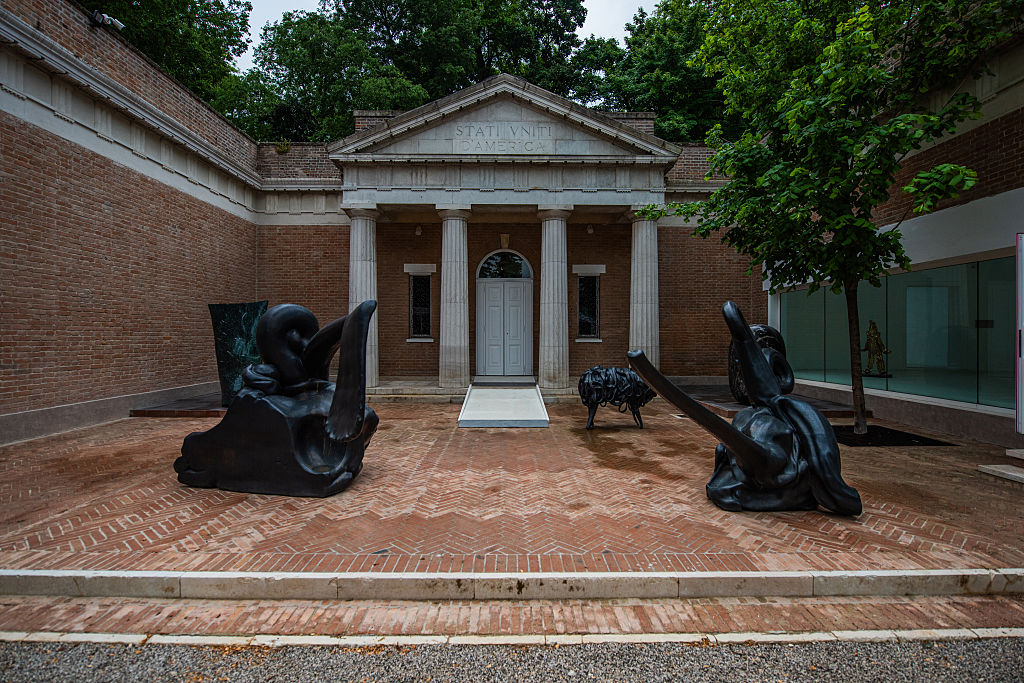
The 2026 Venice Biennale is embroiled in controversy, with the US Pavilion at the center of a political storm. The Trump administration's State Department overhauled the selection process, bypassing the usual NEA panel and commissioning a nonprofit, the American Arts Conservancy, to organize the pavilion. Artist Alma Allen, who accepted the invitation despite threats from galleries and curators, presents a show that critics find politically muted. The Biennale's jury resigned days before the opening, and annual prizes were canceled, adding to the turmoil.

Is the US about to be humiliated on the world’s most prestigious cultural stage?

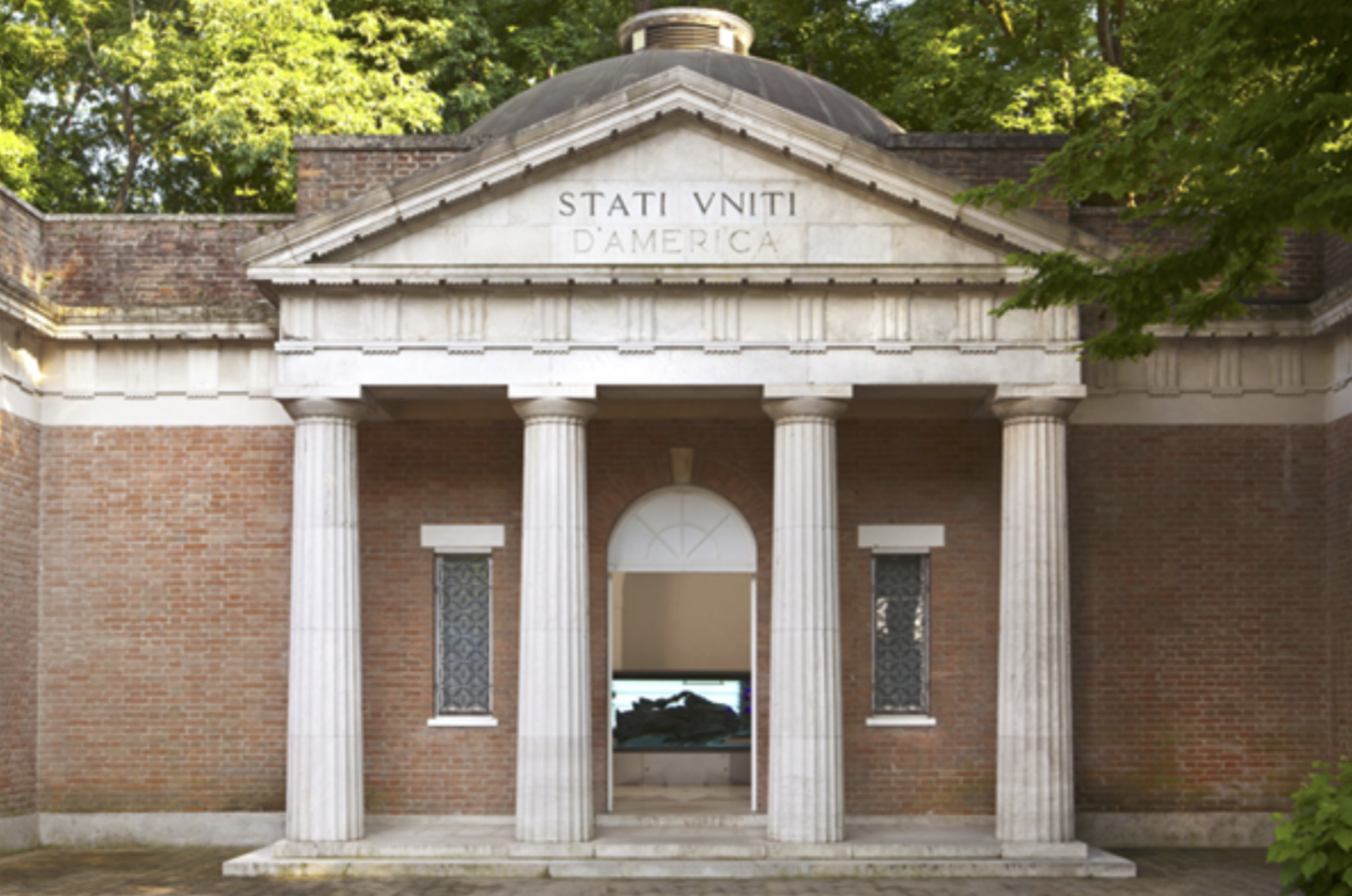
More than 70 prominent international artists have signed an open letter demanding the exclusion of the United States, Israel, and Russia from the 2026 Venice Biennale, accusing those governments of committing war crimes and atrocities. The controversy centers on the US pavilion, which will feature Mexico-based American artist Alma Allen, whose abstract, anodyne sculptures were chosen by a last-minute commissioner with no art-world experience—a luxury pet food store owner from Florida who reportedly gained the role through connections at Mar-a-Lago. The Biennale's five-person jury has already resigned amid the furor, and Russia is returning to the event for the first time since its 2022 invasion of Ukraine.

Roses and Thorns of Greater New York

The article is a digest of recent art news, with a primary focus on critical reviews of the 2026 "Greater New York" exhibition at MoMA PS1. Hyperallergic's editorial team provides mixed assessments of the works in the massive quinquennial survey of local artists. The piece also covers American-French sculptor Barbara Chase-Riboud's decision to decline an invitation to represent the United States at the 61st Venice Biennale, citing the problematic nature of the pavilion's commissioning entity.

La Biennale de Venise s’ouvre dans un climat houleux

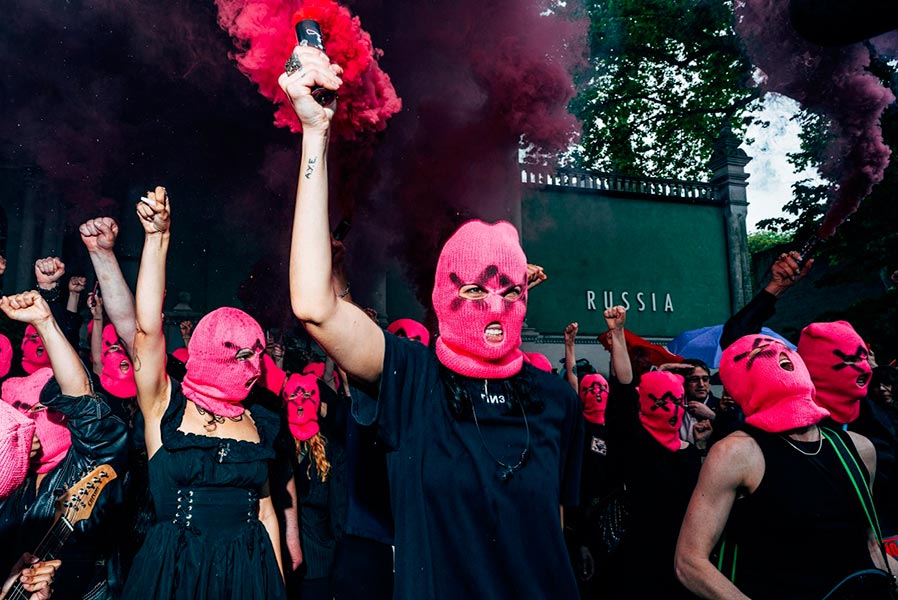
The 61st Venice Biennale opened amid intense controversy after its president, Pietrangelo Buttafuoco, announced the return of the Russian pavilion, which had been absent since the start of the Ukraine war. The European Commission suspended its €2 million subsidy for the 2028 edition, and the entire Biennale jury resigned on April 30. Buttafuoco later declared the Russian pavilion would remain closed, but protests erupted during the pre-opening days (May 6–8), drawing 28,000 professionals. Pussy Riot members, Femen activists, and the Free Nations League staged demonstrations, while the Israeli pavilion remained open despite a letter signed by nearly 200 artists calling for its exclusion.

Art and politics clash at Venice Biennale, as world conflicts upstage exhibition's opening

The 61st Venice Biennale, the world's most prestigious art exhibition, opens under unprecedented turmoil. For the first time, its vision was shaped by the late Cameroonian curator Koyo Kouoh, who centered artists from Africa and its diaspora. However, political conflicts over Russia and Israel have overshadowed the art. All five jurors resigned after the Italian culture minister investigated their decision to withhold prizes from Russia and Israel over alleged crimes against humanity. Protests erupted at the Russian pavilion, with Pussy Riot activists denouncing Russia's participation, while the Israeli pavilion artist threatened legal action over the jury's snub. The Biennale will proceed without a jury, with visitors voting for two awards, and the fate of the Golden Lion remains uncertain.

Italy’s Culture Minister Calls For Resignation Over Russian Pavilion’s Return to Venice Biennale

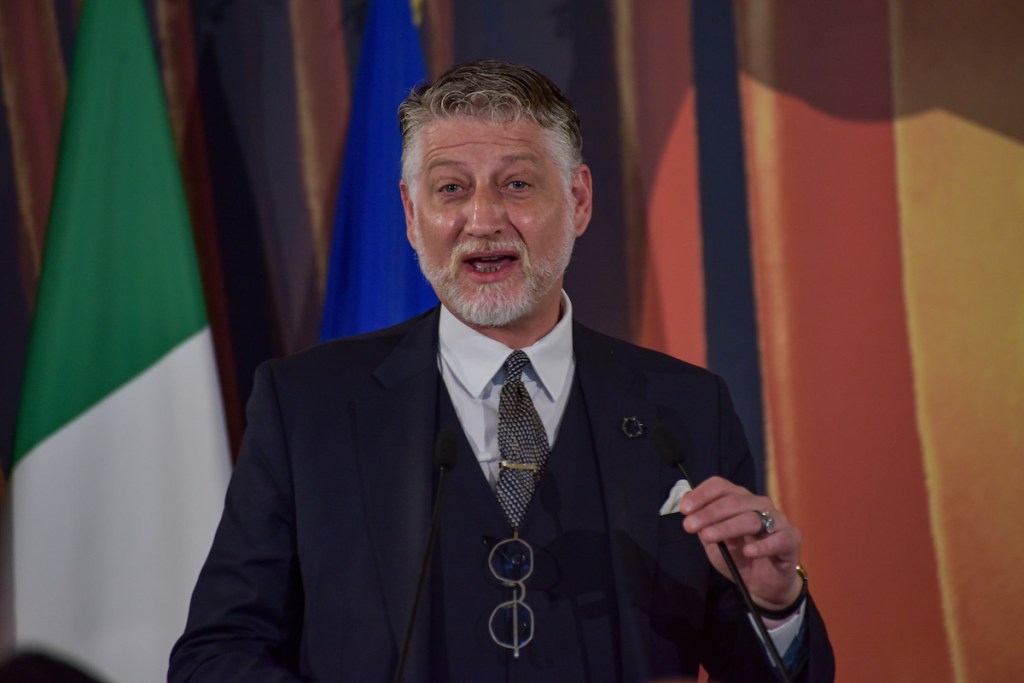
Italy's Culture Minister Alessandro Giuli has demanded the resignation of Tamara Gregoretti, the government's representative on the Venice Biennale board, accusing her of failing to alert the ministry to Russia's planned return to the 2026 exhibition. Russia announced it will reopen its national pavilion for the first time since 2019 with a presentation titled 'The Tree Is Rooted in the Sky,' curated by Anastasia Karneeva and featuring over 30 artists.

the round up south africa pavilion prado speed painting 2741528

The first Art Angle Round-Up of 2026 highlights three major art world stories. The selection includes the controversy surrounding the South Africa pavilion at the Venice Biennale, the Prado Museum's struggle with and plans to manage overwhelming visitor numbers, and the phenomenon of 'speed painting,' exemplified by artist Vanessa Horabuena selling a 10-minute painting of Jesus for nearly $3 million at a Mar-a-Lago fundraiser.

Putin ‘Won’ the Venice Biennale, Quips Italian Culture Minister

Italian Culture Minister Alessandro Giuli stated that Russian President Vladimir Putin "won" the 2024 Venice Biennale, criticizing Russia's controversial return to the event. Giuli, who repeatedly denounced Russia's presence, told Corriere della Sera that Russian artists in the pavilion cannot express dissent against their regime. The Biennale faced widespread calls to remove Russia, with the EU threatening to withhold a €2 million grant, but organizers argued they lacked legal authority to exclude the country. Protests by Pussy Riot and FEMEN marked the pavilion's opening, while the Biennale's jury resigned en masse after announcing that nations charged with crimes against humanity would be ineligible for Golden Lions.

What You Need to Know About the Venice Biennale’s Russian Pavilion Controversy

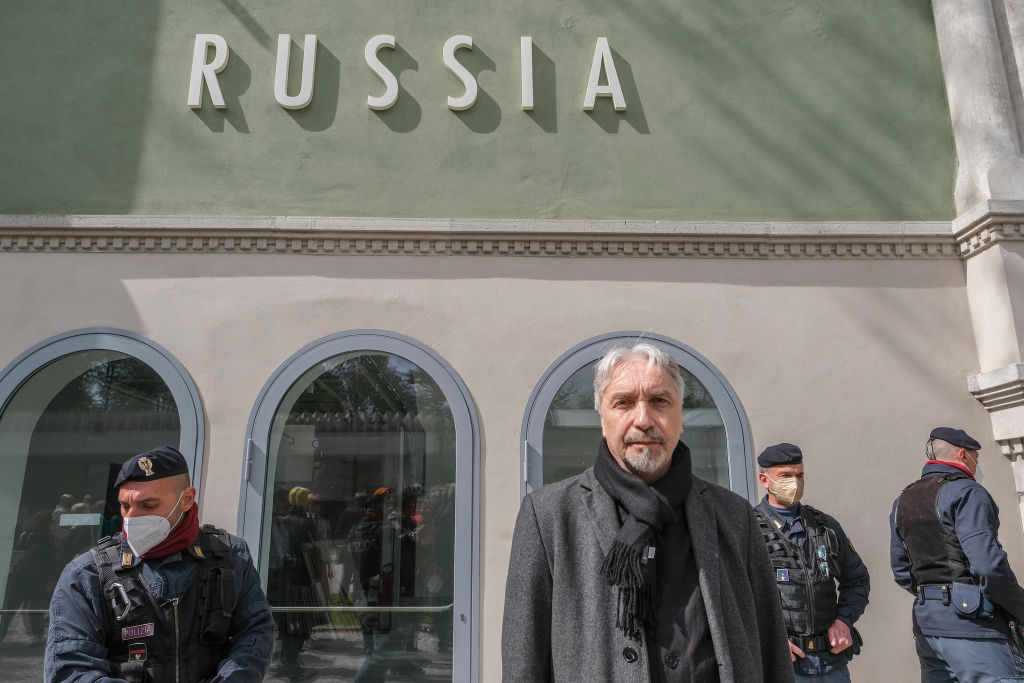
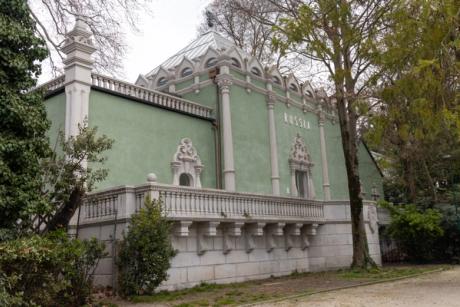
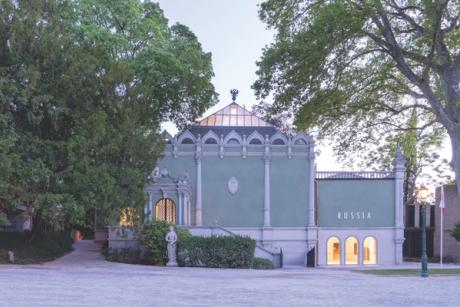
The Russian pavilion is set to return to the Venice Biennale for the first time since the 2022 invasion of Ukraine, presenting an exhibition titled 'The tree is rooted in the sky.' This has sparked significant controversy, with artists, curators, and politicians from Ukraine and several European nations calling for the pavilion's exclusion, citing the ongoing war and sanctions. The Biennale organizers have refused to remove Russia, stating they lack the authority to exclude a state recognized by Italy and emphasizing the event's role as a neutral space for cultural dialogue.

The message behind the US pavilion at the Venice Biennale

The article previews the 61st Venice Biennale, opening May 9 and running through November 22, highlighting early controversies. The five-person Golden Lion jury, led by Brazilian curator Solange Farkas, resigned after declaring they would not consider pavilions from countries under International Criminal Court investigation, targeting the Israel pavilion and its artist Belu-Simion Fainaru. Separately, the US pavilion has drawn scrutiny from the New York Times over its selection process, with commissioner Jenni Parido (a former pet food store owner) tapping curator Jeffrey Uslip and sculptor Alma Allen, bypassing traditional funders like the Ford and Mellon foundations.

Barbara Chase-Riboud Speaks Out on Declining US Biennale Pavilion

Sculptor and author Barbara Chase-Riboud has publicly declined an invitation to represent the United States at the 2026 Venice Biennale, stating it was "not the moment" for her to do so. She was among the artists initially considered by the newly formed American Arts Conservancy (AAC), which is organizing the US pavilion after both she and photographer William Eggleston turned down the opportunity.

"Hier darf laut gelacht werden"

During the opening week of the Venice Biennale, multiple reports detail controversies surrounding the Israeli and Russian pavilions. According to Hyperallergic, artist Belu-Simion Fainaru of the Israeli pavilion threatened legal action against the Biennale after the jury sought to exclude Israel and Russia from prizes over alleged human rights violations, citing antisemitism and nationality-based discrimination. This may have prompted the jury's sudden resignation. Meanwhile, taz reports that Russia's pavilion is a macabre 'dance of death' blending techno and political denial, while Israel's pavilion faces a 'silent boycott' and social ostracism. Zeit describes protests by Pussy Riot and Femen outside the Russian pavilion as a defining image, with activists chanting 'blood sticks to the art of this country.'

Israel Addresses Venice Biennale Jury’s ‘Boycott’ of Pavilion: ‘A Contamination of the Art World’

Israel’s foreign ministry has condemned a statement by the Venice Biennale jury, in which the five curators declared they would not consider pavilions from countries charged with crimes against humanity by the International Criminal Court. The jury’s decision effectively boycotts Israel and Russia, whose leaders face ICC arrest warrants. Israel called the move a “contamination of the art world,” while the artist representing Israel, Belu-Simion Fainaru, also denounced the jury for creating a hostile environment. The Biennale’s organizers have distanced themselves from the jury, stating they cannot exclude any recognized state from the exhibition.

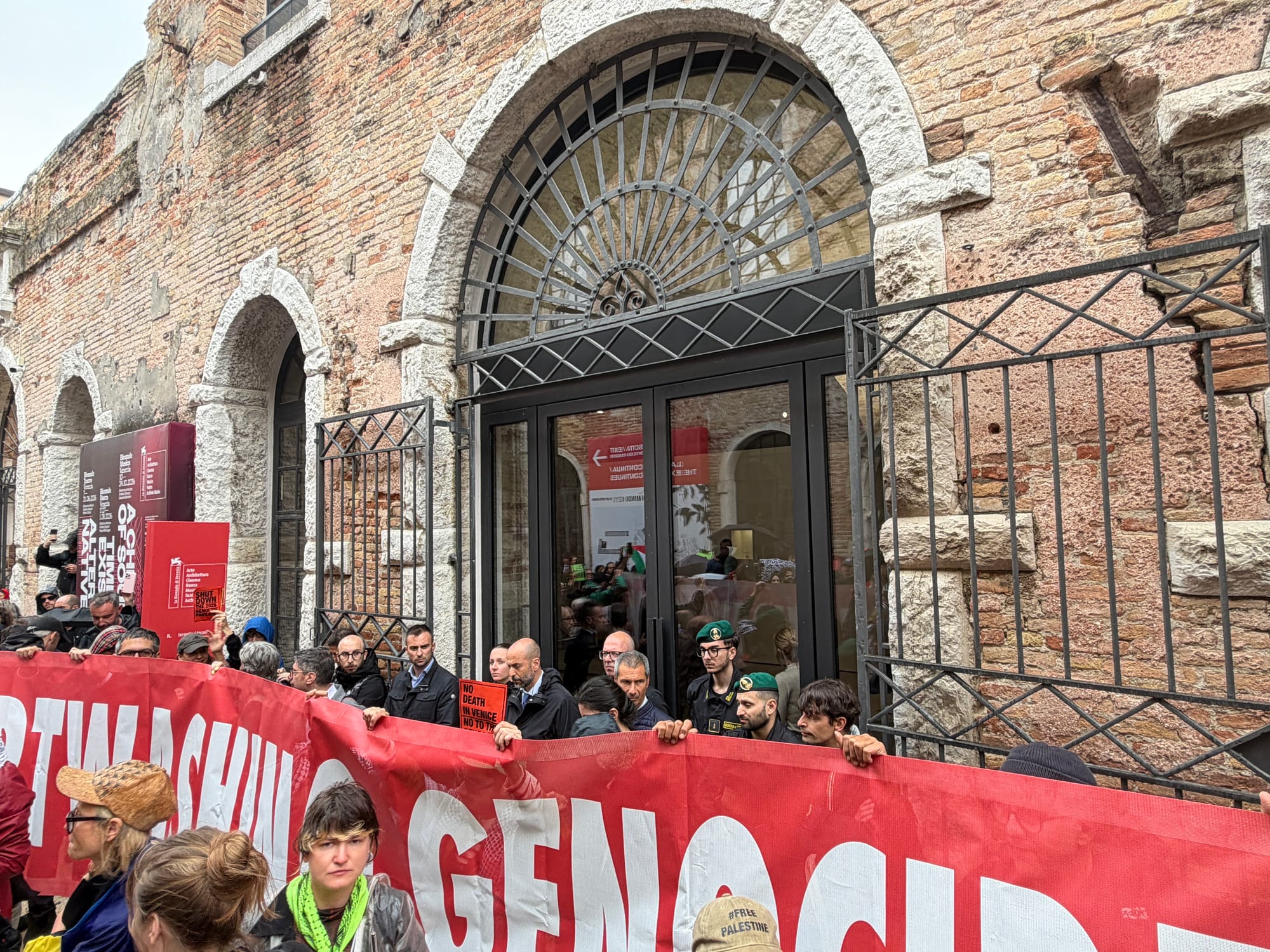
Cultural workers at Venice Biennale to strike over Israel’s participation

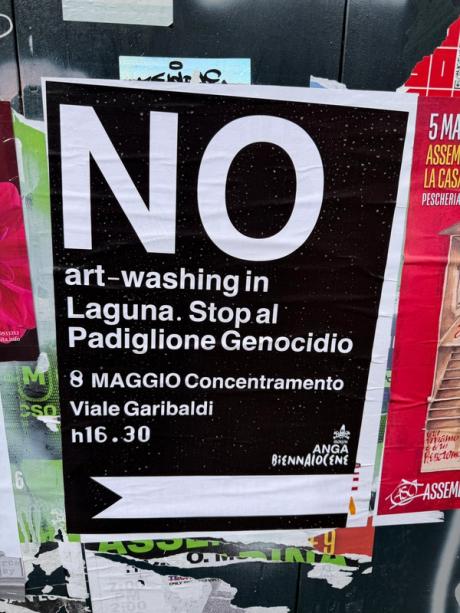
Cultural workers and participants at the Venice Biennale plan to strike on 8 May during the opening week of the 61st edition, protesting Israel’s participation in the event. The strike, organized by the Art Not Genocide Alliance (ANGA) and supported by Italian trade unions, includes a rally near the Arsenale site. ANGA previously sent a letter signed by over 230 artists and curators demanding the cancellation of the Israeli pavilion, citing opposition to "genocide normalisation in culture" and precarious labor conditions. Israel is represented this year by sculptor Belu-Simion Fainaru, who opposes cultural boycotts.

Russia’s pavilion at Venice Biennale will be closed if it features propaganda, city’s mayor says

Luigi Brugnaro, the mayor of Venice, has stated that Russia's pavilion at the upcoming Venice Biennale will be closed if it engages in propaganda. This declaration comes amid controversy over Russia's planned participation, its first since the 2022 invasion of Ukraine, and internal disputes between Biennale president Pietrangelo Buttafuoco and Italy's culture minister, Alessandro Giuli, who has threatened to withdraw ministry support.

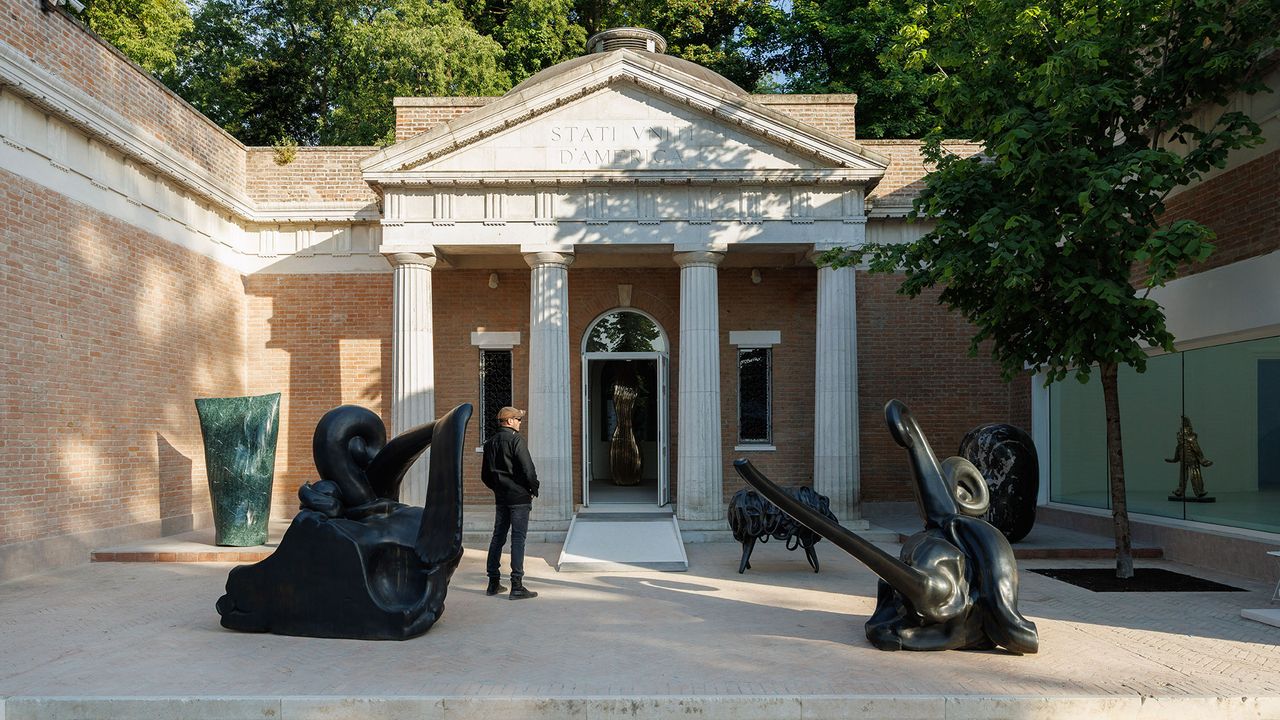
The Biomorphic Sculptures of Alma Allen in the U.S. Pavilion at the 2026 Venice Art Biennale (Amid Controversy)

Le sculture biomorfiche di Alma Allen nel Padiglione USA alla Biennale d’Arte di Venezia 2026 (tra le polemiche)

Alma Allen, a self-taught American sculptor, has been selected to represent the United States at the 61st Venice Biennale in 2026 with the exhibition "Call Me the Breeze." The pavilion, curated by Jeffrey Uslip, will feature site-specific biomorphic sculptures that explore the concept of "elevation" through a hybrid creative process combining pre-industrial carving and hand-modeling with advanced robotic sculpting. Works will incorporate local American materials such as walnut burl, Cantera green volcanic rock, and Yule marble from Colorado, and the pavilion is tied to America250, the celebration of the 250th anniversary of the U.S. Declaration of Independence.

Israeli Pavilion Artist Made Legal Threats Before Venice Biennale Jury Resigned

New reports reveal that Israeli Pavilion artist Belu-Simion Fainaru issued legal threats against the Venice Biennale, alleging antisemitism and discrimination after the awards jury decided to exclude Israel and Russia from consideration due to human rights charges. The jury, which included Elvira Dyangani Ose, Zoe Butt, Marta Kuzma, Giovanna Zapperi, and Solange Farkas, initially stated on April 22 it would not consider nations whose leaders are charged with crimes against humanity by the International Criminal Court. Fainaru filed legal warnings with the Biennale, the Italian Ministry of Culture, and the Prime Minister's office. The jury abruptly resigned eight days later, leading the Biennale to scrap the Golden Lion awards and institute "Visitor Lions" decided by public vote. Reports indicate the Biennale's legal department warned jurors could be personally liable for damages, and Italian Culture Minister Alessandro Giuli promised to promote Fainaru's work.

Jury of the Venice Biennale Resigns

Jury der Venedig-Biennale tritt zurück

The entire jury of the Venice Biennale, appointed by artistic director Koyo Kouoh, has resigned with immediate effect. In a statement released on Thursday, the jury members—including chair Solange Oliveira Farkas, Zoe Butt, Elvira Dyangani Ose, Marta Kuzma, and Giovanna Zapperi—cited a prior declaration from April 22 in which they announced they would not award Golden or Silver Lions to artists from countries whose political leadership is currently indicted by the International Criminal Court (ICC) for crimes against humanity. Although no specific countries were named, the move implicitly targets Russia (President Vladimir Putin) and Israel (Prime Minister Benjamin Netanyahu), both subject to ICC arrest warrants. The resignation comes amid escalating tensions over Russia's participation in the Biennale despite EU sanctions, which had already led to a freeze of EU funding and widespread protests.

Members of European Parliament call on EU to pull Venice Biennale funding over Russian participation

At least 34 Members of the European Parliament have signed a letter demanding the suspension of all EU funding to the Venice Biennale Foundation if Russia's participation proceeds. The letter, addressed to top EU officials, argues that allowing a state under extensive sanctions to participate in an EU-funded event contradicts the bloc's values and weakens its credibility.

Funding Feud Over Russia's Return To The Venice Biennale

Russia is set to return to the Venice Biennale with its national pavilion for the first time since its 2022 full-scale invasion of Ukraine. This has sparked a funding feud, with the European Commission threatening to withhold a €2 million grant from the event if Russia's exhibit proceeds, a move criticized by Italian Deputy Prime Minister Matteo Salvini.