
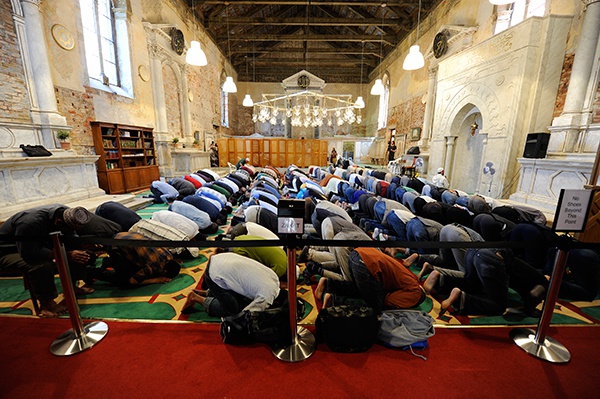
Authorities in Venice have shut down the working mosque installed by Swiss artist Christoph Büchel in the city center as part of his presentation for the Icelandic Pavilion at the 2015 Venice Biennale. The closure followed an evaluation by a public safety committee, citing overcrowding during Friday prayers that exceeded the legal limit of 90 people, as well as security concerns due to the mosque's location near a pedestrian bridge. The Venice Biennale expressed hope that solutions could be found to reopen the pavilion, while the Icelandic Art Center's director published a letter detailing the fraught negotiations with Italian authorities leading up to the installation.
This incident matters because it highlights the tension between artistic freedom and public safety regulations, especially in a post-9/11 context where religious spaces can be perceived as security threats. Büchel's project was the first mosque ever in Venice's historic center, making its closure a significant political and cultural statement. The case raises questions about the limits of institutional support for provocative art, the role of national pavilions in addressing sensitive topics, and the power of local authorities to override curatorial decisions at major international exhibitions like the Venice Biennale.