
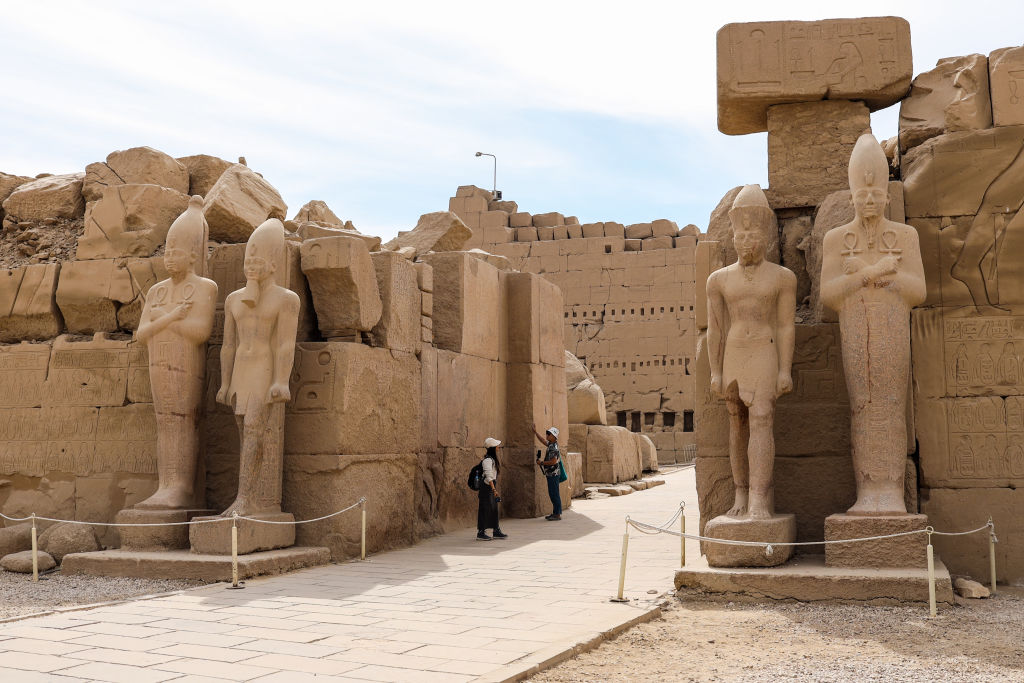
A new study published in the journal Antiquity reveals that Egypt’s Karnak Temple was originally built on a small island, or “fluvial terrace,” surrounded by river channels. The research, led by Ben Pennington of the University of Southampton, is the first comprehensive geoarchaeological survey of the site, analyzing 61 sediment cores and thousands of ceramic fragments. It dates the earliest occupation of Karnak to around 2520 BCE, with ceramics from 2305–1980 BCE, and shows that ancient Egyptians geo-engineered the landscape by dumping desert sand into channels to create new building land.
The findings matter because they reshape understanding of Karnak’s origins and its symbolic connection to Egyptian creation myths, where a god emerges from primeval waters. The island configuration may have been deliberately chosen by Theban elites to evoke the cosmogonical scene of high ground rising from floodwaters, linking the temple’s physical location to religious cosmology. This research also provides unprecedented detail on how the temple evolved from a small island into one of ancient Egypt’s most defining institutions, highlighting the interplay between natural geography and human engineering.