
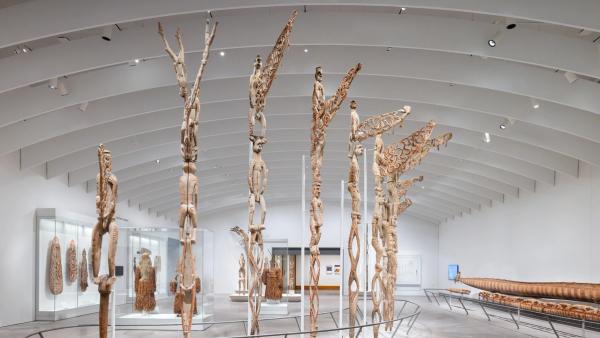
The article explores the rich artistic traditions of Oceania, emphasizing how the vast network of islands and ocean passageways fostered a dynamic exchange of cultures, materials, and ideas over millennia. It describes Oceanic art as vessels for metaphysical journeys, with objects like fishhooks, stick charts, and carved figures serving as tangible expressions of ancestral power and cultural knowledge. The text highlights the role of artists as chiefs and orators who manipulate local materials to manifest spirits, and traces the region's entanglements with European colonial powers from the sixteenth century onward.
This article matters because it reframes Oceanic art not as static artifacts but as living, agentive forces that connect past and present, and link diverse island communities across a third of the globe. By emphasizing the conceptual depth of practical objects and the spiritual agency of artworks, it challenges Western art historical narratives and underscores the importance of Indigenous knowledge systems. The piece also contextualizes the impact of colonial exploitation on the region, making it relevant for discussions about cultural heritage, restitution, and decolonization in the art world.