
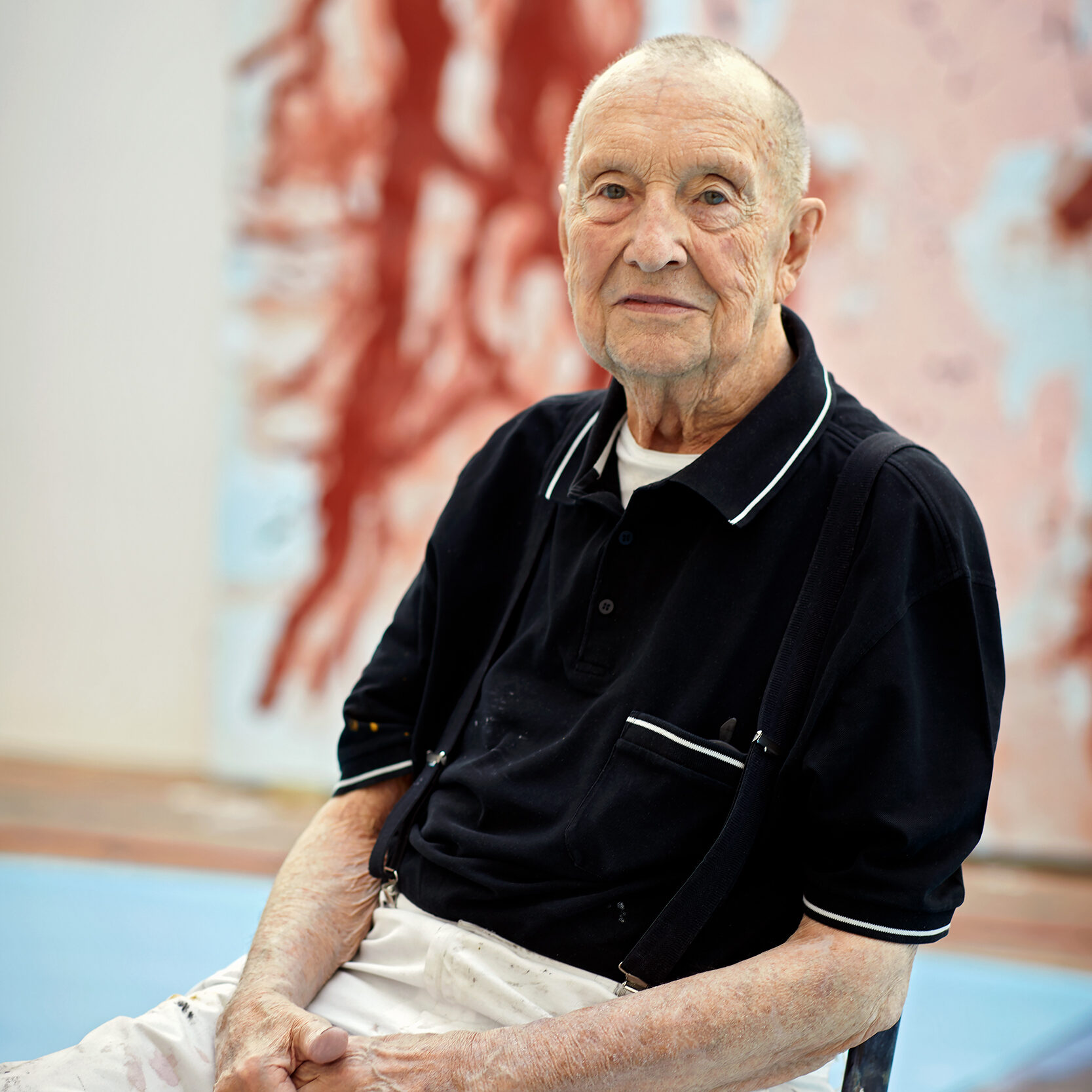
Georg Baselitz, the influential German painter known for his inverted, upside-down artworks, has died at age 88 on April 30. The news was announced by his longtime gallery, Thaddaeus Ropac, via an obituary written by Robert Isaf. Baselitz gave his final spoken interview weeks before his death, discussing his upcoming exhibition “Eroi d’Oro [Heroes of Gold]” at the Fondazione Giorgio Cini in Venice, which opened May 6. The show features monumental gold-primed canvases with inverted portraits of himself and his wife Elke, which he described as a summary of his career and a reflection on art history.
Baselitz’s death marks the end of an era for post-war German art. He was a defining figure who challenged conventions with his grotesque, morally ambiguous imagery, addressing themes of trauma and guilt in post-war Germany. His 1963 work "The Big Night Down the Drain" led to an obscenity trial, and his "Hero" paintings subverted heroic male imagery. By remaining an outsider and refusing to follow trends, Baselitz profoundly influenced generations of artists worldwide. His final exhibition in Venice serves as a poignant coda to a career that consistently disrupted artistic norms and provoked critical dialogue.