
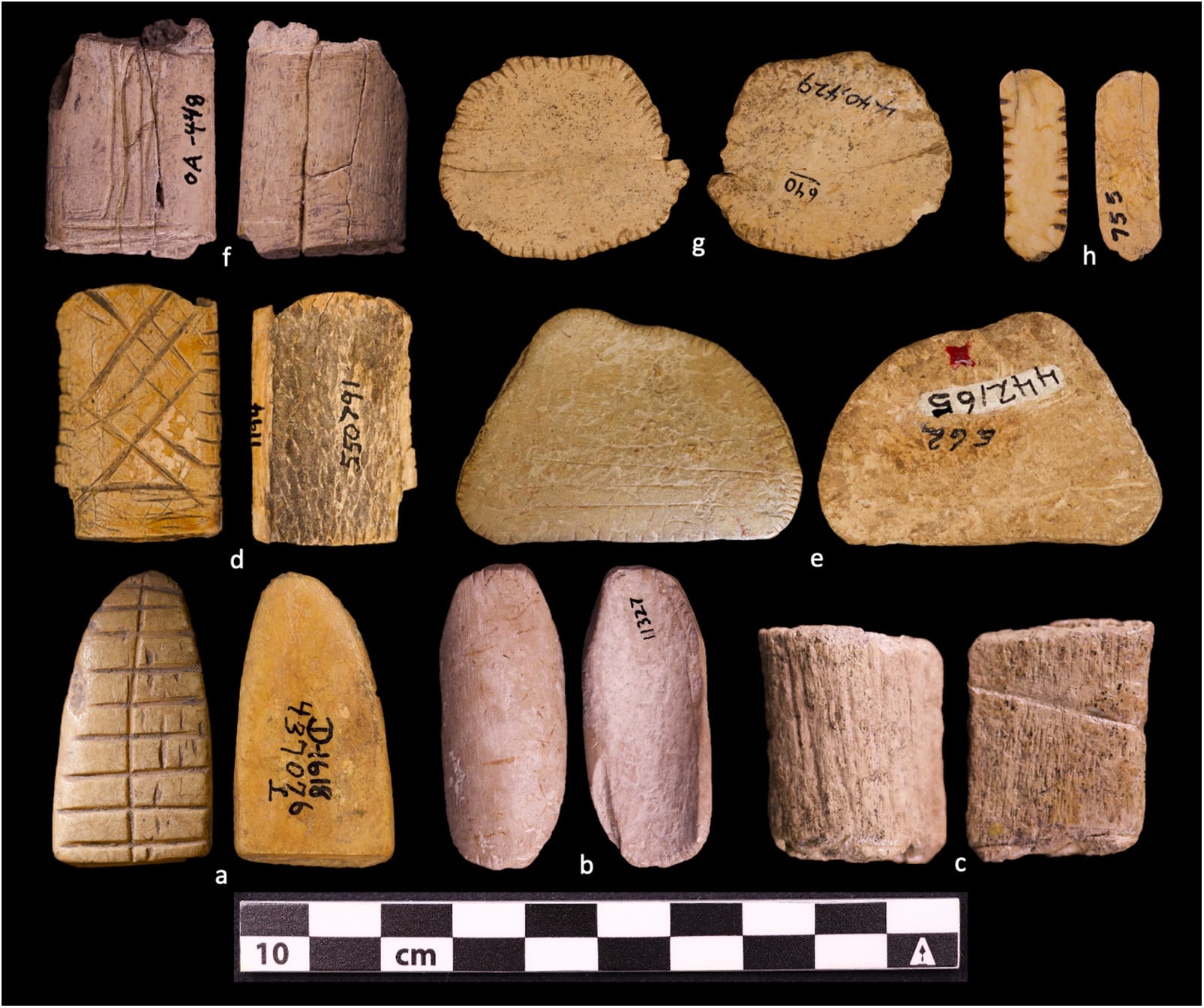
Archaeologists have discovered that Native Americans were engaging in games of chance using handmade dice as far back as 12,000 years ago, during the Late Pleistocene. A new study by researcher Robert Madden reveals that these artifacts, found in sites across Wyoming, Colorado, and New Mexico, predate the previously oldest known dice from Mesopotamia and the Indus Valley by over 6,000 years. These early dice, often made of bone and decorated with pigments, were used by the hunter-gatherer Folsom culture.
This discovery significantly shifts the timeline of human interaction with probability and randomness, suggesting that ancient North Americans were the first known people to intentionally record and observe controlled random events. Beyond mere entertainment, researchers believe these games served as vital social tools in highly mobile societies, helping disparate groups connect in liminal spaces. The findings highlight a sophisticated early understanding of mathematical patterns and the probabilistic nature of the universe long before the rise of established Eastern civilizations.