
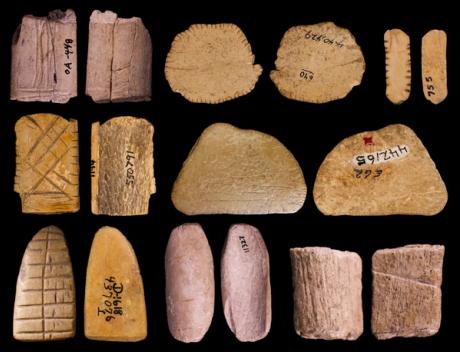
Archaeological research from Colorado State University has identified the world's oldest known dice, created by Native American hunter-gatherers on the western Great Plains over 12,000 years ago. These two-sided "binary lots," found at Folsom-period sites in Wyoming, Colorado, and New Mexico, predate the earliest known Old World dice by more than 6,000 years. The study reclassifies artifacts previously overlooked or misidentified, highlighting that these objects were the only decorated, non-utilitarian items found at these late-Pleistocene sites.
This discovery challenges the Eurocentric narrative that the concepts of probability and randomness were Old World innovations. Beyond their mathematical significance, these games of chance served as a vital "social technology," allowing disparate groups to interact and integrate through shared rules and gambling. The findings suggest a level of intellectual complexity and artistic intent in prehistoric Native American societies that was far more advanced than previously recognized by historians of science and art.