
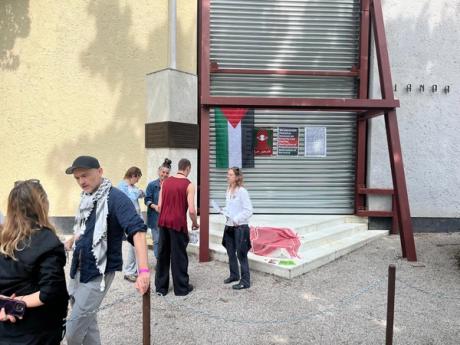
On 8 May, more than 15 national pavilions at the Venice Biennale temporarily or partially closed in a coordinated strike organized by the Art Not Genocide Alliance (ANGA). The protest opposes Israel’s participation in the event, which organizers say normalizes what they call genocide and exploits precarious labor. Participating countries include Austria, Lebanon, Slovenia, Egypt, Poland, and the Netherlands, whose artist Dries Verhoeven stood outside his shuttered pavilion with a Palestinian flag. Some pavilions, like Japan’s, remained open but suspended interactive elements. The strike follows earlier controversies, including the resignation of the prize jury and an open letter demanding the Israeli pavilion’s cancellation.
This strike matters because it marks an unprecedented collective action by artists and curators at one of the world’s most prestigious art events, directly challenging the Biennale’s inclusion policies. By drawing parallels to the apartheid-era exclusion of South Africa, protesters aim to pressure the institution to change its rules regarding Israel and Russia. The action highlights growing tensions between cultural diplomacy and political protest in the art world, and could set a precedent for how international biennials handle geopolitical conflicts in the future.