
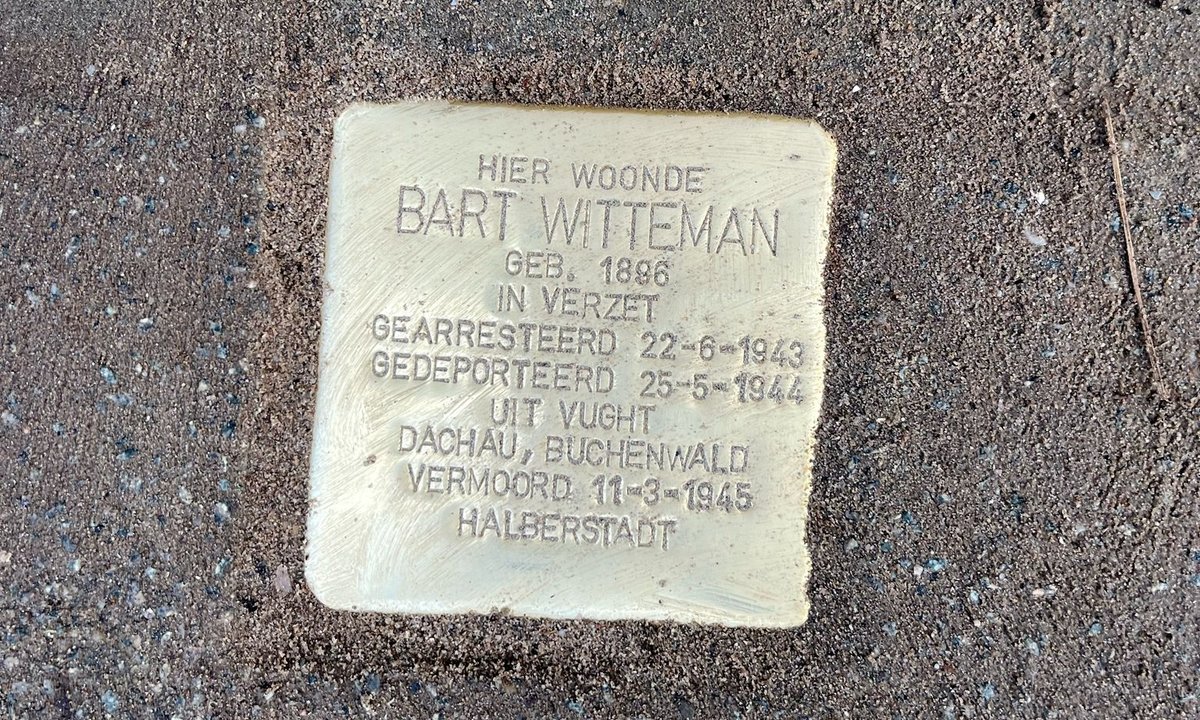
Ton Witteman, grandson of Dutch resistance hero Bart Witteman, has laid an unauthorized 'stumbling stone' (stolpersteine) in front of his grandfather's former home in Haarlem, Netherlands. Bart Witteman, a policeman who sheltered two Jewish people during World War II, was arrested, deported, and murdered by the Nazis in 1945. The city council had refused to include non-Jewish resistance figures in its official memorial program, which only covers the 733 murdered Jewish, Sinti, and Roma residents. Witteman obtained the hand-stamped brass plaque from German artist Gunter Demnig's Stolpersteine project and installed it himself with the current homeowners' blessing.
This act matters because it challenges municipal memorial policies and expands who is officially remembered as a Nazi victim. Haarlem's mayor has stated the city will not remove the illicit stone, and the council has now voted to create its own memorial pavestone for other non-Jewish Nazi victims, inspired by Demnig's project. The story highlights ongoing debates across Europe about how to commemorate all victims of National Socialism, including political prisoners and resistance fighters, and demonstrates how grassroots actions can shift institutional memory practices.