
Wenn die Nacht auf den Tag abfärbt
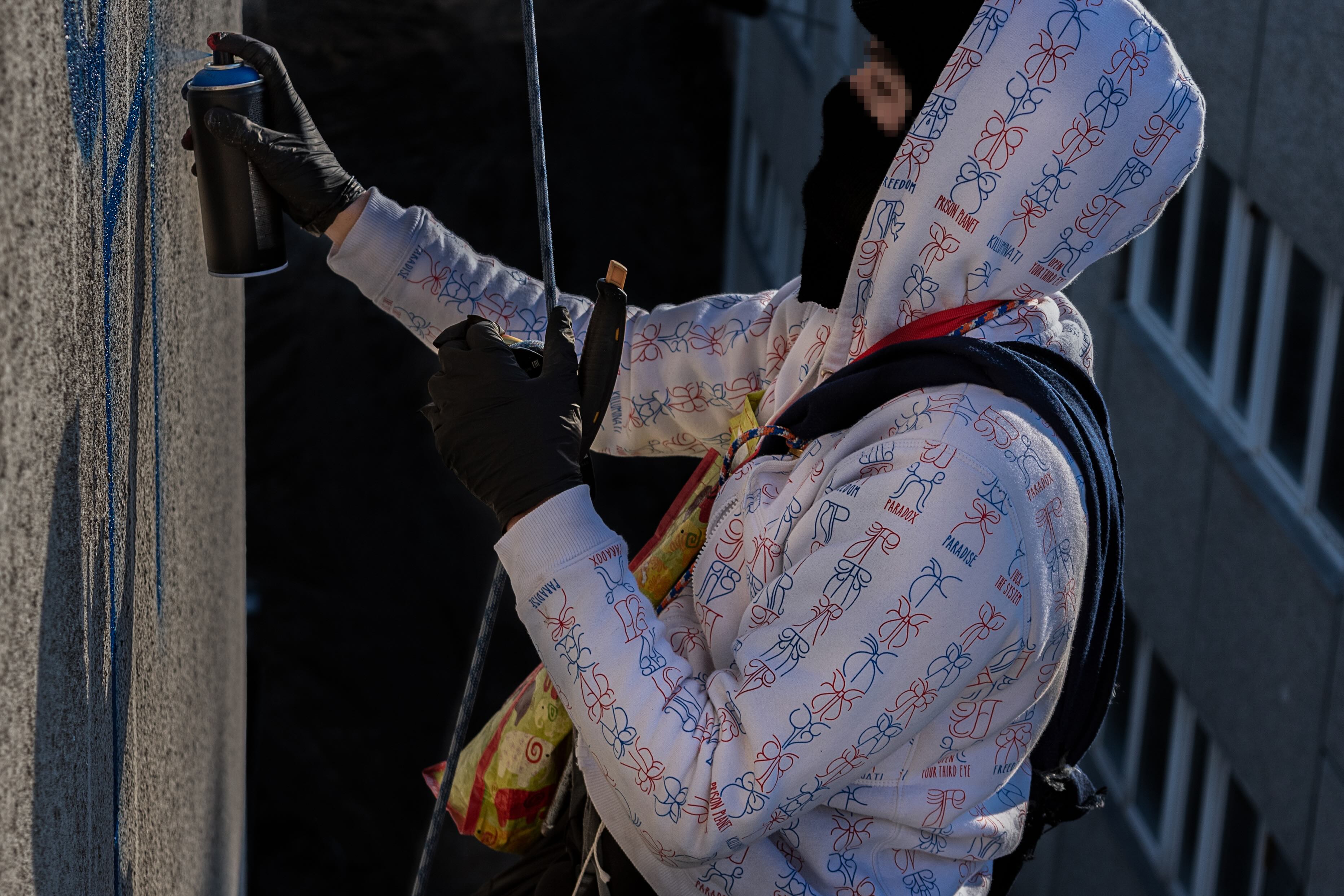
Berlin-based graffiti artist Paradox Paradise, known for his distinctive red-and-blue "Paraglyphs" painted on high facades, discusses his evolution from classic graffiti to a radically reduced visual language. In an interview with Monopol, he explains how he stripped away decorative elements to focus on precise, vertical outlines and messages like "Mieten runter Wände bunter" (lower rents, more colorful walls). He describes his nocturnal actions as states of heightened presence requiring weeks of planning, where every movement has immediate consequences.
This article matters because it offers insight into a contemporary street artist who redefines graffiti by merging typography, architecture, and social commentary. Paradox Paradise's work reclaims urban space in Berlin, a city shaped by division and reconstruction, and his practice reflects broader trends in public art that challenge accessibility and visibility. The interview highlights how graffiti can evolve from rebellion into a disciplined, reflective art form that engages with political and spatial realities.