
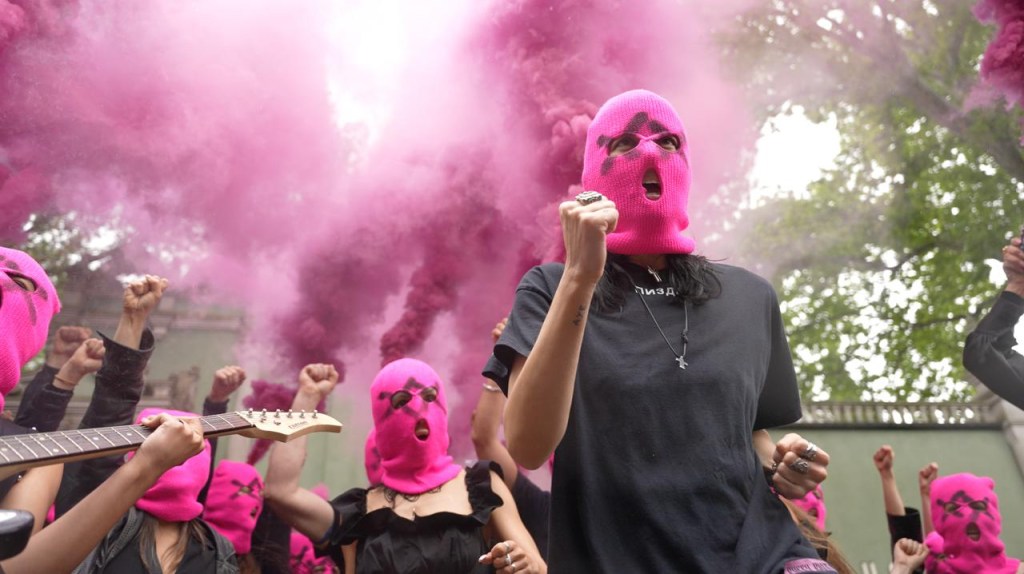
The Russian Pavilion at the 2026 Venice Biennale has become embroiled in a new controversy after accusing the anti-Putin art collective Pussy Riot of censorship. The pavilion posted on Instagram that Pussy Riot demanded the removal of footage featuring them from a documentary film about the pavilion's project, labeling the request as self-censorship. Pussy Riot responded sarcastically, questioning the pavilion's use of Instagram given Russia's 2022 ban of the platform. The dispute follows earlier protests at the pavilion's opening, led by Pussy Riot and FEMEN, against Russia's participation in the Biennale amid its ongoing invasion of Ukraine.
This incident matters because it highlights the deepening fault lines in the international art world over Russia's cultural presence during the war in Ukraine. The Russian Pavilion had already faced backlash, including threats from the European Union to withdraw funding for the 2028 Biennale over sanctions violations. The spat between the pavilion and Pussy Riot underscores the tensions between artistic expression, protest, and censorship, as well as the complex politics of cultural diplomacy in a time of conflict. It also raises questions about how institutions navigate sanctions and public opinion while maintaining a presence at major global art events.