
Corpo come dispositivo. Guida e riflessione sulle performance della Biennale di Venezia
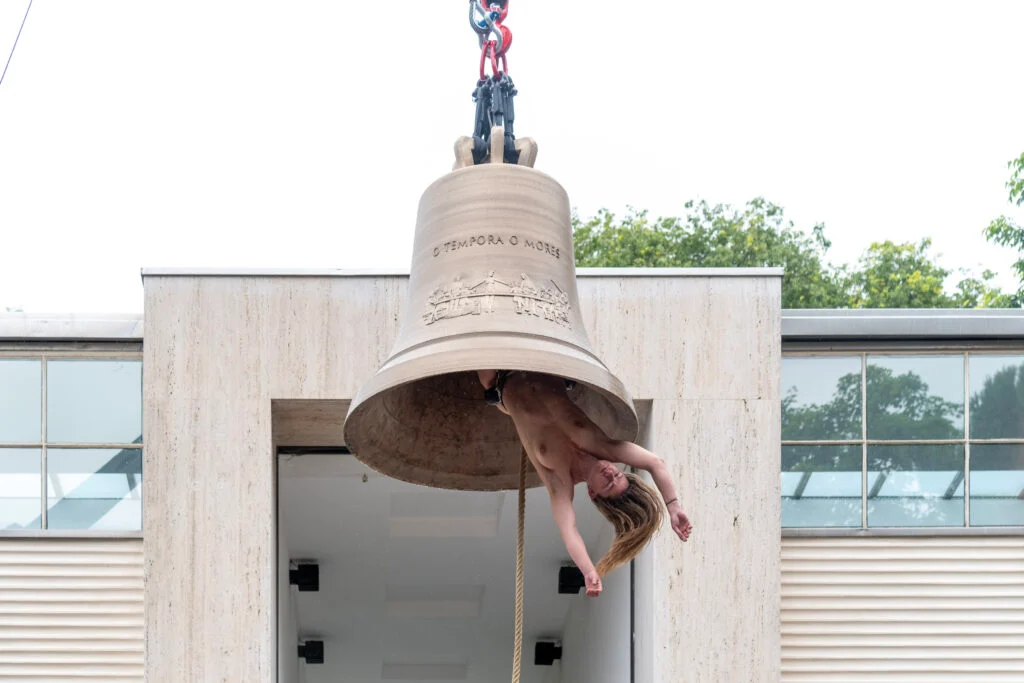
The article analyzes the role of performance art at the 2026 Venice Biennale, arguing that performance is no longer a rediscovered genre but a structurally institutionalized primary form of experience production. It examines how the body reemerges not as an alternative to image-based works but as an internal interruption of the artwork system, preventing closure and reintroducing instability. Key pavilions are discussed: Austria's Florentina Holzinger with "Sancta" draws on 1970s radical performance and feminist body art, creating an immersive environment of continuous movement; Belgium's Miet Warlop with "IT NEVER SSST" engages post-dramatic theater and postmodern dance repetition; Japan's Ei Arakawa-Nash with "Grass Babies, Moon Babies" activates Gutai avant-garde legacies through viewer interaction with soft dolls.
This matters because the article frames the Biennale as a site where competing regimes of the contemporary body are staged, each rooted in distinct historical genealogies that directly shape their forms. By drawing on theorists like Erika Fischer-Lichte and Jacques Rancière, the piece argues that performance redefines the field of the visible and the conditions of perception itself, moving beyond representation to produce transformation in real time. The analysis suggests that the Biennale's most significant pavilions are not collections of works but arenas for competing bodily regimes, making the 2026 edition a critical moment for understanding how contemporary art institutions have fully absorbed performance as a structural, rather than peripheral, practice.