
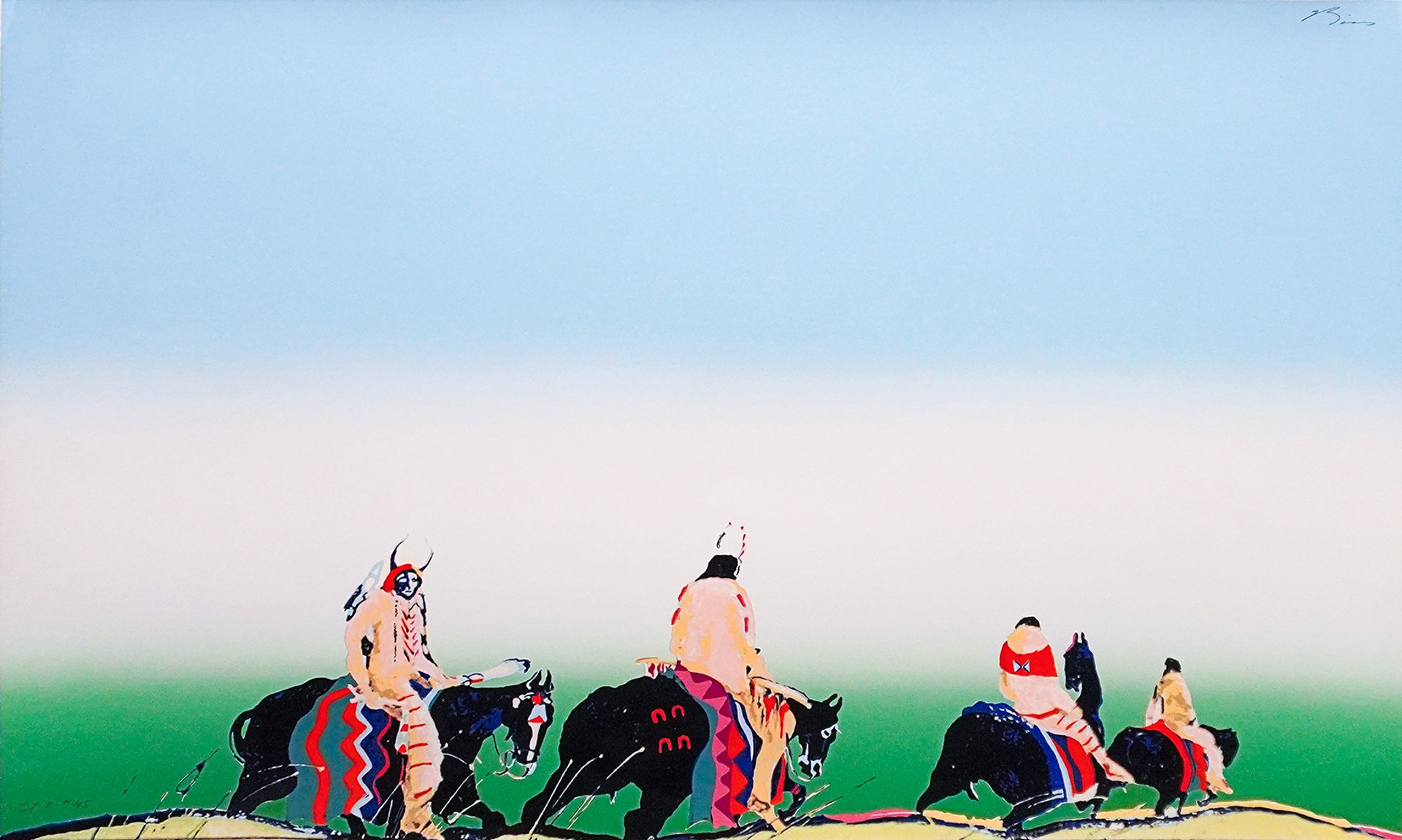
A generation of Native American artists, emerging from the Institute of American Indian Arts (IAIA) in Santa Fe from the 1960s onward, reclaimed Indigenous representation in American art. Figures like Fritz Scholder, T.C. Cannon, Kevin Red Star, and Earl Biss used modernism, irony, and cultural specificity to dismantle colonial stereotypes of Native peoples as romanticized relics, instead portraying them as contemporary individuals with agency and living traditions.
This movement matters because it fundamentally reshaped the American art canon, challenging the long-standing exclusion of Indigenous perspectives from mainstream art history. By blending Abstract Expressionism, Pop Art, and tribal traditions, these artists asserted Native American identity as dynamic and evolving, influencing subsequent generations and forcing the art world to reckon with its colonial foundations. The article underscores the ongoing relevance of this reclamation in debates about representation and cultural sovereignty.