
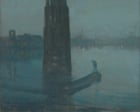
The article explores how the James McNeill Whistler exhibition at Tate in London prompts a reconsideration of the relationship between music and visual art. Whistler titled his works using musical terms like "Arrangement," "Symphony," and "Nocturne," arguing that painting should be abstract and independent of narrative, much like instrumental music. The exhibition, reviewed by Jonathan Jones, highlights Whistler's radical art-for-art's-sake philosophy, which influenced composer Claude Debussy, whose orchestral Nocturnes were directly inspired by Whistler's paintings of light and atmosphere.
This cross-disciplinary connection matters because it challenges conventional distinctions between art forms and underscores how abstraction in painting anticipated modernist sensibilities. Whistler's fusion of visual and musical ideas not only reshaped painting but also inspired Debussy to translate color and light into sound, creating a reciprocal influence that expanded the boundaries of both arts. The article demonstrates that Whistler's legacy endures as a pivotal force in the development of abstract and sensory art, encouraging audiences to experience art beyond literal representation.