
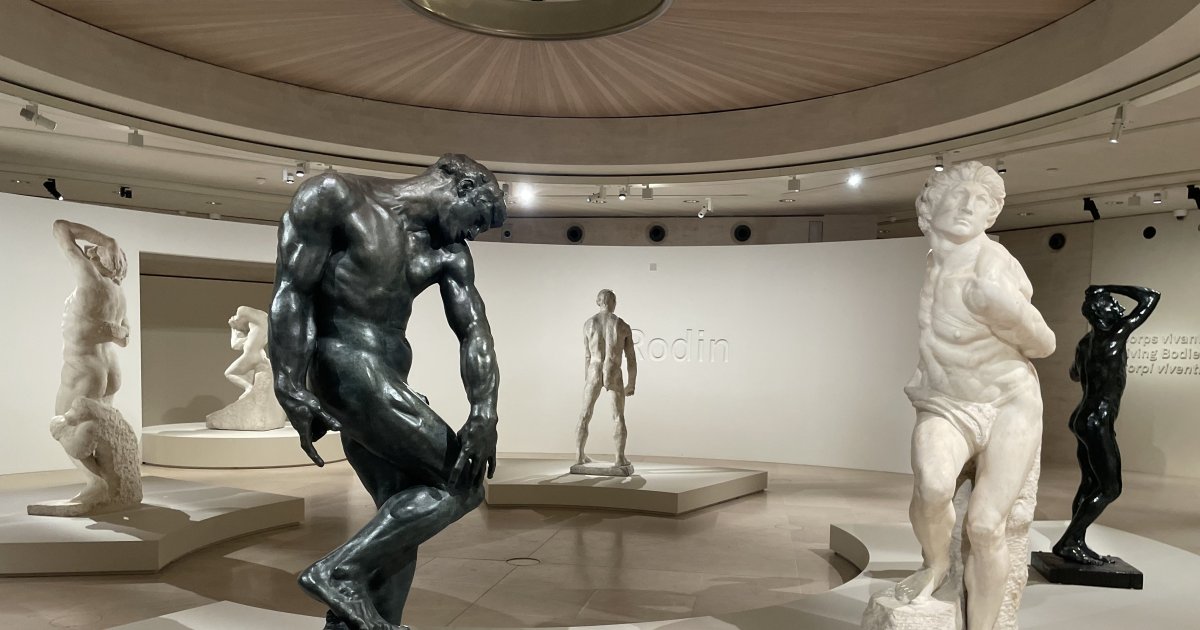
The Louvre in Paris is staging an exhibition titled "Michel Ange Rodin. Corps vivants" from April 15 to July 20, 2026, pairing the Renaissance master Michelangelo with the 19th-century sculptor Auguste Rodin. The show aims to highlight artistic affinities between the two despite their 350-year gap, but critics note a severe imbalance: Rodin is represented by some forty sculptures, while only three works by Michelangelo are on display—two of which are the Louvre's own "Slaves" (Rebel and Dying). After the introductory gallery, the exhibition relies on photographs, works "after Michelangelo" or from his circle, sculptures "inspired" by him, and plaster casts (including a fine 1838 cast of Moses by Felice Adriani), with only a small wooden Christ and a number of drawings to evoke the sculptor's oeuvre.
This disparity matters because it raises fundamental questions about curatorial ambition versus practical feasibility. The Louvre acknowledges that masterpieces like the David, the Pietà, or the Medici tomb could not be moved, yet the exhibition's premise—a direct confrontation between two titans—is undermined by the near-absence of Michelangelo's original sculptures. The review suggests the subject was "torpedoed from the start," turning what could have been a revelatory dialogue into a lopsided display that may frustrate visitors expecting a genuine face-off between two of history's greatest sculptors.