
DE MUERTES EN VENECIA. EL PROLETARIADO DEL ARTE Y LA ANTI-BIENAL SOLIDARIA
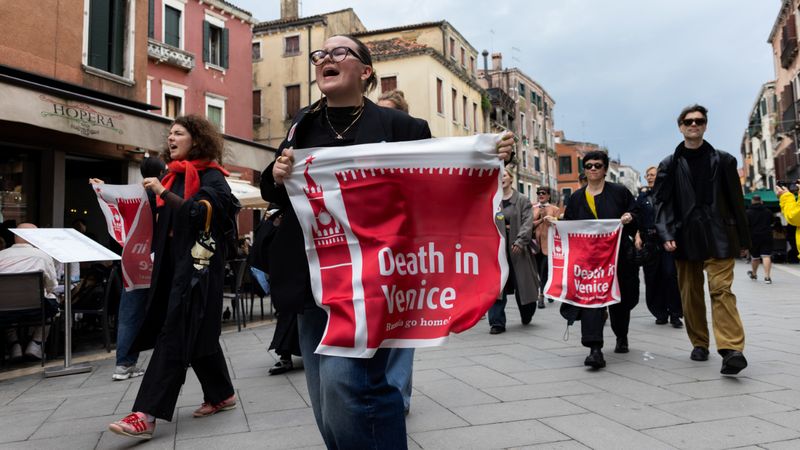
Mariagrazia Muscatello's critical essay on the 2026 Venice Biennale describes an edition overshadowed by death—both literal, with the passing of curator Koyo Kouoh during the curatorial process, and symbolic—and a climate of unease reflecting contemporary tensions: geopolitical conflicts, the genocide in Palestine, and a crisis of legitimacy in art institutions. Muscatello analyzes how political activism at the Biennale—Palestinian flags, strikes, protest gestures—risks becoming a form of personal visibility and cultural marketing rather than genuine rupture, contrasting this with self-managed spaces like S.a.L.E. Docks that propose authentic alternative models. She denounces the precarious, feudal labor conditions in the art world, in stark contradiction with the progressive discourses it champions.
This matters because the essay offers a deep institutional critique of the Biennale as a device of cultural diplomacy and geopolitics rather than artistic exhibition, warning of a dystopian future where national pavilions are replaced by luxury brands—as already seen with Bvlgari becoming the institution's first exclusive partner—consolidating money's dominance over any genuine cultural or political debate. By invoking Thomas Mann's 'Death in Venice' and the 1968 Biennale protests, Muscatello frames the 2026 edition as symptomatic of a broader cultural and political decay, questioning whether performative activism can ever challenge the system it inhabits.